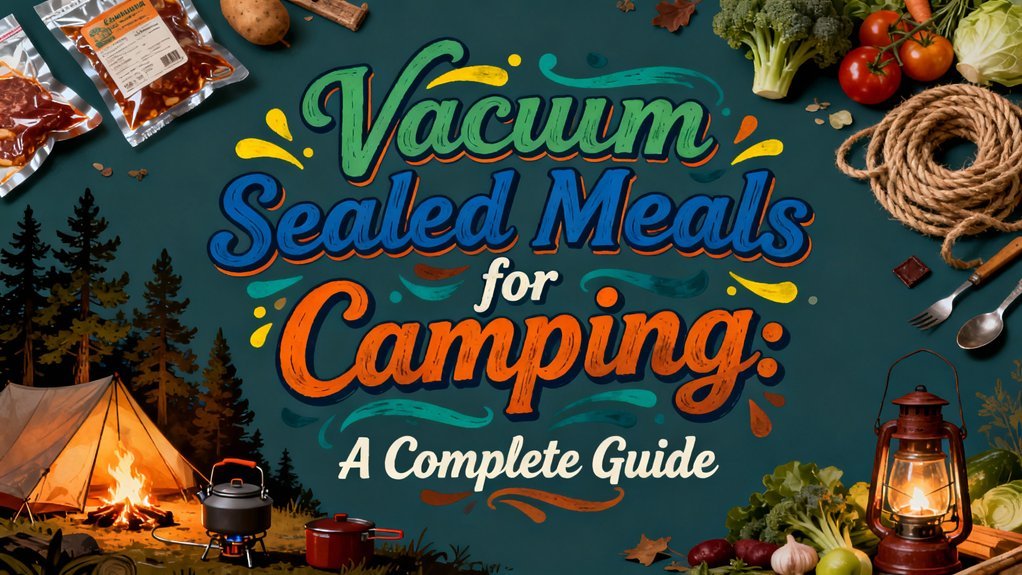
You’ll maximize pack space and minimize cleanup by vacuum-sealing pre-cooked proteins, grains, and one-pot meals that extend shelf life 50–400% longer than air-packed items. The process removes oxygen, inhibiting spoilage bacteria and molds while compressing food into lightweight individual servings. You’ll reheat meals in boiling water within minutes, maintaining nutritional value and taste. Proper cold-chain management—keeping perishables at 4°C and minimizing time in the danger zone—ensures safety. Understanding gear selection, reheating techniques, and campsite regulations transforms your backcountry dining strategy.
Why Vacuum Sealing Makes Camping Easier
Because vacuum-sealed meals compress food into flat, stackable pouches, you’ll fit appreciably more provisions into your pack while reducing overall weight and volume. This meal convenience transforms how you organize gear, enabling you to carry emergency supplies or extra fuel without sacrificing nutrition.
Cooking efficiency improves dramatically when you abandon multi-pot setups. Vacuum-sealed, pre-cooked meals reheat quickly in boiling water, minimizing stove time and fuel consumption. Heat transfers more evenly through sealed pouches, accelerating preparation at camp. For extended trips, consider pairing vacuum-sealed meals with a cast iron Dutch oven for versatile one-pot reheating and cooking options. Vacuum sealed packages last 3 to 5 times longer than non-sealed food, ensuring your meals remain fresh throughout your camping trip. Properly sealed bags prevent oxygen from entering, which extends the shelf life of your dehydrated meals considerably.
Single-bag meals eliminate multiple cooking steps, reducing exposure to weather, insects, and wildlife while you prepare food. You’ll also spend notably less time on cleanup—one pouch means minimal dishwashing and water conservation on resource-limited trips. Vacuum sealing also protects food from freezer burn and atmospheric dehydration, maintaining the nutritional value and texture of your meals in challenging outdoor conditions. For serious backpackers building a complete kitchen system, investing in multiple sizes of vacuum-sealed containers allows maximum flexibility for different trip lengths and group sizes. Fewer utensils and pans lighten your kit appreciably.
How Vacuum Sealing Extends Food Shelf Life
Vacuum-sealed meals don’t just organize your pack and streamline cooking—they also dramatically extend how long your food stays safe and palatable in the field. This vacuum technology works by removing oxygen, which inhibits aerobic spoilage bacteria and molds while reducing oxidative rancidity in fats. You’ll experience shelf life extensions of 50–400% for meats compared to air-packed alternatives, with refrigerated beef potentially lasting 7–15 days longer at 4°C. Frozen vacuum-sealed proteins can remain acceptable for months. The barrier films prevent moisture loss and external oxygen penetration, preserving both texture and color. Vacuum sealing is most beneficial for meats, cheeses, and vegetables, making it ideal for typical camping provisions. Pre-freezing soft or moist foods before vacuum sealing prevents them from being crushed during the sealing process. When properly frozen at 0°F, vacuum sealed whole cuts of beef and pork can maintain quality for 2 to 3 years in the freezer. Different types of vacuum sealers available offer varying features suited to different camping meal prep needs and budgets. However, vacuum sealing doesn’t replace proper cold-chain management—you must maintain consistent low temperatures to maximize these benefits and guarantee food safety during your camping trip.
Best Foods to Vacuum Seal for Camping
While the shelf-life extension that vacuum sealing provides is valuable, you’ll maximize those benefits by choosing foods with the right moisture content, structural integrity, and reheating characteristics. Precooked proteins like shredded poultry, stews, and cured meats perform exceptionally well when sealed. Pair them with al dente pasta, cooked rice, or precooked grains that won’t become mushy upon reheating. Include blanched or roasted vegetables to retain nutrients and texture. Your meal prep strategies should prioritize complete one-pot meals—chilis, curries, stews—portioned and sealed for straightforward boil-in-bag reheating. Layered burritos and casseroles also compress efficiently. For outdoor activities like hunting and fishing trips, vacuum sealed meals eliminate the need for cooking while away from home and allow quick meal access during extended time outdoors. Consider preparing individual serving sizes to provide meal variety and reduce reliance on shared dining options in camp settings. Avoid high-moisture components and always cool foods thoroughly before sealing. Proper vacuum sealing techniques, such as freezing meat slightly before sealing to prevent juice extraction, ensure your camping meals maintain quality while minimizing on-site preparation demands.
Foods You Should Avoid Vacuum Sealing
Not all foods benefit from vacuum sealing, and some can actually spoil faster or pose safety risks when sealed. Cruciferous vegetables like broccoli and kale release gases that accelerate deterioration in sealed environments. Raw onions and garlic present botulism risks in low-oxygen conditions and cause bag inflation. Raw mushrooms develop mold rapidly when trapped moisture accumulates. Fresh fruits like bananas and berries emit ethylene gas, causing premature overripening and mushiness. Soft cheeses and high-moisture foods crush during the vacuum cycle or develop mold from locked-in moisture. Additionally, marshmallows with excessive moisture are unsuitable for vacuum sealing due to their composition.
These foods to avoid require preprocessing before sealing. Blanch, freeze, cook, or dehydrate them first. Cool hot items to room temperature beforehand. Flash-freeze bananas unwrapped. Soft herbs should be blanched or steamed to maintain their flavor and texture before you seal them. Following these steps eliminates spoilage risks and extends shelf life for your camping meals.
Essential Gear and Materials for Vacuum Sealing
To successfully vacuum seal your camping meals, you’ll need to invest in a reliable vacuum sealing system that fits your specific storage needs. Portable sealers like compact Foodsaver models or USB-powered units deliver functionality without bulk, making them ideal for backcountry trips where electricity isn’t accessible. Pair your sealer with high-quality vacuum bags designed for your system—Foodsaver bags offer freezer and microwave compatibility in USA versions, while reusable ziplock bags work across multiple vacuum systems for cost efficiency.
You’ll also want kitchen paper to wrap foods within ziplock bags, preventing damage during transport. Consider brand-specific options: Bosch bags integrate with their hand blender-attached pumps, while Electrolux Create kits accommodate plastic rolls. High-quality USB-powered sealers typically allow for sealing 20-40 bags per charge, making them practical for multi-day camping trips. When selecting bags, prioritize material thickness and BPA-free construction to ensure food safety and durability during your outdoor adventures. Understanding seal strength and reliability across different vacuum sealer models will help you choose equipment that performs well in outdoor conditions. Vacuum sealing removes oxygen from bags, which slows bacterial and mold growth, helping preserve your meals for extended periods while supporting sustainability goals. Properly labeling and dating your vacuum-sealed meals ensures you can track storage duration and rotate supplies effectively on camping trips. For optimal preservation on extended trips, combining vacuum sealing with oxygen absorbers can extend your food’s shelf life significantly beyond vacuum sealing alone. These materials work synergistically to preserve meal integrity and maximize your backpack space throughout extended camping expeditions.
Preparing and Packing Meals Step by Step
Proper meal preparation transforms raw ingredients into shelf-stable, camping-ready portions that’ll sustain you throughout your expedition. Start by selecting quality ingredients and employing appropriate cooking methods—pre-cook meats, rice, and pasta at home to reduce campsite preparation time. Cool all cooked foods completely before sealing to prevent steam damage that compromises food safety. Freeze liquids like soups in containers first, then transfer to vacuum bags once solid. Vacuum-sealed meals can maintain quality for up to three months in the freezer, significantly extending shelf-life compared to regular containers. Store vacuum-sealed meals in airtight containers to maintain maximum freshness and prevent freezer burn during extended storage. Vacuum sealing works by locking out air and moisture], which slows the spoilage process and preserves the nutritional content of your meals. Vacuum sealing extends shelf life by 3 to 5 times longer compared to conventional storage methods, making it ideal for preserving your prepared camping meals. For maximum protection during storage and transport, consider using resealable zipper closures on your vacuum bags to prevent any air re-entry during your camping trip. When selecting vacuum containers for your camping meals, prioritize BPA-free certifications to ensure safe food storage and prevent chemical leaching into your provisions.
Chop vegetables into ready-to-cook portions and marinate meats ahead of time. Assemble single-serve meals like stews or white chili, accounting for your freezer storage capacity. Pre-mix seasonings separately for convenience. Using oven-safe containers with glass lids] allows you to monitor reheating progress at camp without losing heat. Label each wrapped package with the dish name, required water amount, and preparation date using kitchen paper. This systematic approach maximizes space efficiency while ensuring nutritional balance between proteins, vegetables, and non-perishables throughout your camping adventure.
Reheating Vacuum-Sealed Meals at Camp
Once you’ve arrived at camp with your vacuum-sealed meals, reheating them safely demands attention to temperature targets and method selection. You’ll want to use a food thermometer to verify internal temperatures: 74°C for poultry, 63°C for whole cuts of beef or pork, and 71°C for ground meats. Water-bath reheating on your camp stove offers reliable, equipment-light results—simply submerge sealed bags in simmering water until targets are reached. Avoid relying on bag surface feel; instead, check the thickest point immediately after heating. If you’re reheating from frozen, thaw first in your cooler or fridge to eliminate cold spots. Always inspect your vacuum-sealed bags for accidental tears or rips before placing them in heated water to ensure safe reheating. Adding moisture with broth or apple juice will preserve the fresh taste of your vacuum-packed meals during the reheating process. Vacuum sealing maintains superior meat quality compared to traditional freezing methods, so proper reheating technique ensures you benefit from the extended shelf life you’ve already gained through preservation. Hold finished food at 60°C minimum if not eaten immediately to prevent bacterial growth.
Planning Multi-Day Camping Menus
Because your caloric needs shift dramatically with trip duration and activity intensity, you’ll need to calculate total meals required and set daily energy targets before selecting specific dishes. Multiply your activity level (low: 2,200 kcal/day; moderate: 3,000 kcal/day; high: 3,500+ kcal/day) by active days to determine total consumption. Allocate calories across meals—20–25% breakfast, 30–40% lunch/snacks, 35–45% dinner—ensuring sustained energy. Add a 10–20% contingency buffer for delays or exertion spikes.
When meal portioning, divide vacuum-sealed packs into single-serving sizes with clear labels and cook times. Prioritize nutrient balance: target 55% carbs, 20–25% protein, 20–25% fat. Pre-preparing meals ahead of time maximizes convenience and reduces cooking demands at camp. For protein options like venison, vacuum sealing extends shelf life significantly compared to traditional wrapping methods. Proper vacuum sealing also prevents freezer burn during your trip, maintaining meat quality throughout your camping adventure. To prevent messy seals when dealing with marinades or sauces, consider pre-freezing liquids before vacuum sealing to ensure proper seal integrity. For additional flavor enhancement at camp, you can sear vacuum-sealed proteins like sirloin steak in a cast iron skillet over your campfire for a restaurant-quality finish. If cast iron isn’t available, oven-safe stainless steel skillets serve as an effective substitute for achieving a proper sear on your proteins. Rotate flavor profiles across days to prevent palate fatigue and support appetite, while incorporating micronutrient-rich components like freeze-dried vegetables and powdered vitamin supplements on extended trips.
Maintaining Cold Chain and Food Safety
Your vacuum-sealed camping meals depend entirely on maintaining an unbroken cold chain from final preparation through consumption, since any temperature interruption accelerates bacterial proliferation and toxin formation—risks you can’t detect by sight, smell, or taste. Keep perishables at ≤4°C before departure and minimize time in the danger zone (4–60°C) to under two hours cumulative. During transport, use insulated coolers or powered refrigeration units with contingency cooling supplies like extra ice or gel packs. At camp, implement temperature monitoring with digital probes or data loggers to validate cold-chain compliance. For safe thawing, use refrigeration or cold running water only—never ambient temperatures. Reheating from frozen requires reaching 74°C internally to inactivate pathogens effectively.
Legal and Environmental Considerations for Campsites
While vacuum sealing protects your meals from contamination, the legal framework governing where and how you camp shapes every decision you’ll make in the backcountry. You must consult Motor Vehicle Use Maps (MVUMs) and local ranger stations to understand campsite regulations specific to your destination. Set up at least 100 feet from water sources and trails—Olympic National Forest requires 200 feet. Your environmental impact depends on proper waste disposal: pack out all trash, dispose gray water at approved facilities only, and never dump waste on ground. These campsite regulations aren’t merely suggestions; violating federal waste management rules carries substantial penalties and degrades ecosystems. Just as specialized cooking tools are designed for specific purposes to ensure optimal results, different camping locations require different equipment suited to their environmental conditions. Quality cookware with heat retention properties becomes essential for maintaining food safety when meals are prepared days in advance and transported to remote campsites. For meals prepared in advance, consider how heavy construction cookware retains heat efficiently during transport, keeping vacuum-sealed portions at safer temperatures longer in remote settings. Always verify current restrictions before arrival, as regulations change seasonally based on fire danger and local conditions.