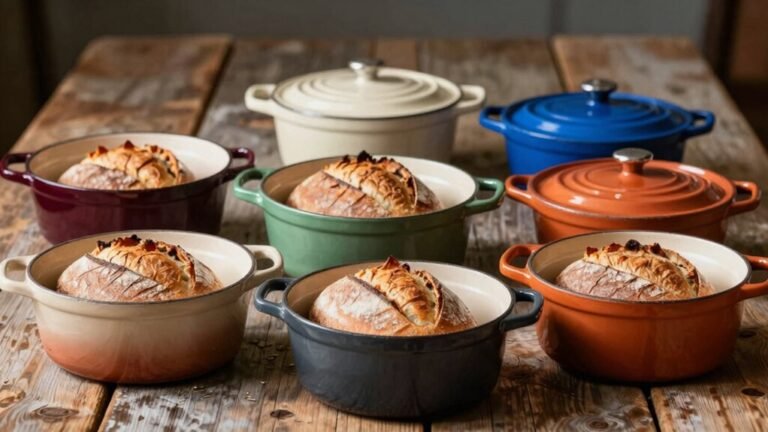
You’ll sear your trimmed, oil-coated pork tenderloin in a preheated Dutch oven until it’s browned on all sides, then deglaze the pan with wine or stock to build a rich sauce. Transfer it to a 250°F oven, monitoring internal temperature until it reaches 140°F. Rest the meat loosely covered for 8–10 minutes, slice against the grain into half-inch strips, and plate with precision saucing. The techniques that elevate this dish from simple to restaurant-quality deserve deeper exploration.
Preparing Your Pork Tenderloin
The foundation of a perfectly cooked Dutch oven pork tenderloin starts with proper preparation. You’ll begin by trimming techniques that remove the silver skin—that silvery-white membrane on the tenderloin’s side—using a sharp knife. This essential step prevents a tough texture in your finished dish. Remove excess fat simultaneously, then pat the meat dry with paper towels.
Next, apply olive oil to enhance both flavor and cooking results. Brush one tablespoon directly onto the tenderloin, then drizzle two additional tablespoons over the meat in your baking dish. Rub the olive oil coating uniformly across the surface. This base layer helps seasonings adhere properly and promotes ideal browning during cooking. Like cast iron cookware that requires seasoning to maintain its surface, your pork benefits from this foundational oil application. For best results, apply oil with a high smoke point to ensure it can withstand the heat of Dutch oven cooking. Just as cast iron grill pans create distinctive sear marks through proper oil application and heat management, your Dutch oven will develop a beautiful crust on the pork tenderloin. Choose pork tenderloin, not pork loin, as the tenderloin’s long, thin shape ensures superior tenderness compared to other cuts. The Dutch oven’s heat retention creates an optimal cooking environment for achieving a moist, tender result. Allow the pork to reach an internal temperature of 165°F for safe consumption and optimal doneness. For optimal results, invest in a good digital thermometer to monitor your pork’s internal temperature throughout the cooking process. Your tenderloin is now ready for seasoning and Dutch oven preparation.
Seasoning and Flavoring Techniques
Now that you’ve prepared your tenderloin, you’ll want to build layers of flavor through strategic seasoning and application techniques. Start by coating your pork with olive oil, then apply your chosen dry rubs—consider blending cumin seeds, coriander seeds, and black peppercorns, roasting them until fragrant before grinding. Alternatively, combine brown sugar, paprika, cumin, and oregano for a balanced profile.
Next, incorporate wet seasonings to deepen complexity. Brush Dijon mustard onto the meat, then brown it to bloom the spices and enhance flavor development. Before oven cooking, spoon a pan sauce of melted butter and balsamic vinegar over the tenderloin. You can also mince fresh garlic directly into your dry rub mixture, or substitute garlic powder for concentrated flavor. For optimal results, rest the meat for 10-15 minutes after searing to allow the seasonings to penetrate the pork and ensure even flavor distribution throughout. These layered techniques create a richly seasoned finished dish, similar to how precise temperature control in specialized cooking methods ensures even seasoning penetration and consistent results. The tight-fitting lids on quality Dutch ovens trap moisture effectively during cooking, ensuring your seasonings stay concentrated on the meat. Proper air removal and packaging techniques can help preserve your leftover seasoned pork if you need to freeze it for later use. Dutch ovens with lids provide superior heat retention that helps distribute seasonings evenly throughout the cooking process. For Dutch oven cooking, wrap the seasoned tenderloin in soaked corn husks to seal in moisture and infuse the meat with subtle flavors while it cooks. Like the customization with various fruits and cake flavors possible with cobbler recipes, you can adjust your seasoning blend to match your preferred flavor profile and available ingredients.
Searing for Perfect Browning
Achieving a deep golden-brown crust on your pork tenderloin requires precise heat management and careful surface preparation. Pat your meat thoroughly dry, then coat it lightly with high-smoke-point oil like avocado or grapeseed. Preheat your Dutch oven to 400–500°F, confirming readiness when oil shimmers and water droplets evaporate instantly.
Your searing techniques should prioritize firm, steady contact without constant flipping. Allow each side 1–5 minutes until a dark brown crust forms, then flip once to finish browning. Sear all major faces and ends for uniform color. For optimal results, return the pork tenderloin to the Dutch oven after searing to complete the cooking process in the oven. Removing the silverskin from pork helps prevent toughness and curling during the searing and roasting process.
These browning tips prevent common mistakes: avoid overcrowding, which drops temperature and causes steaming; rest 30–60 seconds between batches for pan recovery. Monitor color carefully—dark brown indicates ideal Maillard development, while charring signals excessive heat requiring immediate temperature reduction.
Creating Pan Sauces and Glazes
Once you’ve seared your pork tenderloin to a deep golden brown, you’ll want to capture all those flavorful browned bits clinging to your Dutch oven’s bottom—a process called deglazing that forms the foundation for your pan sauce. Remove the meat and pour off excess fat, leaving one tablespoon. Add ½ cup liquid—wine, stock, or a combination—over medium-high heat, scraping vigorously with a wooden spoon. Simmer for three to five minutes until reduced by half. Deglaze while the pan is still hot to ensure the fond lifts easily from the surface.
Your glaze options depend on desired depth. Red wine with beef stock delivers richness, while white wine with chicken stock offers lighter profiles. This technique prevents wastage of flavorful deposits that would otherwise remain unused in the pan. A cast iron Dutch oven provides superior heat retention and distribution compared to glass alternatives, ensuring consistent results. The Dutch oven’s tight-fitting lid and thick construction allow for optimal moisture retention during sauce reduction, enhancing the concentration of flavors. To prevent issues during the cooking process, avoid placing a cold Dutch oven directly into a preheated oven, as this can cause thermal shock and damage to the pot. For best results, store your finished sauce properly to maintain freshness using methods like vacuum sealing to preserve quality when storing prepared foods. Finish by whisking cold butter off heat for an emulsified sauce. These sauce techniques transform pan drippings into silky, concentrated accompaniments that elevate your tenderloin.
Selecting and Preparing Vegetables
Your vegetable choices fundamentally shape both the cooking process and final dish, since different varieties demand distinct timing and placement within the Dutch oven. Root vegetable selection—potatoes, carrots, parsnips, beets—works best beneath the pork because they tolerate high heat and match the tenderloin’s cooking duration. Cut them into uniform 1–1.5 inch pieces to guarantee even doneness.
Avoid quick cook vegetables like green beans, spinach, and asparagus under the pork; they’ll overcook. Instead, add them during the final 10–20 minutes or roast separately. Coat your root vegetables with 1–2 tablespoons oil, then season with kosher salt, black pepper, and dried herbs like thyme or rosemary. Layer aromatics—onions, garlic, shallots—underneath to flavor your braising liquid and develop caramelized fond for pan sauce reduction. For optimal results, use Vidalia onions for their natural sweetness that complements the pork and other vegetables. Creating a honey garlic glaze can enhance the vegetables’ caramelization and add depth to your braising liquid. To verify your vegetables have reached the proper doneness, use an infrared thermometer to check internal temperatures without piercing the flesh. The choice of Dutch oven size does not compromise the cooking process, allowing you to accommodate your preferred vegetable quantities without affecting results. Proper heat retention and distribution from your Dutch oven ensures even cooking of both your pork and vegetables, similar to how cast iron skillets achieve consistent results in other dishes. Cooking vegetables slowly in a covered Dutch oven allows them to become fork-tender while absorbing the rich flavors from the braising liquid. After cooking, hand wash your Dutch oven with hot water and mild detergent, then dry thoroughly and apply a light layer of oil while still warm.
Building Your One-Pot Meal
The Dutch oven’s thermal mass and sealed environment transform a simple sear-and-roast into an integrated one-pot meal where every component contributes to a cohesive dish. You’ll layer aromatics first, sweating onions and garlic to build your flavor foundation. Next, sear the tenderloin to develop fond—those caramelized bits become your sauce’s backbone when deglazed. Stagger vegetable additions by density: root vegetables early, quick-cooking items later. Your ingredient variations determine timing; denser roots need longer cooking than delicate greens. For sauce techniques, maintain a gentle simmer that extracts collagen without separating dairy or starches. Add acidic components like wine or vinegar near the end to brighten flavors. This methodical sequencing guarantees balanced texture and concentrated, cohesive pan sauces throughout your dish. The nutrients leaching into your cooking liquid creates a nutrient-rich broth that enhances the overall nutritional value of your one-pot meal. Using a single Dutch oven reduces the number of dishes you’ll need to wash after preparing this complete meal. Proper handle design ensures safe maneuvering of your heavy Dutch oven both on the stovetop and when transferring to the oven for roasting.
Baking to Ideal Doneness
After you’ve built your layered flavors and achieved that golden crust, precision temperature monitoring becomes your safeguard against the lean tenderloin‘s tendency to dry out. Transfer your Dutch oven to a preheated 250°F oven, where controlled heat guarantees even cooking without rapid moisture loss. Insert your digital instant-read thermometer into the thickest section, avoiding bone and fat. Pull the tenderloin at 140°F—carryover cooking will push it to your 145°F target during the mandatory three-minute rest. Don’t rely on color; slight pink at 145°F is normal and safe. Set a high-temp alarm on your thermometer for precision. Continuous temperature monitoring during these baking techniques prevents overshooting 145°F, which compromises tenderness and juiciness in this inherently lean cut. Using a calibrated thermometer ensures accurate measurements from the thickest part of the meat. The USDA’s recommended internal temperature of 145°F ensures the pork is both safe to eat and optimally tender.
Resting and Slicing Your Meat
Once you’ve pulled your tenderloin at 140°F, resist the urge to slice immediately—this critical resting phase is where you’ll lock in the juices that make or break your final dish. Cover loosely with foil and let it rest for 8–10 minutes on your cutting board. This resting importance can’t be overstated: the heat rises to a safe 145°F through carryover cooking while muscle fibers relax, allowing even juice redistribution throughout the meat. Skipping this resting step may result in a dry, less flavorful pork tenderloin that fails to showcase the quality of your cooking effort.
When you’re ready, use a sharp knife for your slicing technique, cutting against the grain into half-inch strips. This approach maximizes tenderness in lean cuts. For accurate doneness verification, consider using a meat thermometer to confirm your tenderloin has reached the recommended internal temperature before slicing. Similar to how removing excess moisture preserves texture in frozen foods, allowing proper moisture redistribution during resting ensures your pork maintains its juiciness. Just as applying oil while the surface is warm creates a non-stick, rust-resistant layer on cast iron cookware, the warmth of your resting meat allows proper moisture redistribution that enhances final texture. For leftover pork tenderloin intended for extended freezer storage, extended shelf life] benefits from proper vacuum sealing techniques that prevent freezer burn and maintain meat quality beyond conventional storage methods. Like deglazing a Dutch oven with stock to develop rich, savory depth, proper resting and slicing techniques build layers of texture and flavor in your final dish. You’ll notice juices stay contained within each slice rather than pooling on the plate—evidence that your rest period worked perfectly.
Plating and Presentation
Your perfectly rested pork tenderloin deserves a plate that matches its quality, and thoughtful composition transforms a simple dish into restaurant-caliber plating. Position sliced pork off-center using the rule of thirds, stacking pieces slightly for height and focal impact. Create negative space to avoid overcrowding—this restraint elevates your presentation. Apply plating techniques strategically: use a squeeze bottle for precise sauce dots or swipes that guide the eye toward your protein. Select 2–3 color accents like herb purée or berry gastrique to contrast pork’s neutral tones. Layer garnishing tips thoughtfully—microgreens, citrus zest, and toasted seeds add visual pop without overwhelming. Finish with a butter glaze for sheen, coarse sea salt for sparkle, and one aromatic garnish positioned near the diner’s nose to enhance perceived aroma at service. Consider arranging baby bok choy alongside the pork to introduce textural contrast and fresh vegetable elements that complement the richness of the main protein. For those seeking to achieve restaurant-quality results at home, precision temperature control allows you to replicate the exact cooking techniques used in professional kitchens for perfectly cooked proteins. Proper preparation of proteins for cooking can be enhanced through vacuum sealing techniques that lock in moisture and flavors before the cooking process begins. When searing your pork tenderloin in a Dutch oven, ensure you begin with gradual heating to prevent damaging the cookware and to achieve optimal crust development. A fitted lid] on your Dutch oven retains moisture and heat during the braising phase, ensuring your pork tenderloin reaches its ideal tender texture. Like achieving a crispy exterior and tender interior in cast iron cooking, presentation is a culinary artistic skill that improves with practice, so document your plating efforts through photography to track your progress and identify areas for refinement.
Storage and Reheating Guidelines
Beautifully plated pork tenderloin won’t stay at peak quality indefinitely, so understanding proper storage and reheating methods guarantees you’ll enjoy the same succulence and tenderness when you return to your leftovers. Refrigerate cooked tenderloin within two hours in shallow, airtight containers at 40°F or below for three to four days maximum. For extended storage, freeze at 0°F in vacuum-sealed portions for three to six months, which prevents freezer burn and maintains the meat’s quality. Professional-grade chamber vacuum sealers deliver superior results compared to standard consumer models, ensuring consistent food preservation without liquid spillage. Your storage tips should include keeping pan juices separate to restore moisture during reheating. When ready to serve, employ moist-heat reheating methods: cover in a 275–325°F oven or warm sliced portions in a skillet with stock over medium-low heat. Similar to searing steaks, you can use searing on the stovetop to add a flavorful caramelized crust to reheated tenderloin before finishing in the oven. To maintain optimal quality, add a little water when reheating in a pan to prevent the meat from drying out. For a finishing touch on special occasions, consider using a kitchen torch to gently sear the surface of reheated tenderloin slices for added texture and visual appeal—ensure you achieve a dark blue flame for proper combustion and to avoid any off-flavors. Target an internal temperature of 165°F throughout, reheating slowly to preserve texture and prevent overcooking. Always use clean utensils and containers when handling leftovers to avoid cross-contamination and ensure food safety.