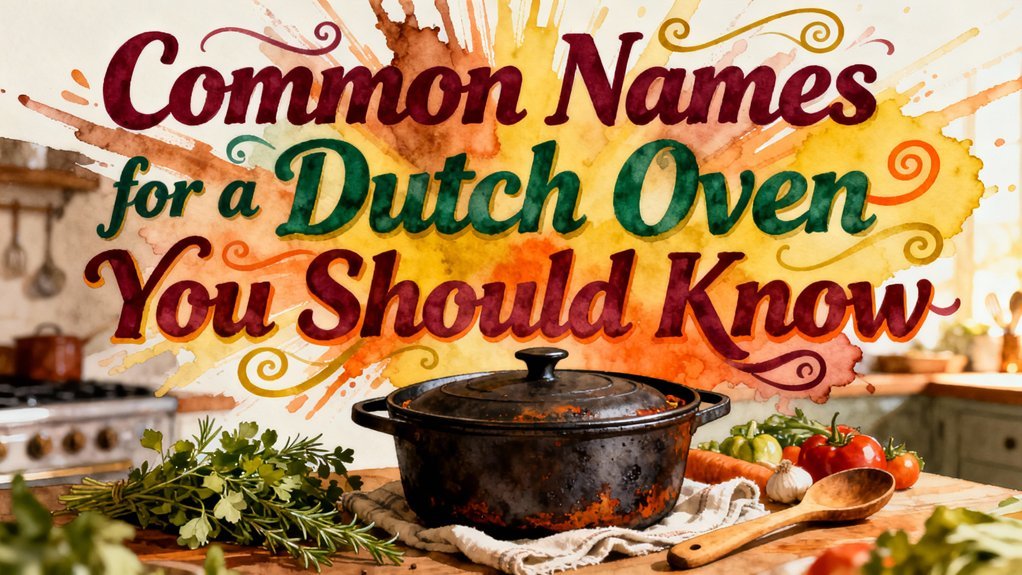
You’ll encounter Dutch ovens under dozens of names reflecting cultural traditions and functional purposes. The French call it a “cocotte” or “French oven,” while the Dutch use “braadpan”—meaning roasting pan. Regionally, you’ll find South Africa’s “potjie,” Japan’s “tetsunabe,” and Spain’s “cazuela.” Functional names like “braising vessel” or “heat retention pot” describe specific cooking applications. Modern variations include enameled, cast iron, and stainless-steel versions. Understanding these distinctions helps you select the right pot for your culinary needs and reveal deeper insights into cookware history.
French-Inspired Names
When you’re shopping for an enameled cast-iron cooking pot, you’ll encounter several French-rooted terms that fundamentally describe the same vessel. The term “cocotte” carries particular significance in French terminology, denoting smaller enameled Dutch ovens prized for braising and tableside presentation. “French oven” similarly describes premium enameled cast-iron pieces, emphasizing their European craftsmanship and origin. Both terms highlight enamel quality as a defining characteristic—porcelain coating eliminates seasoning requirements while enabling vibrant color options. The Cocotte’s spikes on the lid are specifically designed for moisture retention, which enhances the cooking process and helps develop deeper flavors in braised dishes. In Dutch culture, these vessels are known as “braadpans” or “sudderpans,” with modern versions featuring black enameled steel compatible with various heating methods. These vessels excel at slow-cooked stews and braised meats, demonstrating their versatility across multiple culinary applications. The durable glass-like coating of enameled Dutch ovens also makes them resistant to rust and allows for cooking acidic ingredients without damage to the cookware. Unlike traditional cast iron that requires regular seasoning to maintain its non-stick properties, enameled Dutch ovens eliminate this maintenance step entirely. The seamless transition from stovetop to oven cooking makes Dutch ovens exceptionally practical for both professional chefs and home cooks preparing one-pot meals, though you should use a handle cover to protect your hands from the hot cookware. Cultural influences from renowned French manufacturers like Le Creuset and Staub have solidified these naming conventions in English-language retail, where marketers leverage “Made in France” branding to signal premium positioning. Understanding these French terminology distinctions helps you identify exactly which cookware style suits your culinary needs, whether selecting compact cocottes or larger oven-to-table pieces.
Dutch and Regional Names
Beyond French terminology, the Dutch oven’s regional nomenclature reflects its geographic origins and culinary evolution across Europe. In the Netherlands, you’ll encounter Braadpan, literally “roasting pan,” which underscores the vessel’s traditional heavy-cooking purpose. The term Sudderpan, or “simmerpan,” highlights regions where slow-simmering dominates culinary practices. You should recognize Cocotte variations, particularly enameled versions popular in French kitchens, which bridge Dutch and French naming conventions. The broader Casserole adaptations appear across Europe, describing deep, lidded cooking vessels with overlapping Dutch-oven functionality. Historically, Marmite terminology applied to certain lidded pots, though its regional usage varies considerably. These regional names showcase how excellent heat retention made Dutch ovens essential across different European culinary traditions. Dutch ovens proved particularly valuable for communal cooking during cultural gatherings and frontier traditions throughout the continent. Like vacuum sealing’s ability to preserve flavors and nutrients, Dutch ovens maintained food quality through superior heat distribution and moisture retention during extended cooking. Similar to how rigid containers protect delicate foods, Dutch ovens’ durable construction ensured consistent performance across generations of European cooking traditions. The precise temperature control principles that define modern cooking methods also underscore why Dutch ovens became indispensable for achieving reliable results across varied European cuisines. Many traditional Dutch ovens were crafted from enameled cast iron, a material prized for its durability and non-toxic cooking properties across centuries of European culinary practice. Just as BPA-free construction matters for modern food storage solutions, historical Dutch oven materials were selected to ensure safe, long-lasting cooking without harmful substances. These names collectively demonstrate how you can trace the Dutch oven’s evolution through linguistic and cultural contexts across continental Europe.
Functional Descriptive Names
Because the Dutch oven’s functional versatility defies a single culinary purpose, functional descriptive names have emerged throughout cooking cultures to categorize its diverse applications. You’ll encounter terms like “heat retention pot,” emphasizing its superior thermal mass for consistent cooking temperatures. “Braising vessel” highlights the pot’s ability to tenderize tough cuts through low, moist heat. “Stew pot” references its capacity for voluminous, slow-cooked dishes that intensify flavors. “Baking pot” describes its role in bread-making, trapping steam for crispy crusts. “Frying pan” acknowledges its deep-frying capabilities. These cooking specialties-driven names reflect how different cultures and cooks adapted the Dutch oven to their culinary traditions. The Dutch oven’s exceptional heat retention also supports nutrient preservation during extended cooking periods. The heavy lid of a Dutch oven is essential for locking in moisture during extended cooking periods, which is why some cooks refer to it as a “moisture-trapping vessel.” Dutch ovens are commonly used in camping settings for cooking over fire or portable stoves, which has led to specialized names like camping Dutch oven in outdoor cooking communities. The pot’s ability to both brown meat and simmer it in savory broth makes it ideal for complete one-pot meals from start to finish. The even heat distribution provided by cast iron construction ensures consistent results whether you’re roasting, baking, or braising. Enameled Dutch ovens are particularly valued for their rust-resistant properties, allowing cooks to prepare acidic foods without compromising the cookware’s integrity. Like vacuum sealer bags designed to maintain an airtight environment, the Dutch oven’s sealed construction preserves moisture and flavor throughout the cooking process. Understanding these functional descriptors helps you select the right vessel for your specific cooking needs.
General Cooking Vessel Synonyms
While functional descriptive names highlight how you’ll use a Dutch oven, general cooking vessel synonyms reveal the broader culinary vocabulary that encompasses this versatile pot. You’ll encounter terms like “pot,” “cooking pot,” “vessel,” and “container” in general vessel comparisons across culinary literature. These foundational labels reflect cooking terminology evolution, tracing back through centuries of kitchen practice. You might also see “crock,” “clay pot,” and “ceramic pot”—material-oriented names emphasizing construction rather than function. “Casserole” and “oven dish” blur distinctions between the vessel and prepared food itself. Cast iron Dutch ovens are particularly notable for their durability and even cooking capabilities, making them highly sought-after options in culinary contexts. The thick walls and tight-fitting lids of Dutch ovens provide optimal heat distribution for consistent results across multiple cooking methods. Even colloquial terms like “cauldron” or “pan” appear in thesauruses as synonyms, demonstrating how Dutch ovens occupy multiple positions within our culinary lexicon. Understanding these general synonyms helps you navigate recipes and cookware discussions with precision and cultural awareness.
Historical and Specialized Terms
The name “Dutch oven” itself carries contested origins that reveal how culinary terminology emerges from trade, innovation, and cultural exchange. You’ll find that early cooking traditions recognized this vessel by various regional names—dinner pots, Gypsy pots, and stew pots dominated colonial vocabulary before standardization occurred. In the Netherlands, your historical cookware had distinct names: braadpan (roasting pan) and sudderpan (simmer pan), reflecting specific functions rather than a unified term. By the early 19th century, “Dutch oven” competed with “bread oven” in American sources, highlighting how multipurpose cast iron cookware resisted singular nomenclature. These specialized terms emerged from distinct cultural contexts—Dutch traders, Pennsylvania settlers, and Abraham Darby’s innovations each contributed layers of meaning to what you now simply call a Dutch oven. The versatility of Dutch ovens meant that westward-bound explorers utilized them on trails during their journeys, reinforcing multiple regional nomenclatures across different American territories and communities. When selecting a Dutch oven for specific purposes like bread baking, understanding whether you need a 5-quart Dutch oven or a larger size helps determine which regional specifications and historical models best suit your cooking needs. Like specialized kitchen equipment such as culinary torches, Dutch ovens demand careful handling to ensure their longevity, including regular cleaning in well-ventilated areas to prevent buildup of residue. Proper seasoning of cast iron Dutch ovens is critical for creating a natural nonstick surface that improves with use over time. The enameled Dutch ovens introduced in later centuries by manufacturers like Le Creuset further transformed how people referenced this cookware, as enameled coatings distinguished these refined versions from their utilitarian cast iron predecessors. Modern Dutch ovens excel at multiple cooking applications, with braising, bread baking, and slow-cooking remaining the most celebrated uses among home cooks today.
Modern and Alternative Material Names
As modern cookware materials diversified and appliance technology advanced, so too did the vocabulary surrounding Dutch ovens—reflecting how naming conventions shift with innovation and market positioning. You’ll encounter *aluminium options* marketed as “aluminium Dutch ovens” or “hard-anodized Dutch ovens,” emphasizing lightweight construction and superior heat conductivity. *Stainless cookware* variants appear as “stainless-steel Dutch ovens,” appealing to those prioritizing induction compatibility and low maintenance. Multilayered constructions get labeled “multi-clad” or “tri-ply Dutch ovens,” signaling even heating mimicry. Meanwhile, appliance manufacturers co-opted the term entirely: you might see “multi-cookers,” “Instant Pots,” “slow cookers,” or “electric Dutch ovens” positioned as functional replacements. These versatile alternatives offer multiple cooking methods that appeal to modern home cooks seeking convenience without sacrificing quality results. Dutch ovens have become essential for camping dessert recipes, demonstrating their enduring versatility across both traditional and contemporary cooking applications. The tight-fitting lid design remains central to effective steam baking regardless of material composition. These contemporary labels reveal how cookware naming reflects both material innovation and consumer demands for convenience and versatility.
Why Multiple Names Exist
Beyond the material innovations that continue reshaping Dutch oven marketing today, you’ll find that the vessel’s many names stem from a surprisingly complex history of misattribution, cultural adaptation, and functional description. Abraham Darby’s 1707 patent established the “Dutch oven” nomenclature despite the product’s English origin, a naming origins choice rooted in Dutch sand-casting techniques he’d studied. Darby adapted the Dutch casting method to create a more durable and affordable cooking vessel using cast iron rather than brass. Later, French enameling innovations and culinary prestige introduced “French oven,” though the original term persisted. Cultural influences shaped additional names: “braadpan” reflects Dutch roasting traditions, while “braising pot” emphasizes cooking methods. “Casserole” emerged from French culinary vocabulary. These competing designations reveal how you navigate cookware terminology shaped by geographical credit, manufacturing evolution, and the vessel’s multifunctional capabilities across centuries and continents. The excellent heat retention of Dutch ovens has made them indispensable for soups, stews, sauces, and braises, further cementing their place in global culinary traditions. The enameled coating innovation introduced in 1891 expanded the Dutch oven’s appeal and contributed to its association with refined French cooking techniques. Understanding material composition and enamel quality helps distinguish between authentic Dutch ovens and inferior imitations in today’s marketplace. Proper seasoning and maintenance of cast iron Dutch ovens requires oils with high smoke points to create the durable polymerized coating essential for long-term performance. Quality cast iron Dutch ovens can last for generations when properly maintained, allowing these versatile vessels to become cherished heirlooms passed down through families.
Regional Preferences and Usage
Around the globe, you’ll find that regional naming conventions for the Dutch oven reflect both local cooking traditions and the vessel’s functional role in each culture’s culinary identity. In the Netherlands, you’d encounter “braadpan” and “sudderpan,” highlighting specific cooking methods. France celebrates its “cocotte,” inherently linked to iconic dishes like boeuf bourguignon, while South Africa treasures the “potjie”—a round-bottomed cast-iron vessel essential for large communal gatherings. The Balkans recognize the “sač,” sharing design similarities with Japan’s “tetsunabe” and Spain’s “cazuela.” Each name carries cultural significance, embodying how communities have adapted this versatile pot to their culinary heritage. These vessels maintain heat exceptionally well, promoting even cooking for consistent results across different cultural preparations. You’re not simply learning terminology; you’re uncovering how cooking traditions shape language across continents.
Choosing the Right Term for Your Needs
Why does terminology matter when you’re simply looking for a pot? Because the right name guides you toward the vessel that matches your actual needs.
If you’re planning stovetop-to-oven cooking, “Dutch oven” or “enameled Dutch oven” signals cast-iron heat retention and versatility. Choose “casserole” when you need ceramic construction for delicate, slow-moist cooking—though it’s more fragile.
Material differences dictate performance: cast iron excels at sustained heat, while aluminum responds faster but retains less warmth. Cooking methods matter too. Use “stewpot” for braising, “roaster” for dry-heat applications, and “bread cloche” for artisan baking. Both traditional cast iron and enameled cast iron Dutch ovens are suitable for stovetop cooking when proper precautions like gradual heating and avoiding thermal shock are followed. The Dutch oven’s exceptional heat retention and distribution properties make it invaluable for developing rich, complex flavors through patient, even cooking. To maintain your cast iron Dutch oven’s seasoning and performance, use fine-grade steel wool only for restoration projects rather than routine cleaning.
For outdoor cooking, “camp Dutch oven” specifies the legged, coal-capable design you need. A Dutch oven equipped with fry baskets transforms your pot into a deep fryer for oils and fats, expanding your cooking possibilities beyond traditional braising and baking. A single Dutch oven can handle braising meats, baking bread, simmering soups, making it an unmatched investment for any kitchen. Clarifying your cooking method and material preference eliminates confusion and guarantees you purchase exactly what your kitchen requires.