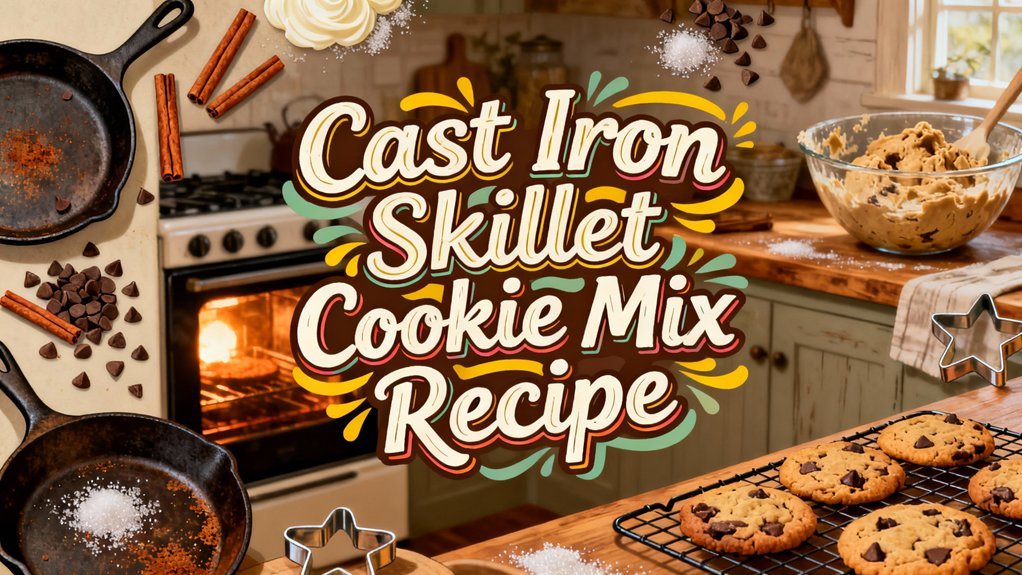
You’ll mix melted butter, both sugars, and an egg until blended, then gently fold in flour, baking soda, and salt before stirring in chocolate chips. Pour your dough into a preheated 10-12 inch cast iron skillet and bake at 350°F for 20-25 minutes until the edges turn golden and the center stays slightly jiggly. Let it rest five minutes, then serve warm with vanilla ice cream for that perfect gooey contrast. There’s so much more you can uncover about perfecting this bakery-rival dessert.
Ingredients You’ll Need
Before you start assembling your cast iron skillet cookie, you’ll want to gather the core dry ingredients that form the foundation of this dessert. You’ll need one to one and three-quarter cups of all-purpose flour, combined with one-third to one-half cup of granulated sugar and one-half to three-quarter cup of packed brown sugar for that chewy, caramelized depth.
Your ingredient sourcing matters here—reach for quality items that’ll shine in your finished cookie. Add one-half teaspoon of baking soda, one-half to one teaspoon of salt, and one large egg. When measuring techniques come into play, spoon flour into your measuring cup and level it off for accuracy. Brown sugar should be packed firmly. You’ll also want one stick of softened butter and three-quarter to ten ounces of chocolate chips. Using cast iron for baking promotes healthier cooking without Teflon and adds a small amount of iron to your diet. For the best results, make sure to use an 8-10 inch skillet that will accommodate the entire batch of batter evenly. Preheating your cast iron skillet in a 400-425°F oven for 10 minutes ensures even heat distribution throughout the baking process. These components create your base.
Step-by-Step Preparation
Now that you’ve gathered your ingredients, it’s time to transform them into a bubbling, golden-brown masterpiece. Start by melting your butter in the microwave for 45 seconds until it’s mostly liquid, then let it cool slightly.
Using proper mixing techniques, beat together your melted butter and both sugars until blended. Add your egg, egg yolk, and vanilla, stirring until fully combined. This creates a rich base that’ll give you incredible cookie texture. Make sure to keep a clear line of sight to your mixing bowl to monitor the consistency of your dough as it develops. Consider using a container with adequate depth to allow proper mixing and ingredient incorporation without spillage.
Gently fold in your flour, baking soda, and salt—don’t overmix here. Finally, stir in your chocolate chips, distributing them evenly throughout. Your dough’s now ready for the skillet, promising that perfect balance between crispy edges and a soft, chewy center. The even heat distribution of cast iron ensures your cookie bakes uniformly from edge to center. For best results, use approximately 4 generous tablespoons of dough to ensure the cookie bakes evenly and achieves that ideal center-to-edge ratio. To avoid surface damage, gently place your smooth-bottomed skillet on the oven rack rather than sliding it across surfaces. Press the dough into a cast iron skillet or oven-safe skillet to ensure optimal baking results and authentic presentation.
Baking Guidelines by Temperature
The magic happens in your oven, and the temperature you choose will determine whether you’re pulling out a gooey masterpiece or a crispy-edged dream. At 350°F, you’ll hit the sweet spot—golden edges with a soft, just-set center in about 20–25 minutes depending on skillet size. Want crispier edges? Bump it to 375°F, but watch your bottom doesn’t char in cast iron. If you’re using browned butter or extra sugar, dial back by 10–25°F to prevent overbrowning while preserving that gooey interior. Temperature adjustments matter when you’ve added extra eggs or liquid too—expect several additional minutes. The milk powder enhances both flavor and chewiness, which can affect how quickly your cookie sets and may require slight timing adjustments. Much like a simple Dutch oven dessert, cast iron cookware benefits from understanding how temperature impacts your final result. Proper heat retention ensures your skillet maintains consistent temperatures throughout the baking process for even results. Just as with cast iron pizzas baked at 475-500°F, cast iron’s thermal properties allow for superior crust development and even heat distribution. Like choosing the right Dutch oven capacity for your cooking needs, selecting the appropriate skillet size will impact your baking time and results. For best results, serve the skillet cookie warm with vanilla ice cream to enjoy the optimal texture contrast. Unlike infrared thermometers that measure radiation from objects, an oven thermometer directly measures internal air temperature to ensure accurate baking conditions. Trust your eyes: slightly jiggly center with lightly golden, pulling edges signals it’s time to pull it out.
Choosing the Right Skillet
Once you’ve nailed your baking temperature, the skillet itself becomes your secret weapon—and picking the right one will make or break your cookie game. For skillet sizes, you’ll want to land in that 10–12 inch range—it’s the Goldilocks zone that gives you enough surface area without overwhelming your oven. Smaller pans produce thicker, chewier centers, while larger ones risk uneven baking.
Surface materials matter just as much. Bare, seasoned cast iron builds nonstick magic over time and holds heat like a champ. Smooth, machine-finished surfaces beat rough ones for delicate doughs. Lodge has been manufacturing quality cast iron in the US since 1896, ensuring your skillet will last for generations. The dual handles for easy maneuvering make it simple to transfer your skillet between stovetop and oven without fumbling. Proper seasoning and maintenance techniques will keep your cast iron performing beautifully for years to come. Cast iron skillets are oven-safe up to high temperatures, making them perfect for finishing your cookies under the broiler if needed. The superior heat retention properties of cast iron ensure even browning and consistent results across your entire skillet. The transition from stovetop to oven allows you to start your cookies on the burner for even heating before transferring to the oven for perfect browning. To further extend the life of your investment, consider pairing your skillet storage with vacuum sealing bags to protect it from rust and moisture when not in use. If seasoning intimidates you, enameled cast iron skips that step entirely. Either way, you’re investing in consistent, beautifully browned cookies that’ll have everyone asking for your recipe.
Serving and Storage Tips
Your cast iron skillet cookie‘s moment of glory arrives the instant it emerges from the oven—that’s when you’ll want to serve it warm to catch the melted chocolate at its peak and savor that gooey center everyone craves. For serving techniques, slice into wedges or scoop portions family-style directly from the skillet. Top with vanilla ice cream to create that irresistible melting contrast. Enhance your presentation with cookie garnishes like flaky sea salt or toasted nuts for texture contrast. When handling portion sizing, allow a 5–10 minute rest before serving to prevent burns. The combination of brown sugar and egg yolks creates that perfect chewy texture that makes this dessert so satisfying. For leftover storage, keep wedges in an airtight container at room temperature up to two days, or refrigerate for four. Reheat briefly—just 5–15 seconds in the microwave restores that coveted gooey texture. After enjoying your skillet cookie, thoroughly dry and oil your cast iron to maintain its seasoning and prevent rust. A well-seasoned cast iron pan creates a protective layer that prevents rust and ensures your cookware remains safe and effective for cooking. To ensure long-term durability, consider applying multiple rounds of seasoning to build up a protective layer on your cookware. For stubborn spots, use coarse kosher salt as an abrasive to effectively remove any stuck-on residue from your skillet. Cast iron’s natural properties make it easy to clean and re-season, ensuring your skillet remains in perfect condition for future baking adventures. Store your skillet with separators to allow airflow, which helps preserve the cooking surface and prevents moisture buildup.
Creative Variations and Substitutions
While a classic cast iron skillet cookie‘s pure chocolate goodness never disappoints, you’ve got plenty of room to get creative and make it uniquely yours. Consider exploring different flavor combinations by browning your butter for a nutty richness or swapping in butterscotch chips alongside semi-sweet chocolate. If you’re craving texture, nut alternatives like macadamia or walnuts add satisfying crunch without overpowering the dessert. You can also elevate your creation with post-bake toppings—drizzle hot fudge while the cookie’s still warm, or broil marshmallows on top for s’mores magic. The cast iron skillet’s heat retention ensures your cookie continues to cook even after you remove it from the oven, so plan your timing accordingly. To prevent thermal shock and ensure even cooking throughout your skillet cookie, place the skillet in the oven as it preheats rather than transferring a cold pan into a hot oven. Just as charcoal placement is critical when baking with Dutch ovens over campfires, proper oven preparation ensures your skillet cookie cooks evenly and consistently. When adjusting heat during baking, remember that temperature control is essential to avoid burning the cookie’s edges while the center remains underbaked. For longer storage of leftover skillet cookies, consider using vacuum sealing techniques to maintain freshness and preserve flavor over extended periods. For extra decadence on special occasions, consider adding frosting and sprinkles to make your skillet cookie perfect for birthday celebrations. These tweaks transform your skillet cookie from simple to spectacular, letting your personal preferences shine through each warm, indulgent bite.