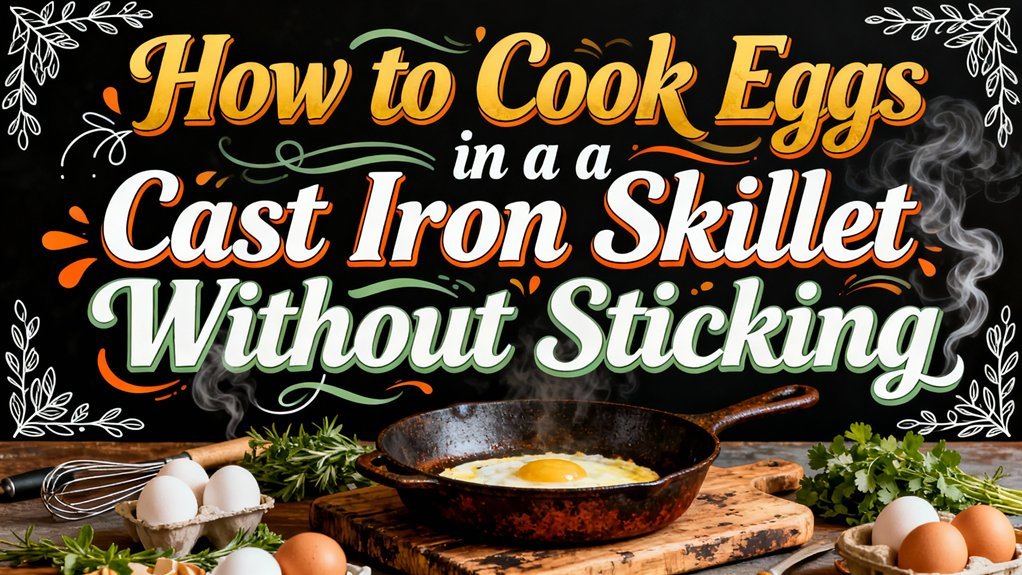
You’ll prevent sticking by preheating your 10.25-inch skillet on medium-low for five minutes until water droplets dance on the surface. Use at least two tablespoons of clarified butter, ghee, or lard—these fats outperform regular butter’s water content. Guarantee your seasoning’s well-maintained through consistent cleaning and light oil coating after each use. Crack eggs into a ramekin first, then let them sit undisturbed for 45-90 seconds before flipping. Master these fundamentals, and you’ll uncover why technique timing matters more than you’d expect.
Preheat and Heat Control
Getting your cast iron skillet to the right temperature is essential before you add any eggs. Start by heating your 10.25-inch skillet on medium-low for five minutes, then gradually increase heat while prepping your eggs. You’ll know you’ve reached the proper temperature when water droplets dance across the surface—this indicates ideal conditions for cooking. Cast iron’s superior heat retention means you can achieve excellent results even at lower temperatures than you might expect.
Make strategic heat adjustments once you add eggs. Lower the heat immediately after cracking them into the pan to prevent sticking and guarantee even cooking. Let eggs sit until they release naturally before flipping, typically after one to two minutes on the first side. Avoid overheating the skillet to ensure even heat distribution throughout the cooking process. Cooking at low to medium heat prevents the eggs from sticking to your seasoned surface. Using a fitted lid can help trap moisture and heat for more consistent results. For longer storage of leftover cooked eggs, consider using vacuum sealer bags to maintain freshness and prevent freezer burn.
Test for temperature precision by observing how quickly your egg yolk turns white. A slow whitening suggests perfect heat; rapid whitening means your skillet’s too hot. Remove it from heat temporarily if needed to cool before continuing. Just as steak requires resting after cooking to allow juices to redistribute, eggs benefit from a brief rest off the heat to achieve optimal texture.
Fat Type and Amount
The fat you choose for cooking eggs in cast iron dramatically affects both texture and flavor—and it’ll determine whether your eggs slide effortlessly from the pan or stick stubbornly to the surface. Butter offers rich browning but contains water that causes sputtering; clarified butter eliminates this issue. Neutral oils and rendered animal fats provide superior nonstick performance without burning. Consider butter alternatives like ghee or lard for enhanced stability. For cast iron omelets, the folded method ensures your fillings stay contained while the fat distributes evenly across the skillet’s surface. Rendered fats like lard and tallow create the most durable and effective seasoning layers, making them particularly valuable for maintaining your pan’s nonstick surface over time.
Fat ratios depend on your method: use 1–2 teaspoons for fried eggs, 1–2 tablespoons for scrambled or omelettes. The key is matching fat viscosity to your pan’s seasoning level. Higher water content fats require lower heat; pure fats withstand moderate temperatures without polymerizing. Blend butter with neutral oil to balance flavor and smoke point for reliable results.
Pan Seasoning and Maintenance
Why does cast iron’s nonstick performance improve over time? You’re building seasoning layers with each use. After cooking eggs, you’ll clean your skillet with warm soapy water and coarse salt, then dry it thoroughly at 200 degrees Fahrenheit for 10-15 minutes. Apply a light oil coating to the entire pan, including the underside, while it’s still warm. This protection prevents rust and strengthens your nonstick surface. Your maintenance tips should include regular cooking, which naturally adds seasoning layers, and avoiding prolonged moisture exposure. Even minor scouring damage repairs itself through continued use and oil buildup. Store your properly seasoned skillet with a light coating of oil, and you’ll develop a superior nonstick finish that improves across generations of use. For optimal results, heat the pan after cooking before applying oil for better adherence to the surface. Consistent seasoning maintenance ensures your cast iron remains durable and can be passed down through generations with proper care.
Technique and Timing
Once you’ve mastered pan seasoning, success with cast iron eggs hinges on three interconnected elements: heat management, fat application, and egg handling.
Preheat over medium-low for 2–5 minutes, verifying temperature by observing fat shimmer or foam. Crack eggs into a ramekin first for controlled egg pouring, then add them to a single pan spot. Let them set 45–90 seconds without moving so proteins naturally release.
For fried eggs, wait until edges lift before flipping—premature flips cause sticking. For scrambled eggs, allow an initial bottom film to form, then use gentle folding to create larger curds and minimize iron contact. Cooking in cast iron helps preserve egg yolk integrity and ensures cooking consistency through even heat distribution. Using an appropriate fat such as butter or oil further reduces sticking and improves overall egg release.
Remove eggs promptly; residual cast iron heat continues cooking and causes drying. Timing varies by skillet and burner, so record empirical seconds for consistent results.
Equipment and Size Considerations
Mastering heat management and fat application demands you pair your technique with the right equipment—and skillet size matters more than you’d think. Your skillet selection directly impacts cooking capacity and egg quality.
For single or few eggs, an 8-inch x 8-inch pan optimizes heat distribution and prevents excess oil pooling. A 9.5-inch skillet handles standard portions efficiently, while the 10.25-inch cast iron accommodates multiple eggs without crowding. Scaling your pan size to egg quantity prevents uneven cooking and maintains consistent heat.
Beyond dimensions, prioritize a smooth-cast surface over rough textures—essential for preventing sticking. A properly seasoned skillet builds natural non-stick properties through repeated oil layering at 350°F. Consider metal or bamboo utensils and a heat-resistant handle to protect your grip during cooking. The cast iron’s ability to retain and evenly distribute heat ensures consistent cooking results regardless of your stovetop type.
Troubleshooting Common Sticking Issues
Even with proper technique, you’ll encounter sticking if you’re not addressing the root causes—and they’re almost always preventable. Start by evaluating your skillet’s seasoning—a smooth polymerized oil layer prevents adhesion, while porous surfaces trap egg proteins. The seasoning process restores this protective layer by applying oil and heating it to create a hard, slick, blackened surface resistant to sticking. Next, examine your heat management. Medium-low temperatures are ideal; cast iron retains heat efficiently, so you don’t need high settings. Ascertain you’re preheating for 4-5 minutes and coating the entire bottom with adequate fat—at least 2 tablespoons of butter, oil, or bacon grease creates a barrier between eggs and pan. For egg preparation, wait until fat simmers evenly before adding eggs. Selecting butter and bacon fat as your primary lubricants will enhance your non-stick results compared to alternatives. Allowing eggs to cook undisturbed without constant movement lets the whites set properly and reduces sticking contact with the skillet surface. Creating a hot and humid environment in your cast iron by covering the pan with a lid during cooking helps set the egg whites more evenly and reduces sticking. If you’re using cast iron on a glass top stove, ensure your skillet has a smooth bottom surface to prevent scratching the cooktop. Just as precision tools like kitchen torches allow for controlled heat application in specialized cooking techniques, mastering heat control with your cast iron skillet takes practice and attention to detail. For those seeking to expand their cast iron cooking repertoire beyond savory dishes, Dutch oven desserts offer excellent opportunities to master heat control in outdoor settings. Finally, scrape stuck bits immediately while the pan’s warm using chainmail scrubbers or salt, preserving your seasoning layer and maintaining long-term stick prevention performance.
Choosing the Right Cooking Method
There’s no single “best” way to cook eggs in cast iron—success depends on matching your technique to your pan’s condition and your desired outcome.
Different egg types and cooking styles demand adjusted approaches. Fried eggs require medium-low heat with 2-4 tablespoons of butter or bacon grease for proper release. Scrambled eggs benefit from gentle, periodic stirring after the initial one-minute set, allowing the underside to firm before movement. Omelets need consistent heat control to prevent sticking during folding.
Your pan’s seasoning heavily influences method selection. Well-seasoned cast iron handles various techniques effectively, while newly stripped and re-seasoned pans perform most efficiently with adequate fat and patient cooking. Polymerization of the oil during the seasoning process creates the protective layer that enables reliable non-stick performance. A regular seasoning regimen maintains the protective layer that prevents sticking over time. Before storage, ensure your skillet is dried thoroughly to prevent rust and maintain the seasoning integrity. For restoration purposes, electrolysis tanks can remove all rust and buildup that compromises your pan’s cooking surface. Unlike glass lids that have temperature limitations typically maxing around 400°F, cast iron can withstand much higher heat for various cooking applications. To achieve superior results, consider preheating your skillet to ensure even heat distribution before adding your eggs. Regardless of your chosen style, maintain medium-low heat throughout, avoid premature stirring, and prioritize plenty of fat—these fundamentals transcend cooking method distinctions.
Best Practices for Long-Term Cast Iron Care
Once you’ve perfected your cooking technique, protecting your investment becomes equally important—your cast iron’s longevity depends on consistent maintenance habits that preserve seasoning and prevent rust.
After each use, dry your skillet immediately and apply a thin coat of high-smoke-point seasoning oils like grapeseed, vegetable, or canola. Store your pan in a dry location with proper airflow to inhibit moisture contact. Periodically perform oven seasoning cycles at 450–500°F when the surface dulls or sticking occurs, restoring that hard, nonstick patina. Allow the cast iron skillet to cool completely before cleaning to prevent warping and damage to the seasoning layer. For best results, use a soft sponge or nylon pad when cleaning with warm, soapy water to maintain the seasoning.
For rust prevention, avoid prolonged acidic food storage and never put it in the dishwasher. Remove surface rust with steel wool, then re-season promptly. When dealing with stubborn burnt residue, use gentle abrasives like kosher salt or baking soda to scrub off burnt areas without compromising the seasoning. Building the skillet’s seasoning through regular use and proper maintenance ensures long-lasting performance. These straightforward practices—consistent oiling, proper drying, and periodic maintenance—ensure your skillet remains reliable for decades of egg cooking and beyond. You can also use your cast iron for indoor cooking projects like baking desserts indoors to build seasoning through regular use.