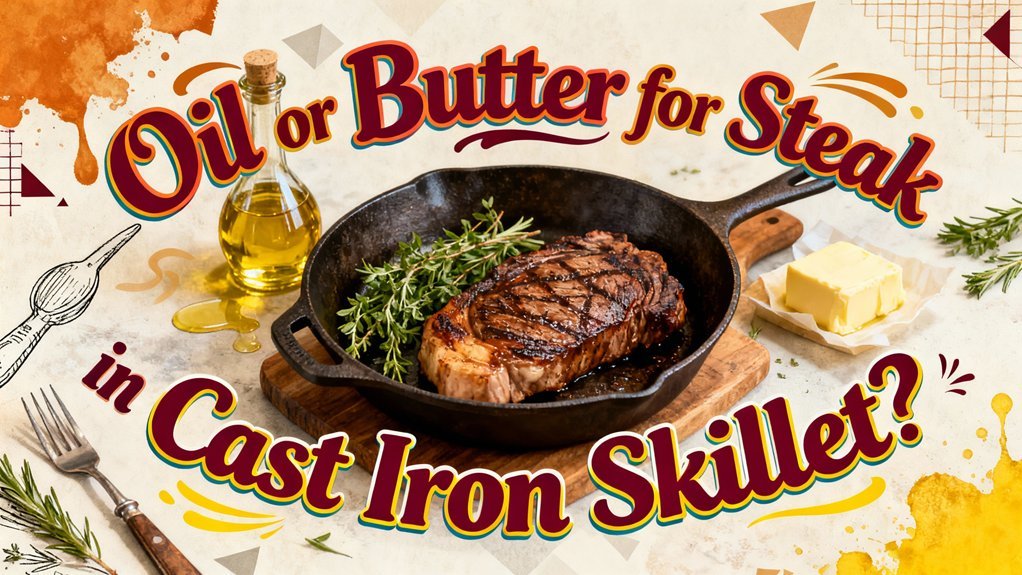
You’ll get the best sear on your cast iron steak by using oil first, then finishing with butter. Oil’s higher smoke point—around 450–520°F depending on the type—handles the intense initial heat without breaking down. Add butter during the final 1–3 minutes when your steak reaches 20–30°F below target doneness. This approach gives you a perfect crust while avoiding burnt milk solids. The combination delivers both flavor and technique mastery.
Understanding Smoke Points
The smoke point—that critical temperature where fat breaks down and produces visible smoke—is your guide to choosing between oil and butter for searing steak. When you exceed this threshold, fats split into free fatty acids and glycerol, generating harmful chemical byproducts and an acrid burnt taste that ruins your meat.
Understanding heat tolerance matters because different fats perform differently. Regular butter’s 350°F limit restricts its use for high-heat searing, while clarified butter reaches 450–485°F, making it ideal for cast iron cooking. Oils like avocado oil hit 520°F, offering superior heat tolerance for aggressive searing. Animal fats provide high smoke points that rival or exceed refined oils, making them excellent alternatives for achieving a perfect sear. Storage conditions and oxidation can impact how quickly butter breaks down, so fresh, well-wrapped butter retains better cooking properties for consistent results. For those without clarified butter readily available, adding a small amount of olive oil to regular butter can reduce smoking during the initial searing phase.
You’ll recognize the shift when your cooking fat moves from shimmering to actively smoking. By selecting fats with appropriate smoke points for your desired cooking temperature, you preserve both flavor and nutritional integrity while achieving that perfect crust on your steak.
When to Add Butter for Best Results
Now that you’ve selected a fat with sufficient heat tolerance, timing becomes your leverage for capturing butter’s rich, nutty flavors without sacrificing your steak’s crust. Add butter during the final 1–3 minutes of cooking, when your steak is 20–30°F below target doneness. This timing prevents milk solids from burning while allowing controlled browning. For thin-to-medium steaks on very hot cast iron, delay addition until the final 30–90 seconds. Thicker steaks benefit from earlier butter timing since moderate heat browns butter more gradually. Once added, employ proper basting techniques: tilt the skillet and continuously spoon hot butter over the steak’s surface. Add aromatics like garlic or thyme to amplify flavor. The Maillard reaction requires that you maintain a smoking hot pan throughout the entire cooking process to build the golden brown crust essential for perfect steak. The herb and garlic butter baste should be applied in the final moments of searing for maximum flavor impact without burning the delicate aromatics. After resting your steak post-cooking, the internal temperature will continue to rise by approximately 10°F during rest, ensuring optimal doneness and juiciness. Stop basting upon reaching target temperature and rest your steak immediately.
Choosing the Right Oil
Because you’re searing steak at temperatures between 400–500°F, you’ll need an oil with a smoke point that matches or exceeds your pan’s heat. Refined oils like avocado, canola, and peanut excel for high heat cooking, offering smoke points around 450–500°F without breaking down or producing bitter flavors.
Your oil selection should balance smoke point with flavor balance. Neutral refined oils let your steak’s crust and beef flavor dominate, while oils with distinct profiles impart competing tastes. Lower-viscosity refined oils spread evenly across cast iron, promoting consistent browning. Heating oil to its smoke point triggers polymerization, which bonds the oil to your pan and enhances the cooking surface. Peanut oil’s high smoke point makes it particularly suitable for the intense searing temperatures required for steak development.
Avoid extra-virgin olive oil for hot searing—its 375°F smoke point causes smoking and degradation. Reserve it for finishing. Choose refined options that withstand your target temperature while supporting ideal crust development.
Preparing Your Cast Iron Skillet
Before you sear your steak, you’ll need to properly prepare your cast iron skillet to confirm even heat distribution and ideal crust development. Start by cleaning your skillet with warm, soapy water and a cloth, then dry it completely by hand to prevent rust. Avoid abrasive metal sponges that strip away your skillet seasoning.
Next, apply a thin, even layer of oil using a lint-free cotton rag or paper towel. Wipe away excess to prevent sticky buildup. Your skillet seasoning improves through proper cooking techniques—the more you cook with oil, the better your non-stick surface becomes. Frequent cooking with oil adds layers to your seasoning, creating a more durable and effective natural finish over time. For optimal results, use Crisco shortening as your seasoning medium to achieve a smooth, black patina. After each seasoning application, allow your skillet to cool inside the oven to properly cure the oil layer. If you prefer to minimize smoke during cooking, consider using alternative cookware such as non-stick or stainless steel pans as an option.
Preheat your skillet over medium-high heat for several minutes until it’s smoking slightly. This confirms proper temperature for searing and helps you achieve that perfect, flavorful crust on your steak through the Maillard reaction, which creates the savory browning that makes cast iron an ideal choice for steak preparation. For accurate temperature verification, consider using an infrared thermometer to ensure your skillet reaches the optimal heat level before cooking.
Achieving the Perfect Crust
With your skillet properly heated and seasoned, you’re ready to focus on what transforms a good steak into an exceptional one: the crust. Press your steak firmly onto the hot pan surface, ensuring complete contact for even browning. Don’t move it—sear for 1-3 minutes per side, allowing the crust to develop undisturbed. Your steak thickness of 1.5 inches provides the ideal window for this process.
The scoring technique you’ve applied creates micro-channels that enhance crust formation and allow seasonings to penetrate deeper. After flipping, hold the steak upright with tongs to brown the fat cap thoroughly. Once both sides develop that coveted golden-brown exterior, baste generously with butter. For thick steaks, you may need additional cooking time of 2 minutes per side to ensure the interior reaches your desired doneness. Use an instant-read thermometer to verify you’ve achieved the exact doneness level you’re aiming for. Use extra-virgin olive oil to brush the steak before seasoning, which helps create an even more flavorful crust. Selecting a skillet with superior even heat distribution ensures that every section of your steak receives consistent, high-temperature exposure for an uniformly golden crust. The cast iron’s heat retention properties allow you to maintain consistent high temperatures throughout the searing process, preventing temperature drops that would compromise your crust development. Choosing the right cut of steak with good marbling ensures the fat renders properly during searing, contributing additional flavor to your crust. This final step locks in moisture while adding richness to your crust, delivering the restaurant-quality result you’re pursuing.
Flavor Outcomes Across Methods
The fat you choose doesn’t just conduct heat—it fundamentally shapes your steak’s final flavor profile through its interaction with the meat’s proteins and sugars during searing. Different fat types deliver distinct outcomes. Neutral oils like avocado produce cleaner flavor profiles, allowing beef’s natural character to dominate. Clarified butter and tallow preserve buttery and beefy notes respectively without burnt-dairy off-flavors. Whole butter adds richness through milk solids but risks carbonization at high temperatures, potentially masking desirable Maillard complexity. Aromatic fats like bacon grease layer secondary flavors that can overshadow your steak’s inherent profile. Your finishing choice matters equally: butter-basting increases perceived richness through surface coating, while oil maintains juiciness with a leaner-tasting result. Rice bran oil offers a high smoke point of 490°F, making it an excellent alternative for searing without compromising the steak’s natural beef flavors. For maximum searing performance, preheat cast iron to 500-600°F to achieve optimal crust development before adding your chosen fat. During the final stage, basting with butter and herbs on the stovetop enhances the steak’s depth while maintaining its flavorful crust. Cast iron’s remarkable heat retention and performance characteristics make it ideal for achieving consistent results, much like how Le Creuset Dutch Ovens excel at maintaining precise temperatures for various cooking methods. The skillet’s superior heat retention and even distribution create the charred exterior and texture that define quality seared meat. Traditional fats like lard’s durability and rendered pig fat have long been valued by cooks for building robust seasoning layers that withstand repeated high-heat cooking. Match your fat type to your desired flavor outcome.
Oil Versus Butter: The Final Comparison
When you’re searing a steak on cast iron, you’re balancing two competing priorities: achieving a reliable, flavorful crust while preserving the fat’s integrity under extreme heat. Oil wins functionally—its higher smoke point handles cooking temperatures without breakdown, delivering consistent Maillard browning. Butter loses as your primary searing fat; milk solids burn quickly on cast iron’s intense surface, producing bitter off-flavors and excessive smoke.
Your ideal strategy combines both. Use a neutral high-smoke oil for the initial sear, then finish with butter basting at lower cooking temperatures. This approach captures oil’s heat-transfer reliability while revealing butter’s rich flavor profiles without combustion risk. Tilting the pan to collect melted butter and spooning it over the steak ensures even heat distribution throughout the cooking process. Cast iron’s exceptional heat retention properties mean the temperature remains consistent even as you adjust your basting technique. Proper seasoning techniques will maintain your pan’s non-stick surface and enhance its cooking performance over time. Avocado oil’s exceptional 520-degree smoke point makes it an excellent choice for the initial searing phase. You’ll achieve superior crust formation, cleaner kitchen air, and authentic butter taste—without compromise.