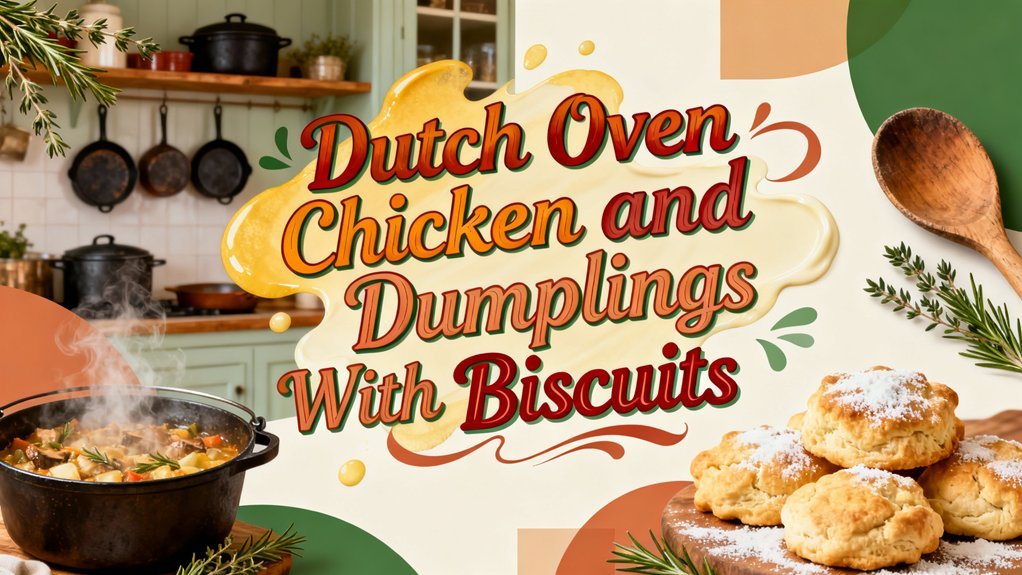
You’ll sear golden chicken in your Dutch oven, sauté aromatic vegetables until translucent, then simmer everything in rich broth before topping with fluffy biscuits. The magic happens when you transfer it to a 350°F oven, letting tender chicken, caramelized onions, and savory carrots meld together while those biscuits turn golden-brown and crispy on top. This one-pot wonder comes together in under two hours, delivering that soul-satisfying comfort you crave. There’s much more technique waiting to transform your dish from good to extraordinary.
Ingredients You’ll Need
Before you heat your Dutch oven, gather your proteins, liquids, and aromatics—the foundation of a deeply satisfying chicken and dumplings. You’ll want boneless chicken breasts or bone-in pieces for richer flavor; about 1–1.5 pounds yields four servings. Pour in four cups of chicken broth, your primary liquid base. Build your vegetable ratios with one onion, two to three carrots, and two to four celery stalks, diced uniformly for even cooking. Add garlic cloves and fresh thyme for aromatic depth.
Use butter or olive oil to sauté your aromatics until softened. The Dutch oven’s tight-fitting lid will help retain moisture as your vegetables release their flavors during this initial cooking stage. For dumplings, choose store-bought refrigerated biscuits or prepare from-scratch drop dumplings using flour, baking powder, and buttermilk. This approach simplifies the cooking process by avoiding complicated steps like making dough from scratch. If you’re making biscuits ahead of time, consider using vacuum sealing techniques to preserve their freshness until you’re ready to cook. This recipe serves 4 people and can be doubled easily for larger gatherings. Season thoughtfully with salt and poultry seasoning, adjusting for your broth type’s sodium content. These preparation tips guarantee balanced nutritional values and ideal texture throughout your dish.
Equipment & Vessel Setup
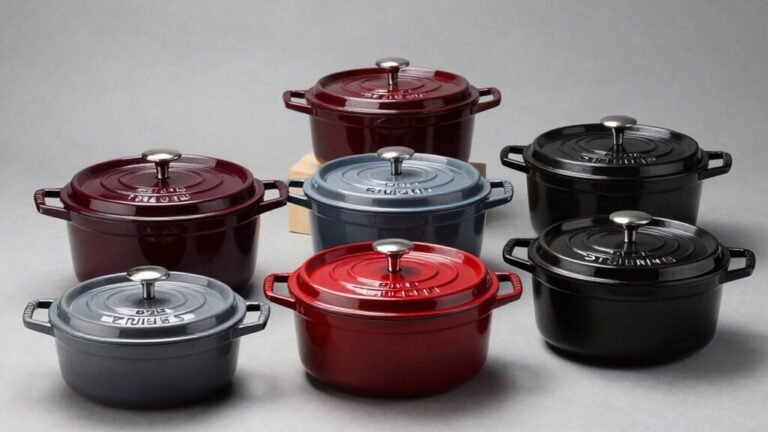
With your ingredients prepped and ready, the Dutch oven you’ll choose makes all the difference—it’s the vessel that’ll transform simple components into a cohesive, steaming bowl of comfort. For vessel selection, opt for a 4.5–6 quart enameled cast iron to balance even heating with easy cleanup. Its tight-fitting lid traps steam, ensuring dumplings rise perfectly without drying. The tight-fitting lid is essential because it prevents moisture loss during the critical 10–15 minute steaming period, which is when your dumplings achieve their ideal fluffy texture.
Your heat source strategy matters equally. Start on medium-high stovetop heat to bring the broth to a gentle simmer—never a rolling boil, which’ll shred your dumplings. Once simmering, you can transfer to a 350°F oven for steady, consistent cooking. Leave at least 1–2 inches of headspace for dumplings to expand. Cover immediately after adding them, resisting the urge to peek for 10–15 minutes. Measuring cups and a chef’s knife will help you portion your 7 basic ingredients with precision before they enter the Dutch oven.
Step-by-Step Cooking Instructions
Start by arranging your prepped ingredients within arm’s reach of your Dutch oven—chicken pieces, diced aromatics, measured broth, and dairy all positioned for quick assembly. Heat your pot over medium-high heat, then sear chicken in batches until golden, developing rich Maillard flavors without cooking through completely. Remove and set aside. In the remaining fat, sauté onions, celery, and carrots for 4–6 minutes until translucent and fragrant. Deglaze with broth, scraping up caramelized bits for flavor enhancement. Return chicken, add full broth measurement, and bring to a gentle simmer. This simmering technique—maintained at 15–20 minutes—melds flavors while tenderizing vegetables. For camping convenience, consider prepping ingredients at home to streamline the cooking process outdoors. After simmering, allowing the chicken to rest briefly before shredding will help retain its juices and tenderness. Add dairy carefully near the end to prevent curdling, then drop dumplings onto the simmering surface and cover tightly. The key to achieving fluffy dumplings is to avoid over-mixing the flour when combining your dumpling ingredients. For additional depth of flavor, you can deglaze with balsamic vinegar or incorporate tomato paste into your broth. Dutch ovens are incredibly versatile for cast iron cooking, making them perfect for preparing both savory meals like this and sweet treats at your campsite. When storing any leftovers, keep them refrigerated at proper cold temperatures to ensure food safety and maintain quality for several days.
Tips for Perfect Dumpling Texture
Since dumplings are fundamentally a balance of wrapper and filling, you’ll want to treat both components with equal care to achieve that ideal tender bite. Keep your filling consistency paste-like by mixing vigorously while chilled—this prevents fat from separating and guarantees juiciness throughout cooking. Squeeze excess moisture from vegetables thoroughly; soggy filling compromises texture and wrapper integrity. Test your filling consistency by pan-frying a small sample before committing to assembly. Choose wrapper thickness appropriate for your cooking method: thinner for steaming, slightly thicker for boiling. Seal edges firmly with proper pleating to maintain structural strength. Avoid overfilling, which stresses seams and disrupts the delicate balance between dough and filling. For enhanced moisture and juiciness, incorporate unflavored gelatin in seasoned broth into your filling, which will melt during cooking to keep the interior succulent. Tapioca starch is recommended to retain moisture and prevent liquid pooling during the cooking process. Just as cast iron requires proper oil polymerization to build a durable non-stick surface, your dumpling wrapper needs consistent heat and moisture management to develop optimal texture. Building a creamy base with flour and liquid will help achieve the richness and cohesion found in traditional one-pot meals. Similar to how glass must be gradually cooled to avoid cracking after heating, dumplings benefit from careful temperature management throughout their cooking and resting process. For best results, prepare your dumplings ahead of time and store them in the refrigerator or freezer, as proper oxygen removal during storage can extend their shelf life significantly. These careful steps yield dumplings with consistently tender, cohesive texture.
Nutritional Information & Serving Sizes
Understanding portion sizes helps you plan satisfying meals while managing nutritional intake. A standard adult serving delivers 1 to 1.5 cups of steaming stew paired with 1–2 biscuits, yielding approximately 280–630 calories depending on your recipe’s richness. You’ll consume 14–32 grams of protein, 30–63 grams of carbohydrates, and 17–28 grams of fat per bowl.
Our nutrient analysis reveals sodium content often reaches 830–2,000 milligrams per serving when using canned soups and store-bought biscuits. Cholesterol ranges from 40–74 milligrams, while fiber typically stays modest at 1–3 grams unless you incorporate vegetables or whole-grain alternatives. For those seeking nutritional balance, consider that cream of chicken soup significantly contributes to the overall sodium and fat profile of this dish. Individual dietary needs may vary significantly, so consulting a healthcare provider ensures you select portion sizes aligned with your personal nutritional requirements.
Children under ten benefit from reduced portion recommendations of 3/4 cup stew with one small biscuit piece, proportionally lowering sodium and calorie exposure while maintaining satisfaction.
Storage & Make-Ahead Strategies
For leftover storage, keep your dish in airtight containers for three to four days. Separate biscuits from soup to preserve their crispness. The freezer benefits shine when you portion soup into single servings, storing it up to six months. Freeze bags flat for convenient thawing. For optimal results, label your containers with freezing dates to track storage duration. Consider using vacuum seal bags to maximize freshness and prevent freezer burn during extended storage. Look for bags with strong, secure seals to ensure your frozen portions remain protected from air exposure and quality degradation. When vacuum sealing your portions, ensure you remove air completely from the bags before freezing to maintain optimal food quality.
Prepare components strategically: make your chicken soup mixture days ahead, refrigerating it separately from dumplings. Assemble raw dumplings on parchment paper, cover loosely, and refrigerate until cooking. Mix dumpling dough just before adding to your simmering stew for ideal fluffiness. A glass lid allows you to monitor your simmering stew without releasing heat or moisture during the cooking process. Leftovers improve in taste after sitting in the fridge, allowing flavors to meld beautifully. When reheating, warm dumplings separately before combining with hot soup to prevent spongy textures and preserve their tender bite.
Troubleshooting Common Issues
When your Dutch oven chicken and dumplings doesn’t turn out quite right, a few common missteps are usually to blame. Tough, dense dumpling textures often result from boiling too vigorously—use a gentle simmer instead. Overworking the dough develops gluten, creating chewy dumplings; mix until ingredients barely combine. If dumplings fall apart, you’re likely adding them to rolling liquid; they need a calm simmer. For broth consistency, simmer longer with bones to build body, or reserve cooking liquid before adding dumplings, which absorb liquid and thin the dish. Avoid oversalting broths, which weakens dough structure. Pre-cook chicken thoroughly to ~165°F, ensuring tender, safe meat throughout. To verify doneness accurately, use a cooking thermometer that has been tested for accuracy. Monitor doneness closely and resist excessive stirring—cover your pot instead, but remember to uncover the pot after adding dumplings to allow moisture to escape and prevent them from becoming gooey. If your broth lacks richness and depth, homemade chicken stock made from bones and aromatics will significantly enhance the overall flavor compared to boxed alternatives. Similar to how cast iron cookware requires proper seasoning and maintenance to prevent rust and ensure longevity, your Dutch oven benefits from proper seasoning practices that protect its cooking surface and enhance non-stick properties. When resealing your Dutch oven for storage, consider using vacuum-sealed containers to preserve the dish’s freshness and prevent freezer burn. Similar to how achieving a caramelized sugar topping requires careful attention to heat and timing in crème brûlée, mastering the precise cooking technique for dumplings demands patience and close monitoring throughout the process.