You’ll achieve restaurant-quality caramelization by preheating your cast iron skillet to 350–425°F and using high smoke point oils like avocado or grapeseed. Cut vegetables uniformly for consistent cooking—dense roots need 20–40 minutes, while delicate items require just 5–12 minutes. Employ two-zone cooking by positioning vegetables at cooler pan edges to prevent steaming and encourage Maillard browning. Season immediately with flaky salt, cracked pepper, and citrus zest. Uncover how strategic plating and finishing techniques elevate your presentation beyond simple roasted sides.
Selecting and Preparing Your Vegetables
Since you’ll want even caramelization and consistent cooking times, you’ll need to cut your vegetables into uniformly sized pieces before they hit the skillet. Start with vegetable selection based on seasonal variety—winter calls for carrots, parsnips, and Brussels sprouts, while summer favors eggplant, zucchini, and bell peppers.
Cube sweet potatoes and butternut squash into half-inch pieces. Dice tomatoes, mince garlic, and halve mushrooms. Chop broccoli and carrots into uniform cubes. Clean all vegetables thoroughly before cutting to remove soil and debris. Root vegetables like beets and ginger are grounding and hearty options that work well in skillet roasting.
Select vegetables in prime condition to maximize natural sugar caramelization. Fresh, seasonal produce delivers superior flavor and texture. A well-seasoned cast iron skillet retains heat during the roasting process, ensuring even cooking throughout all your vegetable pieces. Prepare your vegetables while your cast iron skillet heats, ensuring efficiency and peak cooking results when you begin the roasting process.
Essential Equipment and Heat Management
With your vegetables uniformly cut and ready, you’ll now need to master the equipment and heat dynamics that determine whether you achieve deep caramelization or uneven browning.
Equipment selection starts with matching your skillet diameter to burner size, eliminating cool rim zones and center overheating. For oversized pans, use dual burners set identically or deploy a heat diffuser to combat extreme hotspots. Cast iron’s high heat capacity means it requires more energy to reach temperature but retains substantial thermal energy once heated, making it excellent for achieving consistent browning results. Like the one-pan ground beef meals featured in traditional skillet cooking, cast iron’s thermal properties make it ideal for stovetop preparation of vegetables requiring even heat distribution. Consider that proper dough expansion space, a principle similar to how cast iron accommodates ingredients, is equally important for even heat distribution in cookware. The skillet’s ability to evenly distribute heat creates superior browning on vegetables comparable to the sear achieved on steaks. A fitted lid can help retain moisture during the final cooking stages, ensuring vegetables finish tender while maintaining their caramelized exterior. After each use, maintain your skillet by washing with minimal soap, drying thoroughly, and applying a thin layer of oil to preserve its seasoning.
Heat control requires gradual preheating over 5–10 minutes at low–medium temperatures, allowing cast iron’s high heat capacity to reach thermal equilibrium before adding vegetables. Reduce to medium–low after initial searing to prevent scorching while interiors soften. On induction cooktops, lower settings sooner since these platforms deliver heat rapidly. Rotate your pan every few minutes to redistribute uneven exposure, particularly over inconsistent stovetops. Use a water test to verify your pan has reached proper temperature before introducing vegetables, ensuring even cooking results.
Oil, Seasoning, and Flavor Building
Once your cast iron reaches thermal equilibrium, you’ll need to select an oil that won’t break down under roasting temperatures while preserving your vegetables’ natural flavors. Canola oil’s 400°F smoke point makes it ideal for stovetop roasting, offering neutral flavor that won’t overpower delicate vegetable tastes. Grapeseed oil provides similar heat tolerance with a light profile, preventing flavor interference while building seasoning layers.
Before adding vegetables, coat your skillet with a thin oil layer. This accomplishes dual purposes: preventing sticking and depositing polymerized seasoning layers through repeated high-heat exposure. Sunflower oil works equally well, delivering high polyunsaturated fat content that bonds effectively during roasting. Among the most reliable options, avocado oil reaches 520°F and offers superior performance for extended high-heat roasting without degradation. The polymerization process bonds oil to the pan when heating reaches the smoke point, enhancing the cooking surface and non-stick quality. When using cast iron on glass top stoves, ensure your skillet has a smooth bottom and is gently placed rather than slid to prevent surface damage. High smoke point oils are essential for maintaining the durability and non-stick quality of your cast iron through multiple cooking sessions. Regular use and proper maintenance help build and preserve the skillet’s seasoning over time. Proper oil selection also contributes to the overall durability of your cookware investment. Using an instant read thermometer can help you verify that your roasted vegetables have reached optimal doneness and food safety temperatures. Each cooking cycle strengthens your cast iron’s non-stick properties while maintaining vegetable flavor integrity through proper oil selection and application.
Stovetop Roasting Techniques
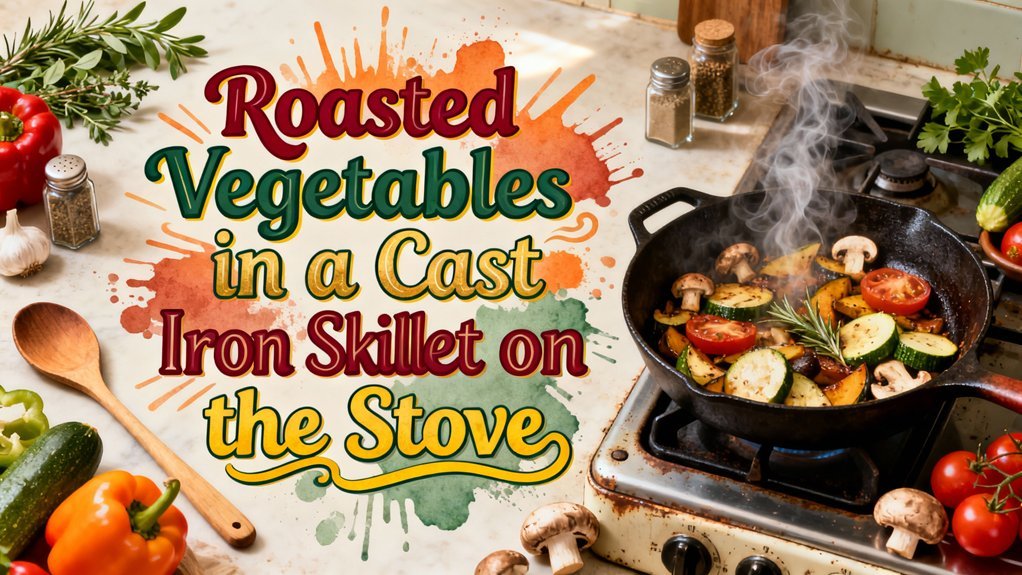
Achieving properly roasted vegetables in cast iron demands careful attention to heat management and pan preparation, as your skillet’s thermal properties will either enhance or undermine browning quality. Preheat your skillet over medium heat for several minutes, targeting 350–425°F using an infrared thermometer to eliminate cold spots. Once you’ve added oiled vegetables, reduce burner heat to medium or medium-low since cast iron retains heat aggressively and’ll burn food otherwise. Employ the two-zone cooking techniques by positioning vegetables toward the pan’s cooler edges when you need to balance searing with internal doneness. Keep your batch to a single layer—crowding triggers steaming rather than Maillard browning. Use frequent turning with metal spatulas to expose all surfaces evenly during stovetop roasting. Similar to coffee bean roasting, consistent stirring ensures even heat distribution and prevents burnt spots on your vegetables. Cast iron skillets excel at high heat cooking, which is essential for preventing sticking and achieving optimal browning results on your roasted vegetables. For added protection during extended cooking, consider using a cotton yarn handle cover to prevent burns when handling your hot skillet. Proper storage of your finished roasted vegetables in airtight containers will help maintain their freshness and quality.
Cooking Times by Vegetable Density
Three primary factors—vegetable density, cut size, and pan temperature—determine how long your cast iron roasting’ll take from raw to properly caramelized. Dense, starch-rich roots like potatoes and beets require 20–40 minutes when cut small on medium-high heat. Medium-density vegetables such as carrots and parsnips reach doneness in 15–25 minutes, while low-density, high-water items like zucchini finish in 5–12 minutes. Leafy vegetables cook fastest—often 5–12 minutes total. These cooking durations vary considerably based on texture variations you’re targeting. Uniform sizing accelerates even heat penetration; variance in piece size extends cooking by 10–30 minutes. To achieve optimal caramelization, avoid covering your vegetables during the cooking process to prevent steaming. A well-seasoned cast iron skillet with a natural non-stick surface will help prevent sticking and promote even browning throughout the cooking process. Cast iron skillets distribute heat evenly across the cooking surface, making them ideal for achieving consistent results. For longer-term food storage of your roasted vegetables, consider using vacuum sealer bags to preserve freshness and prevent freezer burn. After cooking, maintain your skillet by thoroughly drying it with a towel and applying a thin layer of oil to prevent rust and preserve its seasoning. Like the puffing action that occurs in oven-baked pancakes, proper cast iron cooking requires maintaining consistent heat without interruption to achieve the best results. For mixed batches, stage cooking by density: begin with dense roots, add medium vegetables next, finish with quick-cooking items to align overall doneness. Chef William Dissen recommends introducing vegetables in stages, starting with harder root vegetables like beets and turnips before adding peppers and green beans to ensure every ingredient reaches optimal caramelization simultaneously.
Deglazing and Creating Pan Sauces
After you’ve removed your roasted vegetables from the skillet, you’ll find a layer of caramelized fond—those browned, flavorful bits clinging to the cast iron—that’s primed for transformation into a concentrated pan sauce. Deglaze with 1/4 to 1/2 cup hot liquid while the pan’s still hot; this temperature guarantees fond lifts easily. Use a wooden spoon to mechanically scrape and dissolve the fond as liquid simmers. Your deglazing techniques determine flavor enhancement: wine adds acidity and aromatics, stock provides umami backbone, while water serves as a neutral base. Cast iron skillets are versatile for a range of recipes, making them ideal for creating pan sauces that complement both vegetables and proteins. The superior heat retention of cast iron ensures your liquid reduces evenly and efficiently to proper concentration. Proper preheating techniques help establish the ideal pan temperature for achieving consistent reduction rates. Reduce the liquid by half for proper concentration. The concentrated flavors from this reduction unlock savory notes that elevate the overall dish. You can verify your sauce has reached the proper temperature and consistency using non-contact temperature measurement to ensure optimal results. Building and maintaining the protective polymerized oil layer] through proper seasoning ensures your cast iron skillet performs optimally for all your pan sauce needs. After your sauce is complete, remember to clean your skillet with kosher salt and oil to preserve its seasoning for future cooking. Finish off-heat by whisking in cold butter or cream for silkiness, then taste and season before briefly recoating your vegetables.
Finishing Touches and Serving
Once your pan sauce is complete and your vegetables have cooled slightly, you’re ready to transform them into a polished dish. Apply seasoning enhancements immediately: finish with flaky salt, cracked pepper, and a citrus zest dusting for aromatic lift. Employ strategic plating techniques by arranging vegetables by color and height, leveraging negative space to prevent overcrowding. Layer textural contrast with toasted nuts, crispy pancetta, or quick-pickled accents. Serve on warm plates immediately to preserve crisp-tender textures and caramelized edges. For visual presentation, garnish with fresh herbs or edible flowers as a refined flourish. To enhance flavor further, sprinkle Parmesan cheese as an optional topping for additional richness and umami depth. If you have leftovers, store them using the water displacement method to maintain optimal freshness and texture. For optimal temperature maintenance during service, monitor your cast iron skillet’s heat using a reliable thermometer to ensure your vegetables remain at the ideal serving temperature. Your serving suggestions should pair roasted vegetables with complementary proteins—grilled fish, pan-seared steak—and starch components like crusty bread to absorb remaining pan juices, creating balanced, restaurant-quality plates. For outdoor dining experiences, consider using tripod designs or elevated platforms to keep your cast iron skillet at optimal working height and ensure consistent heat distribution throughout the cooking process.
Cast Iron Care and Maintenance
Now that you’ve plated and enjoyed your roasted vegetables, your cast iron skillet‘s longevity depends on how you care for it. Immediately wipe out excess oil and food debris with a cloth to preserve your cast iron seasoning layer. Use coarse salt and a towel as a dry abrasive for stuck-on residue, then rinse briefly with warm water and dry completely—either on the stovetop or in the oven—to prevent moisture infiltration. For rust prevention, apply a light oil coating before storage. To ensure effective seasoning, the oil should be heated to its smoke point for proper polymerization and bonding to the pan’s surface. Store your skillet dry in a cool location with minimal humidity. Avoid prolonged soaking and temperature shocks that compromise the seasoning’s integrity. Over time, layers of cooked oils bond to the surface of cast iron, creating an increasingly smooth non-stick cooking surface. Regular maintenance after each use eliminates the need for aggressive re-seasoning cycles. When stored in a warm oven to cool down together with your skillet, you further prevent rust formation and extend its lifespan. Never place your cast iron skillet in the dishwasher, as this can damage the seasoning and promote rust. Your cast iron skillet can be used for both outdoor and indoor cooking, making it a versatile tool for any kitchen or campsite adventure.