You’ll master Dutch oven cooking by leveraging its exceptional heat retention and even distribution for stovetop and oven techniques alike. Select a 6-quart size for family meals and bread, or choose smaller or larger capacities based on your household. Learn proper coal management using the 2x Rule, maintain your Lodge cast iron through regular seasoning, and uncover versatile recipes from hearty braises to artisan breads. The techniques you’ll find reveal this single vessel’s full potential.
What Makes a Dutch Oven So Versatile
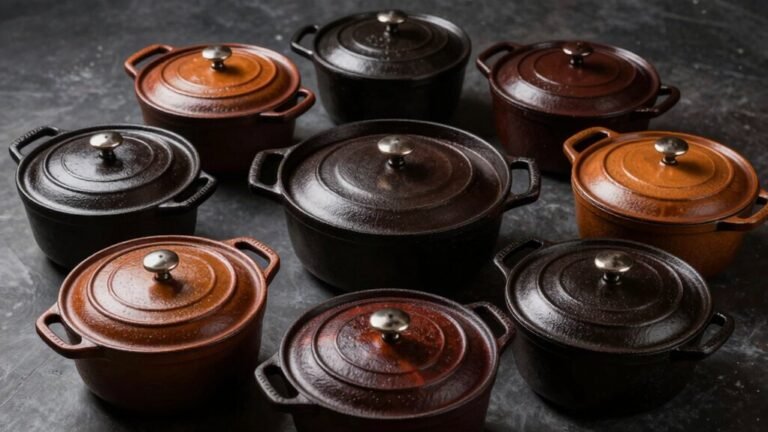
Whether you’re searing a steak or braising root vegetables, a Dutch oven‘s exceptional heat retention and even distribution make it work harder than almost any other cooking vessel. The thick cast-iron walls store thermal energy, eliminating hot spots and enabling uniform browning. You’ll shift seamlessly from stovetop to oven, performing multiple cooking techniques in one pot—searing, deglazing, simmering, and finishing without transferring dishes. This versatility extends across global cuisine, from French braises to Indian curries to rustic stews. The tight-fitting lid traps steam, creating self-basting conditions that concentrate flavors and preserve moisture. Dutch ovens are available in various sizes, from 2.75-quart to over 7-quart models, allowing you to select the perfect capacity for your cooking needs. A Dutch oven can maintain constant temperatures for prolonged periods and withstand high oven temperatures up to 500°F, making it suitable for an impressive range of cooking methods. Beyond stovetop cooking, Dutch ovens excel at baking artisan breads, producing the steam circulation necessary for perfectly crusty crusts and tender interiors. The trapped steam also promotes starch gelatinization, which contributes to a glossy, crisp crust that’s essential for artisan bread baking. Just as premium fuel ensures optimal performance in specialized equipment, high-quality Dutch ovens deliver consistent results through superior craftsmanship and material refinement. A Dutch oven is equally suited for confit cooking, slow-cooking, and one-pot meals, further demonstrating its adaptability across diverse culinary applications. Lodge enameled cast iron Dutch ovens offer exceptional durability and multifunctionality for both indoor and outdoor cooking applications. Whether you’re executing quick weekday meals or slow-roasted comfort foods, a Dutch oven adapts to your cooking techniques, making it indispensable for both novice and experienced cooks.
Selecting the Right Size for Your Needs
A Dutch oven’s versatility means nothing if you’ve chosen the wrong capacity for your kitchen and cooking habits. Your size considerations should align directly with meal planning and household needs. The 6-quart (12″) shallow model offers the best starting point—it handles family meals, whole chickens, stews, and breads without overwhelming most kitchens. For couples or small households, a 4–5 quart (10″) suits everyday braises and soups for 2–4 people. Singles gravitate toward 2-quart (8″) models for sauces and sides. When entertaining or batch cooking for 6–12+ people, 10–12 quart (14″–16″) capacities become essential. Account for headroom when planning meals; use roughly 1 to 1.5 quarts per adult serving for stews. A 5 to 6-quart Dutch oven is particularly well-suited for artisan bread baking, as it provides adequate space for dough expansion while ensuring proper heat circulation and oven spring. Enameled cast iron Dutch ovens offer an excellent alternative to traditional cast iron, eliminating the need for seasoning maintenance while retaining superior heat retention properties. For those interested in long-term food preservation beyond cooking, jar vacuum sealers can complement your Dutch oven cooking by extending the shelf life of prepared meals and leftovers. Remember that heavier, larger models complicate transport and storage. Accurate temperature monitoring with proper thermometer placement helps ensure your Dutch oven meals cook evenly and reach safe internal temperatures. Lodge’s pre-seasoned cast iron] construction ensures even heating and optimal cooking results across all size options. With proper care including seasoning oil maintenance, your Dutch oven will develop a resilient, non-stick layer that improves with use over time. The 6-quart capacity is ideal for most recipes and works well as an expandable collection starting point, allowing you to add smaller or larger sizes later as your cooking needs evolve.
Understanding Coal Heat Management
Mastering coal heat management separates successful Dutch oven cooking from frustrating trial-and-error experiments. You’ll choose between briquettes and lump hardwood—each affects your cooking differently. Briquettes burn longer and maintain consistent heat, ideal for recipes exceeding 30 minutes. Lump hardwood ignites faster but requires midway replacement for sustained temperature.
For heat maintenance, you’ll employ the 2x Rule: use twice your oven’s diameter in total briquettes. Place one-third on the bottom and two-thirds on the lid for standard cooking. Adjust these ratios based on your cooking type—baking requires 3/4 top heat, while stewing demands 3/4 bottom heat. Temperature variations within the 350°F to 374°F range will not significantly impact your cooking outcomes. An instant-read probe thermometer provides accurate internal temperature readings to ensure your food cooks properly.
Rotate your oven and lid periodically to eliminate hot spots. Add fresh coals midway through longer recipes to sustain even temperatures throughout your cook. Using a heavy-bottomed pot with a lid ensures even heat distribution similar to traditional oven baking.
Mastering Baking Techniques Outdoors
Three critical elements—proper briquette placement, consistent heat distribution, and strategic rotation—transform your Lodge Dutch oven into a reliable outdoor bakery. You’ll place two-thirds of your briquettes on the lid and one-third underneath to prevent bottom burning. Coal placement directly determines baking success; distribute briquettes evenly across the lid’s surface while spacing them around the base. Charcoal briquettes are preferred over wood fire coals because they provide superior consistency for maintaining stable temperatures throughout your baking session.
Rotate your oven one-quarter turn in one direction every ten to fifteen minutes, rotating the lid one-quarter turn in the opposite direction. This counterrotation guarantees uniform heat exposure throughout your baking process. Using a lid lifter and other specialized equipment will help you safely manage the hot Dutch oven and briquettes during rotation. To preserve your Lodge Dutch oven’s functionality during outdoor cooking, always thoroughly dry your cookware after cleaning to prevent rust on exposed cast iron edges. Consider using a silicone handle cover to protect your hands from burns when handling the Dutch oven during outdoor baking sessions. For best results, consider reducing your dough quantities proportionally based on your Dutch oven’s capacity to ensure proper baking outcomes. While infrared thermometers might seem convenient for checking baking progress, they cannot measure the internal temperature of your bread and are limited to surface readings only.
Make baking adjustments based on environmental conditions. Cold weather adds ten to fifteen minutes to recipes, so monitor your baking time accordingly. For optimal results with dense, rustic loaves, consider the dough fermentation time when planning your outdoor baking schedule. Avoid lifting the lid unnecessarily, as this releases heat and compromises temperature stability. Your baking times match conventional ovens when you maintain proper coal placement and consistent rotation patterns.
Proper Cleaning and Seasoning Care
Because your Lodge Dutch oven’s longevity depends on consistent maintenance, you’ll want to establish a cleaning routine immediately after cooking. For enameled cast iron, hand wash with warm soapy water using a nylon brush, then dry promptly to prevent rim rust. For bare cast iron, scrape food residues first, wash with mild detergent, and dry thoroughly before applying seasoning.
Your seasoning methods should focus on building protective layers. While warm, rub a light cooking oil across the surface, then wipe away excess to avoid residue buildup. This routine strengthens non-stick properties over time. For stubborn burnt areas, consider using kosher salt or baking soda as gentle abrasives to scrub off residue without damaging the seasoning. If food becomes really stuck or causes odors, more intensive cleaning with steel wool or wire brush may be necessary, followed by thorough drying and re-seasoning to protect the skillet from rust. To restore heavily damaged seasoning, place your Dutch oven in a 450-500 degree oven for one hour positioned upside down to loosen stubborn gummy layers. Multiple rounds of oiling and baking can build up a more durable seasoning layer for superior protection. Store your Dutch oven with the lid ajar to prevent moisture accumulation that can compromise the seasoning over extended periods. Avoid using citrus-based cleaners on enameled surfaces as they can diminish the gloss finish.
For stubborn stains, soak the interior with a baking soda solution or bleach mixture, then scrape carefully. Always oil rims after cleaning to prevent rust recurrence. After removing food particles with salt, apply a light coat of oil] to maintain your Dutch oven’s seasoning and prevent rust. Consistent cleaning techniques combined with regular seasoning maintenance guarantee your Dutch oven performs reliably for decades.
One-Pot Dinner Ideas
Once you’ve mastered your Dutch oven’s care routine, you’ll want to put it to work for what it does best: creating complete, satisfying meals in a single vessel. Your Dutch oven excels at hearty recipes like beef stew, where searing develops deep flavor before the braize begins. You’ll uncover that braising breaks down collagen into gelatin, naturally thickening sauces without additives. For pasta dishes, the pot’s even heat enables both stovetop cooking and oven finishing. Vegetarian options—such as lentil stew or mushroom barley—prove equally rewarding, with legumes and grains providing substantial protein and texture. The Dutch oven’s exceptional heat retention and distribution properties make it perfect for developing the rich, complex flavors that distinguish one-pot meals. Whether you’re preparing meat-based braises or plant-forward meals, your Dutch oven transforms simple ingredients into nourishing dinners with minimal cleanup required. To preserve leftover Dutch oven meals, consider using vacuum sealer bags for optimal food storage and freezer longevity. The tight-fitting lid traps steam that melds flavors together throughout the cooking process. Traditional beef stew recipes often include aromatic vegetables like onions and garlic along with herbs such as thyme or bay leaves to build complexity. Dutch ovens are also ideal for chicken pot pie with biscuits, where creamy fillings topped with homemade biscuits bake to golden perfection in a single vessel. Try one-pot combinations like One Pot Chicken and Sausage with White Beans for streamlined cooking that delivers satisfying flavors without extra dishes to wash. A classic example is a chuck roast pot roast, which becomes fall-apart tender when slow-roasted at low temperatures for several hours.
Casserole Recipes for Crowds
Your Dutch oven’s generous capacity makes it the ideal vessel for feeding a crowd, transforming simple ingredients into impressive one-pot casseroles that require minimal fuss. You’ll find diverse casserole variations suited to any occasion. Dutch oven enchiladas layer tortillas, beans, and vegetables with sauce and cheese for effortless assembly. Campfire nachos stack chips, beans, and melted cheese directly in your pot. Macaroni and cheese bakes completely in enameled cast iron, while jambalaya combines shrimp, sausage, chicken, and rice for authentic flavor. A hearty chicken stew with bone-in thighs, carrots, onions, and potatoes develops deep, savory flavor when baked covered then uncovered until the chicken is tender.
For serving suggestions, a Lodge 12″ 8 qt deep Dutch oven accommodates 6-8 people, while the 6 qt shallow option serves 4-6. You’ll brown meat first to develop flavor, then add remaining ingredients. Top finished dishes with fresh garnishes like pico de gallo or jalapeños for customizable portions. Investing in a reliable Dutch oven ensures consistent cooking results across all your casserole recipes. Baked stuffed apples filled with buttery brown sugar oat mixture provide an impressive sweet option that can feed large groups when nestled together in your Dutch oven.
Bread Baking in Cast Iron
Cast iron transforms bread baking by trapping steam from wet dough, which simulates the professional steam-injected ovens that produce bakery-quality results. You’ll achieve a crispy crust with a tender interior crumb through exceptional heat distribution and retention.
For sourdough techniques, prepare your sticky dough overnight with flour, water, salt, and yeast to develop flavor layers. Shape your dough into a ball, place it seam side down on a floured towel, and let it rise for two hours. A natural patina develops over time on cast iron, which aids in food release and prevents sticking without requiring additional greasing after initial use. The well-seasoned cast iron surface provides excellent non-stick properties for optimal bread handling.
Preheat your 4- to 6-quart Lodge Dutch oven to 230-260°C for 20-45 minutes. Transfer your dough using a parchment paper sling, then bake covered for 30 minutes. Reveal and bake 15-30 minutes until golden brown with a non-contact temperature measurement confirming 90°C internal temperature. When handling your extremely hot Dutch oven, always use protective equipment and maintain proper safety precautions to avoid burns or injuries. After baking, consider vacuum sealing cooled bread for extended storage that maintains moisture content and prevents freezer burn. For optimal long-term preservation, seal strength and moisture handling capabilities are critical factors when selecting a vacuum sealer designed for food storage. Proper maintenance of your cast iron involves avoiding long soaks in water to prevent rust formation. Cool your bread immediately outside the pan for ideal crust crispiness.
Essential Tips for Outdoor Cooking Success
Whether you’re baking bread or simmering stew, mastering heat management is essential to achieving consistent results with your Lodge Dutch oven outdoors. You’ll balance heat distribution by adjusting your briquette placement: use roughly 2/3 top heat for baking, or equal distribution for stews and roasts. Environmental factors like wind, humidity, and elevation reduce coal effectiveness, so add briquettes or create windbreaks as needed. Refresh coals during long cooks and remove ash buildup from your lid to maintain temperature stability. Outdoor safety demands you establish a clear perimeter, keep fire control supplies nearby, and always wear heat-rated gloves. A lid lifter enhances safety and ease of access when managing your coals and checking on your food. Preheat fully grey coals before placement, and rotate your oven occasionally to compensate for uneven heat fading, ensuring even cooking throughout. For precise temperature monitoring during outdoor cooking, consider using an infrared thermometer to verify your Dutch oven’s heat levels and adjust your coal placement accordingly. Cast iron Dutch ovens like Lodge retain heat longer than aluminum alternatives, providing more stable cooking temperatures during extended outdoor meals.