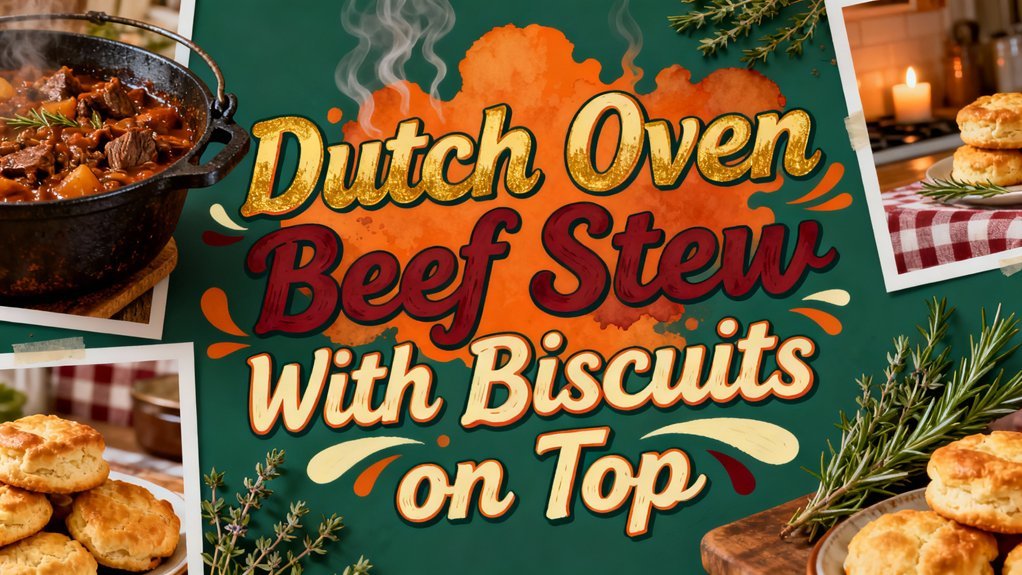
You’ll transform chuck roast into restaurant-quality stew by searing beef until deeply browned, then braising at 325-350°F for tender, flavorful results. Layer aromatics and vegetables strategically, using tomato paste and stock to build depth. Time your biscuit topping—whether drop or rolled—to bake golden atop the bubbling stew, not absorb moisture from prolonged contact. Proper technique guarantees crispy exteriors and moist interiors. Master these three critical steps, and you’ll uncover how nuanced seasoning, controlled heat, and precise baking transform this classic into an impressive centerpiece.
Core Components and Ingredient Ratios
The foundation of a successful Dutch oven beef stew rests on three pillars: quality beef, aromatic vegetables, and proper liquid balance. You’ll select chuck roast or stewing cubes—1.75 to 2 pounds yields hearty portions for 4-6 servings. Cut meat into 1- to 1.5-inch chunks and trim excess fat before seasoning with 1.5 teaspoons kosher salt and 1 teaspoon black pepper per 3 pounds. Brown the beef well in oil until seared to develop optimal flavor before adding the liquid. The heavy construction and tight-fitting lid of your Dutch oven will ensure optimal heat distribution throughout the cooking process.
Your aromatic base combines 1 large onion, 2-6 minced garlic cloves, and optional celery. You’ll incorporate 2-3 tablespoons tomato paste for depth. The vegetable core includes 3-4 carrots and 1-4 pounds potatoes, both cut into consistent 0.5- to 1-inch chunks. Pairing your Dutch oven with quality cooking utensils such as metal spatulas will help you manage ingredients without damaging the cookware’s surface.
For liquids, you’ll use 3-5 cups beef stock combined with 0.5-2 cups red wine. These seasoning ratios and beef cuts guarantee balanced, flavorful results. Consider adding bay leaves and other herbs to enhance the stew’s complexity and depth of flavor. Deglazing the pot with your wine choice will lift browned bits and intensify the savory foundation of your stew. The Dutch oven’s exceptional heat retention ensures that your stew develops rich, complex flavors through patient, even cooking. The initial oven cooking at 300°F for 2 hours with just the beef ensures proper tenderization before vegetables are added for the final hour of cooking.
Selecting the Right Biscuit Topping
A biscuit topping transforms your Dutch oven stew from single-dish meal into rustic braise-and-bread experience, but success depends on matching dough type to your preferred technique. Drop biscuits offer rustic appeal and moisture tolerance, while rolled varieties provide uniform browning. Consider your hydration levels carefully: firmer dough resists spreading and maintains structure against steam, whereas softer dough risks soggy bottoms. High-fat biscuits—enriched with butter or cream—develop superior flakiness that withstands humidity better than lean formulations. Your flavor profiles should complement stew aromatics through strategic add-ins: fresh herbs like thyme, sharp cheddar, or subtle garlic powder. Dutch ovens’ excellent heat retention makes them particularly effective for achieving perfectly cooked biscuit toppings with golden-brown exteriors. The steam trapping capability of a Dutch oven creates an ideal environment for developing crispy exteriors while maintaining tender interiors in your biscuit topping. Refrigerated biscuits from a can offer convenient preparation and consistent results when baked according to package instructions. For extended storage of homemade biscuit dough, consider proper storage techniques to maintain dough quality and prevent premature drying before baking. Like the berry crumble and cobblers featured in popular camping desserts, Dutch oven biscuit toppings benefit from the reliable cooking environment cast iron provides. Homemade cheddar biscuits mixed with flour, baking powder, and cream provide a customizable alternative to store-bought options for enhanced flavor control. To prevent sogginess and achieve optimal texture, keep the biscuit topping uncovered while baking so steam can escape rather than condensing back into the dough. These texture considerations and ingredient choices determine whether your topping emerges golden and crisp or dense and collapsed.
Browning and Deglazing the Beef
Begin by heating your Dutch oven over medium to medium-high heat for several minutes until it’s properly preheated, then add olive oil or vegetable oil until it shimmers across the surface. Pat your beef cubes dry, season generously with salt and pepper, then toss in flour for even coating.
Employ proper browning techniques by searing beef in 2-3 batches, allowing 2-5 minutes per side undisturbed to develop a flavorful crust through the Maillard reaction. Avoid overcrowding, which causes steaming rather than caramelization. Transfer browned beef to a plate, reserving fond in the pot. To protect your Dutch oven’s enamel coating, use gentle tools like wooden spoons when scraping the bottom. Wooden spoons are particularly effective because they provide heat-resistant ergonomic handling without damaging delicate surfaces.
Execute deglazing methods by adding onions, carrots, and garlic over medium heat. Incorporate tomato paste and Worcestershire sauce, cooking 2-3 minutes. Pour red wine or broth, scraping fond with a wooden spoon for 3 minutes. This concentration amplifies flavor complexity throughout your stew, creating the layered flavor foundation that defines a successful braise. The brown bits released during searing create additional depth and richness that will enhance the overall taste of your finished dish. Using chuck roast as your beef cut ensures that the longer cooking time will properly tenderize the meat for optimal texture and palatability. For accurate monitoring of braising temperatures, consider using specialized cooking thermometers designed to handle the heat levels required for proper meat preparation.
Braising Technique and Timing
Once you’ve built up that flavorful fond base, you’ll transfer your browned beef back into the Dutch oven and bring everything to a vigorous boil on the stovetop over high heat with the lid covered. This initial braising method establishes ideal conditions for collagen breakdown and moisture retention throughout the cooking process.
Transfer your Dutch oven to a preheated 325-350°F oven and maintain covered braising for 2½ to 3 hours. Implement timed monitoring by checking liquid levels hourly, adding additional stock if reduction becomes excessive. Your timed monitoring guarantees fork-tender beef without drying out the stew. The simple ingredients combined with time will enhance the depth of flavor as the stew braises low and slow. For optimal results, ensure your Dutch oven has heat-resistant handles and lids to safely withstand the extended high-temperature braising period. Mix tapioca flour into your beef stock base to prevent watery separation and maintain a rich, cohesive sauce throughout the braising process. Proper time-temperature management ensures safe bacterial control during the extended cooking period. Consider using a heat diffuser on your stovetop to help distribute heat more evenly and prevent hot spots that could cause uneven cooking or scorching of your stew. For storing leftover stew, consider using BPA-free storage containers to maintain food quality and safety, and if your Dutch oven requires maintenance after extended use, electrolysis cleaning can help restore it to like-new condition.
Test doneness at the 2-hour mark; beef should shred easily when fully braised. These precise braising methods assure perfectly tender meat and vegetables with concentrated, developed flavors.
Vegetable Preparation and Sequencing
Three foundational aromatics—diced medium yellow onion, peeled and chopped carrots, and chunked celery—form the flavor base you’ll add immediately after browning your beef. Begin your onion sautéing with the diced onions, cooking them alongside your carrot chopping and celery cutting until all three vegetables soften, approximately 4-5 minutes. These aromatics create a rich flavor foundation that enhances the overall depth of your stew.
Your vegetable sequencing matters considerably. After this initial aromatics phase, you’ll cube potatoes and add them with browned beef and broth for the initial simmer. Incorporate additional root vegetables—such as parsnips or turnips—alongside your original aromatics. During the 90-minute braise, introduce remaining carrots and potatoes. Finally, stir in fresh peas 10 minutes before serving, preserving their color and texture. Small Dutch ovens excel at slow cooking hearty stews, distributing heat evenly throughout the pot. To create the ideal moist environment for your vegetables, consider steam creation techniques such as adding a pan of water or using a covered Dutch oven to trap moisture. Using cookware like a well-seasoned Dutch oven ensures even heat distribution throughout your braise, and gradually preheating the pot prevents thermal shock that could damage your vessel. Maintaining your Dutch oven with proper drying and care preserves its seasoning layer and ensures safe, flavorful cooking. This precise timing guarantees each vegetable reaches ideal tenderness while maintaining distinct flavors throughout your Dutch oven stew.
Thickening and Flavor Layering
Your vegetables are now softening into the aromatics base, and you’ll build the stew’s body through strategic thickening and layered flavor development. Deploy your thickening agents methodically: incorporate tomato paste after browning to boost umami and provide natural pectin, then introduce your flour slurry in incremental additions to maintain flavor balance without over-dilution. Stir 1/4 cup flour per 4 cups broth post-searing, allowing the starch to gelatinize during the 90-minute braise at 325-375°F. The flour coating on your beef releases starch gradually, contributing foundational thickness while the fond scraped from your Dutch oven’s bottom delivers concentrated flavor compounds. This layered approach—tomato paste’s umami depth combined with starch thickening—creates complexity and body without compromising the stew’s essential character or masking ingredient quality. For best results, use a well-marbled cut of meat like chuck roast, which becomes fall-apart tender during the braise and enriches your cooking liquid, much like how pork shoulder develops deep flavor when braised with aromatics and apple cider or hard cider. A Dutch oven with even heat distribution ensures your braise cooks uniformly without hot spots that would scorch your stew. After your stew finishes cooking, immediately dry your Dutch oven by heating it on the stovetop to prevent rust and maintain the cookware’s longevity through proper seasoning maintenance. Whisk the flour and water together until lumps are gone before adding to ensure a smooth incorporation that prevents lumpy gravy. For additional customization, you can adjust the thickness preference by starting with a thinner consistency and adding more thickening agents at the end of cooking if desired.
Baking the Biscuit Topping
The shift from simmered stew to finished dish hinges on executing your biscuit topping with thermal precision and spatial discipline. You’ll arrange biscuits in a single layer atop your stew, maintaining slight spacing to allow side expansion without merging. Your dough thickness—roughly 3/4 to 1.5 inches—ensures upward rise rather than horizontal spreading. The cast iron dutch oven supports this versatile cooking method, enhancing your ability to manage multiple heat zones simultaneously. For optimal results, allow your dough to rest for 2 to 3 minutes before arranging it on the stew to ensure even mixing and texture.
Target 400–425°F and rotate your Dutch oven quarterly to prevent hot spots. Balance your heat strategically: concentrate coals on the lid for browning and rise while controlling bottom heat to avoid scorched bases. The heavy lid traps steam effectively, similar to the technique used in artisan bread baking where steam creates optimal crust development. The Dutch oven’s tight-fitting lid and thick construction enable superior moisture retention that enriches both your stew’s flavor and your biscuits’ texture. Proper sealing during cooking, much like air-tight food storage, prevents unwanted moisture loss and maintains the quality of your dish. To maintain your Dutch oven’s performance over time, season it regularly with oils with high smoke points to build a protective layer. Bake 12–30 minutes until golden-brown tops and internal temperatures reach 190–200°F—temperatures you can verify with an instant read thermometer for precision. You’ll recognize doneness through uniform coloring and domed crests. If bottoms brown prematurely, elevate your pot or reduce lower heat immediately.
Storage, Reheating, and Serving Tips
How you store and reheat your Dutch oven beef stew determines whether you’re reviving a quality dish or salvaging a compromised one. Your storage techniques matter: refrigerate cooled stew in airtight, nonreactive containers for 3–4 days maximum, or freeze in portioned, flat bags for 2–3 months. Label containers with dates to track freshness. Remember that flavor often improves with time, making refrigerated or frozen stew a convenient option for meal prep. This makes leftovers ideal for Sunday suppers and a practical solution for busy weeknights.
For reheating methods, choose stovetop for ideal texture—gently warm over low–medium heat, stirring occasionally and adding stock if gravy’s thickened. Alternatively, cover and reheat in a 325–350°F oven until reaching 165°F internally. Store biscuits separately to preserve their texture; assemble and finish baking after the stew’s heated through. This approach prevents soggy toppings while ensuring food safety and quality restoration.