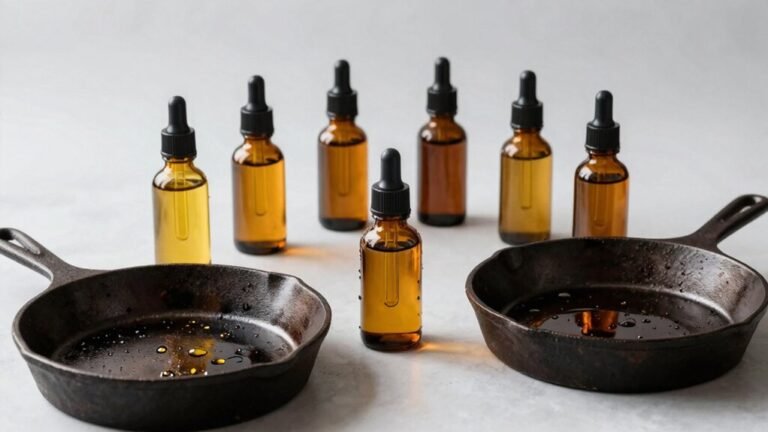
Yes, you can season your cast iron skillet with beef tallow—it’s an excellent choice. Tallow’s high smoke point near 400°F and thermal stability prevent fat breakdown, creating durable, rust-resistant protective films rather than greasy residues. Its saturated triglyceride composition bonds effectively to metal surfaces. You’ll apply thin coats, bake at high temperatures, and repeat layering for best results. Understanding the specific preparation and maintenance techniques will help you achieve superior, long-lasting seasoning.
Why Beef Tallow Works for Cast Iron Seasoning
Because beef tallow has a smoke point near 400°F (205°C), you can heat seasoning layers hot enough to polymerize them without excessive smoking. This thermal stability prevents fat breakdown and rancid off-compounds during repeated high-temperature cycles, delivering durability benefits that many culinary oils can’t match.
Tallow’s saturated and monounsaturated triglycerides cross-link under heat, forming bonded protective films rather than greasy residues. You’ll build darker, more uniform patina through multiple thin bake-and-wipe applications, creating rust-resistant seasoning that develops with use. The triple-layer seasoning approach ensures decades of rust-free performance that single applications cannot provide. Using generous amounts of protective coatings similar to how bakers prevent sticking on cast surfaces will strengthen your skillet’s durability over time. Multiple rounds of oiling and baking build up a durable seasoning layer that improves with use and care. Oils with higher levels of unsaturated fats tend to polymerize better, though beef tallow’s triglyceride composition offers distinct advantages for long-term cast iron maintenance. Proper storage techniques for your tallow between applications will help maintain its protective qualities throughout the seasoning process.
The mild savory character of beef tallow offers subtle flavor enhancement during initial seasoning, particularly suited to meat-centric cooking. As your polymerized layers accumulate, this beefy note diminishes, leaving a neutral, durable surface that withstands demanding kitchen tasks. Beef tallow solidifies at room temperature, similar to butter, which makes it convenient to store and apply between seasoning sessions.
Preparing Your Skillet for Tallow Application
Before you apply tallow to your cast iron skillet, you’ll need to prepare the surface methodically to guarantee the seasoning bonds effectively and develops evenly. Start with thorough surface cleaning and rust removal using mechanical abrasion, chemical soaking in diluted vinegar, or phosphoric-acid cleaners. Follow with complete drying techniques—towel-dry immediately, then oven-dry at 250–350°F for 10–20 minutes to eliminate residual moisture. Next, employ degreasing methods using isopropyl alcohol or acetone to remove oils inhibiting uniform bonding. Lightly abrade with fine steel wool to create micro-roughness promoting adhesion. Remove all debris from crevices and pour spouts. Finally, preheat your skillet on the stove for 1–3 minutes to improve tallow flow and penetration into the iron’s micro-pores. High smoke point tallow is essential for this process to prevent smoke and unpleasant odors during the seasoning application. For effective polymerization to occur, the tallow must be heated to its smoke point so the oil bonds into the pan’s surface and creates the natural seasoned finish. Beef tallow creates a durable, non-stick polymerized layer that protects the iron from rust while developing a rich, dark patina. The stovetop method allows you to heat the oiled pan over medium heat until it begins to smoke, similar to traditional seasoning techniques. Once the surface is properly prepared, apply multiple rounds of seasoning to ensure a durable and long-lasting finish on your cast iron cookware. After each application, thoroughly dry] your skillet with a towel and place it over heat to ensure all moisture is eliminated. The rendered beef tallow] used in cast-stick™ products provides superior results compared to traditional seed oils due to its natural composition and effectiveness.
Step-by-Step Application and Baking Process
Now that you’ve prepared your skillet’s surface, you’re ready to apply tallow and begin the polymerization process—the critical stage where thin, even layers transform into a durable seasoning. Your application techniques should prioritize minimal coverage: use 1–2 teaspoons for small skillets or 1–2 tablespoons for standard 10–12″ pans. Rub tallow evenly with a lint-free cloth until the surface appears nearly dry, then wipe away visible excess to prevent drips. Before applying tallow, ensure your skillet is thoroughly dried to create the ideal surface for seasoning adhesion. Baking considerations include preheating your oven to 400–500°F, then positioning your skillet upside down on the middle rack with a foil-lined catch pan below. Bake for one hour, allow full cooling inside the turned-off oven for 1–2 hours, then repeat this cycle 1–3 times for robust nonstick development. The natural non-stick seasoning that develops through this layering process will improve with each heating cycle. Beef tallow’s high smoke point around 400 degrees makes it particularly effective for this seasoning method without breaking down during the baking process. When storing your skillet after seasoning cycles are complete, coat it with oil and cover it to prevent dust accumulation. When using cast iron cookware, be mindful that glass top stoves require smooth-bottomed pans to prevent surface damage. Unlike dishwasher cleaning and soap, which strip the seasoning, the tallow creates a protective layer that builds with each cycle.
Building Durable Layers Over Time
The durability of your cast iron seasoning hinges on polymerization—a chemical process where unsaturated fat molecules form cross-linked films that bond directly to iron oxide sites on the skillet’s surface. You’ll build coating durability through multiple thin applications rather than single thick coats. Each layer application should be wiped to remove excess before curing, preventing pooling and uncured sticky spots. Alternate curing cycles with regular cooking to gradually strengthen the film. Expect three to six well-cured cycles to achieve a visually dark, hard seasoning. Track performance through visual darkening, smoothness, and resistance to flaking. Implement maintenance passes—light oil rubs and brief heating—between full recoatings to mend micro-abrasions and reinforce the film incrementally. This maintenance approach mirrors the post-cooking care recommended for cast iron, where thorough drying and light oiling after each use preserves the seasoning layer. To prevent rust and maintain your skillet’s integrity, store it with separators to allow airflow between pieces. Preheating your skillet over medium or medium-high heat for a couple of minutes ensures even polymerization during the seasoning process. Cooking with fatty cuts of meat in your cast iron contributes additional seasoning layers naturally over time. Beef tallow’s high smoke point makes it particularly effective for building multiple durable seasoning layers without burning off during the heating process. Similar to how proper flame control prevents damage during specialized cooking techniques, careful temperature management during seasoning prevents degradation of the protective layers. This same principle applies to Dutch oven dessert cooking, where the seasoned surface improves with each use and develops superior non-stick properties over time.
Heat Stability and Long-Term Performance
While you’ve been building your seasoning layers through patient repetition, understanding how beef tallow performs under sustained heat becomes essential to protecting your investment. Tallow’s smoke point around 400–420°F provides reliable thermal stability during cooking, resisting breakdown better than polyunsaturated oils. Temperature effects matter markedly: the saturated fats in tallow polymerize more consistently across repeated heating cycles, creating durable cross-linked films that withstand high-heat cooking without flaking. Durability factors depend on application technique—thin coats baked at 450–500°F encourage stepwise polymer growth superior to thick applications. Regular cooking with fatty foods augments this seasoning naturally. Unlike plant oils that can go rancid quickly when exposed to heat, tallow remains naturally stable and resists oxidation over extended periods. Cast iron improves with age as its seasoning develops through consistent use and proper maintenance. To maintain your seasoning’s integrity, always hand wash with warm soapy water rather than using a dishwasher, which will damage the protective layers you’ve built. When properly seasoned, polymerized oil layers form a protective barrier that protects the iron from rusting and provides a non-stick surface. After each use, heat the skillet to evaporate any residual moisture and apply a light coat of seasoning oil, wiping away excess to maintain the optimal matte finish. To maximize the longevity of your seasoning, avoid overheating] your skillet, which can damage the protective layers you’ve carefully built. While mechanical abrasion and acidic foods inevitably wear your finish, tallow’s chemical resilience means your re-seasoning efforts rebuild protection efficiently.
Managing Smoke and Odor During Curing
As you build those durable polymer layers through repeated heating, you’ll quickly notice that smoke and odor accompany the curing process—and managing both becomes practical when you understand their sources.
Smoke reduction begins with using clarified, low-moisture tallow and preheating your oven gradually to minimize volatilization spikes. Apply thin, wiped-to-near-dry coats that fully polymerize before adding subsequent layers. Position your pan upside-down with a drip tray beneath to prevent oils from pooling and burning on heating elements.
For odor control, guarantee your pan is thoroughly cleaned and dried beforehand, as residual food or moisture intensifies off-odors. Remove volatile impurities by warming tallow and skimming dark solids. Run your exhaust fan at high setting during curing and for 15–30 minutes after. Consider placing activated charcoal outside the oven to adsorb airborne particulates.
How Beef Tallow Compares to Other Seasoning Fats
Because you’re building seasoning layers through repeated heat cycles, understanding how beef tallow’s chemistry compares to other fats will help you choose the most effective medium for your curing routine. Tallow benefits include a ~400°F smoke point that rivals refined vegetable oils while offering superior heat stability compared to polyunsaturated seed oils. Unlike butter or unrefined olive oil, tallow resists smoking during standard seasoning. However, avocado and high-oleic oils tolerate slightly higher temperatures. Tallow’s saturated-fat composition promotes durable polymerization and resists softening at moderate cooking temperatures better than unsaturated seasoning alternatives. Yet regardless of fat selection, your application technique—thin coats, careful wiping, precise temperature control—ultimately determines adhesion quality and durability more than fat choice alone. Cast iron’s exceptional heat retention allows you to achieve proper seasoning results even at lower temperatures than you might expect. Building multiple seasoning layers through repeated cycles creates a smooth, nonstick patina over time, and this natural non-stick surface improves with proper seasoning over time, reducing the need for cooking oil during regular meal preparation. Proper handling and avoiding overheating tallow will preserve its quality and seasoning effectiveness. High-quality tallow sourced from grass-fed cattle enhances the overall effectiveness of your seasoning process through superior fatty acid profiles.
Solving Common Seasoning Problems
Even with careful application and proper technique, seasoning problems can emerge—and they’re usually fixable once you understand their root causes. Flaking seasoning typically stems from excessive fat layers or low-temperature oven seasoning that creates weak polymer bonds. You’ll prevent this by applying thin coats and maintaining proper polymerization temperatures. Sticky residue indicates incomplete curing—ensure you’re heating long enough at adequate temperatures. Rust formation signals compromised seasoning or moisture exposure; protect your pan through proper storage and drying. Complete drying of the pan is crucial after washing to prevent rust development. For additional rust prevention, consider applying a thin layer of seasoning oil after each use to maintain your pan’s protective barrier. Choose oils with high smoke points like vegetable or canola oil to ensure they withstand cooking temperatures without breaking down. Metallic flavors suggest thin seasoning allowing iron leaching; build cumulative layers through repeated cooking cycles. Poor nonstick performance requires adequate preheating and sufficient seasoning layers, and storing your skillet properly in a dry environment helps maintain the non-stick polymerized surface you’ve built up over time. These maintenance tips address most seasoning failures when you identify the underlying cause promptly.
Maintaining Your Tallow-Seasoned Cast Iron
Once you’ve corrected seasoning problems and established a solid polymerized base, your focus shifts to preserving that patina through daily care and mindful cooking practices. Implement proper cleaning methods immediately after use: rinse with hot water, scrub with a stiff brush or coarse salt, then dry thoroughly on the stovetop to eliminate residual moisture. When selecting a brush, prioritize stiff-bristled brushes designed to remove stuck-on food without damaging your seasoning layer. Store your pan in a dry location with paper towels between stacked pieces for rust prevention. Apply a thin tallow coat after each use to maintain the seasoning layer. Avoid acidic braises and dishwashers, which compromise your protective coating. Use gentle wooden or silicone utensils that minimize scraping. For optimal results, preheat your oven to 250F initially before beginning any re-seasoning process to ensure complete dryness of the cookware. Like versatile Dutch ovens, cast iron cookware benefits from consistent maintenance and proper storage techniques. Proper maintenance creates an air-tight protective environment similar to what vacuum sealing achieves for food storage. If rust appears on your tallow-seasoned cast iron, remove it with steel wool or sandpaper followed by washing and reseasoning. Schedule re-seasoning two to three times a year with thin, even tallow applications at 350–600°F to reinforce durability and prevent degradation.