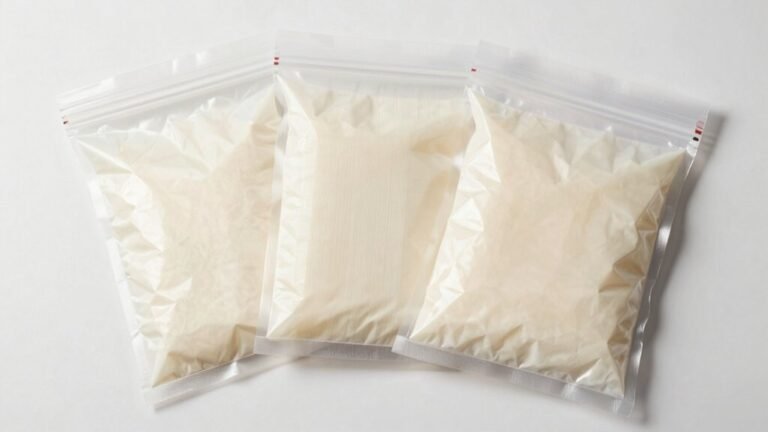
You’ll freeze meat effectively without a vacuum sealer by portioning it into uniform sizes and chilling it for 1–2 hours. Wrap it tightly in cling film, then add a layer of freezer paper with the waxed side inward to eliminate air pockets. Secure seams with freezer tape and label everything with the cut, weight, and date. Place packages in your freezer’s coldest zone, temporarily lowering the temperature to -10°F for 12–24 hours. You’re realizing that proper technique replaces expensive equipment when preventing freezer burn and maintaining quality.
Preparation and Portioning
Before you freeze meat, you’ll want to divide it into portions that match your typical meal sizes—this approach prevents the quality degradation and bacterial risk that come from repeated thaw-refreeze cycles. Aim for uniform portion weights: 4–8 oz for individual meals or 1–1.5 lb for family servings. This consistency guarantees predictable freezing techniques and thaw times.
For ground meat, flatten portions to 1/2–3/4 inch thickness to accelerate freezing and enable direct-from-frozen cooking. Pre-form common shapes like patties and cubes before freezing. Cut larger pieces into uniform chunks to minimize ice-crystal damage and preserve texture during rapid freezing.
Chill meat in your refrigerator for 1–2 hours before packaging. This lowers core temperature and reduces freezer load, promoting faster, more even freezing that protects cellular structure and moisture retention. Unlike vacuum sealing, which requires specialized equipment, proper air removal through wrapping techniques can still prevent freezer burn when combined with strategic portioning. Consider using oxygen absorbers alongside tight wrapping to further extend your frozen meat’s shelf life and maintain quality during long-term storage. Proper preparation of your portions helps prevent quality degradation that can affect the safety and taste of your frozen meat. Using sharp knives and kitchen scales] will ensure your portions are accurate and consistently sized for optimal results. Just as vacuum sealing extends shelf life by removing oxygen, minimizing air exposure through tight wrapping and adjustable suction strength principles helps preserve your meat’s quality during extended freezing.
Wrapping Techniques With Plastic Wrap and Freezer Paper
Three critical layers form the foundation of effective meat wrapping without vacuum sealing: cling film creates direct contact with the meat surface to eliminate air pockets, a second layer of cling film provides redundancy and enhanced air exclusion, and freezer paper with its waxed side facing inward adds a moisture and oxygen barrier while protecting against punctures. You’ll secure seams with freezer tape to prevent slippage during storage. Label the package with permanent marker before taping, recording the cut, weight, and freeze date. For wrapping materials and sealing techniques, you should apply multiple small, firm folds rather than one large fold to minimize internal air spaces. Maintain consistent tension throughout to compress meat slightly and reduce freezer burn risk. Double-wrap vulnerable areas like bone tips to prevent packaging puncture. Like sous vide cooking, proper freezing requires attention to food safety standards and time-temperature management to prevent bacterial growth during extended storage. Unlike vacuum sealing, which can preserve meat for up to three years, proper wrapping without a vacuum sealer requires careful layer application to maximize freshness duration. Similar to how proper dough shaping techniques improve baking outcomes, the precision of your wrapping method directly influences how well meat maintains quality during freezing. For optimal results, ensure proper ventilation in your freezer area to maintain consistent temperatures throughout storage. Properly wrapped meat can last long without freezer burn when multiple layers are applied correctly. This method produces longer storage life compared to vacuum sealing alone, making it an economical and reliable freezing alternative.
Water and Ice Immersion Methods
Water and ice immersion methods accelerate heat removal from meat far more effectively than air freezing alone, since water conducts heat 50-100 times better than air. You’ll achieve rapid freezing by submerging watertight bags in ice water, which forms small ice crystals that minimize cell wall damage and drip loss upon thawing. For best results, pre-chill your meat to 32-36°F before immersion freezing to prevent spoilage within 24 hours. To maintain optimal cooling efficiency, tumble the bags periodically during the chilling process to promote even heat removal across all surfaces. Alternatively, you can employ brine immersion techniques using a 2% NaCl solution, which depresses the freezing point and accelerates thawing times—pork thaws in approximately 118 minutes versus 135 minutes in plain water. Both methods preserve muscle fiber integrity better than slow freezing, delivering superior quality outcomes when you’re freezing meat without specialized equipment. Proper seasoning and preparation of your ingredients before freezing ensures better flavor retention throughout storage, similar to how uniform heat distribution is essential in cookware for consistent cooking results. For faster thawing of large cuts, immerse in watertight bag in cold water until the meat reaches a pliable state, ensuring food safety throughout the process. Using a dutch oven allows you to cook your thawed meat with superior heat retention and browning capabilities once you’re ready to prepare your meal.
Freezing Order and Quick-Freeze Tips
Maximizing freezing efficiency requires strategic ordering and staging of your meat packages, as the sequence you follow directly impacts both freeze time and temperature stability throughout your freezer. Load smaller, thin cuts first to reduce overall freeze time and core freezing duration. Place newly packed meat in the coldest zone—typically the back or bottom—ensuring fastest initial freezing. Flatten portions before wrapping to increase surface-area-to-thickness ratios, accelerating freeze rates considerably. Use pre-cooled metal baking sheets as conduction surfaces, spacing packages with small gaps for ideal cold air circulation. Temporarily lower your freezer to -10°F to -20°F for 12-24 hours after loading fresh meat, then return to 0°F. Newly slaughtered meat should chill to 40°F within 24 hours before freezing to ensure optimal preservation. Just as oils must be heated to their smoke point for effective bonding to surfaces, proper meat preparation requires attention to temperature thresholds for quality preservation. After vigorous cleaning and thorough drying, ensure your freezer and storage containers are completely moisture-free to prevent ice crystal formation and freezer burn. For additional space savings without specialized equipment, consider using ziplock bags with air removal techniques to minimize package volume and maximize freezer capacity. Verify the accuracy of your freezer’s temperature control by using a meat thermometer to confirm it maintains proper freezing conditions. Proper packaging techniques like preventing freezer burn] through strategic wrapping methods further enhance meat quality during storage. These freezing techniques and strategic quick thaw methods minimize ice crystal formation and preserve meat quality substantially. Avoid overpacking your freezer to maintain adequate thermal mass and ensure proper air circulation around all packages.
Alternative Barriers and Materials
Once you’ve positioned your meat strategically in the freezer and initiated the quick-freeze cycle, you’ll want to focus on selecting barrier materials that’ll protect your packages during extended storage. Your alternative materials range from plastic cling film—effective for short-term freezing—to multilayer butcher film, which offers superior barrier effectiveness comparable to commercial vacuum packs. Freezer paper provides moderate protection when wrapped wax-side inward, while heavy-duty freezer bags deliver convenient resealing with acceptable moisture resistance. Aluminum foil excels at blocking oxygen and odors, particularly when layered. For maximum barrier effectiveness, combine these materials strategically: plastic wrap inner layers expel air efficiently, while foil or freezer paper outer wraps provide durable external protection. The water submersion method with Ziploc bags creates an effective seal that rivals mechanical vacuum equipment without requiring specialized machinery. This tiered approach compensates for lacking mechanical vacuum equipment. Just as cast iron requires thorough drying after cleaning to prevent rust and moisture damage, your frozen meat packages need complete moisture protection to maintain quality. Proper material selection helps prevent freezer burn and extends your meat’s shelf life significantly compared to conventional storage methods. Avoid butcher paper as it allows air entry, which can compromise your meat quality during storage.
Shelf Life and Safety Guidelines
Although you’ve implemented proper freezing techniques and barrier materials, understanding storage timelines and temperature control remains critical to maintaining both safety and quality. Keep your freezer at 0°F (−18°C) consistently; fluctuations accelerate freezer burn and quality deterioration. USDA safety guidelines confirm that meat remains safe indefinitely at this temperature, though quality declines beyond recommended windows: steaks 6–12 months, roasts 4–12 months, ground meat 3–4 months. Label packages with pack dates for rotation management. Monitor your freezer temperature regularly with an accurate thermometer. For optimal results, freeze meat as quickly as possible to prevent large ice crystals from forming that compromise texture and flavor. Quick freezing minimizes the size of ice crystals, which is essential for preserving the meat’s cellular structure and moisture content. While freezer burn doesn’t pose safety risks, it degrades meat quality through moisture loss and oxidation. Whole cuts of beef, pork, or lamb can maintain quality for 2 to 3 years when properly protected from air exposure and oxidation. Consider using proper barrier materials like specialized freezer bags or wrapping to provide additional protection against freezer burn during extended storage. For best results, you may also explore vacuum sealing alternatives that can significantly enhance your freezing outcomes by minimizing air exposure. Discard only if you detect off-odors or sliminess suggesting spoilage beyond freezer-burn effects.
Proper Thawing and Storage Maintenance
Proper thawing reverses your freezing efforts and demands equal attention to temperature control and contamination prevention. You’ll choose from three primary thawing methods based on your timeline and safety priorities.
Refrigerator thawing remains safest—plan 12–36 hours depending on package size, keeping meat below 40°F. Cold water thawing accelerates the process; submerge sealed meat and change water every 30 minutes for completion in 30 minutes to 3 hours. Microwave thawing suits emergencies only, requiring immediate cooking afterward due to uneven heating risks. Avoid thawing meats on the countertop as bacteria thrive at room temperature.
For post-thaw storage, you must cook cold water or microwave-thawed meat immediately. Refrigerator-thawed ground meat and poultry remain usable 1–2 days; red meat lasts 3–5 days. Always maintain sealed containers to prevent cross-contamination throughout the entire process. Never refreeze thawed meat unless it has been fully cooked to ensure food safety and quality.