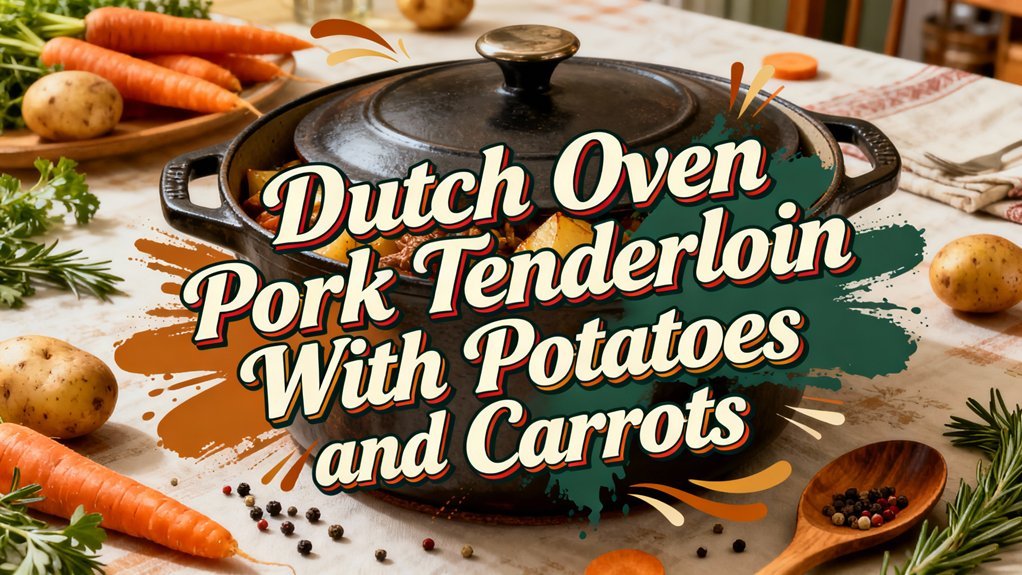
You’ll sear a 1–1.5 lb pork tenderloin in your Dutch oven, then layer it atop cubed Yukon Gold potatoes and chunked carrots seasoned with herbs. Deglaze the pan with broth, cover, and roast at 350°F until the pork reaches 140°F internally—about 20–35 minutes. The result’s a tender, juicy centerpiece with caramelized vegetables and rich pan sauce that’ll elevate your weeknight dinner considerably.
Ingredients & Proportions
Since a Dutch oven braise depends on balanced proportions for even cooking and proper sauce development, you’ll want to start with a quality pork tenderloin—the lean, quick-cooking cut that typically weighs 1–1.5 lb per piece. Plan 4–6 ounces cooked meat per person, accounting for shrinkage.
For ingredient ratios, match your vegetables roughly to your meat weight. Pair 1–2 lb pork with 1–2 lb combined potatoes and carrots. Your vegetable choices matter: choose Yukon Gold or russet potatoes cut into 1-inch pieces, and add 6–8 medium carrots chunked similarly for even doneness. The cast iron retains heat, cooking your vegetables faster than other cookware methods. This single piece of cookware can replace multiple pots and pans in your kitchen while delivering superior results. If you prefer plastic-free cooking vessels, glass canning jars can also be used for braising, though they may require adjusted cooking times. Remove the silver skin from pork before cooking to ensure optimal texture and prevent a tough, chewy exterior. To keep your Dutch oven in excellent condition for future meals, thoroughly dry it after washing to prevent rust on exposed cast iron edges. Use a meat thermometer to verify that your pork tenderloin reaches the proper internal temperature for safe consumption.
Season with ½–1 tsp salt per tenderloin, freshly ground pepper, and 1–2 tsp dried herbs. Add 1–2 cups broth for braising, which will develop into a rich, flavorful sauce as the pork and vegetables cook together. These proportions guarantee balanced flavor and synchronized cooking throughout your Dutch oven.
Equipment & Bake Parameters
The right Dutch oven and cooking approach make all the difference in achieving an evenly braised pork tenderloin with a golden crust and tender vegetables. Choose an enameled cast iron Dutch oven sized 5–7 quarts for excellent heat retention and durability. Wide, shallow models provide superior searing surface area compared to tall designs. Confirm your Dutch oven’s maximum oven-safe temperature before cooking—most enameled versions cap at 500°F. A quality enamel coating will maintain its integrity and performance through repeated high-heat cooking and frequent cleaning. The tight-fitting lid locks in moisture and flavor for consistent braising results. Unlike traditional bare cast iron, enameled Dutch ovens eliminate the need for seasoning, making maintenance simpler for home cooks. Consider your cooking style and budget when selecting between various enameled options to ensure the Dutch oven meets your long-term kitchen needs. Quality cast iron Dutch ovens can last for generations when properly cared for, making them a worthwhile investment for home cooks.
Sear your tenderloin 3–4 minutes per side over medium-high heat using high-smoke-point oil like canola. This develops a flavorful Maillard crust and fond for sauce. Ascertain your burner covers most of the Dutch oven base for even searing. Allow the pork to come closer to room temperature before cooking to achieve a better sear and more consistent browning across the surface. Using a covered pot in the oven helps retain moisture and ensures even cooking throughout the meat. Roast at 350°F for approximately 20–35 minutes, pulling the meat at 145°F internal temperature.
Preparation & Assembly Techniques
Once you’ve confirmed your Dutch oven‘s heat capacity and burner setup, you’re ready to prepare your ingredients and assemble the dish. Begin by cubing six small russet potatoes with skins intact and cutting three large carrots into uniform chunks. Quarter petite potatoes and slice onions accordingly for even cooking. Cutting vegetables into similar sizes ensures consistent cooking throughout the roasting process.
Next, rub your pork tenderloin with Italian seasoning, paprika, and garlic powder. Sear it on all sides for two minutes over medium-high heat, then remove it temporarily. Deglaze the pan with chicken broth, scraping brown bits with a wooden spoon to incorporate those flavorful compounds. Allow the pan to cool slightly before proceeding to ensure optimal heat stabilization for the next cooking phase. If you’re using a cast iron Dutch oven on a glass cooktop, be sure to gently place the pan rather than sliding it to avoid surface damage. This deglazing technique lifts the browned bits that contribute rich, savory flavors to your braising liquid.
For vegetable layering, arrange onions, carrots, and potatoes in your Dutch oven’s bottom. Apply seasoning techniques by sprinkling Italian seasoning and salt over vegetables. Add fire-roasted tomatoes, Worcestershire sauce, oregano, and basil. Position your seared pork atop this vegetable base before covering and baking. To prevent thermal shock and ensure even cooking, place your assembled Dutch oven in a cold oven and allow it to preheat gradually together with the pot rather than transferring it to an already-heated oven. For enhanced flavor development, consider using Vidalia onions which add natural sweetness to complement the savory pork and root vegetables.
Selecting the Right Pork Tenderloin
How do you know you’re choosing a quality pork tenderloin that’ll deliver tender, flavorful results? Start with freshness indicators: look for bright or light pink coloring, avoiding greyish tones that signal poor quality. Pale pink with slight marbling is ideal.
Next, perform texture evaluation by pressing the meat firmly—it should feel solid without mushiness. Check for minimal marbling and avoid excessive fat layers that’ll compromise texture during cooking.
Assess the smell; it should be clean with no off odors. Examine the packaging for excessive surface liquid or leaking juice, both red flags for quality concerns. Consider sourcing your pork from locally raised sustainable farms across provinces like Ontario and Alberta to ensure ethical production practices. Understanding fat content can guide your cooking methods and help you achieve the best results.
Finally, confirm the butcher’s trimmed away silver skin and excess fat. These steps guarantee you’re selecting a premium cut that’ll cook beautifully in your Dutch oven.
Vegetable Sizing and Prep Work
Proper vegetable preparation makes or breaks your Dutch oven pork tenderloin—you’ll want uniform cuts that cook at the same rate as your meat. Start by peeling and trimming your potatoes and carrots, then square them off before making precise cuts. Dice both vegetables into consistent cubes for even roasting, keeping carrots slightly smaller than potatoes due to their higher density. This size adjustment synchronizes cooking times and prevents overcooked or undercooked portions.
Uniform vegetable cutting directly impacts your roasting techniques and prep efficiency. Equal-sized pieces promote consistent texture enhancement, ensuring crisp exteriors and tender interiors throughout your dish. A sharp knife will improve both your safety and the precision of your cuts, allowing you to achieve the uniformity that transforms an ordinary meal into something memorable. A round Dutch oven with even heat distribution will ensure your vegetables and tenderloin cook consistently throughout the dish. Rinse your prepped vegetables before oiling and roasting at 375-400°F alongside your tenderloin, allowing flavors to integrate seamlessly in your Dutch oven environment.
Searing and Browning the Meat
Pat the meat completely dry, then season it generously with salt and let it rest briefly. Heat your Dutch oven over medium-high heat with high-smoke-point oil until shimmering. Lay the tenderloin away from you to avoid steam, then leave it undisturbed for 2–4 minutes per side using browning techniques that develop a golden-mahogany crust. Flip only once with tongs, preserving precious juices. Sear all major faces, including the ends, for uniform caramelization. Avoid crowding the pan when searing multiple pieces, as proper spacing ensures good sear development on each piece. Consider protecting your hands with heat-resistant accessories while handling the hot Dutch oven and skillet. The superior heat retention and distribution of your Dutch oven creates the perfect conditions for developing that golden crust on all sides of the meat. A fitted lid on your Dutch oven enables moisture retention throughout the braising process, keeping your tenderloin tender and flavorful. This generous seasoning and careful browning technique mirrors the approach used in classic pot roast recipes, where well-marbled cuts benefit from thorough searing before slow-cooking. Target an instant-read thermometer reading slightly below 145°F, accounting for carryover cooking during rest.
Building Flavor With Deglazing and Braising
Now that you’ve built a mahogany crust on your pork, you’ll capture those browned solids—called fond—by deglazing the Dutch oven with liquid, which dissolves the caramelized Maillard reaction compounds into a flavorful base for your braise. Pour ½ cup apple cider or dry white wine into the hot pot immediately after removing the meat. Scrape the bottom gently with a wooden spoon while the liquid simmers, releasing browned bits into the pan. Add remaining stock to reach your desired braising volume. These deglazing techniques concentrate umami and balance richness. The Dutch oven’s exceptional heat retention properties ensure that your braising liquid maintains consistent temperature throughout the cooking process, allowing the flavors to meld seamlessly. To verify your braising liquid has reached the proper temperature, consider using an infrared thermometer for quick, non-contact surface temperature readings.
For braising dynamics, pork tenderloin cooks quickly, so aim for a 145°F internal temperature with brief oven time. Cover the pot to trap steam, promoting even cooking of potatoes and carrots without drying the lean meat. The trapped steam works similarly to the steam development that creates a crispy crust during the initial baking phase. Using proper food storage methods like vacuum sealers for leftovers can help preserve braised dishes for future meals. Use soft utensils like wood to avoid scratching your enamel coating while stirring and basting.
Flavor Variations & Common Sauces
Once you’ve mastered the braising technique, you’ll reveal that the real magic happens in your choice of sauce—the finishing touch that transforms your Dutch oven pork into something uniquely yours. Your sauce variations determine the entire flavor profile of the dish. Consider a Dijon-mustard pan sauce for tangy sophistication, or a balsamic reduction for sweet-tart contrast with roasted vegetables. For umami-forward results, try an Asian-inspired soy-honey glaze. A creamy garlic-herb sauce delivers richness alongside potatoes, creating the kind of emotional comfort that food provides when shared with loved ones. You can also deglaze with white wine and finish with butter for a classic French approach. The raspberry jam and balsamic vinegar combination creates a thick, flavorful sauce without requiring roux or cornstarch, offering another excellent variation that complements the natural richness of pork tenderloin. Similar to how cast iron cookware distributes heat evenly for superior results, the Dutch oven’s tight-fitting lid ensures that your sauce reduces evenly while maintaining the moisture that keeps your pork and vegetables tender throughout cooking. For perfectly cooked results, use a meat thermometer to verify your pork has reached the safe internal temperature before removing it from the oven. Each variation leverages different acid, sweetener, and umami components to complement pork’s richness while brightening your entire plate. These sauce options work beautifully with root vegetables like potatoes, carrots, and onions that have been braised alongside your pork.
Nutrition & Serving Considerations
Dutch oven pork tenderloin delivers impressive nutritional value that shifts based on your sauce choice and vegetable additions. You’ll find recipes ranging from 83kcal to 563kcal per serving, with averages around 358kcal. The caloric breakdown typically features 34-36g protein, 2-53g carbohydrates, and 4-6g fat per portion.
For serving suggestions, plan on 5-8 portions from a 1-2.5 pound tenderloin. A single pound suits smaller groups perfectly. You’ll get significant potassium (61-1546mg) and iron (1-3mg) from the complete dish. Like chicken thighs prepared in Dutch ovens, layering complementary ingredients such as herbs and vegetables creates depth of flavor while enhancing the nutritional profile. Low-carb versions stay under 5g carbs, making this adaptable for various diets. Searing before roasting can enhance both flavor and moisture retention in your finished dish. For longer-term storage of leftover pork tenderloin, consider vacuum sealing your portions to extend shelf life and prevent freezer burn. While Dutch ovens excel at traditional cooking methods, precision techniques like proper sealing capabilities ensure consistent results across different cooking applications. To maintain your Dutch oven’s non-stick properties over time, applying proper seasoning techniques after each use will preserve the cookware for generations of cooking. Rest your pork at 145°F internal temperature for ideal texture and juiciness, maximizing nutrient retention throughout the cooking process. For cast iron Dutch ovens specifically, use water-based rust removal products to safely clean and maintain the cookware without compromising its cooking surface.
Common Issues, Troubleshooting & Tips
Even when you’ve mastered the basics, Dutch oven pork tenderloin can present challenges that compromise texture, timing, and flavor. Overcooking remains the primary culprit—use an instant-read thermometer at the thickest point rather than relying on cooking times. Remove pork at 140°F to account for carryover cooking during a 5–10 minute rest, which redistributes juices and improves moisture retention. For vegetable doneness, cut potatoes and carrots into uniform 1-inch pieces and parboil briefly beforehand. Add ¼–¾ cup broth to produce adequate steam without oversaturating. Season meat and vegetables before searing and again before roasting to build flavor layers, similar to how layering in vegetables partway through cooking ensures optimal texture. Verify your oven’s actual temperature with a thermometer—calibration errors greatly affect cooking times across different Dutch oven materials. Like cast iron skillets, Dutch ovens retain heat exceptionally well, so turn down the heat after the initial searing to prevent burning and ensure even cooking throughout the roasting process. For finishing touches on your pork tenderloin, consider using a culinary torch with refined butane fuel to add a caramelized crust, similar to the technique used for crème brûlée. For longer storage of leftover pork tenderloin, consider vacuum sealing portions before refrigerating to maintain freshness and prevent oxidation. When using alternative baking vessels like stoneware or casserole dishes instead of traditional Dutch ovens, adjust your expectations for heat retention and browning performance accordingly, as these materials don’t provide the same heat retention capabilities that specialized cookware offers.