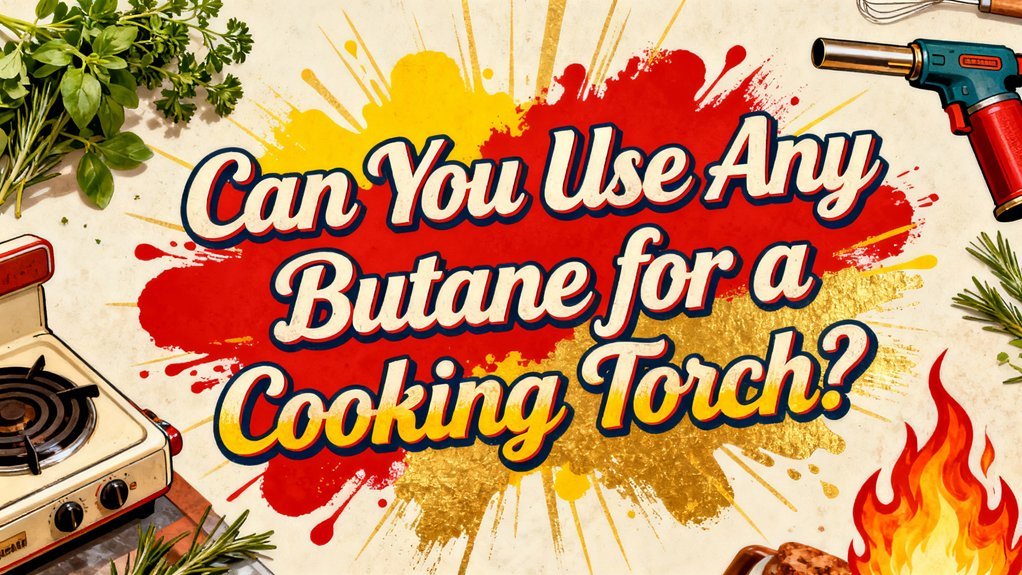
You can’t use any butane for your cooking torch—you’ll need fuel that matches your torch’s valve system and pressure rating. Premium refined butane at 99.5% purity produces consistent dark blue flames ideal for caramelization, while lower-quality fuel causes sputtering and yellow flames that affect taste and performance. Always purchase torch-specific fuel from reputable brands like Iwatani or Bernzomatic, and store canisters upright in cool, dry locations. Understanding the nuances between fuel types guarantees your torch operates safely and efficiently.
Understanding Fuel Compatibility Requirements
Before you refill or attach a butane canister to your cooking torch, you’ll need to confirm that the fuel type, valve system, and pressure rating match your torch’s specifications—mismatches between canister and torch can result in gas leaks, seal failure, or unsafe operation.
Different fuel types and cartridge styles exist. Some torches accept screw-in canisters while others use standard refill cartridges or attach directly to larger threaded canisters. Check your torch’s manual to identify which inlet valve your model requires. Higher purity butane allows for cleaner burning and reduces nozzle clogging issues. Investing in premium refined butane prevents residue buildup that can damage torch mechanisms over time. You can purchase butane through Amazon, hardware stores like Home Depot and Lowes, outdoor and camping stores such as REI, larger grocery stores, or directly from kitchen torch manufacturers like Jo Chef and Iwatani.
Pressure compatibility matters critically. Using a canister with higher fill pressure than your torch’s rated capacity risks seal failure and malfunction. Additionally, confirm that valve seals aren’t worn or deformed, and verify that threaded fittings are debris-free. Always select canisters labeled specifically for culinary use to guarantee manufacturer approval. Beyond basic caramelizing, cooking torches offer versatile applications like roasting peppers and tomatoes to remove their skins with precision heat. Allow your torch to rest for stabilization after refilling to ensure the fuel and components are properly settled before use. For long-term storage of your cooking torch, consider vacuum sealing techniques to protect equipment and fuel canisters from environmental damage. Proper maintenance techniques and adjustable flame control features vary by model, so consulting your torch’s documentation ensures you’re using compatible fuel and operating the device safely.
The Impact of Butane Purity on Torch Performance
While fuel compatibility guarantees your torch functions safely, the chemical purity of your butane fundamentally determines how well it’ll perform. You’ll notice immediate differences when comparing butane grades—premium 99.5% pure fuel produces consistent blue flames, while lower-quality alternatives create sputtering, yellow flames that signal contamination.
High-purity butane with advanced fuel filtration removes oils and particulates that clog your torch’s internal components. Without proper filtration, you’ll experience frequent nozzle cleaning, unreliable ignition, and accelerated wear on critical parts. According to torch maintenance best practices, use high-quality, filtered butane designed specifically for torches to ensure optimal performance and equipment longevity. The Chef Master Premium Cooking Butane Torch is specifically compatible with Chef Master standard 8 oz. butane cans, which are formulated to maintain consistent performance in both cooking and outdoor applications.
Premium brands maintain strict purity standards, ensuring reliable performance across varying conditions. Just as commercial vacuum sealers require proper equipment maintenance, kitchen torches benefit from consistent quality fuel to preserve operational efficiency. Kitchen torches excel at various culinary applications including caramelizing sugar on crème brûlée and searing meats, all of which require consistent flame quality. Similar to how superior heat retention in quality cookware enhances cooking results, premium butane maintains steady, efficient operation for professional-quality culinary results. Just as cast iron requires proper seasoning maintenance to preserve its cooking surface, your torch needs high-purity butane to maintain peak performance. Contaminants don’t just compromise flame quality—they deteriorate your torch’s longevity. Investing in properly filtered, certified-pure butane prevents costly damage and maintains steady, efficient operation for professional-quality culinary results.
Essential Safety Guidelines for Butane Storage and Use
Since butane’s volatility demands rigorous control over its storage environment, you’ll need to establish protocols that minimize pressure buildup, leakage, and fire risk. Store canisters upright in cool, dry locations away from heat sources and direct sunlight, maintaining temperatures within manufacturer specifications to prevent overpressure. Keep butane segregated from oxidizers, flames, and combustibles.
For safe handling, always engage the safety lock and set gas adjustment to OFF before refilling or transporting. Inspect valves for damage or debris before each use. Work only in well-ventilated spaces to prevent vapor accumulation. Wear safety glasses and heat-resistant gloves during operation. Use refined butane brands to prevent clogs and ensure optimal torch performance. Adhering to manufacturer’s instructions ensures that your butane torch operates safely and maintains its integrity during extended use.
To optimize performance and safety, ensure you use the fuel type specified by your torch manufacturer, as using incompatible fuels can result in poor performance or safety hazards. Cool your torch completely before refilling, and maintain a suitable fire extinguisher nearby. Like cast iron cookware, butane torches require proper heat retention and maintenance to preserve their longevity and performance. These butane storage and safe handling practices greatly reduce accident risk.
How Butane Delivers Superior Flame Quality
You’ll achieve superior cooking results with butane because its combustion chemistry produces a short, dark blue oxidizing flame that maximizes surface temperature while minimizing unburned hydrocarbons. This ideal fuel-air mixture delivers combustion efficiency that translates directly to faster browning and shorter exposure times for caramelization.
Butane’s flame stability depends on your torch’s adjustable needle valve, which lets you fine-tune between pilot and concentrated oxidizing flames. Proper adjustment prevents the yellow, reducing flame that deposits soot and off-flavors onto food surfaces. High-quality butane canisters contain fewer contaminants and additives, ensuring clean combustion without smoky tastes. Before lighting your torch, always light it away from food to prevent any contamination from the initial combustion. Thermocouples and infrared thermometers can help verify that flame temperature remains consistent throughout your cooking process.
Your nozzle geometry concentrates heat delivery, reaching usable searing temperatures of 1,200–2,200°F. This precision heating distinguishes butane torches from inferior alternatives, making them the professional choice for culinary applications requiring controlled, flavorless caramelization.
Where to Purchase Quality Butane Canisters
Now that you understand butane’s combustion properties and flame characteristics, sourcing the right fuel becomes your next priority. You’ll find quality butane through both online retailers and physical stores, each offering distinct advantages.
Online retailers like Amazon, Home Depot, and Lowe’s provide convenient access to torch-specific brands like Iwatani and Bernzomatic. You can compare canister sizes and specifications before purchasing.
Physical stores offer immediate gratification—hardware chains stock standard refills in their aisles, while specialty outdoor shops guarantee premium, temperature-stable options. Grocery stores carry basic canisters for quick refills. Just as vacuum sealer bags require specific material composition to function properly, butane fuel must be formulated specifically for cooking torches. Dedicated cooking torches with appropriate flame patterns ensure even heat distribution and more direct heating for optimal culinary results. Understanding safety mechanisms in your torch helps ensure you’re using compatible fuel designed for reliable operation. For optimal results when cooking with high-heat methods, proper even heat retention ensures consistent performance similar to specialized cooking equipment.
For peak performance, you’ll want manufacturer-direct sources like Iwatani or Bernzomatic, which guarantee compatibility with your torch. When selecting your torch, consider whether a single-flame or multi-flame design best suits your cooking needs and frequency of use. Regardless of your chosen outlet, prioritize torch-specific fuel formulations over generic alternatives to assure reliable combustion and safety.
Maintenance Tips for Optimal Torch Operation
Just as quality butane fuel keeps your torch performing reliably, consistent maintenance preserves its combustion efficiency and extends its operational lifespan. You’ll want to prioritize torch cleaning after heavy-use sessions, removing carbon and residue buildup from the nozzle and flame port using compressed air or a soft brush. Perform nozzle inspection regularly for cracks or wear that compromise performance. Wipe exterior surfaces with isopropyl alcohol on lint-free cloth, avoiding submersion. Every three to six months, conduct deep cleaning to assess seals and O-rings for deterioration. Before refilling with butane, always bleed the torch by holding it upside down and pressing the refill valve to release leftover air pressure, which prevents overfilling and promotes a consistent flame. Wait a few minutes after refilling for excess gas to evaporate, ensuring safe operation before ignition. Allow your torch to dry completely before testing ignition in well-ventilated areas. If your torch lacks automatic ignition or the ignition system fails, you can light it with an external lighter by carefully applying flame to the nozzle while turning on the gas. Monitor flame characteristics—steady blue flames indicate proper operation, while yellow or flickering flames signal contamination requiring immediate attention and purging procedures.
Comparing Butane to Alternative Fuel Options
While butane remains the standard fuel for handheld culinary torches, understanding how it compares to propane, MAP (methylacetylene-propadiene), and other alternatives helps you select the right fuel for your specific cooking needs and environmental conditions. Butane vs propane presents distinct trade-offs: propane reaches ~3,600°C compared to butane’s ~3,150°C, while butane delivers superior torch fuel efficiency at 49.1 MJ/kg mass energy content. However, propane excels in cold environments since butane’s higher boiling point (−0.5°C) causes performance failure below freezing. Different metals have varying melting temperatures, which is an important consideration when selecting fuel types for specialized culinary applications beyond standard brûléing tasks. MAP-Pro achieves the highest flame temperatures (~3,730°C) but requires compatible torch equipment. To avoid unpleasant flavors during cooking, ensure your flame is a dark blue flame by properly adjusting the torch, as incomplete combustion can leave off-flavors in your food. For culinary applications, high-purity butane minimizes soot and flavor contamination, making it ideal for precision cooking despite propane’s thermal advantages in demanding conditions. Professional chefs often prioritize fuel capacity and flame control features when selecting torches for consistent performance across multiple dishes. Achieving accurate flame temperature readings requires proper alignment and stabilization] before measurement to ensure consistent heat output across your cooking tasks. When connecting fuel cylinders to your torch, always turn the cylinder, not the torch to ensure a secure and safe attachment. High-purity butane also prevents taste transfer to food, which is why most culinary professionals recommend selecting high-purity fuel for delicate brûléing and finishing tasks. For optimal results with delicate dishes, monitor your food’s internal temperature to ensure proper cooking throughout.