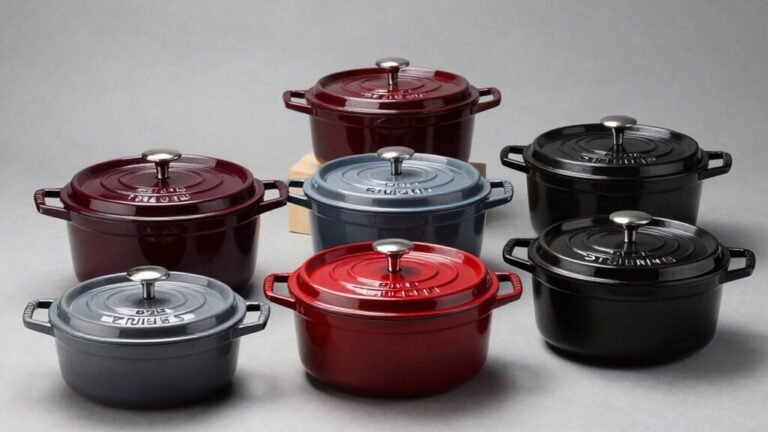

You’ll sear a trimmed 4–6 pound brisket until it’s deep mahogany, then braise it low and slow at 275–325°F for 3–6 hours in beef broth and red wine. The moist heat breaks down collagen into silky tenderness. You’ll know it’s done when an instant-read thermometer hits 200–205°F and a fork pulls the meat apart easily. Rest it covered for 15–30 minutes, slice against the grain, and serve immediately. The complete technique reveals how each step compounds for perfect results.
Ingredients You’ll Need
Since you’re preparing a Dutch oven beef brisket, you’ll want to gather a substantial cut of meat—plan for a 4 to 6-pound brisket point or flat cut with the fat trimmed. You’ll need 2-3 tablespoons of oil for searing, whether olive or avocado oil.
For aromatics, gather one quartered onion, minced garlic, and halved shallots to build your flavor foundation. Stock your pantry with 2 cups beef broth and dry red wine for braising liquid. Your seasoning options include red wine vinegar, Worcestershire sauce, soy sauce, and tomato paste—these create depth and complexity. Soy sauce adds umami to balance the smoky flavors from your BBQ seasoning and brown sugar.
A 16-ounce can of crushed tomatoes adds body, while BBQ sauce offers optional sweetness. After cooking, make sure to let your brisket rest for a few minutes, which helps confirm doneness and retain juices. The flat cut is leaner with a uniform shape, while the point cut offers more marbling that enhances flavor. The Dutch oven’s tight-fitting lid creates optimal moisture retention during the long braise, ensuring your brisket stays tender and flavorful throughout the cooking process. These brisket cuts and seasoning options work synergistically to produce a tender, richly flavored result in your Dutch oven.
Preparing the Dry Rub
Now that you’ve assembled your ingredients, it’s time to build the flavor foundation with a dry rub that’ll create a savory, caramelized bark on your brisket’s exterior.
Start by measuring your spices accurately into a bowl. Combine brown sugar, chili powder, smoked paprika, kosher salt, garlic powder, and onion powder. Use a fork to break apart any clumps, then whisk thoroughly for even distribution across all components. As you mix, the coarsely ground spices will adhere better to the meat’s surface during cooking. For optimal results, store any leftover rub in an airtight container where it will keep for up to 4 weeks.
Explore dry rub variations by adjusting heat levels with chipotle chili powder or red pepper flakes, or amplify smokiness with smoked sea salt. Consider adding ground coriander for earthiness or mustard powder for extra spice. To preserve the quality of your seasoning blends, keep them away from moisture and heat exposure, similar to how cast iron cookware requires proper storage conditions. Proper storage of your spice blends follows the same hygiene and prevention principles essential in food safety.
Master seasoning techniques by applying ¼ cup rub per pound of brisket, working the mixture into all surfaces with your hands. Wrap the rubbed brisket in foil and let it rest up to 24 hours before cooking for best flavor penetration.
Preparing the Brisket
Before you apply that carefully crafted dry rub, you’ll want to select and prep your brisket with precision to guarantee even cooking and ideal tenderness. Choose between the flat cut for leaner slices or the point for richer marbling. Select a 3–6 pound brisket that fits your Dutch oven comfortably.
Employ trimming techniques to remove the fat cap down to 1/4–1/2 inch, eliminating silver skin and hard connective tissue that obstruct even cooking. Inspect for uniform thickness; butterfly shallow areas or fold thin ends under as needed. Strategically trimming fat helps avoid greasiness while retaining juiciness throughout the final dish. The flat-cut brisket is particularly recommended for optimal moisture and flavor retention during the extended cooking process. A Dutch oven’s superior heat retention ensures your brisket cooks evenly and develops exceptional tenderness.
Pat your brisket dry before applying seasoning methods. Allow it to reach near room temperature for 30–60 minutes, reducing thermal shock and promoting consistent internal cooking throughout the roast. Cooking the brisket low and slow in the oven will break down the connective tissue for melt-in-your-mouth tenderness. Consider deglazing your Dutch oven with beef stock or wine after searing the brisket to lift browned bits and build a flavorful braising liquid.
Searing and Setup
After your brisket has reached near room temperature, you’ll want to focus on achieving a deeply browned, flavorful crust—the foundation for a rich braising liquid. Heat your Dutch oven on medium-high until oil shimmers, then test with a small meat scrap to confirm immediate sizzle. Pat your brisket dry and apply your rub to maximize the Maillard reaction. Using high smoke-point oil, coat the pan lightly—excess impedes browning. Position the brisket fat-side-down first, allowing rendered fat to lubricate the surface. Sear 4–7 minutes per side without frequent flipping, ensuring even heat circulation around the meat. Rotate to sear all edges for uniform caramelization. Maintain consistent heat by briefly reducing burner temperature if smoking occurs, preventing burnt surfaces while building deep flavor. The Dutch oven’s exceptional heat retention ensures consistent browning and develops the rich flavors essential to your braising process. The sizzling sounds indicate that browning is progressing successfully and developing the rich flavors essential to your dish. For superior results, consider dry aging your brisket beforehand using permeable membrane bags to concentrate flavor and improve tenderness before the searing process begins. Once your brisket is fully cooked, you can preserve any leftovers using vacuum sealer bags to maintain freshness and prevent freezer burn during storage. For finishing touches and precise caramelization on select portions, consider using a culinary butane torch to add final color and depth to your seared surfaces. For optimal doneness, aim for an internal temperature of 200°F when the brisket is fully cooked through the braising process. To ensure accuracy throughout the cooking process, consider using a digital oven thermometer with a probe inserted into the thickest part of the meat to track internal temperature without repeatedly opening your oven door.
Braising Process
Once you’ve achieved that deep mahogany crust, you’ll transfer your seared brisket to a preheated Dutch oven where low, moist heat will work to break down collagen and transform the meat into tender, succulent slices. Maintain oven temperatures between 275–325°F for 3 to 6 hours, adjusting based on brisket size. Lower temperatures favor more even collagen conversion. Your liquid ratios matter: combine beef stock with acidic components like red wine or vinegar, submerging approximately one-third to one-half of the meat. This braising technique requires a snug-fitting lid to minimize moisture escape. Add root vegetables midway through cooking. Target an internal temperature of 190–205°F, checking tenderness rather than relying solely on thermometer readings. For optimal results, create a herb bouquet with rosemary and thyme using kitchen twine to infuse deeper flavor complexity into your braising liquid. Rest the brisket covered for 15–30 minutes before slicing against the grain into half-inch thick slices to maximize tenderness and presentation.
Checking for Doneness
As your brisket approaches the end of its braise, you’ll need to verify tenderness through multiple methods rather than relying on time or temperature alone. Insert your thermometer into the thickest part of the flat, avoiding fat pockets, and aim for 200–205°F for pull-apart texture. Verify temperature accuracy beforehand to guarantee reliable doneness indicators. When selecting a thermometer, consider response time to ensure quick and reliable readings during the cooking process.
Combine temperature readings with probe testing: slide a toothpick or skewer through the meat—it should pass with minimal resistance. Use the fork test; the meat should pull apart effortlessly. For whole flats, lift with tongs; properly braised brisket sags slightly, indicating collagen breakdown. Similar to searing meat on all sides to develop a brown crust, verifying collagen breakdown ensures the connective tissues have properly transformed. Like the aromatics in a traditional pot roast, the braising liquid infuses the brisket with deep, savory flavors throughout the cooking process. Resting the brisket after cooking is crucial for locking in juiciness and allowing flavors to fully develop. A resting period of 30-60 minutes will enhance the overall tenderness and moisture retention of your finished brisket.
Check doneness 30–60 minutes before your estimated finish time. Don’t open the Dutch oven excessively; use an instant-read thermometer for spot checks rather than continuous monitoring. Reliable thermometer readings eliminate guesswork and ensure your brisket reaches the proper internal temperature for food safety. Allow the meat to stabilize for several minutes after removing it from heat, similar to how fuel components require stabilization time before optimal performance.
Serving and Storage
Let your brisket rest 15–30 minutes after removing it from the Dutch oven so juices redistribute throughout the meat. Slice against the grain into 1/8–1/4 inch pieces using a sharp knife. Serve immediately at 140–165°F, keeping it loosely tented with foil in an insulated carrier to retain heat without drying.
For storage tips, cool your brisket from hot-holding to 70°F within two hours, then to 41°F within four additional hours. Refrigerate at 41°F or below for 3–4 days, or freeze tightly wrapped at 0°F for 2–3 months. Store the braising liquid separately and chill the gravy in airtight containers to prevent odor absorption and maintain the quality of your leftovers. These serving techniques and storage practices preserve both safety and quality.