You’ll hand wash your enameled cast iron skillet with mild soap and soft sponges, then towel-dry immediately to prevent rust. Avoid thermal shock by preheating slowly over low-medium heat and using wooden or silicone utensils. While the enamel doesn’t require seasoning, you should oil exposed rims periodically to prevent corrosion. Store your cookware in cool, dry locations with soft barriers between pieces. Mastering several counterintuitive maintenance practices will keep your skillet performing efficiently for decades.
Cleaning Basics
Proper maintenance of your enameled cast iron skillet begins with understanding the fundamentals of everyday care. You’ll want to allow cookware to cool to room temperature before washing, as thermal shock can cause cracking. When cleaning, use warm water and mild dish soap with proper materials like soft natural sponges, nylon brushes, or everyday scrub cloths. These cleaning techniques protect your pan’s enamel finish from damage. Avoid metal sponges and abrasive cleaners that scratch surfaces. While enameled cast iron is dishwasher-safe, hand washing is recommended to preserve the enamel’s appearance over time. Rinse thoroughly under running water and dry immediately with a towel to prevent water spots and moisture accumulation. For tough stains, use a pan scraper to remove stubborn buildup without damaging the enamel surface. For food safety, always ensure that foods cooked in your skillet reach the proper internal temperature appropriate for the type of protein being prepared. Proper food storage and cooking practices, including awareness of safe temperature zones, further extend your skillet’s lifespan. After cleaning, storing your skillet with a thin oil coating helps maintain its longevity during extended periods of non-use. Unlike traditional cast iron that requires seasoning, enameled cast iron’s enamel coating eliminates the need for regular oil maintenance. This straightforward approach preserves your skillet’s integrity while maintaining ideal cooking performance and aesthetic appeal.
Rust Prevention on Rim
While your enameled cast iron skillet‘s enamel coating protects most of the pan, the exposed cast iron rim remains vulnerable to rust formation. Rim corrosion occurs when bare metal contacts moisture for extended periods. You’ll prevent this by immediately towel-drying the rim after washing—don’t air-dry or leave your skillet on a wet draining board. Moisture exposure accelerates oxidation, so store your cookware in a cool, dry location with good air circulation. Apply a thin layer of neutral cooking oil to the exposed rim periodically to create a protective moisture barrier. Avoid prolonged soaking and minimize dishwasher use since dishwashers expose the rim to extended moisture contact that promotes rust development. Just as cookware benefits from gradual heat distribution, proper stabilization of the oiled surface requires allowing the cookware to rest for a few minutes before storage to ensure optimal protection. For stubborn rust spots, use a nylon scrubbing pad with baking soda paste, then reapply oil immediately to inhibit re-oxidation. If rust grains persist despite regular maintenance, use a green Scotch Brite pad for more intensive removal before reapplying oil. For more significant rust damage on the rim, consider reseasoning in a 450-500 degree oven to restore the protective layer. The most crucial step after any rust removal is thoroughly drying with a towel to prevent moisture from causing new rust formation. Regular maintenance and proper storage with separators to allow airflow helps preserve your enameled skillet’s rim and ensures it remains a durable, reliable tool for generations.
Cooking Usage
Getting the most from your enameled cast iron skillet requires understanding how to manage heat, lubrication, and cooking techniques that complement its unique properties. Preheat slowly over low–medium heat to prevent thermal shock. Limit empty preheating to five minutes, as prolonged heating damages enamel. Use medium heat for most cooking since enameled cast iron distributes warmth evenly; reserve high heat sparingly. Add oil before cooking and allow foods to form crusts naturally rather than flipping frequently. Bring food to room temperature for even cooking throughout the skillet. Master braising, stewing, and slow-cooking techniques that leverage the cookware’s thermal mass and exceptional heat retention properties. Employ wooden or silicone utensils exclusively to protect the enamel surface. Avoid abrupt temperature changes, such as transferring hot pans to cold water, which causes crazing—similar to how freezer storage requires gradual temperature transitions to prevent thermal shock damage. Always handle with care as handles can become very hot during cooking. These heat management practices and refined cooking techniques maximize your skillet’s performance and longevity.
Stain and Discoloration Removal
Because enameled cast iron’s nonporous surface resists staining better than bare cast iron, you’ll find that most discoloration responds well to gentle, chemical-free methods before resorting to commercial cleaners. Overnight soaking in warm soapy water breaks down everyday stains safely. For persistent marks, dissolve two tablespoons of baking soda per pot of water, or create a paste applied directly to spots for 10–15 minutes. When using staining techniques with baking soda, employ only non-abrasive pads to preserve your enamel’s integrity.
For tougher discoloration, cream cleansers or oxalic-acid–based cleaning products like Bar Keepers Friend provide effective results when used sparingly. Always test commercial cleaning products on inconspicuous areas first, and avoid metal scrapers that chip enamel surfaces. Hydrogen peroxide combined with baking soda creates sodium percarbonate, a safe cleaning agent that will not damage your enamel coating. When cleaning discolored surfaces, ensure you have a clear line of sight to the area you’re treating to identify all stains accurately. For stubborn residue that resists gentle methods, a notched scraper or soft sponge can help remove buildup without damaging the enamel. Unlike bare cast iron, which requires regular oiling and baking to maintain its seasoning layer, enameled cast iron’s protective coating eliminates the need for this maintenance process. To further protect your skillet’s finish, use wooden, silicone, or nylon utensils when cooking to prevent additional scratching, as this preserves the protective enamel coating that makes enameled cast iron such an attractive and durable cookware option. Most stains are cosmetic and do not affect the flavor, safety, or performance of your cookware. Follow manufacturer recommendations to guarantee compatibility with your specific cookware.
Maintenance and Seasoning
Unlike bare cast iron, enameled cast iron doesn’t require full interior seasoning since the enamel coating prevents direct iron exposure and provides inherent corrosion protection. However, exposed unenameled edges and rims benefit from targeted seasoning to prevent rust formation.
For seasoning methods, clean the rim thoroughly, apply a thin oil coat using high smoke-point oils like canola or grapeseed, then bake upside-down at 350°F for one hour. Oil selection matters: avoid low smoke-point oils that polymerize unevenly. Cool the cookware inside the oven before handling. Wooden, nylon, or silicone utensils should be used during cooking to avoid damaging the enamel coating on the interior surfaces.
Daily maintenance involves hand-washing with mild detergent and immediate drying. After abrasive cleaning or rust removal, reapply targeted seasoning to exposed metal areas. This protective polymerized oil layer prevents rust and maintains the integrity of your cookware’s exposed edges. For compact storage, consider using vacuum sealing techniques to keep your cookware dust-free when not in regular use. Vacuum sealing can extend storage freshness by creating an airtight seal that prevents oxidation and dust accumulation during extended periods of non-use. Light stovetop oiling serves as interim maintenance between oven seasoning cycles, performed a few times yearly for heavily used pieces. Cast iron grill pans demonstrate how heat retention properties can be maximized through proper maintenance routines. Regular seasoning cycles help extend the usability of your cookware for years to come.
Storage and Longevity Tips
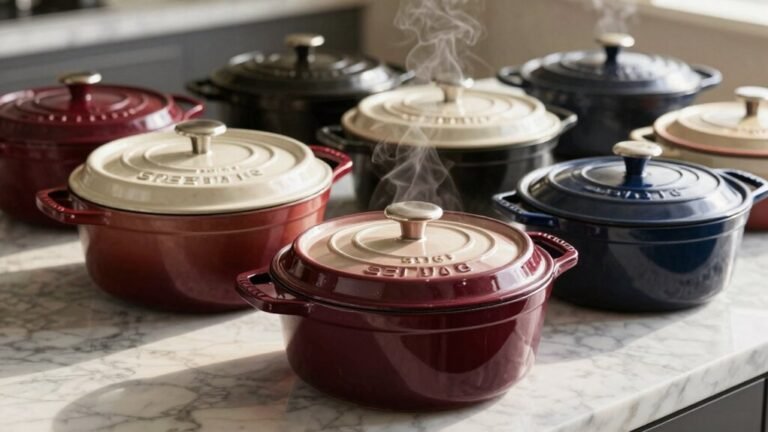
While your enameled cast iron‘s enamel coating provides excellent protection during daily use, you’ll extend its lifespan greatly through thoughtful storage and handling practices. Store your cookware in dry, well-ventilated cabinets away from moisture sources, and use soft barriers between stacked pieces to prevent chipping. Keep lids stored right-side up with spacers allowing air circulation. Utilize cookware protectors made of durable felt to maximize space while preventing scratches and damage during storage.
Implement proper storage precautions by lifting—never sliding—cookware from cabinets and placing heavier items on lower shelves. Avoid hanging heavy Dutch ovens on inadequate hardware. The finish on enamel-coated Dutch ovens can be fragile, so ensure lid protectors are in place to prevent pot and lid from touching. Using a Dutch oven rack during storage can also help maintain proper spacing between pieces and improve air circulation around your cookware.
For long term monitoring, periodically inspect rims and edges for hairline chips, crazing, or rust exposure. Address damage early before underlying cast iron corrodes. Before storage, ascertain complete drying of all surfaces and remove food residue promptly to prevent discoloration. Store your cookware away from flammable materials to minimize fire hazards in your kitchen storage areas. Consider using a meat thermometer to verify internal temperatures of slow-cooked dishes before storage to ensure proper food safety. Proper maintenance during storage ensures your Dutch oven remains ready for slow-braising meats and other cooking applications for years to come.