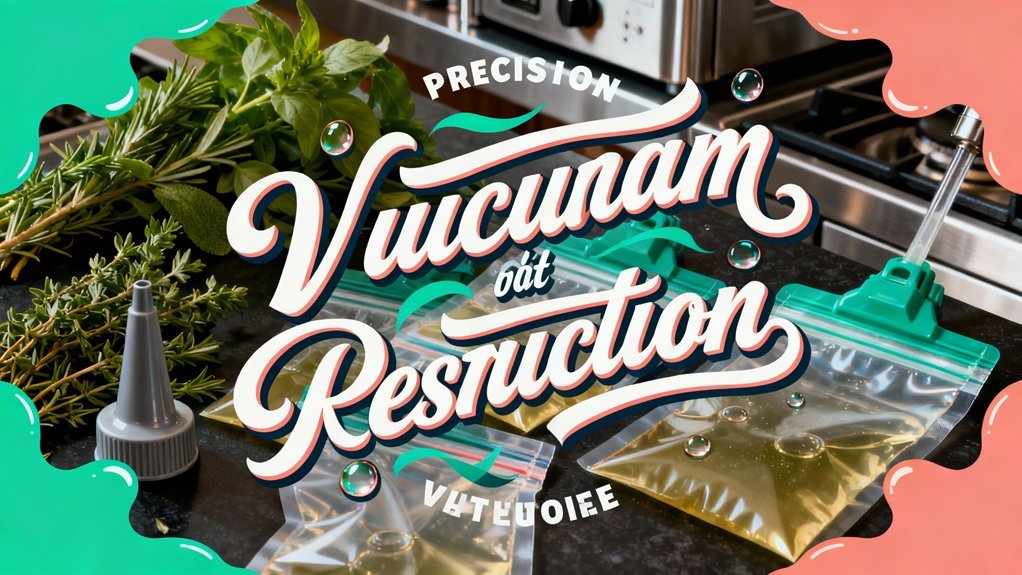
You can vacuum seal liquids without freezing by pre-cooling them to approximately 41°F for a slushy consistency, which prevents messy overflow and pump damage. Use a chamber vacuum sealer rather than an external model, as it equalizes pressure safely. Wipe your seal area completely dry, fill only three-quarters capacity, and maintain a 1-inch headspace. Position the bag with its mouth straight in the vacuum channel and use controlled vacuum pulses to manage liquid proximity to the sealing zone. Mastering specific techniques’ll greatly improve your success rate.
Understanding the Non-Freezing Pre-Cooling Method
When you’re vacuum sealing liquids, pre-cooling is your most effective strategy for preventing the messy mishaps that typically occur during the process. Non-freezing techniques offer you precise temperature management without solidifying your contents. You’ll chill liquids to approximately 41°F within four hours post-cooking, targeting a slushy consistency rather than a fully frozen state. This approach reduces bubbling and minimizes liquid movement into seal areas during vacuum cycles. You can achieve this through ice baths, blast chillers, or external ice blocks around your container. The key lies in lowering the boiling point risk in low-pressure environments while maintaining seal integrity. Remember to wipe edges of packages if they become wet during the sealing process to ensure a clean, reliable seal. Chamber vacuum sealers handle any liquid consistency without requiring full freezing, making them ideal equipment for this non-freezing pre-cooling method. According to Consumer Reports’ rigorous testing methodology, seal quality is one of the most critical performance metrics to evaluate when selecting equipment for specialized tasks like liquid sealing. For optimal results, consider investing in vacuum seal bags with strong, secure seals that are specifically designed to maintain durability during liquid sealing operations. Gentle vacuum settings combined with adequately chilled liquids enhance overall efficiency without compromising food safety or quality. Battery life and suction power are important factors when choosing a handheld vacuum sealer for consistent performance across multiple sealing sessions. Many liquid-compatible models feature drip trays and liquid detection sensors to further protect your machine when working with wet foods.
Selecting the Right Equipment for Liquid Sealing
Your success with the non-freezing pre-cooling method depends heavily on having equipment that’ll work with chilled liquids rather than against it. Chamber vacuum sealers are your best choice—they equalize pressure around the entire bag, preventing liquid from being sucked into the pump. External or suction-nozzle sealers risk drawing chilled liquids directly into sensitive components, which damages equipment and interrupts sealing cycles.
Look for machines with piston pumps and integrated liquid traps that protect against contamination. Adjustable vacuum depth lets you stop the pump before liquid reaches your seal line, preserving both equipment and package integrity. Chamber sealers offer greater oxygen vacuuming and flexibility with both solids and liquids, making them ideal for diverse product types. VacMaster home vacuum sealers provide reliable equipment designed to handle frequent sealing of various products including liquids. Choose equipment with slanted insert plates that position fluids away from sealing zones. When selecting equipment, prioritize models with suction power ratings that can handle liquid sealing tasks effectively. Proper material thickness of your vacuum bags also plays an important role in preventing leaks when sealing liquids. Prioritize sealing techniques like staged vacuum programming, which reduces foaming when removing air from chilled products, ensuring reliable, consistent results.
Preparing Your Liquids for Vacuum Sealing
Success with liquid vacuum sealing hinges on meticulous preparation that addresses the thermodynamic challenges of removing air from chilled products. You’ll want to implement pre chilling strategies by cooling sauces, soups, and juices before sealing. This practice prevents rapid boil-over during the vacuum process while promoting seal integrity and maximizing vacuum draw.
Your liquid preparation techniques should include wiping the seal area completely dry—any residual moisture compromises seal failure. You must leave adequate headspace in your pouch, using fewer filler plates to create space at the top. This positioning prevents overfill and reduces boil-over risk. Using a canning funnel during the filling process keeps the bag open and directs liquid properly into the pouch. For optimal results with liquids, consider investing in chamber technology which removes air from the entire chamber rather than using suction that can accidentally extract liquids from bags.
Additionally, angle pouches at twenty degrees to gravity-feed liquids toward the base, directing bubbles toward the machine. These methodical steps eliminate common complications and guarantee peak sealing performance. Just as cast iron requires protective seasoning layers to prevent rust and maintain durability, your sealed bags need proper construction to withstand storage conditions. Maintaining proper seal strength throughout the process ensures your sealed bags will withstand the rigors of storage and sous vide cooking without compromising the integrity of your prepared liquids. Like adjusting for weather conditions when cooking outdoors, you may need to modify your vacuum sealing approach based on ambient humidity and temperature in your kitchen. Using specialized vacuum sealer bags designed specifically for wet applications provides added protection against leaks and maintains the quality of your moisture-rich foods during storage. Properly sealed liquid portions also support efficient meal portioning by allowing you to freeze and thaw exact serving sizes throughout your week.
Proper Filling Techniques to Prevent Overflow
Preventing overflow during liquid vacuum sealing requires three critical interventions: using a canning funnel to direct flow, maintaining a dry seal area, and controlling your filling level strategically. You’ll direct liquid precisely into your bag without spilling by employing the funnel, which stabilizes the opening during pouring. For liquid control, you should never exceed three-quarters capacity, leaving ample space at the top to accommodate vacuum suction. After filling, wipe the bag’s top completely dry before sealing—moisture interferes with the heat bar’s adhesion, causing seal failures. Just as lye-based oven cleaner products require thorough rinsing after use to prevent chemical residue, your vacuum-sealed bags must have all moisture removed from sealing surfaces to ensure proper adhesion. Push out visible air bubbles post-filling to prevent overflow during the vacuum cycle. Some users find that elevating the FoodSaver during vacuuming can stop liquid from reaching the seal area more effectively. These overflow prevention techniques guarantee your seal remains airtight while keeping liquid contained within the bag’s body, away from critical sealing zones. For best results, use vacuum sealer bags specifically designed to withstand the sealing process and maintain an airtight environment, as regular plastic bags lack the appropriate texture and structure necessary for effective sealing. Proper heat distribution during the sealing process ensures consistent results across different liquid types and viscosities. Vacuum sealing liquids also helps preserve their nutritional value more effectively than traditional storage methods. Unlike traditional freezing methods that risk freezer burn and quality degradation, vacuum sealing maintains meat quality during extended storage periods.
Mastering the Skip Feature for Air Retention
While the skip feature isn’t universally known among home vacuum sealers, it’s a game-changing technique that’ll transform how you seal liquids without expensive specialized equipment. You activate this function by pressing the seal button mid-vacuum cycle, manually stopping air extraction before overflow occurs.
Mastering timing techniques requires observing your liquid’s rise and triggering activation when moisture reaches the seal strip. Your skip feature benefits compound through repeated use—you’ll successfully seal soups, stews, and sauces over fifty times on standard FoodSaver models. This method proves especially effective for preserving freshness of liquid-based foods compared to traditional storage approaches, as removing oxygen slows oxidation and prevents mold and bacteria growth. Vacuum-sealed liquids can maintain quality significantly longer than conventionally stored items when kept at proper temperature control. Proper maintenance and care of your vacuum sealing equipment ensures consistent performance across multiple sealing cycles. Avoid rapid temperature changes when storing sealed liquids, as thermal shock can compromise your vacuum seal’s integrity.
Position your machine one inch elevated on a slight slope, angling your bag forty-five degrees over the counter edge. This positioning directs bubbles toward the machine while keeping liquid low, optimizing air removal before you engage the seal.
Positioning and Sealing Your Bags Correctly
Your bag orientation directly impacts success. Position the fill lowest and seal area highest, maintaining an ~1-inch elevation so air migrates toward the sealer while liquid settles downward. Lay your bag flat with liquid spread thin to minimize headspace and prevent sloshing during vacuuming. Keep the bag mouth straight in the vacuum channel—no twists or kinks—to guarantee even suction.
Before vacuuming, wipe the top 1–2 inches thoroughly dry. Maintain a clean, dry strip of 2–3 cm between liquid and your intended seal line. Use controlled vacuum pulses, stopping immediately when liquid approaches the seal. This methodical approach prevents moisture intrusion and guarantees reliable welds every time, much like how avoiding prolonged contact between liquid and heat sources—such as extended boiling in cast iron—preserves the integrity of your cookware and food quality. Similar to how deglazing incorporates browned bits and flavors in Dutch oven cooking, vacuum sealing requires careful technique to capture quality. Just as internal temperature measurement ensures food safety in meat preparation, precise moisture control during vacuum sealing ensures optimal preservation results. Proper sealing technique also helps prevent freezer burn when you eventually freeze your liquid-filled bags, preserving both texture and quality.
Double Sealing for Maximum Durability
Double sealing immediately reinforces your vacuum seal by applying a second heat cycle right after the initial seal, creating a fortified barrier that considerably reduces leak risk during storage and transport. You’ll enhance seal durability by activating the seal button again without removing your bag, ensuring the seal area stays dry beforehand.
This technique considerably strengthens packaging integrity, especially for non-freezing liquids susceptible to pressure changes. The dual-seal approach creates a backup should your primary seal weaken over time from liquid expansion or temperature fluctuations. You’ll notice improved long-term freshness retention and better stackability without compromising structural reliability. Chamber vacuum sealers are particularly effective for this double-sealing process, offering better vacuum control that ensures consistent results across both seal applications. Similar to how proper seasoning maintenance prevents deterioration in cast iron cookware, even heat distribution across your sealing surface ensures both seal applications bond with equal strength and consistency.
Verify both seals visually for uniform width and absence of gaps. For maximum reinforcement on thicker liquids, you can apply an optional third seal. This method is essential for preventing freezer burn, which can compromise both texture and taste during extended storage periods. This method consistently outperforms single seals in freezer efficiency and safety.
Managing Air Bubbles and Excess Liquid
Since proper air and liquid management directly determines seal success, you’ll need to execute several preparatory steps before activating your vacuum sealer.
Begin with air bubble management by nudging obvious bubbles toward the bag’s edge using a gentle slope positioning. This prevents air pockets from compromising your seal’s integrity. Next, address liquid overflow by wiping the bag’s top completely dry—any moisture interferes with the sealer’s vacuum function. Fold the bag edge over if necessary to protect the seal area.
Position your bag slightly elevated so air evacuates before liquid reaches the seal zone. Keep the edge flat and tucked into the sealer trough. Small residual bubbles are acceptable provided they don’t compromise the seal. If any liquid does touch the edge of the bag during the process, double sealing is recommended to ensure a secure closure. This methodical approach minimizes both air entrapment and leakage during the sealing process.
Storage Solutions for Sealed Liquid Packages
Once you’ve sealed your liquid package, you’ll need to contemplate where and how you’re storing it—because the seal’s success depends equally on proper containment afterward. Your container selection determines long-term viability; borosilicate glass and food-grade plastics like PET or polypropylene resist chemical degradation and minimize odor transfer during extended liquid storage. Silo’s Tritan™ containers are specifically engineered to safely store liquids without leaks while maintaining airtight integrity.
Position sealed containers upright in shallow drip trays as secondary containment, catching potential leaks from undetected seal failures. This failsafe approach protects adjacent items and surfaces. Store packages in climate-controlled environments away from direct sunlight and temperature fluctuations that compromise material integrity. Our vacuum containers feature airtight seals that keep food and liquids fresh and tasty throughout extended storage periods.
For transportable liquid packs, use containers featuring locking clips or secondary outer closures preventing accidental lid displacement. Test seals before committing to long-term storage by submerging closed containers, verifying no air bubbles escape—confirming your container selection and seal integrity align with safe liquid storage protocols.
Troubleshooting Common Liquid Sealing Issues
Even with proper storage and container selection, vacuum-sealed liquids can fail if you don’t address underlying sealing problems. Different liquid variations demand specific troubleshooting approaches. First, inspect your sealing components for melted plastic residue, cracks, or misaligned gaskets that compromise seal integrity. Clean sealing bars thoroughly to remove food particles blocking contact. Second, manage moisture by allowing absorbent strips to capture excess liquid before sealing. Empty your drip tray when the indicator blinks. Third, maintain proper temperature control—allow 20 seconds between seals to prevent heat buildup that weakens bonds. Finally, verify bag placement is centered and undamaged. These methodical steps directly address why your liquid packages reopen or leak, ensuring consistent, reliable seals. For optimal results, invest in precision-engineered sealing systems that employ bi-active sealing and air-assist features to guarantee strong, consistent seals every time.