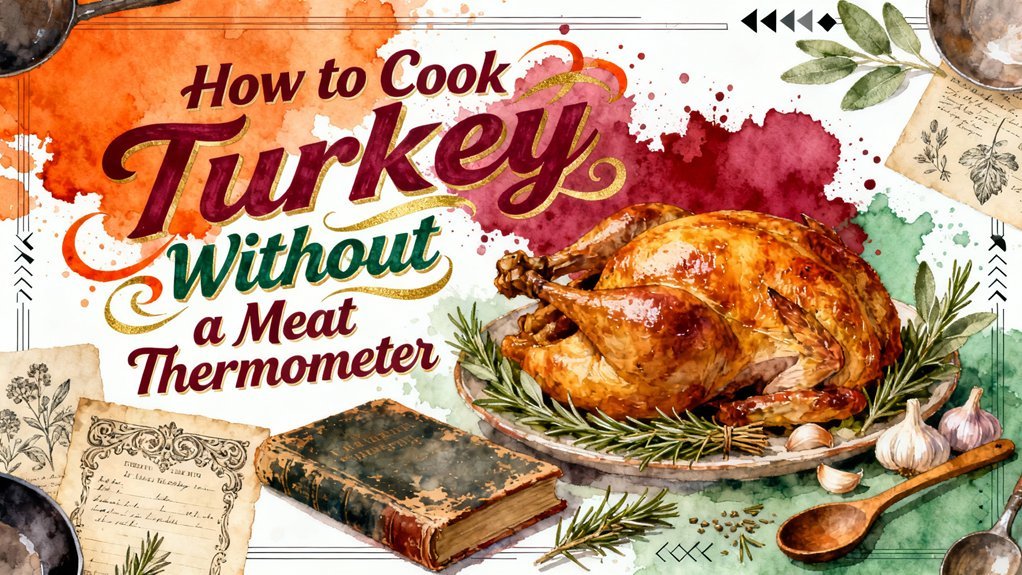
You can cook turkey without a thermometer by checking several key indicators. Pierce the thickest thigh and verify juices run clear, not pink. Wiggle the drumstick—it should move freely at the hip joint when fully cooked. Look for golden-brown, crispy skin throughout. The meat should be opaque white or tan when sliced and separate easily from bones. While these visual and tactile cues work, they’re less reliable than thermometers for ensuring food safety, so understanding each method’s specifics matters considerably.
Visual Signs Your Turkey Is Fully Cooked
Without a meat thermometer, you’ll need to rely on several observable cues to determine doneness. Start by testing leg mobility—wiggle the drumstick at the hip joint, and a freely moving joint indicates collagen breakdown and likely doneness. Next, examine surface color; your turkey should display even golden-brown, crisped skin across the entire bird. Check meat opacity by slicing the thickest breast or thigh portions—you’re looking for opaque, white or tan meat rather than translucent flesh. Observe juice clarity when piercing thick sections; clear juices suggest doneness, while pink or reddish juices indicate undercooking. Finally, assess carving texture by inserting a fork into the thickest part—the meat should yield easily and separate cleanly from bone. To prevent foodborne illness, always avoid cross-contamination by washing your hands and utensils thoroughly after handling raw turkey. However, relying on visual and juiciness cues without a thermometer is risky and unreliable for ensuring food safety. Remember that some pinkness near the bone may be normal, particularly in smoked or brined turkeys, so use all these visual indicators together for the most accurate assessment. Just as cast iron cookware can be used for outdoor cooking on various heat sources to achieve reliable results, your turkey requires proper heat application throughout the cooking process. Proper storage techniques like removing air from containers can help maintain turkey quality if you’re preparing it ahead of time. Just as cast iron cookware requires seasoning after cleaning to prevent rust and maintain its cooking surface, turkey skin develops its protective golden-brown exterior through proper heat application. For the most reliable verification of doneness, use a food thermometer to confirm the turkey has reached the safe internal temperature of 165°F in the thickest parts of the thigh and breast. Combine all these visual signs for confident results.
The Juices and Texture Method
Because juice clarity and meat texture provide reliable indicators of doneness, they’ll become your primary assessment tools when cooking without a thermometer. Pierce the thigh’s thickest part with a fork—clear juices flowing freely signal full cooking, while pink or cloudy liquid indicates undercooking. The juices clarity should show no blood near the bone.
For texture firmness, press the breast lightly; it should feel springy and resistant. The thigh meat should feel firm yet juicy, shredding easily with a fork while remaining moist. Soft, mushy texture suggests the bird needs more time. Remember that 165°F internal temperature is the target doneness level that these visual and tactile cues should approximate. After cooking, you can prepare magnificent gravy using the rendered drippings collected in the roasting pan, a technique perfected in classic Dutch oven recipes.
After removing your turkey from the oven, rest it for one hour at room temperature under loose foil. Like proper food storage methods, this resting period redistributes juices throughout the meat, ensuring ideal moisture and texture before carving. Building layers of flavor through proper preparation techniques, similar to how multiple rounds of seasoning create depth in cast iron cookware, transforms a simple roasted bird into an exceptional centerpiece. The rendered pan drippings can be deglazed with stock to create a flavorful base, much like the technique used in beef stew preparation. The even heat distribution properties of quality cookware ensure consistent results whether you’re roasting turkey or preparing braised dishes.
Physical Movement Tests for Doneness
When you’re cooking without a thermometer, physical movement tests offer quick, hands-on ways to gauge your turkey’s doneness.
Start with the thigh wiggle test. Hold the turkey body and jiggle the drumstick—a loose, easy movement signals that connective tissues have broken down. Stiff resistance means you need more cooking time.
Next, try drumstick rotation. Grab the drumstick end and twist gently. Freedom to rotate at the hip and knee indicates the muscle fibers have relaxed toward doneness. Resistance suggests undercooking.
Compare both drumsticks for similar mobility to detect uneven cooking. Always protect your hand with a cloth or towel when performing these tests to avoid hot grease and slipping. These physical indicators work best when the thigh reaches 180-185°F, ensuring the thickest part of the turkey is properly cooked through. However, the USDA recommends that turkey reach 165°F in the thickest part of the thigh to eliminate harmful pathogens and ensure food safety.
Use these physical tests as corroborating indicators alongside juice color and skin appearance.
Why Alternative Methods Have Limitations
While the physical tests and visual checks described earlier offer practical guidance, they’re inherently unreliable for ensuring your turkey’s safety. Color cues mislead you—golden brown exteriors develop before your turkey reaches 165°F internally, and pink near bones persists even when meat is fully cooked due to bone pigments, not bacteria. Cooking duration calculations ignore critical variables like oven inconsistencies, starting temperature, and altitude, leaving dangerous cold spots undetected. Your turkey’s breast may reach safe temperatures while thighs and stuffing lag dangerously behind. Juices run clear well below the safety threshold, providing false confidence. Fat pockets and dense thigh areas remain hidden from visual inspection, masking undercooking in bacterial hotspots. These methods fail against whole-bird heat distribution realities, similar to how even heat distribution is essential for properly cooking proteins, just as searing the meat on the stovetop before finishing in the oven ensures thorough and consistent cooking. A reliable digital thermometer is the only accurate tool for confirming proper doneness throughout the bird. According to food safety guidelines, stuffing must reach 165°F internally to eliminate harmful bacteria, a requirement impossible to verify without proper temperature measurement tools.
Best Practices for Cooking Without a Thermometer
Although alternative methods have significant limitations, you can still cook a safe turkey without a thermometer by following a structured approach that accounts for the variables traditional timing and visual checks ignore.
Start by adhering strictly to weight-based timing guidelines at 325°F for 6 to 6.5 hours total. Monitor juices running clear from the thickest thigh areas—they’ll shift from pink to amber when fully cooked. Check doneness at two-thirds cooking time, then tent with foil to prevent surface drying while maintaining heat retention. The target temperature for a fully cooked turkey is 170° F in the thigh, which visual indicators can help approximate. Basting the turkey periodically helps retain moisture and ensures even cooking throughout the process. Similar to searing meat in cast iron before finishing in the oven, allowing the turkey to rest after cooking helps retain juices and improves the final texture and flavor. For optimal results, allow a three-minute rest period after removing the turkey from heat to ensure carryover cooking completes safely. Just as gentle cleaning methods preserve cookware integrity, careful handling and proper resting techniques preserve the turkey’s quality and safety. Proper storage of leftover turkey using vacuum sealing can extend its freshness and maintain quality for future meals.
Position your turkey breast-side down initially to protect delicate white meat. Flip it breast-side up midway through cooking. These rotation techniques guarantee even heat distribution and safe cooking throughout without relying on thermometer readings, much like how cast iron skillets distribute heat evenly during the frying process.