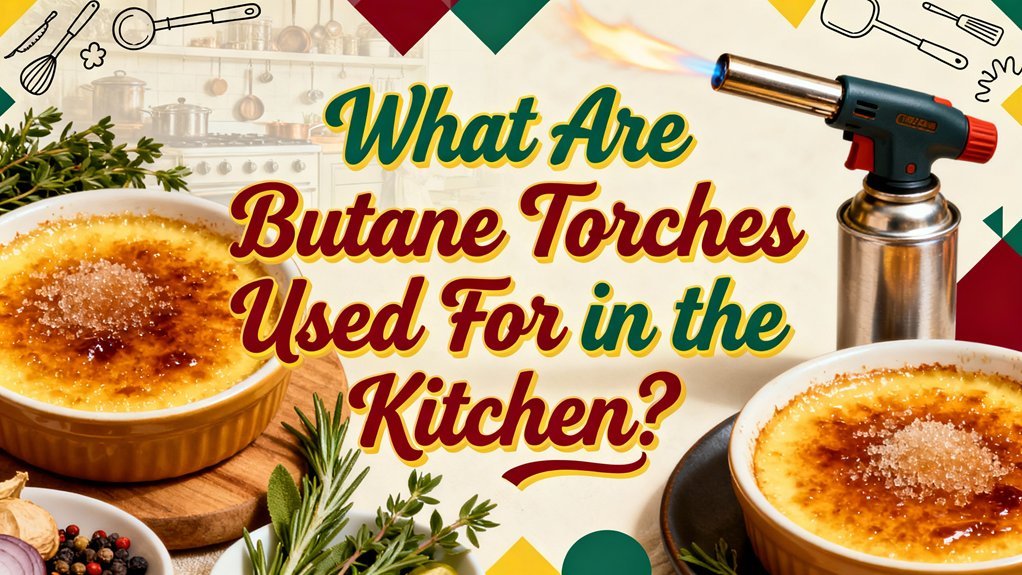
You’ll use a butane torch to achieve restaurant-quality results across countless dishes. Caramelize crème brûlée with precision, brown meringue peaks evenly, and sear sous vide proteins quickly while maintaining tender interiors. Char vegetables and fruits for deeper flavors, melt cheese for gratinated tops, and flambé desserts dramatically. The torch also infuses cocktails and dishes with aromatic smoke. Its compact design lets you handle tight spaces efficiently while impressing guests with professional techniques. Uncover how to master each application for elevated home cooking.
Dessert Applications and Caramelization
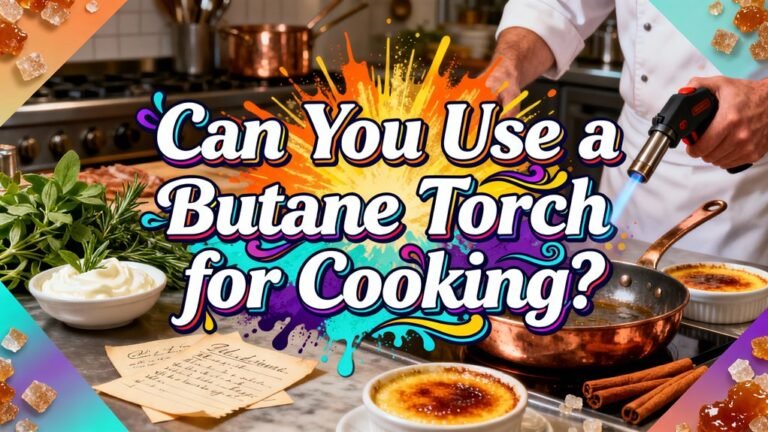
Whether you’re perfecting a classic crème brûlée or browning meringue peaks, a butane torch delivers precise, instantaneous caramelization that’s difficult to achieve with traditional kitchen tools. You’ll sprinkle an even sugar layer on your custard, then hold the torch 4-6 inches above the surface, moving it continuously until the sugar bubbles and forms a glassy crust. For meringue, use low flame intensity to avoid burning the delicate structure while creating that signature golden appearance. Beyond these classics, torches excel at dessert decoration and chocolate tempering applications. The Maillard reaction occurs in seconds, producing rich caramelized flavors without overcooking your interior. You’ll achieve restaurant-quality results at home, creating stunning contrast between creamy centers and hard caramel exteriors that impress every guest. For the best results, ensure your crème brûlée is thoroughly chilled before torching to preserve its creamy texture under the torch’s heat. Using a circular motion with the torch ensures even caramelization across the entire sugar surface. A butane torch also eliminates the difficulty of traditional caramelization methods like using cast iron tools or ovens. Remember to control flame intensity carefully to avoid creating bitter flavors during the caramelization process, as precise temperature management is essential for achieving optimal browning without burning. The magnetic base] makes storage convenient and keeps your torch easily accessible for multiple dessert applications. Butane torches are equally effective for browning meringue toppings on pies and tarts, adding both visual appeal and texture to your finished desserts.
Cheese and Dairy Melting Techniques
Butane torches excel at melting and browning cheese across countless dishes—from classic French onion soup to gourmet burgers—delivering results that rival traditional oven methods without the wait time. You’ll achieve precise control over dairy textures, creating bubbly, golden layers on soups while preserving creamy interiors on gratins. Different cheese types respond beautifully to torch application, developing complex flavors through the Maillard reaction. The slow motion visual appeal of melting cheese enhances both the cooking experience and final presentation.
For ideal results, adjust your flame to medium and burn off excess butane before directing heat at food. You’ll create gratinated tops on pasta dishes and charred edges on burgers in seconds. Always wear safety gear during operations and refuel with high-quality butane for consistent performance. Store butane canisters away from heat sources to maintain fuel integrity and prevent safety hazards. Professional-grade kitchen torches typically offer superior flame control and temperature output compared to basic models. This technique transforms individual portions tableside, adding smoky char and visual appeal to your dishes.
Vegetable and Fruit Roasting Methods
While cheese and dairy applications showcase the torch’s precision for browning delicate surfaces, vegetables and fruits reveal its power for aggressive charring and deep flavor development. Bell pepper charring creates sweet, meaty flavors with subtle smokiness, perfect for salsas and romesco sauce. Eggplant roasting produces superior smoked flavor in just 14 minutes, ideal for baba ganoush. Asparagus charring develops textural contrast by burning one or two sides black while maintaining a tender interior. Brussels sprouts searing combines steaming with high-heat charring to create black spots that enhance taste complexity. Rapini finishing adds smoky depth as a quick final touch for sous vide greens. The CDC recommends consuming 2 to 3 cups of vegetables daily to support overall health and wellness. For optimal results, allow sweating roasted vegetables with a towel or lid covering to improve their final texture before blending or serving. Butane torches with appropriate flame patterns deliver more even heat distribution for consistent charring across vegetable surfaces. These techniques transform vegetables into restaurant-quality dishes efficiently at home.
Meat and Protein Searing
The torch’s precision transforms sous vide cooking from perfectly tender to restaurant-quality by delivering a caramelized crust in seconds. You’ll pat your steak dry post-sous vide at 130°F, then apply your torch with proper flame control for peak results.
Maintain a 12-inch distance and adjust to a moderate-high setting for a whitish-blue flame—this guarantees complete fuel combustion and prevents butane taste. Keep the nozzle 2-3 inches from the surface, moving slowly and constantly. Torch the top for 60 seconds, flip for 30 seconds.
Target visible fat to render and create aromatic smoke that emulates charcoal barbecue flavor. Focus on burning fat rather than the meat itself to avoid over-charring while maximizing the smoky, enhanced flavors. A propane torch typically connects to a 20 lb propane bottle for convenient outdoor or garage use. Always prioritize safety precautions: turn on your torch away from meat, avoid low gas settings, and never get too close. Proper ergonomic design in your torch handle will reduce fatigue during extended searing sessions. Testing criteria for kitchen torches includes ignition reliability to ensure consistent performance every time you need to sear. For cast iron cookware, ensure proper seasoning is maintained before torching to protect the cooking surface, as cast iron’s even temperature distribution helps prevent hot spots during the searing process. Like a Dutch oven’s heavy construction, cast iron requires attention to heat management and maintenance. Rest with butter after torching.
Browning and Toasting for Texture
Beyond the savory applications of meat searing, your kitchen torch excels at creating textured, caramelized surfaces across both sweet and savory dishes. Master various browning techniques to elevate your culinary presentations.
For crème brûlée, sprinkle fine sugar over custard and torch for 6-10 seconds until it forms a crispy caramel shell. Apply similar toasting effects to meringue peaks using low-intensity flame, sweeping slowly for even browning without burning. Moving the flame around ensures even caramelization across all peaks.
Direct your torch over grated cheese for professional-level melting and charring on gratins or French onion soup. You’ll achieve bubbly surfaces with smoky edges while maintaining dish integrity. Proper flame control allows you to adjust heat intensity for different applications and prevent over-charring delicate surfaces.
Extend browning applications to fruit by caramelizing sugar on grapefruit or bananas, creating contrasting crunchy textures. Allow the torch to sit for a few moments after refilling with butane to ensure optimal flame performance before applying heat to your desserts. Finally, char vegetable skins like peppers and eggplants for smoky flavor without full interior cooking.
Flambéing and Alcohol Preparation
Once you’ve mastered surface browning, you’re ready to ignite your culinary creativity with flambéing—a dramatic technique that uses controlled flame to ignite alcohol in sauces and desserts. Your portable flamber torch becomes essential for executing flambé techniques with precision and safety. Push the safety lock down, then hit the ignition button to create your controlled brief flame. Use sweeping motions across alcohol surfaces for even ignition, allowing the flame to caramelize sugars and create impressive finishes. The adjustable flame intensity, reaching up to 2500°F, guarantees proper alcohol ignition without overshooting. Whether you’re finishing Crème Brûlée with a glassy caramelized crust or flaming Suzette pancakes, this technique delivers professional-level results while maintaining delicate interiors beneath crunchy exteriors. For even caramelization without burning, move the flame smoothly across the surface of your dessert. Much like how proper heat distribution in cast iron skillets creates an evenly baked product, precise torch control ensures consistent caramelization across your dish. Cast iron skillets can withstand oven temperatures up to 500°F, making them reliable for finishing dishes that require both stovetop and oven techniques. Proper torch technique also helps preserve the nutritional quality of your ingredients, similar to how vacuum sealing preserves nutrients during meal preparation. For optimal performance, ensure proper fuel compatibility between your torch and butane fuel canisters to maintain consistent flame control throughout your flambé preparations. Quality dab torches designed with flame control mechanisms allow for precise temperature regulation when applying heat to delicate ingredients.
Smoking and Flavor Enhancement
While flambéing creates dramatic visual spectacle through controlled flame, smoking techniques elevate your cocktails and garnishes with sophisticated aromatic complexity. You’ll create smoked cocktails by torching smoke dust for 6-10 seconds, positioning your flame six inches away to infuse enchanting smoky flavor without scorching. Always ignite your torch separately first, burning off residual butane that could contaminate your drink.
For flavor infusion, you’ll apply heat to wood chips in a smoker, controlling flame intensity to achieve perfect smoke levels. This approach transforms standard cocktails into professional presentations with enhanced aromatic profiles. The Superior RX Kitchen Torch produces temperatures reaching 2,370°F, enabling you to achieve consistent smoke generation and precise caramelization on your garnishes. While butane torches offer visual appeal for smoking applications, many home cooks find that traditional searing methods deliver superior flavor development for most culinary tasks.
You can also caramelize garnishes using small, adjustable flames held 2-4 inches away, moving slowly to create crispy, golden edges. Like building seasoning on cast iron, proper maintenance of your torch through regular use ensures consistent performance and optimal heat delivery. To develop a durable non-stick surface similar to cast iron, you should apply multiple rounds of oiling and baking to build up layers of seasoning over time. These techniques work beautifully for finishing desserts like ginger crème brûlée, where precise torch control creates the perfect caramelized sugar shell. For storing your butane supplies and maintaining optimal torch performance, consider using vacuum sealer bags to protect butane canisters from oxidation and contamination. Maintaining proper ventilation and safety precautions while using your torch prevents accidents and ensures a controlled cooking environment. Use culinary-grade butane throughout for impurity-free results that preserve clean taste and maximize your flavor enhancement techniques.
Portable Cooking for Outdoor Entertaining
When you’re entertaining outdoors, a butane torch transforms your campsite into a fully equipped cooking station. You’ll attach the torch to standard butane canisters for compact, portable grilling that doesn’t require traditional equipment. This versatility enables you to sear steaks with precision, caramelize desserts, and tackle campfire cooking challenges efficiently.
The torch’s adjustable flame lets you customize heat intensity for different tasks—from melting cheese on camp dishes to torching meringues for finishing touches. You can operate it upside-down, accommodating various cooking positions and techniques. With proper safety precautions like gloves and goggles, you’ll execute chef-quality results at your outdoor gathering. The compact, easier to handle design of butane torches makes them ideal for maneuvering in tight cooking spaces where precision matters most.
Whether you’re searing proteins or adding decorative charred effects to desserts, your butane torch delivers restaurant-quality cooking capabilities directly to your campsite, impressing guests with restaurant-caliber results.