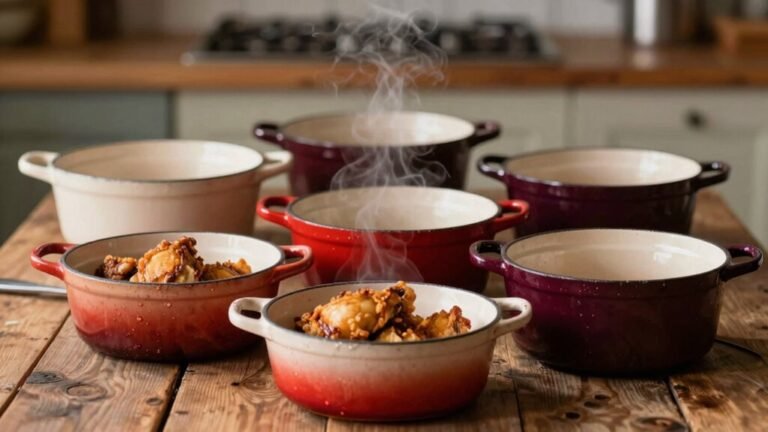

You should preheat your Dutch oven with the lid on to effectively trap steam and achieve superior oven spring for bread baking. Heating both pot and lid together reduces burn risks and simplifies handling. However, you can preheat lid-off for a faster 20-30 minute cycle if you prefer. Standard preheating at 450°F for 30-45 minutes with the lid on yields consistent professional results. The choice between these methods greatly impacts your crust development and workflow efficiency.
Why Preheating Your Dutch Oven Matters for Bread Baking
When you preheat your Dutch oven before baking bread, you’re setting the stage for superior oven spring and crust development. The preheat benefits are substantial: a rapidly heated dough expands dramatically upon entering the hot pot, creating the height and volume you’re seeking.
Steam production is equally critical. Your preheated Dutch oven generates an immediate burst of steam when you add dough, transforming your crust into delicate, shattering shards. This captured moisture prevents the crust from setting too quickly, allowing your dough to rise fully before the exterior hardens. The thick cast iron walls provide ample thermal mass, ensuring stable and consistent temperature throughout the baking process. Synchronizing your preheating with dough rising stages maximizes the effectiveness of the steam environment. Using an instant read thermometer allows you to verify your Dutch oven has reached the precise temperature needed for optimal results.
Without preheating, you’ll sacrifice both oven spring and crust quality. A cold Dutch oven yields noticeably smaller loaves with inferior crusts. Standard preheating at 450°F for 30-45 minutes delivers consistent, professional results that justify the extra effort. The Dutch oven’s heavy lid works in tandem with proper preheating temperatures to create the signature open crumb structure that defines artisan bread. During the initial baking phase, the Dutch oven’s ability to trap steam efficiently is what separates homemade bread from bakery-quality loaves. Be mindful that most Le Creuset Dutch ovens with classic phenolic knobs are only oven-safe up to 390°F, so verify your specific model’s temperature rating before preheating.
Lid-On Versus Lid-Off: Understanding the Key Differences
Since you’re preheating your Dutch oven, you’ll face a critical choice: keeping the lid on throughout or removing it during the preheat phase. Lid on benefits include simpler handling, eliminated lid drops, and superior steam retention when you place your dough. You’ll heat both pot and lid evenly as a single unit, reducing burns and complexity.
Conversely, lid off drawbacks include potential steam burns and uneven lid heating if you don’t manage separate preheating carefully. However, removing the lid accelerates preheat time to 20-30 minutes, allowing easier dough placement on a cooler pot. Some bakers prefer cold Dutch oven approaches to avoid prolonged preheating periods altogether. Preheating with the lid off typically requires 20-30 minutes for the Dutch oven to reach optimal temperature. The Dutch oven’s thick cast iron construction ensures even heat distribution throughout the cooking vessel.
Your choice depends on priorities: choose lid-on for maximum crust development and volume, or lid-off for faster preheating and simplified workflow. Just as removing air from packaging helps preserve food quality during storage, proper temperature management during preheating helps prevent freezer burn and ensures consistent cooking results, similar to how polymerization bonds materials into surfaces to create durable, non-stick finishes that improve with proper heating techniques. For savory dishes like beef stew, maintaining steady heat with the lid on helps develop rich, flavorful crusts that enhance the final dish.
How Preheating Affects Oven Spring and Crust Development
Preheating your Dutch oven directly influences how your dough rises and develops its crust during baking. When you preheat adequately, you supply rapid, consistent heat that gelatinizes surface starches quickly, setting crust formation while preserving loaf expansion during the critical first 10–20 minutes. This thermal mass promotes stronger oven spring by creating ideal conditions for dough rise.
The trapped steam from a preheated closed pot delays crust hardening, enabling maximum oven spring before the crust sets. You’ll achieve a glossy, thin crust instead of a thick, matte one. However, insufficient preheating reduces heat delivery, leading to slower crust formation, premature gas loss, and flatter crumb structure. Conversely, overheating creates uneven browning and localized searing. Similar to how a proper sear develops a flavorful crust on proteins, your Dutch oven’s heat must be precisely controlled to maximize crust quality. To avoid overheating concerns, transition from stovetop to oven for more uniform temperature distribution. While a 3-quart Dutch oven can work for bread baking, ensure it maintains adequate thermal mass throughout the preheating process. Aim for uniform heating throughout your vessel’s interior for consistent results. Using an oven-safe meat thermometer allows you to monitor your Dutch oven’s temperature with precision to ensure it reaches and maintains the ideal preheating temperature. For precise monitoring, consider using oven-safe temperature measurement tools to track your Dutch oven’s internal heat accurately. Selecting a Dutch oven with superior heat retention ensures your vessel maintains stable temperatures throughout the baking process, which is essential for achieving optimal oven spring and crust development.
Safety Considerations When Handling a Hot Dutch Oven
Handling a preheated Dutch oven demands careful attention to several critical safety factors. You’ll need heavy-duty oven mitts or silicone-coated gloves as essential protective gear—tea towels won’t provide adequate protection. Since cast-iron handles and the entire pot retain extreme heat reaching 300-500°F post-oven, never touch bare surfaces without protection, even early in cooking.
When opening the lid for hot handling, position your face away to avoid steam burns. Use a lid lifter or claw hammer to raise the lid safely. Gradually preheating the Dutch oven with the oven helps ensure even heat distribution and prevents thermal shock from damaging your cookware. Similar to how controlling flame intensity is crucial when using specialized cooking tools, managing your oven temperature throughout the preheating process prevents damage and ensures optimal results. The Dutch oven’s exceptional heat retention and distribution properties mean it maintains dangerous temperatures for extended periods, requiring heightened caution throughout your cooking session. For cast iron Dutch ovens, applying a light layer of cooking oil after cooking maintains the seasoning and protects against rust during storage. To further protect your surfaces, always set your Dutch oven on heat-resistant surfaces] like metal, ceramic tile, or thick towels—never small or plastic trivets. Proper maintenance techniques including thorough drying around all edges prevent rust from forming on your Dutch oven. Applying seasoning oil after cooking and before storage helps protect your Dutch oven from rust and maintains its durability.
Remember: your Dutch oven remains dangerously hot long after removal, requiring constant protective gear awareness throughout the cooking process.
Temperature, Timing, and Practical Alternatives
To maximize oven spring and achieve a golden crust with that coveted hollow knock, you’ll want to preheat your Dutch oven to between 400–450°F for a full hour with the lid on. This preheat timing guarantees even heating throughout the vessel, trapping moisture when you insert your dough for peak volume.
If you’re pressed for time, you can preheat with the lid off for just 20–30 minutes, then hold the Dutch oven at temperature for 15 minutes before baking. You’ll sacrifice some evenness but still achieve respectable results.
For convenience, cold-start baking works too—simply bake with the lid on for 50 minutes at 450°F, then 10 minutes uncovered. While you won’t maximize oven spring, you’ll still produce a good ear and hollow-sounding loaf. The heavy construction and tight-fitting lid of your Dutch oven ensure optimal heat distribution for consistent baking results. To keep your Dutch oven in peak condition, periodically restore any rust damage using seasoning oil treatments to maintain the vessel’s longevity. Dutch ovens are equally versatile for one-pot meals that combine proteins with vegetables and seasonings for minimal cleanup. Beyond savory dishes, Dutch ovens excel at camping desserts like cobblers and cakes that satisfy sweet cravings outdoors. Both the preheated and cold-start methods can yield satisfactory crumb structure and similar results when executed properly.