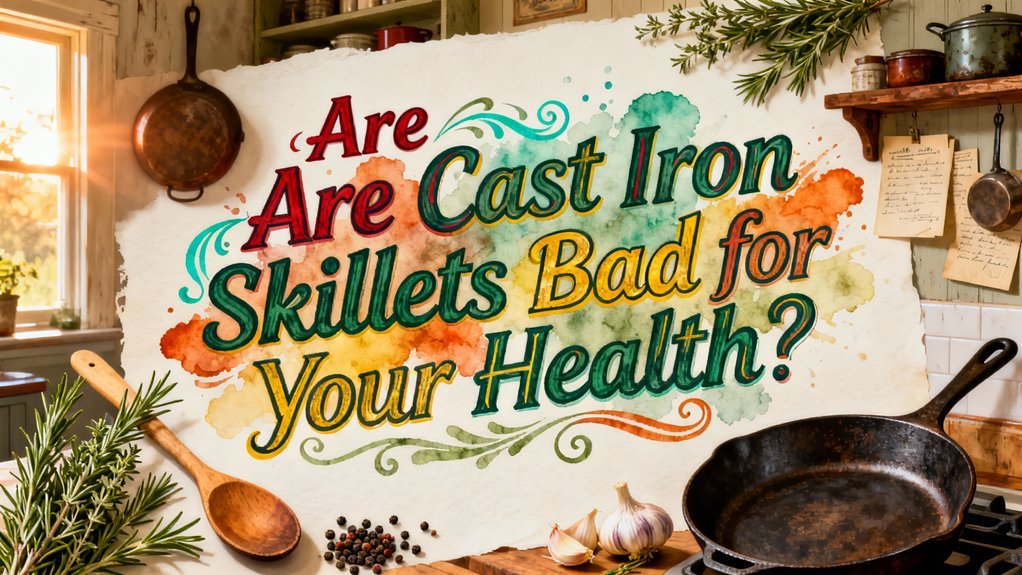
Cast iron skillets aren’t inherently bad for your health—you’ll actually boost your dietary iron intake with regular use. However, if you’ve got iron metabolism disorders like hemochromatosis, you’re at genuine risk. Acidic foods on bare, poorly seasoned surfaces can leach significant iron into your meals. Well-maintained, properly seasoned cookware minimizes this concern considerably. Your specific health profile and cooking habits determine whether cast iron’s benefits outweigh potential risks for you.
Iron Leaching and Dietary Impact
How much iron actually ends up in your food when you cook with cast iron? You’ll find the amount varies greatly based on cooking conditions. When you prepare acidic foods—like tomato-based sauces—in cast iron, iron content can increase from less than 1 mg to nearly 6 mg per serving. This leached iron becomes bioavailable, meaning your body can absorb it effectively.
The Journal of the American Dietetic Association (2000) confirms this substantial iron boost in acidic foods. For individuals relying on plant-based dietary sources, cast iron cookware historically provided reliable iron absorption. Well-seasoned pans minimize leaching compared to new cookware, while cooking duration and food moisture content elevate iron transfer rates. Cast iron’s natural non-stick properties develop through proper seasoning, which creates a protective barrier that reduces iron transfer into food. Building and maintaining this seasoned coating requires applying thin, even layers of oil with a high smoke point to create a durable polymerized surface. Excess iron consumption from cast iron is unlikely with proper cooking practices, helping you avoid potential health complications. However, stainless steel cookware poses minimal corrosion risks from these same acidic ingredients. You’ll benefit most from occasional use rather than prolonged acidic cooking sessions. The cookware is easy to clean and maintain with proper care, which further supports the reduction of excess iron transfer into your meals.
How Cast Iron Compares to Nonstick and Other Cookware
When you’re deciding between cast iron, nonstick, and other cookware options, you’re really weighing durability, safety, performance, and practicality against one another. Cast iron benefits include exceptional longevity and thermal mass that prevents warping, whereas nonstick drawbacks emerge quickly—PTFE coatings degrade within years, potentially releasing particles when scratched or overheated. You’ll find that seasoned cast iron approaches nonstick performance without chemical exposure risks, though it demands maintenance discipline. Cast iron skillets also develop a natural non-stick finish through proper seasoning, which improves with use and repeated cooking over time. Enameled cast iron eliminates iron leaching but sacrifices heat responsiveness and adds significant weight. Stainless steel excels for high-heat searing and sauce-making, though new stainless steel cookware may leach small amounts of nickel and chromium that diminish after several cooking cycles. Seasoned cast iron also provides essential iron nutrients to your food, enhancing its nutritional value compared to coated alternatives. Cast iron’s ability to develop a crispy crust through even heat distribution makes it ideal for recipes like stovetop cornbread that benefit from reliable thermal performance. For cooks seeking precise temperature control alongside traditional cooking methods, dual-function cookware with integrated temperature monitoring can complement cast iron’s strengths by offering additional versatility in the kitchen. Like using meat thermometers to ensure precise cooking results, proper cookware selection helps you achieve optimal food safety and quality in your kitchen. Just as removing air from packaging preserves food quality during storage, selecting the right cookware prevents degradation of your meals during preparation. Your choice hinges on balancing cast iron’s durability and safety profile against nonstick convenience and ceramic alternatives’ middle-ground approach.
Effects on Food Quality and Culinary Outcomes
Because cast iron’s thermal properties and iron reactivity directly influence what you’re eating, understanding these effects matters for both nutrition and taste. You’ll experience superior culinary benefits when using cast iron—the cookware’s high thermal mass and emissivity create exceptional heat retention and distribution, enabling ideal browning and searing. This flavor enhancement occurs because sustained, even temperatures promote Maillard reactions more effectively than conventional cookware. You’ll also benefit from cast iron’s versatility across stovetop, oven, grill, and campfire applications. However, you should note that acidic foods and prolonged cooking times increase iron leaching into your meals. While modest iron accumulation can be nutritionally beneficial, you’ll want to avoid extended simmering of tomato-based sauces in unseasoned or degraded pans to prevent both seasoning damage and excessive iron transfer. Preheating your cast iron pan is essential for even cooking and ensures optimal heat distribution before you begin preparing food. Cast iron pans that are properly seasoned contain no harmful chemicals often found in non-stick cookware, making them a safer choice for health-conscious cooks.
Who Should Avoid or Limit Cast Iron Use
While cast iron cookware offers genuine culinary advantages, certain populations should reconsider or limit their use based on medical and physiological factors. If you have hereditary hemochromatosis or conditions increasing iron absorption—such as chronic hepatitis C or porphyria cutanea tarda—you’ll want to avoid cast iron’s cumulative iron contribution to your disease burden. Infants and young children face particular vulnerability due to their developing nervous systems and small body mass, which magnifies iron concentration changes. You should also exercise caution if you’re managing metabolic syndrome or diabetes alongside elevated iron markers. Moderate to severe allergic reactions to excess iron have been reported in some individuals, making it essential to monitor for any adverse symptoms when using cast iron cookware. High-risk individuals benefit from a thorough dietary assessment before adopting cast iron cookware, particularly since proper use limits iron absorption in most healthy individuals. A well-seasoned protective layer] significantly reduces the amount of iron that leaches into food during normal cooking, much like how seasoning builds resilience through regular maintenance and care. Similar to the benefits of long-term storage methods, establishing proper cast iron care routines requires consistent attention to maintenance protocols, including blanching and flash freezing techniques that help preserve food quality. Precise caramelization techniques require proper preparation and technique to achieve optimal results. Consulting your pediatrician, hepatologist, or hematologist guarantees you’re accounting for all iron sources in your clinical management strategy.
Maintenance Practices That Reduce Health Risks
For those who’ve determined cast iron cookware’s benefits outweigh potential risks, proper maintenance becomes your primary tool for mitigating health concerns. Your maintenance routines directly influence iron leaching rates and contamination prevention.
Hand wash your skillet immediately after use with minimal soap, avoiding dishwashers that compromise seasoning layers. Use a pan scraper for stuck food, then cool before scraping to prevent damage. For stubborn buildup, stiff-bristled brushes effectively remove stuck-on food without damaging the protective coating. Dry thoroughly to prevent rust formation, which increases iron oxide transfer to foods. A well-seasoned surface naturally prevents excess iron from leaching into your meals.
Implement seasoning techniques by applying thin oil coats and heating the oiled pan over medium heat until it begins to smoke, allowing the oil to polymerize and penetrate the surface. For deeper seasoning, you can also bake your skillet at 450-500°F for one hour when seasoning degrades, ensuring you use high smoke point oils like vegetable oil or canola oil for optimal results. If rust does develop, use vinegar spray solution to remove oxidation before re-seasoning. This polymerized layer creates a protective barrier reducing excess iron transfer. Ensure your skillet is evenly heated before cooking to maintain consistent seasoning performance. Store your cookware dry and unprotected to preserve coating integrity. Cast iron’s durability means these maintenance efforts preserve your skillet’s functionality for decades. These practices markedly reduce health risks while maintaining your skillet’s functionality.
The Science Behind Iron Transfer to Food
How does iron actually migrate from your skillet into the food you’re cooking? Iron transfer occurs through leaching mechanisms when acidic foods contact bare cast iron surfaces, dissolving ferrous ions into your meal. The process accelerates with heat—temperatures above 100°C peak ion release. Acidic ingredients below pH 4.5, like vinegar or tomato sauce, boost leaching by 5–10x compared to neutral foods. Ion diffusion intensifies with stirring and extended cooking; a 30-minute tomato sauce simmer yields 6–8 mg iron per serving, while two-hour simmering reaches 20 mg. Your skillet’s seasoning layer partially blocks this transfer by forming a polymerized oil barrier. Water volume matters too—larger pots show 20–50% less iron per serving due to dilution effects.
When to Choose Enameled or Alternative Cookware
If you’re concerned about iron leaching or prefer minimal maintenance, enameled cast iron offers a compelling alternative to bare cast iron. You’ll eliminate seasoning requirements entirely, as the vitreous enamel coating provides permanent non-stick properties without ongoing upkeep. The enameled benefits extend to acidic food compatibility—you can simmer tomatoes, wine-based sauces, and citrus dishes without corroding the surface or experiencing off-tastes. Enameled cast iron also excels at heat retention, making it ideal for braising and slow-cooking applications. A well-seasoned bare cast iron skillet can be used for quick acidic applications like deglazing, though extended cooking with acidic ingredients is better suited to enameled alternatives. The tight-fitting lid on enameled cast iron Dutch ovens traps both heat and moisture during slow cooking, further enhancing their braising capabilities.
However, you should recognize that enameled cast iron’s enamel coating remains susceptible to chipping and cracking under high heat or impacts. For cookware versatility, you might combine enameled cast iron for braising and simmering with stainless steel or ceramic alternatives for high-heat searing. This strategic approach maximizes your cookware’s performance while mitigating durability concerns inherent to each option. Stainless steel cookware excels at high-temperature cooking due to its superior heat conductivity and ability to adapt across various cooking techniques without the fragility concerns associated with enameled surfaces. If you do choose bare cast iron, remember that vinegar baths can effectively remove rust when limited to short soaks followed by proper seasoning.
Medical Considerations for Iron Metabolism Disorders
While cast iron cookware poses minimal health risks for most people, individuals with iron metabolism disorders face genuine medical concerns that warrant careful dietary management. If you have hereditary hemochromatosis or ferroportin disease, you must understand iron absorption mechanisms to prevent accumulation in essential organs. Excess dietary iron exacerbates iron overload consequences, including cirrhosis, cardiomyopathy, and diabetes mellitus. Your hepcidin-ferroportin axis dysfunction impairs iron export, making even modest dietary contributions problematic. Non-transferrin-bound iron promotes oxidative damage in your liver, heart, and pancreas. You should consult your physician before using cast iron skillets, as cooking acidic foods enhances iron leaching. For those without iron metabolism disorders, cast iron cookware can improve with age as its seasoning develops, making it a durable kitchen investment. Stainless steel or enameled cookware offers safer alternatives, allowing you to manage your condition effectively without compromising nutritional intake.