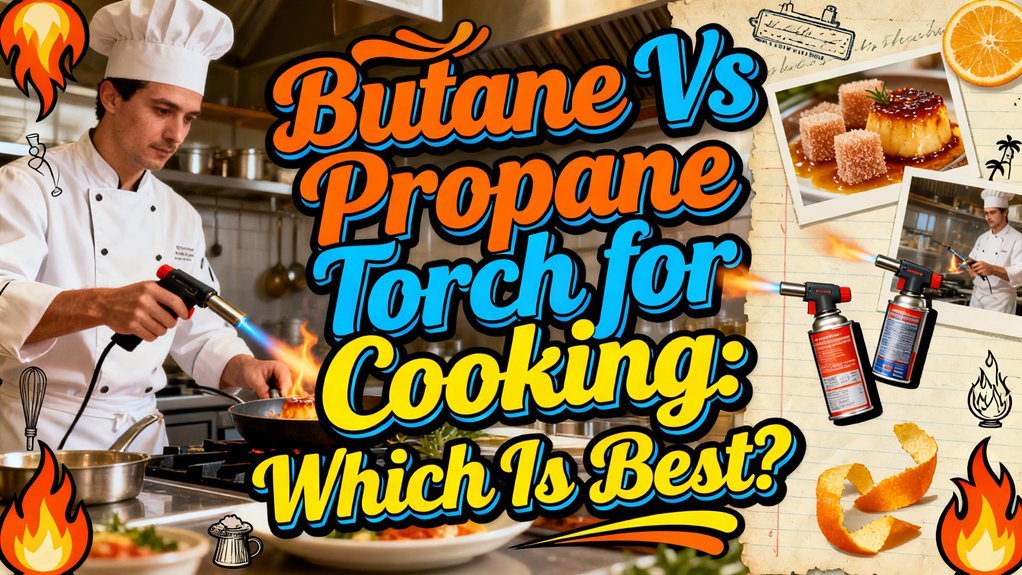
You’ll find propane torches deliver superior performance for most culinary tasks, reaching 3,600°F versus butane’s 3,150°F, making propane ideal for rapid crust formation on proteins. However, butane offers precise flame control for delicate work like caramelizing desserts and costs less upfront ($20–$40). Butane excels in portability and indoor storage, while propane performs consistently in cold weather and provides better long-term economy for frequent use. Your best choice depends on whether you prioritize heat intensity, portability, or cost—and exploring the nuances of each fuel type reveals compelling reasons for one over the other in your specific kitchen.
Heat Output and Flame Temperature Comparison
When you’re choosing between butane and propane torches for cooking, understanding their fundamental thermal differences is critical. Propane delivers superior flame intensity, reaching 3,600°F compared to butane’s 3,150°F in-air combustion. This 450-degree advantage stems from propane’s higher flame velocity and energy transfer rate to surfaces.
You’ll notice propane’s thermal conductivity advantage translates to faster metal heating during searing tasks. Propane generates 19,768 BTU/lb versus butane’s 19,494 BTU/lb, giving you greater overall heat output. However, butane’s lower flame intensity doesn’t indicate weakness—it provides precise control for delicate applications like caramelizing desserts. For jewelry work and specialized heating, the heat transfer rate proves more critical than flame temperature alone. Butane is moderately priced, reflecting its convenience for specialized culinary tasks.
When using either torch with cast iron cookware, remember that maintaining the seasoning layer through proper oil use ensures your pan remains nonstick and rust-resistant during high-heat torch applications. Your choice depends on your cooking demands. You’d select propane for high-heat applications requiring rapid thermal transfer, while butane suits precision work where controlled, steady flames matter most.
Fuel Availability and Refilling Options
You’ll find butane and propane differ markedly in their availability channels and refilling infrastructure. Butane’s fuel sourcing relies primarily on small canisters stocked in hardware and drug stores, offering convenient portable refills for kitchen torches. However, this supply chain limits larger-capacity options. Butane canisters are generally lighter and more compact than propane tanks, making them easier to store in kitchen spaces.
Propane demonstrates broader accessibility, particularly in colder regions where its supply chain infrastructure supports various tank sizes through hardware stores and camping retailers. You can refill propane torches with disposable tanks or refillable appliance formats, providing flexibility for different cooking applications. Propane is widely available in most retail locations, making it easier to find replacement fuel on short notice. Like vacuum sealers that require reliable sealing mechanisms, propane torches benefit from consistent fuel delivery systems. A strong vacuum level, typically measured between 50 and 80 KPA, ensures optimal performance in food preservation devices much like consistent propane pressure ensures reliable torch operation. When using cooking torches on glass top stoves, ensure your torch has a smooth bottom surface to prevent scratching the cooktop. Both fuels require proper adjustment to achieve a dark blue flame, which prevents off-flavors from incomplete combustion during cooking. Both butane and propane torches require proper care to maintain their functionality, similar to how cast iron skillets need proper seasoning techniques to develop their non-stick surface.
Cost varies by location and local supply dynamics. Butane typically costs less per energy unit for portable use, while propane offers affordability for extensive home applications. Your fuel choice depends on balancing availability in your area, refilling convenience, and budget requirements.
Portability and Storage Considerations
Because butane canisters are engineered notably smaller and lighter than propane tanks, they’re naturally suited for portable cooking applications where space and weight matter. You’ll appreciate butane convenience when transporting compact stoves or pocket lighters for camping expeditions. However, propane durability becomes advantageous for extended outdoor use, as its pressure-resistant containers withstand harsh environmental conditions for months.
Storage requirements differ greatly. You should keep butane indoors, away from extreme temperatures, fitting easily into limited kitchen spaces. Conversely, propane tanks require pressure-resistant containers and tolerate prolonged outdoor exposure. Consider your usage pattern: if you’re prioritizing portability for single-use applications, butane’s lightweight design wins. For sustained cooking operations or tools requiring robust fuel delivery, propane’s structural integrity and propane durability justify the additional storage demands. Iwatani canisters are noted for their smaller size and lower cost, making them ideal for travel.
Flame Control and Culinary Precision
While portability and storage shape your choice of fuel type, the torch’s actual performance in the kitchen hinges on flame control and culinary precision. You’ll find that adjustable gas-flow knobs with fine detents enable micro-tuning of flame height for delicate work, while separate flame-shape controls give you independent adjustment of spread versus intensity. Flame stability at low settings determines your ability to maintain gentle, controlled heat—critical for finishing without overcooking. High-quality regulators and well-machined tips produce steadier flames, delivering predictable results for precise heating tasks like sugar caramelization or protein torching. Lock features reduce fatigue during extended use, maintaining consistency across multiple dishes. Just as proper storage solutions protect your culinary equipment and ingredients from environmental damage, maintaining a proper distance of 2-4 inches from the food and moving the flame evenly prevents scorching and ensures consistent results. In practical testing, the Bernzomatic propane torch demonstrated superior direct heat application, completing the tomato-skinning task in just 14 seconds compared to butane alternatives. Butane is preferred for kitchen use over propane due to its superior flame control and performance characteristics in culinary applications. Ultimately, burner design matters as much as fuel type; a well-engineered butane torch often outperforms poorly designed propane alternatives in culinary applications.
Safety and Regulatory Requirements
Safety considerations and regulatory compliance aren’t secondary concerns—they’re fundamental to responsible torch use in any kitchen. You’ll need to understand that butane and propane torches fall under strict regulatory frameworks governing flammable gas devices. Both fuels require proper storage between 32°F and 125°F in cool, dry, well-ventilated areas. You must engage safety locks when torches aren’t in use and allow adequate cool-down periods before storing. Additionally, high-quality butane with 99% or higher purity prevents performance issues and ensures consistent flame output during culinary applications.
Your torch safety practices demand pre-use inspections for cracks, loose connections, and damaged components. You’re obligated to maintain fire extinguishers nearby and wear appropriate personal protective equipment, including safety goggles and heat-resistant gloves similar to those recommended for handling hot cookware. Just as cast iron requires protective seasoning layers to prevent deterioration, torch equipment requires regular maintenance to ensure optimal performance and safety. Most professional butane torches include built-in automatic ignition systems to ensure safe and reliable lighting. It’s critical to use only the fuel type specified by your torch manufacturer, as incompatible fuels can damage seals and valves, potentially leading to leaks or safety hazards. Regulatory compliance guarantees you’re using manufacturer-recommended fuel and following child-resistant mechanism standards. When handled responsibly with proper ventilation, butane fuel is clean-burning, minimizing exposure to harmful emissions during culinary operations. Improper torch use can expose users to butane inhalation risks and other health hazards, so adherence to safety guidelines is essential. Understanding these requirements protects you, your kitchen, and everyone present during culinary torch operations.
Cost and Long-Term Operating Expenses
Now that you’ve secured your torch and established proper safety protocols, you’re ready to evaluate the financial implications of your equipment choice. Butane torches present lower initial expenses, ranging from $20–$40, with bulk refills dropping to $59.99 per pack. You’ll experience shorter refill intervals due to smaller canister capacity, though standardized availability keeps replacement costs predictable. The BUSATIA Butane Torch offers exceptional value at a discounted price of $9.99, making it an accessible entry point for budget-conscious cooks. Propane torches demand higher upfront investment at $43.49+, but their superior cold-weather performance potentially reduces indirect storage complications. For frequent indoor culinary use, butane’s cheaper wholesale cases ($34.99–$65.88) and abundant single-pack options ($18.99–$21.99) yield superior long-term economy. Sterno and Chef Master brands provide high-performance alternatives with ratings up to 5 stars, offering professional-grade reliability for serious home cooks and commercial kitchens. Propane’s temperature versatility benefits variable outdoor applications, offsetting higher initial expenses through fewer operational constraints and extended seasonal usability. When maintaining your torch equipment, proper maintenance tips for longevity ensure your investment continues to perform reliably across multiple cooking seasons. It’s important to note that butane torches are strictly prohibited on aircraft, so always plan ahead when traveling with your equipment. Similar to how heat retention and distribution matter when selecting cookware for searing meats, choosing the right torch fuel type ensures consistent performance for your culinary techniques. When preparing ingredients for precision cooking methods, proper food storage and sealing prevents oxidation and maintains ingredient quality throughout your cooking process, much like how extending food freshness through vacuum sealing preserves nutrients and flavors during meal preparation.
Combustion Quality and Food Safety
Beyond initial cost considerations, the quality of your torch’s combustion directly impacts both the flavor and safety of your finished dish. Butane torches are more prone to producing incomplete combustion, generating yellow reducing flames that deposit unburned hydrocarbons and soot onto food, creating off-flavors and potential contaminants. Proper flame adjustment and oxidation efficiency matter more than fuel choice alone. You’ll recognize complete combustion by a dark blue, short, hissing flame—indicators of oxidizing conditions that enable focused caramelization. Incomplete combustion produces longer yellow flames with luminous soot precursors. Prolonged or intense torching creates polycyclic aromatic hydrocarbons and heterocyclic amines, known food-safety concerns. Always ignite and adjust your torch away from food before use to guarantee clean, controlled combustion at your intended surface. The Turbo Torch’s piezo ignition ensures reliable and automatic spark generation for consistent flame initiation. Some users have raised concerns about lead in brass torch parts potentially contaminating food during the cooking process. Mastering proper technique for achieving even heating helps home cooks avoid common mistakes and add professional-level finishes to their dishes. For those seeking to minimize smoke and unwanted residue from cooking methods, perforated grill pan designs offer an alternative approach to achieving caramelization with better smoke control in indoor environments.
Performance in Different Cooking Scenarios
Your choice between butane and propane determines how well each torch performs across distinct culinary applications. For indoor versatility, butane torches like the Rosle model deliver even coverage ideal for delicate searing tasks such as tomatoes, while propane’s Bernzomatic head excels at quick, direct browning without flare-ups in confined spaces.
Outdoor robustness favors propane considerably. Propane torches maintain high-pressure performance in cold conditions, enabling faster steak searing in windy environments—the Sundico propane torch accomplishes this in approximately 14 seconds. Conversely, butane’s flame weakens substantially when temperatures drop, requiring warm storage to sustain intensity. Proper storage of propane canisters ensures safety and maintains fuel reliability for outdoor use. Like cast iron cookware, propane torches benefit from consistent practice and use to master their application in various outdoor cooking scenarios.
For high-heat applications, propane delivers superior intensity for rapid crust formation on proteins. Butane flames risk prolonged exposure times that potentially overcook surfaces, making propane the technical choice for demanding searing scenarios. Both torches excel at caramelizing sugar on desserts and providing precision browning for finishing touches that enhance flavors through direct flame application. These torches complement slow-cooking methods like using a Dutch oven for developing rich, complex flavors in hearty dishes. Torch-searing techniques pair effectively with vacuum sealing to preserve seared proteins while maintaining their texture and quality for future meals.
Choosing the Right Torch for Your Kitchen
Selecting the right torch depends on matching fuel properties and safety requirements to your specific kitchen environment and cooking frequency. For torch selection criteria, evaluate your storage constraints: butane’s compact canisters suit limited indoor space, while propane cylinders demand outdoor storage access. Consider climate—butane underperforms below freezing, making propane superior for unheated areas. Assess culinary use cases: casual brûléing favors convenient butane cartridges; frequent searing benefits from propane’s consistent performance and cost-efficiency. Verify certifications for indoor culinary use and guarantee proper ventilation capability in your kitchen. Match torch nozzles to fuel type, as incompatible fittings compromise safety. Inspect maintenance accessibility—clogged tips occur regardless of fuel, so prioritize models allowing routine cleaning for peak flame quality. Before refilling your torch, ensure it is turned off and cooled down in a well-ventilated area to prevent accidents. Kitchen torches excel at multiple applications including caramelizing sugar, searing meats, roasting peppers, and toasting meringue, making fuel selection critical for your intended purposes. Understanding temperature output differences between fuel types helps ensure your torch performs optimally for your intended cooking applications. A critical consideration is that propane torches lose functionality when tilted at angles, which can significantly impact browning techniques that require directional flame control. Proper safety mechanisms should be evaluated when comparing different torch models for your kitchen setup. Propane torches are usually hot enough for most cooking applications, eliminating the need for more expensive alternatives that may introduce unwanted flavors to your food.