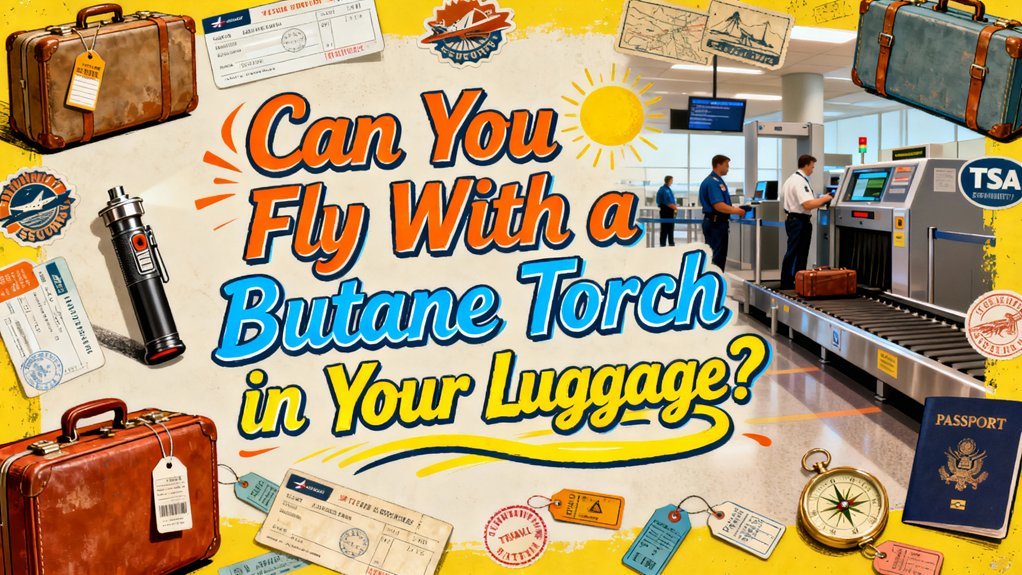
You can’t bring a butane torch in either carry-on or checked luggage on commercial flights. The TSA and FAA classify torch lighters as prohibited hazardous materials due to their high-temperature flames and pressurized containers, which pose serious fire and explosion risks. This ban applies across all airlines nationwide without exceptions. However, you’ll find several compliant alternatives—like electric arc lighters or purchasing torches after security—that can help you accomplish your travel needs safely.
Federal Aviation Rules and TSA Regulations on Butane Torches
Because butane torches pose concentrated ignition risks during flight, federal law prohibits them outright from both carry-on and checked baggage. The Hazardous Materials Regulations (HMR) under 49 CFR 175.10(a)(2) establish this nationwide prohibition, which the TSA enforces at security checkpoints. You cannot bring torch lighters—also called jet flame or blue-flame lighters—aboard any commercial aircraft, regardless of how you pack them.
The TSA’s butane regulations explicitly ban these devices due to their high-pressure fuel and uncontrolled flame characteristics. Unlike standard disposable lighters, torch lighter designs create unique fire hazards that federal agencies deem unacceptable in pressurized aircraft cabins. The concentrated ignition risks are particularly acute because torch lighters operate with high-pressure fuel that cannot be safely contained in the cabin environment. Additionally, the incompatible seals and valves in butane torches can lead to leaks and safety hazards that compound the danger in flight. TSA officers retain final discretion to confiscate any lighter they determine violates safety standards. One lighter per passenger is the general allowance for permitted types, but this exception does not apply to torch lighters under any circumstances. Consider discarding torch lighters prior to traveling to avoid potential confiscation and security delays at the airport. Your torch lighter will be confiscated if identified during screening.
Carry-On vs. Checked Baggage: Where Butane Torches Are Prohibited
Where can’t you bring a butane torch when flying? You’re prohibited from packing butane torches in both your carry-on and checked baggage. The TSA and DOT regulations don’t permit torch lighters in either location under any circumstances.
Regarding carry-on limits, you cannot bring a butane torch into the cabin. Even though some common lighters qualify for one-per-passenger allowances, torch lighters fall outside these exceptions due to their flammable nature and potential safety risks. Common plastic lighters like BIC are permitted onboard, but butane torches are strictly forbidden.
For checked baggage, the restrictions remain equally strict. Butane torches aren’t permitted in checked compartments without exception. Airlines uniformly enforce this prohibition across all baggage types. These restrictions are governed by 49 CFR 175.10(a)(2) and the Hazardous Materials Regulations that mandate safety measures for air travel. Unlike jewelry-making applications where soldering and metal fusion techniques require controlled flame use, aviation safety protocols eliminate all torch lighters from aircraft. Butane torches produce a dark blue flame when properly adjusted, which is the ideal combustion state for culinary use. The prohibition reflects federal hazardous materials regulations designed to protect aviation safety by preventing flammable substances from being transported in the aircraft environment. When using a butane torch at your destination, always follow proper torch maintenance and safety protocols to ensure safe handling. Like devices that rely on stable voltage output, torches require consistent fuel pressure to function safely and reliably.
Your best option? Leave your butane torch at home or purchase one after clearing security at your destination airport.
Airline-Specific Restrictions and Carrier Policies
How do individual airlines enforce butane torch bans? While the TSA sets baseline restrictions, individual carriers maintain their own enforcement standards. American Airlines explicitly prohibits all torch lighters, micro-torches, and butane fuel in both carry-on and checked baggage—no exceptions.
Airline comparisons reveal varying strictness levels. Some partners allow disposable lighters in carry-on while others ban fueled lighters entirely from checked bags. You’ll find critical differences in international policies too. Many global carriers align with TSA regulations, though some impose stricter requirements. Torch lighters produce high-intensity flames that pose significant fire risks, which is why international aviation authorities universally restrict them across all flights. Beyond aviation restrictions, butane torches also pose health hazards including respiratory irritation and cardiac problems when misused for smoking purposes. Refill canisters for butane lighters are strictly prohibited in both checked and carry-on luggage due to their extreme flammability. Similarly, cooking equipment that uses high heat sources requires careful handling, as Dutch ovens are valued kitchen tools that demand proper storage and transport considerations.
You must verify your specific airline’s policy before traveling. Partner airlines on codeshare flights demand separate policy reviews. Check your carrier’s website or contact customer service directly. These variations prevent assumptions about what you can bring aboard, ensuring compliance and avoiding confiscation at checkpoints.
Safety Hazards and Why Butane Torches Are Banned
While airline policies determine what you’ll encounter at check-in, the underlying regulations stem from substantive safety concerns that transcend carrier preferences. Butane dangers are significant in confined aircraft environments. You’re dealing with an extremely flammable gas classified as a serious fire risk, especially in pressurized cabins where ignition sources can trigger rapid combustion.
Torch lighters produce concentrated, high-temperature flames capable of igniting materials quickly—far exceeding ordinary lighter capabilities. Pressurized containers pose explosion hazards if heated or compromised, potentially causing BLEVE events that damage aircraft systems, wiring, and structural integrity. Accidental activation during baggage handling creates uncontrolled ignition scenarios. The flame temperature ranges of 2,500°F to 3,000°F make butane torches particularly dangerous in aircraft cargo holds where temperatures fluctuate.
Released butane displaces oxygen and forms explosive air mixtures in compartments. Most butane torches include built-in automatic ignition systems that increase accidental activation risks during transport. Butane torches are unsuitable for full fusion welding on thicker metals and are best suited for light brazing or soldering applications, yet their design prioritizes portability over safety features. Unlike specialized cooking equipment designed to achieve the Maillard reaction through controlled heat application, butane torch designs lack adequate safety mechanisms for enclosed transport environments. The high combustibility of butane in confined spaces mirrors the challenges of controlling volatile materials in emergency situations, where proper sealing and containment become critical safety measures. Using programmable temperature alerts similar to those found in modern cooking equipment could theoretically prevent accidental ignition, though such safety features are not standard on portable butane torches. Such fires overwhelm portable extinguishers and generate toxic smoke that impairs crew response and evacuation efforts, jeopardizing everyone aboard.
Practical Alternatives and Travel-Safe Options
Since butane torches aren’t permitted in aircraft, you’ll need to contemplate equipment that either eliminates pressurized fuel entirely or relies on fuel sources you can acquire after landing. Consider these travel tips: rechargeable electric arc lighters bypass fuel restrictions entirely and charge via USB, making them ideal for carry-on travel. Alternatively, small refillable butane pocket lighters produce softer flames than torches and often comply with TSA carry-on rules, though you’ll purchase butane canisters at your destination. For camping applications, pack only the empty torch head and source compatible isobutane canisters locally. If culinary tasks dominate your trip, leverage hotel broilers or rental grills instead, which can accomplish precision browning and caramelizing sugar on desserts just as effectively as a torch. Electric lighters are flameless and windproof, ideal for outdoor conditions when traveling. Many torches are available for purchase online through retailers like Amazon and local ethnic grocery stores at pricing ranges from $14 to $27, ensuring you can source alternatives upon arrival. When selecting alternatives, prioritize models with flame control mechanisms to ensure consistent performance across different culinary applications. These alternative lighters and workarounds guarantee you maintain functionality while respecting aviation safety regulations.