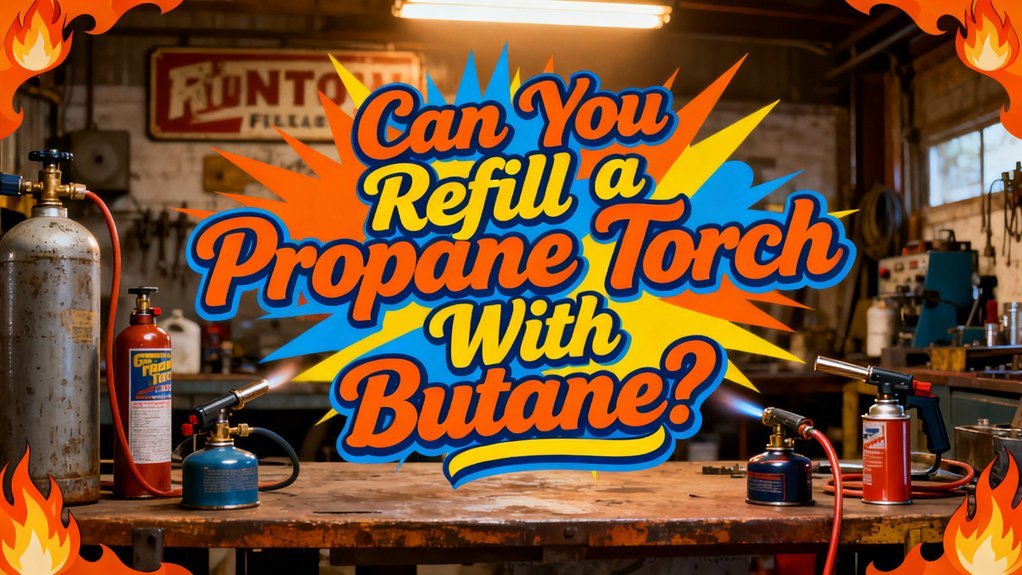
You shouldn’t refill a propane torch with butane. Propane generates 145 PSI vapor pressure while butane only produces 35 PSI, creating dangerous pressure mismatches that can rupture your torch or cause violent ignition. Mixing these incompatible fuels leads to unpredictable reactions, excessive pressure buildup, and potential explosions. You’ll also experience performance degradation, reduced flame intensity, and sputtering. Using the correct fuel specified by your manufacturer is essential for safe operation. Understanding why fuel compatibility matters reveals the full scope of these critical safety concerns.
Understanding Fuel Compatibility and Chemical Differences
Before you attempt refilling a propane torch with butane, you’ll need to understand why these fuels aren’t interchangeable. Propane (C3H8) and butane (C4H10) differ fundamentally in fuel structure and molecular composition. Propane’s three-carbon chain generates 145 PSI vapor pressure at room temperature, while butane produces only 35 PSI. This pressure disparity creates incompatibility issues that can damage your torch or cause malfunction.
The chemical differences extend beyond pressure. Propane vaporizes at -42°C, enabling cold-weather performance that butane cannot match. Butane’s boiling point sits at -0.5°C, restricting its reliability in freezing conditions. Incomplete combustion from using the wrong fuel can also leave an unpleasant taste on food, a common problem when fuel and torch specifications don’t align. Like extending food freshness, proper fuel compatibility requires precise conditions and specifications to maintain quality and safety. Additionally, seals and valves in a propane torch may not be compatible with butane, potentially leading to leaks or other safety hazards. For culinary applications, using dedicated cooking torches with the correct fuel ensures proper performance and food safety. Your propane torch is engineered specifically for high-pressure propane operation. Attempting to substitute butane introduces dangerous pressure mismatches that compromise safety and performance. These aren’t merely preferences—they’re critical design specifications. Propane torches are designed for professional heavy-duty use, making them incompatible with lower-pressure fuel alternatives like butane.
Safety Risks and Hazards of Mixing Fuels
Because propane and butane operate at fundamentally different pressures, mixing these fuels in a torch creates serious safety hazards you must avoid. When you combine incompatible fuels, unpredictable fuel reactions occur that compromise your torch’s structural integrity. The distinct combustion properties of propane and butane mean their mixture burns inconsistently, generating excessive pressure buildup that risks explosion.
You’ll face dangerous consequences: the torch may rupture, spray flaming liquid, or detonate without warning. Mixing fuels also prevents proper purging, leaving residual gas that reacts violently with new fuel. This chemical instability makes your torch unreliable and potentially lethal. Compressed gas tanks can explode in waste-to-energy facilities or during improper disposal if fuel compatibility is not maintained. Most professional torches include built-in automatic ignition systems that safely control fuel delivery and combustion when the correct fuel is used. Before refilling, ensure your torch is turned off and cooled down to minimize safety risks. Always use high-quality, filtered butane designed for your specific torch to ensure compatibility and safe operation. Just as maintaining consistent heat is critical when cooking in Dutch ovens, proper fuel selection ensures your torch operates at safe, predictable pressures. Butane and other flammable substances pose serious risks in pressurized environments, making proper fuel selection critical for safe torch operation. Small cast-iron pots demonstrate how specialized equipment requires compatible fuel and materials to function safely and effectively.
Never attempt refilling a propane torch with butane. The pressure differential alone creates conditions for catastrophic failure. Always use the correct fuel for your specific torch model to maintain safe, predictable operation.
How Performance and Functionality Change
Even if you manage to refill your propane torch with butane without triggering immediate safety failures, you’ll encounter significant performance degradation that undermines the torch’s reliability and heat output. Butane’s lower vapor pressure at ambient temperatures produces reduced fuel flow through your nozzle, diminishing instantaneous BTU delivery. You’ll notice flame intensity dropping progressively during sustained burns as the remaining fuel reservoir cools faster than with propane. Cold conditions exacerbate this effect dramatically. Your performance expectations won’t align with design specifications because functionality differences stem from incompatible fuel chemistry—oxygen-fuel ratios shift, combustion efficiency declines, and you may experience sputtering from liquid butane flashing inside the torch. Short bursts might mask these problems temporarily, but continuous operation reveals the torch’s fundamental mismatch with butane. Unlike propane torches designed with patent pending fuel efficiency technology to optimize performance with specific fuel types, butane’s incompatible chemistry will prevent your torch from operating at its intended specifications. Grade T hoses rated for multiple gas types may accommodate butane mechanically, but specialized equipment designed for each fuel ensures proper combustion ratios and prevents the performance failures you’d encounter with incompatible substitutes.
Proper Refilling Techniques and Best Practices
Precision and safety define successful butane refilling, beginning with thorough preparation that can’t be rushed or compromised. You’ll locate the fuel valve on your torch’s bottom, then invert the butane canister for liquid fuel flow rather than gas vapor. Align the nozzle straight into the valve, pressing firmly for controlled transfer. Hold the inverted canister against the valve for approximately ten seconds or until sputtering occurs, which signals you’ve reached capacity. Stop immediately to prevent overfilling. Wipe excess fuel away with a clean cloth. These refilling techniques guarantee ideal performance. Best practices also demand you wait three minutes before igniting, allowing fuel stabilization. Store your torch in cool, ventilated areas and inspect seals regularly for cracks or looseness. Allow the torch to rest in a well-ventilated area during this stabilization period to ensure proper temperature regulation. Work in a well-ventilated area to prevent gas buildup during and after the refilling process.
Manufacturer Guidelines and Legal Requirements
While manufacturer specifications and legal requirements might seem bureaucratic, they’re essential safeguards that’ll protect both your equipment and yourself. You must verify gas type compatibility before refilling—using propane in a butane torch violates manufacturer specifications and risks damage or performance failure. The CPSC classifies lighter refills as hazardous materials with strict capacity limits: maximum 0.35 fluid ounces for butane or propane mixtures. Legal compliance requires you to follow these fuel quantity caps during transport and use. Reputable manufacturers provide MSDS documentation detailing proper handling procedures. You’ll find that propane torches demand specific adapters while butane uses valve screwing—incompatible connections aren’t accidental design flaws but intentional safety features. Newport butane products feature a crenellated cap system with eight molded adapters designed to ensure safe and reliable refills across compatible devices. Just as Dutch oven capacity affects baking outcomes, torch capacity limitations determine the duration and intensity of your work sessions. Proper flame control during refilling prevents fuel spillage and maintains equipment safety. Mixing fuels can prevent optimal torch performance and create dangerous operating conditions. Always consult manufacturer instructions before attempting any refill procedure to guarantee legal compliance and equipment integrity.
Safer Alternatives and Recommended Solutions
Rather than attempting to refill a propane torch with butane—or vice versa—you’ll find that selecting the correct fuel type from the outset eliminates the hazards associated with incompatible refills. You should purchase alternative fuel canisters explicitly matched to your torch’s design specifications. For propane torches, use manufacturer-approved portable propane cartridges; for butane torches, obtain high-purity filtered butane refill canisters from certified suppliers. When using butane torches, always operate them in well-ventilated areas to prevent gas buildup and ensure safe combustion.
Consider electronic heat tools as a superior alternative. Battery-powered heat guns and induction devices remove flammable-gas hazards entirely for many applications. If you must work outdoors in cold conditions, you’ll benefit from propane-specific torches, which maintain vapor pressure at lower temperatures. Just as accurate temperature monitoring is essential for achieving optimal results in precision cooking applications, proper fuel selection is critical for torch performance and safety. Mastering proper torching technique ensures you achieve consistent results while maintaining safety standards. Selecting sealed fuel canisters with proper sealing capabilities prevents leaks and ensures reliable performance throughout your work session. Different torch models are engineered with specific safety mechanisms and build quality considerations that directly impact their compatibility with particular fuel types. High-purity butane, typically 99.9% or higher, is essential for optimal torch lighter function and longevity, as impurities can clog jets and reduce flame quality. Always verify that any refill adapter you purchase carries explicit compatibility certification from your torch’s manufacturer or a recognized third-party certifier. Because butane’s high flammability increases the risk of burns and explosions, ensuring proper fuel matching prevents dangerous incompatibility incidents.