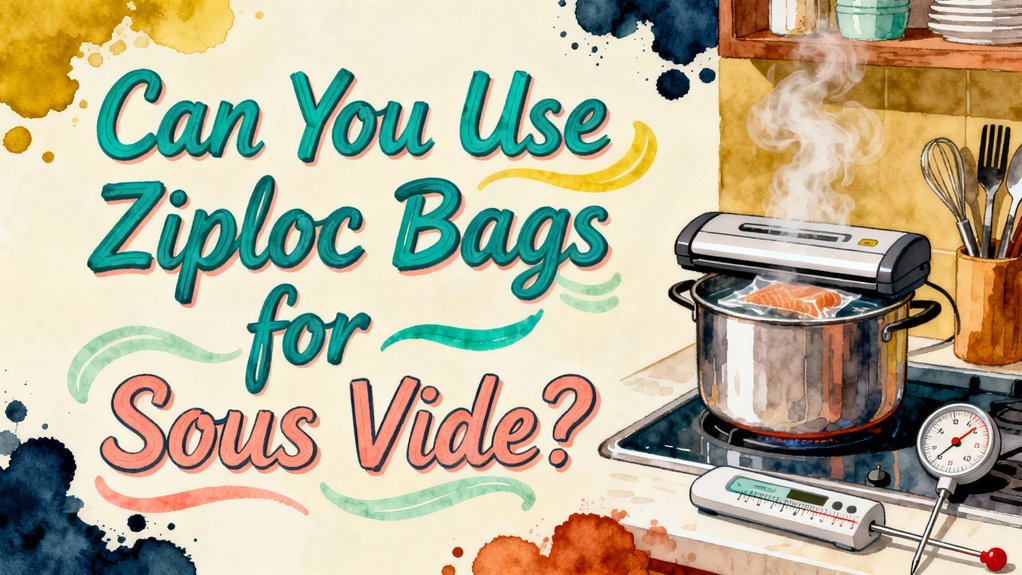
You shouldn’t use standard Ziploc bags for sous vide cooking. Polyethylene softens around 230°F, which risks leaching chemicals and compromising food safety. Manufacturer guidance explicitly restricts these bags to storage and microwave use only. While they’re FDA-approved for cold food contact, sustained heat exposure causes material degradation. Ziploc Endurables made from platinum silicone withstand higher temperatures, but dedicated vacuum pouches remain the ideal choice. Understanding the complete thermal properties and safer alternatives will help you make informed decisions.
What Are Ziploc Bags Made From?
Polyethylene—the backbone of Ziploc bags—serves as the primary material because it’s durable, flexible, and cost-effective. You’ll find three main polyethylene densities working together in these bags. Low-density polyethylene (LDPE) provides the softness and transparency you need for tight sealing. High-density polyethylene (HDPE) contributes rigidity to the zipper mechanism. Linear low-density polyethylene (LLDPE) combines strength with flexibility, making freezer bags resistant to heat and cold.
Manufacturers select virgin PE plastic to guarantee toughness throughout production. They prepare polyethylene resins as beads, clean them meticulously, and adjust temperature and pressure for extrusion. The film blowing process involves melting and extruding these materials into a flat tube before cooling and flattening for zipper attachment. Each batch of pellets undergoes quality control testing to verify moisture and chemical properties before production begins. The FDA approves food-grade PE for direct food contact, confirming your bag material meets safety standards. For temperatures above 150°F (65.5°C) or extended cooking times, specialized sous vide bags are recommended as standard Ziploc bags may fail under these conditions. Secondary components like polypropylene and nylon enhance specific polyethylene properties depending on bag type. Many consumers interested in vacuum sealing find that vacuum sealer compatibility becomes an important consideration when deciding between traditional Ziploc bags and purpose-built food storage solutions.
Temperature Limits and Material Safety
Understanding the thermal boundaries of standard Ziploc bags is critical before you attempt sous vide cooking. Standard polyethylene bags soften at 195°F (90.6°C), which poses risks during extended heat exposure. Since typical sous vide temperatures range 50–80°C (122–176°F), standard bags remain viable for low-temperature applications like 60°C red meat cooking, though you’ll find limited testing data below 80°C. Ziploc bags made from polyethylene should not be used for sous vide as they soften at 230F and water boils at 212F.
Your bag selection matters greatly. Standard bags show no deterioration after eight hours at 60°C with intact seals, but you shouldn’t exceed this threshold. Both Ziploc and FoodSaver bags have demonstrated leak resistance in controlled water bath testing, making them reliable for short cooking durations at safe temperatures. When selecting bags, consider that external suction models are commonly used with standard bags for sous vide preparation. For applications requiring extended cooking times, pre-freezing your vacuum-sealed liquids] prevents the vacuum sealer from drawing moisture into the seal area, ensuring better reliability during sous vide preparation. Proper seasoning techniques similar to those used in cast iron cookware maintenance require attention to material preparation and protective layering. For sous vide advantages requiring higher temperatures or longer durations, Ziploc Endurables—made with platinum silicone—withstand up to 425°F safely. The manufacturer explicitly recommends Endurables for sous vide applications, ensuring you maintain both food safety and material integrity throughout cooking.
Chemical Composition and Leaching Risks
Before you seal food in a Ziploc bag for sous vide, it’s worth understanding what’s actually in the plastic and how those components might migrate into your meal. Most food-storage bags use low-density polyethylene (LDPE) or high-density polyethylene (HDPE), often layered with nylon for durability. Manufacturers incorporate chemical additives like slip agents, antioxidants, and heat stabilizers, though they rarely disclose exact formulations.
Migration mechanisms—how additives transfer into food—accelerate at elevated temperatures. Diffusion moves small molecules through the polymer; partitioning favors transfer into fatty foods; thermal degradation breaks polymers into smaller, more mobile fragments. Time and temperature drive migration rates. For sous vide cooking specifically, selecting bags with temperature resistance appropriate for your cooking method helps minimize potential leaching concerns. While regulatory frameworks permit these materials for food contact, specific migration data for sous vide’s precise temperature ranges (50–90°C) remain scarce in peer-reviewed literature, creating knowledge gaps you should acknowledge. The good news is that sous vide bags are free of phthalates, BPA, and hormone-disrupting chemicals. However, extensive testing indicates low levels of BPA leaching from plastics during sous vide cooking, requiring prolonged exposure to high temperatures for significant migration.
Manufacturer Guidance on Heat Exposure
Ziploc’s official stance is unambiguous: the company explicitly advises against using its standard bags for sous vide cooking. Their manufacturer warnings state that polyethylene bags soften at 230°F, which exceeds water’s boiling point of 212°F, creating risk during prolonged heat exposure. Ziploc’s labels restrict intended use to food storage and microwave heating only, explicitly cautioning against immersion in boiling or near-boiling water.
Other major manufacturers like Glad provide similar user instructions, recommending storage and microwave applications while warning against prolonged submersion at high temperatures. Sous vide device makers, including Anova, endorse freezer bags only when used below specified temperatures with proper sealing techniques. However, reputable brands like Ziploc and Glad are made from safe polyethylene and lack harmful materials that would pose chemical risks during normal use within manufacturer guidelines. Ziploc bags are generally BPA-free and tested to meet food safety standards, making them suitable for moderate sous vide temperatures when proper precautions are followed. Like Dutch ovens, which excel at heat retention for slow-cooking applications, freezer bags require understanding their thermal properties for safe use, similar to how oils with high smoke points withstand elevated temperatures without degrading. For optimal results, preheating your cooking vessel ensures even heat distribution throughout the cooking process. Proper restoration and maintenance of cooking equipment, similar to how rust removal techniques restore cast iron cookware, ensures long-term durability and safe cooking performance. For sous vide cooking specifically, freezer bags offer greater heat resistance than standard storage bags and are recommended as a safer alternative when consumers choose to proceed outside manufacturer guidelines. Manufacturer warranties exclude liability for damage arising from use outside stated conditions, making adherence to guidance essential for both safety and product protection.
Comparing Ziploc Bags to Sous Vide Vacuum Pouches
Given Ziploc’s explicit warnings against sous vide use, you’ll want to understand how standard storage bags compare physically and functionally to purpose-built vacuum pouches. Ziploc bags use single-layer polyethylene with higher oxygen and water-vapor transmission rates, while vacuum pouches employ multilayer polyethylene/nylon laminates engineered for superior gas barrier performance. Ziploc advantages include lower cost and accessibility, but their reinforced-seam deficiency and susceptibility to pinholes offset these benefits during extended cooking. Vacuum pouches create permanent heat-sealed bonds resisting slow seepage and punctures better than press-zip mechanisms. Vacuum pouch disadvantages remain minimal for sous vide applications—primarily higher upfront expense. Like Dutch ovens require oil conservation considerations when deep frying, vacuum pouches provide superior permeability control compared to standard storage bags. The heavy lids and moisture-trapping design of quality cookware demonstrate how engineering for heat control translates across cooking methods. True Ziploc-brand bags are confirmed to be BPA-free, which provides additional peace of mind when considering their use in cooking applications. For prolonged cooks exceeding twelve hours, vacuum pouches’ superior temperature stability and permeability control substantially outperform Ziploc’s cumulative stress vulnerability. However, Ziploc bags are generally sufficient for sous vide cooking when time durations remain within reasonable limits. For serious enthusiasts planning batch cooking sessions, vacuum pouches provide a more reliable seal and enhance overall cooking results. Vacuum-sealed bags create sterile environments that prevent spoilage by removing oxygen, similar to how oxygen removal extends storage life for foods beyond cooking applications.
Proper Sealing Techniques for Sous Vide
Since air pockets and zipper failures represent the primary leak vectors in sous vide cooking, mastering sealing technique directly determines whether your food stays submerged, maintains consistent temperature, and reaches your target doneness.
Prioritize seal integrity by cleaning the zipper channel before filling and leaving 3–5 cm headspace. Press the zipper slowly and evenly across its length, then run your finger along it to detect missed spots or pinches. For air removal, use the water-displacement method: seal the bag partially, then submerge it slowly with one corner open, allowing hydrostatic pressure to expel air before fully closing. For enhanced results, combine displacement with vacuum-assist techniques using handheld pumps, a cost-effective alternative that home cooks can implement without investing in purpose-built vacuum sealers. Brands like Glad and Ziplock offer BPA-free resealable options that work effectively for sous vide cooking. Reinforce seals with tape over valves for extended cooks. These methodical approaches minimize leakage risk and guarantee reliable heat transfer throughout cooking.
Microbial Safety and Food Handling Practices
While mastering seal integrity protects your food from mechanical leaks, you’ll also need to address the microbial and chemical safety factors that emerge when cooking at low temperatures in sealed anaerobic environments. Low sous vide temperatures (130-140°F) create ideal conditions for spore-forming bacteria like Clostridium botulinum in oxygen-free settings. You’ll prevent microbial growth by maintaining proper time-temperature combinations that pasteurize foods adequately. Guarantee circulating water contacts all food surfaces evenly to eliminate temperature gradients where food contamination thrives. Vacuum-sealed bags minimize anaerobic bacterial proliferation more effectively than partially sealed containers. Proper vacuum sealing reduces freezer burn and spoilage, which also prevents contamination pathways that compromise both safety and the shelf life of vacuum sealed meat. Vacuum sealing also preserves the nutritional value and taste of your food during extended storage. You must follow manufacturer guidelines and avoid reusing bags that’ve contacted raw meat, even after cooking. Like open flame work requires proper safety mechanisms to prevent accidents in the kitchen, sous vide preparation demands strict adherence to safety protocols. These practices establish the safety foundation beneath successful sous vide preparation.
Best Practices for Using Zip-Top Bags
Now that you’ve established microbial safety through proper time-temperature protocols, you’ll need to focus on the physical performance of your zip-top bags themselves.
To maximize zip top benefits, use the water-immersion method for air removal—submerge your bag slowly, forcing air out before sealing completely. Double-seal critical seams by running the slider twice to reduce zipper failure risk during extended cooks. For temperatures above 80–90°C or multi-day cooking, consider sous vide alternatives like vacuum-sealer bags, which offer superior durability and heat tolerance than standard freezer bags.
Prevent punctures by trimming sharp bones and wrapping them protectively. Avoid overcrowding proteins to guarantee even heat transfer and prevent internal abrasion. Use clips or weights to maintain full submersion, preventing air pockets that compromise results. These methodical practices guarantee reliable bag performance throughout your cook.
Cost and Environmental Considerations
When you’re deciding between Ziploc bags and alternative sous vide vessels, the financial calculus depends heavily on your cooking frequency and purchasing strategy. Bulk Ziploc bags cost roughly $0.15 each, while vacuum-sealed alternatives run $0.79 per bag—plus a $149.50 equipment investment. Reusable silicone bags carry higher upfront costs ($10–$30) but lower per-use expenses over time.
Environmental impact tilts toward reusables when you cook frequently. Single-use Ziploc bags create significant plastic waste; frequent sous vide users generate dozens annually. Most zip-top bags aren’t accepted in curbside recycling, increasing landfill likelihood. Unlike FoodSaver bags, which feature a patented waffle pattern design that prevents air pockets, standard Ziploc bags lack specialized construction for sous vide applications. Reusable silicone bags substantially reduce cumulative plastic despite their larger initial material footprint. Like the low and slow cooking method used in traditional braising, sous vide requires sustained heat application that benefits from proper vessel selection over time. Vacuum sealers add lifecycle energy through manufacturing and electricity consumption, offsetting cost efficiency gains unless used extensively. Proper labeling and storage duration practices help maximize the value of whichever preservation method you choose. 100% silicone food grade options like reusable freezer bags offer superior environmental performance compared to disposable alternatives for regular sous vide cooking. When selecting equipment for food preservation, suction power and battery life directly impact the efficiency of vacuum sealing systems over repeated use. Digital probe thermometers can help verify that reusable vessels maintain proper temperature monitoring throughout the cooking process. For those committed to frequent sous vide use, switching to reusable bags represents a meaningful long-term investment in both cost savings and waste reduction.