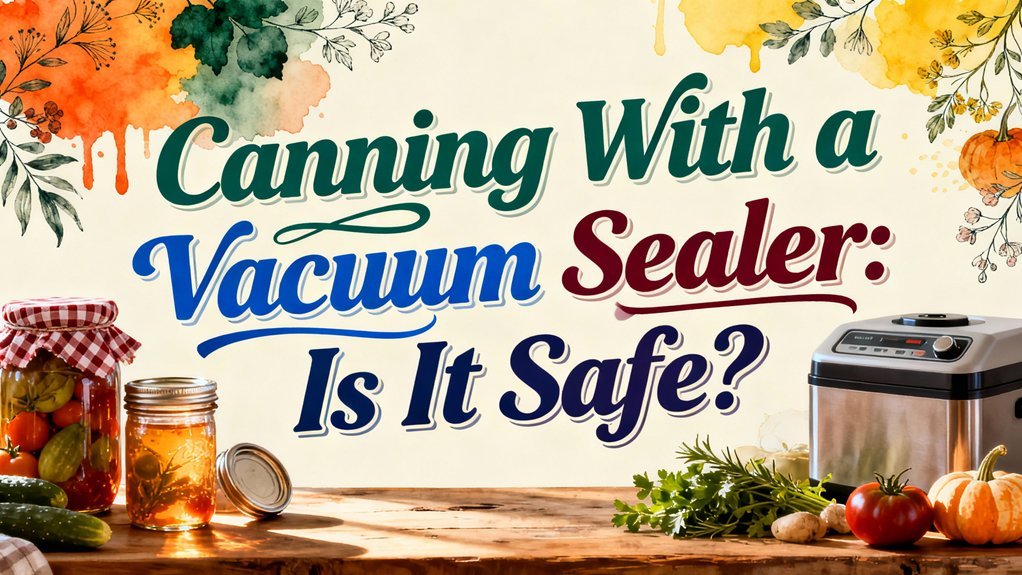
You can’t safely can low-acid foods with a vacuum sealer alone. Removing air creates an anaerobic environment where *Clostridium botulinum* thrives undetected—without spoilage indicators to warn you. Heat processing requires specific temperatures (212°F for water-bath, 240-250°F for pressure canning) to destroy bacterial spores; vacuum sealing doesn’t reach these temperatures. You’re safe vacuum-sealing only refrigerated, frozen, or dried foods. For shelf-stable preservation, you’ll want to understand why proper canning methods matter.
How Vacuum Sealing Differs From Heat Processing
While both vacuum sealing and heat processing preserve food, they operate through fundamentally different mechanisms. Vacuum sealing removes air from packaging to create an anaerobic environment that inhibits aerobic bacteria and mold growth. This approach slows spoilage from oxidation and microbial activity but doesn’t destroy pathogens.
Heat processing, conversely, directly kills bacteria, yeast, and molds by exposing foods to specific temperatures. The cooling process then creates a vacuum seal naturally. Canned foods preserved through heat processing can maintain quality for 1 to 5 years or longer when stored in cool, dark, and dry conditions. Dry canning in particular provides robust protection against storage challenges by maintaining an airtight seal that prevents moisture and pest contamination. Using a proper lid with appropriate venting ensures heat can circulate effectively during the canning process.
You’ll notice a critical distinction: vacuum sealing lacks heat application, preserving freshness short-term without sterilization. Vacuum sealing can prevent freezer burn and oxidation] during refrigeration and freezing periods. Vacuum sealing works best for items like meats, vegetables, and cheeses that benefit from reduced oxygen exposure during storage. However, certain harmful bacteria may thrive in the oxygen-free environments created by vacuum sealing. Vacuum sealing does not make food shelf-stable or eliminate existing pathogens that may already be present. Heat processing achieves true preservation through thermal destruction of microorganisms. This fundamental difference determines their effectiveness for different foods and storage durations, making heat processing superior for long-term shelf stability.
The Role of Temperature in Destroying Pathogens
Heat processing’s effectiveness hinges on temperature’s ability to destroy pathogens, and understanding how thermal exposure kills microorganisms will help you design safe canning processes. Different organisms require distinct temperature thresholds for pathogen inactivation. Vegetative cells succumb rapidly above 70–75°C, while boiling eliminates most within minutes. However, bacterial spores—particularly *Clostridium botulinum*—demand sterilization near 121.1°C because they resist sub-sterilizing moist heat. The relationship between temperature and time is logarithmic: modest temperature increases dramatically reduce required processing time. In low-acid foods, you must achieve adequate thermal lethality at the container’s cold spot, where heating lags. Conversely, acid foods (pH ≤4.6) inactivate *C. botulinum*, permitting gentler boiling-water methods instead of full sterilization. Similar to how a Dutch oven’s moist heat environment creates tender, flavorful results through prolonged cooking, canning relies on controlled heat to achieve food safety. Like the tight-fitting lid essential to Dutch ovens for maintaining steam during bread baking, canning vessels require proper sealing to ensure uniform heat distribution and pathogen elimination. Just as excess fat drainage in specialized cookware improves food quality during preparation, proper heat distribution throughout the canning vessel ensures uniform pathogen elimination. Vacuum sealing alone cannot achieve the thermal processing necessary for safe canning, as it lacks the heat processing capabilities required to eliminate dangerous pathogens. The boiling water bath method also kills molds, yeasts, and bacteria] present in foods, providing an additional safety mechanism beyond vacuum sealing alone. Automatic devices can control retort conditions, ensuring precise maintenance of time and temperature throughout the sterilization process. The total sterilizing effect is measured in F units, which represent equivalent minutes of exposure at 121.1°C and enable accurate comparison of different time-temperature combinations.
Why Vacuum Alone Cannot Ensure Safety
Although vacuum sealing removes oxygen from mason jars, it doesn’t destroy the pathogens that proper heat processing eliminates. You create an oxygen-free environment that actually favors anaerobic bacteria like Clostridium botulinum, which thrives without air. Unlike heat treatment that kills harmful microorganisms, your vacuum seal simply removes their preferred atmosphere—they survive dormant and dangerous.
Without adequate vacuum seal hygiene and proper processing temperatures, pathogenic bacteria persist undetected. You won’t see spoilage indicators like mold that signal problems in traditional preservation. Low-acid foods and raw vegetables pose particular risks since anaerobic bacteria multiply silently in these conditions. Your vacuum seal provides suction-based storage, not the pathogen elimination that canning requires. Heat treatment at recommended internal temperatures of at least 212°F is essential for destroying pathogens and ensuring food safety. Refrigeration or freezing remains necessary for perishables you’ve vacuum sealed. Vacuum packaging should be used primarily for refrigerated, frozen, and dried foods rather than for home canning applications.
Foods That Are Safe to Vacuum Seal
Since vacuum sealing alone can’t eliminate pathogens, you’ll want to focus on foods where pathogenic risk doesn’t exist. Dry grains like rice and quinoa store safely for 3-5 years when vacuum sealed in mason jars. Nuts and seeds remain stable when you remove oxidation air, preventing rancidity. Dehydrated fruits and vegetables work well provided moisture content stays below 10%. You can confidently vacuum seal spice storage items—dried herbs, flour, and baking powder maintain potency in airtight containers. Shelf snacks including chocolate chips, candy, and cereal preserve effectively without refrigeration. These low-moisture, shelf-stable foods naturally resist microbial growth. Vacuum sealing simply extends their freshness and prevents quality degradation rather than providing preservation through pathogen elimination. Unlike meat storage where proper vacuum sealing techniques can prevent freezer burn and oxidation, shelf-stable foods rely on their inherent low moisture content for safety. Vacuum sealing helps reduce food waste by extending the shelf life of these shelf-stable items through removing oxygen that would otherwise contribute to spoilage. When using oxygen absorbers along with vacuum sealing, you can further extend storage life by eliminating residual oxygen in your containers. The suction power of your vacuum sealer will determine how effectively it removes air from containers and bags. For fine powders like cinnamon or paprika, place them in a zip-lock inside the jar to prevent vacuum sealer mess and ensure optimal machine performance. Ball brand tempered glass mason jars are recommended for durability when selecting containers for your vacuum sealing projects.
The Botulism Risk With Reduced-Oxygen Environments
The risk intensifies with foods like garlic, mushrooms, and raw onions. You won’t detect pathogenic growth through appearance alone, making botulism prevention critical. Certain strains even multiply during refrigeration, particularly in vacuum-sealed fish. Spoilage bacteria that usually indicate food deterioration are reduced in vacuum-sealed environments, which can mask unsafe conditions.
For botulism prevention, you must pair vacuum sealing with consistent refrigeration at 38-40°F. Boiling suspect foods destroys toxin at temperatures above 85°C for five minutes, though it won’t eliminate spores. C. botulinum spores are widespread in the environment and can germinate in the low-oxygen conditions created by vacuum sealing. Commercial canning, pasteurization, or acidification remain the only reliable methods to prevent anaerobic growth safely.
Seal Reliability and Potential Failure Modes
While vacuum sealers promise reliable preservation, they’ve got significant limitations you need to understand before trusting them with your food storage. Seal integrity depends heavily on maintaining consistent vacuum levels, yet most electric sealers achieve only 59-62% oxygen removal—far below professional standards of 80-85%. Without heat-softened plastisol bonding the lid permanently, your seal relies entirely on pressure differential that inevitably deteriorates. Temperature fluctuations during storage accelerate vacuum loss, allowing oxygen re-entry that triggers rancidification and mold growth. You’re looking at a shelf life of merely 1-3 years versus canning’s potential decades. Manual pumps generally outperform electric pumps, with some models achieving higher oxygen removal percentages that demonstrate superior long-term effectiveness. Unlike travel applications where vacuum seal bags can maximize luggage space through temporary compression, food preservation requires permanent and reliable sealing. Vacuum consistency proves unreliable long-term, making these sealers fundamentally unsuitable for dependable food preservation compared to seasoning cast iron and other heat-processed methods. Unlike traditional canning methods, which use significant processing and salt as major components before sealing in airtight jars, vacuum sealing relies solely on mechanical air removal without any thermal treatment to ensure sterility.
What Authoritative Sources Say About Jar Vacuumers
Before investing in a jar vacuum sealer, you should consult what extension services and food safety experts actually recommend. K-State Research & Extension, University of Minnesota Extension, and Penn State Extension all clearly state that vacuum sealers can’t replace proper canning methods. You’ll find that vacuum sealing misconceptions are widespread—manufacturers often misleadingly suggest their products match traditional canning’s safety standards. However, vacuum sealing doesn’t reach the temperatures required to destroy pathogens: 212°F for water bath canning or 240-250°F for pressure canning. The seal may also fail without heat-treating the plastisol band. Pathogens like Clostridium botulinum and Listeria monocytogenes can survive and proliferate in the oxygen-free environments created by vacuum sealing, posing serious health risks. Unlike cast iron cookware that develops a polymerized protective surface through proper heat treatment, vacuum sealing lacks the thermal processing necessary for food preservation. Without the partial vacuum created by cooling, the preservation state cannot be reliably maintained. Unlike stovetop bread baking that uses even, dry heat from controlled temperatures to achieve safe results, vacuum sealing lacks the thermal processing necessary for food preservation. Traditional canning methods, which have been refined over centuries like the manufacturing techniques used in 19th century cookware, provide proven safety standards that vacuum sealing simply cannot replicate. Authoritative sources uniformly reject vacuum sealers as safe canning alternatives, emphasizing that sealed appearance doesn’t guarantee food safety or proper preservation.
Best Practices if You Use a Vacuum Sealer
If you’ve decided to use a jar vacuum sealer despite the safety limitations outlined above, you’ll need to follow strict protocols to minimize risk. Prioritize jar selection by using only undamaged containers free from chips, cracks, or prior thermal stress. For sealing techniques, verify your jar rim is completely dry and clean before vacuuming—food particles or moisture will compromise the seal. Apply manufacturer-recommended headspace even when vacuum sealing. After sealing, tighten the screw band fingertip-tight only to avoid interfering with seal formation. Similar to bread baking in a Dutch oven, proper container preparation and technique are essential for successful results. Vacuum sealing works best when you understand how removing air from jars extends the shelf life of your stored foods. To prevent messy failures, consider pre-freezing liquids before vacuum sealing them, as this prevents the sealer from drawing liquid into the machine and compromising the seal. Label jars with contents and dates, then monitor them regularly for bulging lids, leaks, or off-odors. Unlike traditional freezer preservation methods, vacuum-sealed canned goods require consistent monitoring to ensure safety and quality. When monitoring your sealed jars, look for the same visual cues you would observe in baked goods, such as changes in appearance that signal spoilage. Discard any jars showing these signs immediately.
Proper Canning Methods for Long-Term Shelf Storage
Vacuum sealers can’t replace the validated methods that guarantee long-term safety, so you’ll need to understand how proper canning actually works. Must choose between water-bath canning for high-acid foods or pressure canning for low-acid foods—each uses specific temperatures and processing times tested by food safety experts. You’ll follow precise canning techniques: preheating jars, maintaining correct headspace, wiping rims clean, and applying lids fingertip-tight. Processing parameters vary by food type, jar size, and altitude, so you can’t deviate from your recipe. Jar safety depends entirely on achieving proper seals through thermal processing that destroys pathogens like Clostridium botulinum. Successful sealing is indicated by the lid popping sound during the cooling process, confirming that the food has been safely preserved. Using tools like an accurate temperature monitoring device throughout the canning process helps ensure you maintain the precise heat levels required for food safety. Vacuum sealing alone won’t create the conditions necessary for shelf-stable preservation, whereas genuine seal quality from validated canning methods ensures food remains safe throughout extended storage periods. Proper canning methods create a non-stick surface effect through thermal processing that prevents bacterial growth, unlike vacuum sealing which only removes air without the heat treatment necessary for pathogen elimination.