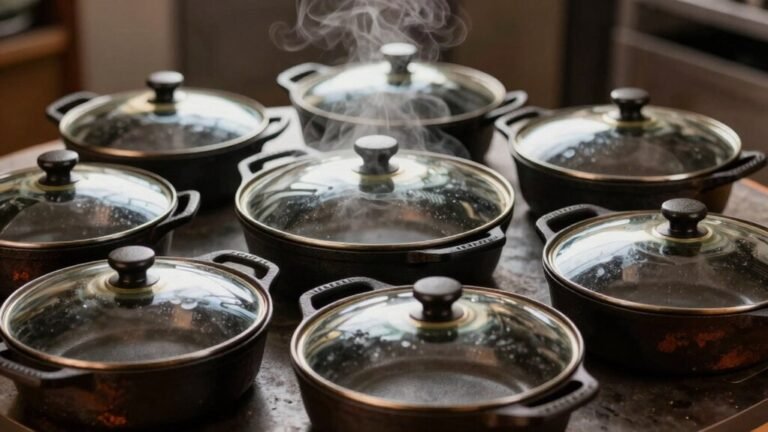
You’ll master cast iron cooking over open flames by starting with white-hot coals and positioning your skillet strategically—closer for gradual heating, farther for cooling. Rotate every few minutes for even distribution. Properly season your skillet with high smoke-point oils, applying thin coats and heating at 450-500°F for durable non-stick performance. Use sturdy tongs and long-handled utensils to protect your seasoning. Maintain a two-zone fire for versatile cooking needs while keeping emergency equipment accessible. The techniques you’ll uncover transform campfire meals into expertly prepared dishes.
Essential Equipment and Setup
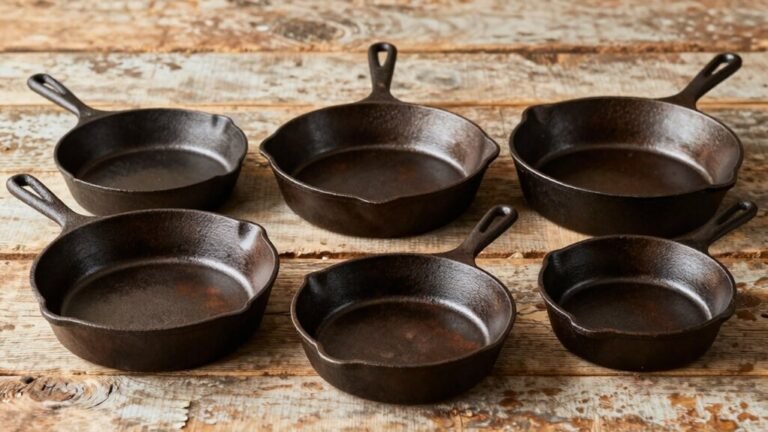
When you’re setting up for cast iron cooking over an open fire, you’ll need to start with the right skillet. The Lodge Pre-Seasoned 10.25-inch model, weighing 5 pounds 9.5 ounces, excels in open fire tests and delivers reliable performance. For lighter options, consider the GSI Guidecast alternative, which reduces weight without sacrificing durability.
Beyond your skillet, important cooking accessories include sturdy tongs, long-handled spatulas, and spoons for safe fire handling. A campfire grate positions your cookware above flames for controlled heat distribution. Add a heavy-duty fire set and round iron trivets to stabilize your setup. Pit mitts protect hands from heat, sparks, and flames while you’re managing your cookware positioning and adjustments.
Wooden utensils are vital—they won’t damage your seasoned surface during cleaning. Include a cutting board and reliable knife for food preparation. Cast iron cookware retains heat and improves over time, making it an investment that enhances your outdoor cooking capabilities. These components create a functional, efficient cast iron cooking station.
Mastering Fire and Heat Management
Because cast iron’s exceptional heat retention demands respect, you’ll need to master the delicate balance between fire intensity and cookware positioning. Start by building white-hot coals as your foundation, then adjust fire temperature by moving your skillet closer or farther from the heat source. Position your pan near flames initially for gradual absorption, then slide it directly over coals for searing. Rotate your skillet quarter turns every few minutes to guarantee even heat distribution across the cooking surface. Use the middle and back zones of your fire as hottest areas, reserving edges for cooler temperatures. If overheating occurs, remove your skillet briefly and lower the fire temperature. A chimney starter can efficiently heat your coals before transferring them to your cooking area. Allow ample preheating time before cooking to minimize localized hot spots and ensure optimal temperature stability. The cast iron’s thick construction and tight heat retention properties require gradual heating to prevent thermal shock and ensure consistent results. Like Dutch ovens, cast iron’s ability to develop complex flavors comes from proper heat management and seasoning. Beyond savory dishes, cast iron skillets also excel at creating Dutch oven desserts over campfire flames when properly managed. To maintain your cookware’s longevity, always let cookware cool before cleaning to avoid thermal shock damage. Consider using a fitted lid to retain moisture and heat during longer cooking sessions over open flames. This methodical approach prevents thermal shock and ensures consistent, controlled cooking results.
Seasoning Your Cast Iron for Outdoor Cooking
Just as mastering heat management requires deliberate technique, properly seasoning your cast iron demands understanding the chemistry behind polymerization. When you heat seasoning oils above their smoke point, molecular bonds form between the oil and iron surface, creating a durable, non-stick layer.
For outdoor cooking, use high smoke point oils like vegetable oil or flaxseed for maximum hardness. Apply microscopically thin coats—excess pooling defeats the purpose. Position your skillet upside down over your heat source at 450-500°F for one hour, allowing the polymerization process to complete thoroughly. To achieve optimal results, aim for at least six coats to build a hard polymer that effectively resists wear during outdoor cooking. Each use with oil or fat adds another seasoning layer to strengthen the surface over time.
Cool your pan in place for two hours before removing it. Repeat this cycle 2-6 times, preheating between applications. Avoid using butter for seasoning due to its low smoke point of around 350 degrees Fahrenheit, which causes it to burn quickly and impart unwanted flavors to your food. The resulting seasoning appears shiny, dry, and non-slippery—your cast iron is now primed for outdoor cooking. This durable finish improves with use and care, developing a natural non-stick surface that generations can enjoy when properly maintained. For long-term durability, store your skillet with airflow separators to prevent moisture buildup and maintain the seasoning you’ve worked to develop.
Core Cooking Techniques and Food Preparation
Your properly seasoned cast iron skillet is now ready for the heat, and you’ll need to master several fundamental techniques to transform it into a reliable outdoor cooking tool. Start by searing proteins like fish or steaks directly over hot coals to develop a rustic, caramelized crust. For sautéing vegetables, brown them first in your preheated skillet before adding liquids for stews, ensuring even cooking and enhanced flavor development. Control heat by moving your skillet on and off the fire, particularly for delicate foods requiring precision. Use butter rather than oils to minimize flare-ups while maximizing non-stick performance. Stir your dishes occasionally during simmering to promote tenderness and consistent texture throughout your outdoor meals. The non-stick surface created by proper seasoning ensures that your food releases easily from the pan, allowing you to focus on perfecting your cooking technique rather than struggling with stuck ingredients. When baking bread or desserts in your skillet, position it on a cooking grate to achieve even heat distribution and optimal results.
Safety Precautions and Logistics
While mastering cast iron cooking techniques builds confidence, prioritizing safety and proper logistics guarantees you’ll cook successfully without incident. You’ll establish fire safety by containing flames within designated pits and checking local cooking regulations before igniting. Position your skillet over hot coals rather than direct flames, using heat-resistant gloves and long-handled utensils to maintain safe distance from intense heat.
You’ll prepare a two-zone fire setup for versatile cooking needs, preheating cast iron gradually to your desired temperature. Cast iron’s natural magnetic properties make it reliable for various heat sources, including open flames. Maintaining even temperature distribution across your skillet ensures consistent cooking results whether you’re working with a single heat zone or multiple flame sources. After each cooking session, rinse your skillet with warm water and use a brush to clean off food residue before applying a light coat of seasoning oil to maintain its protective layer. Keep emergency equipment—water, sand, or a fire extinguisher—within immediate reach. Never leave your fire unattended, especially with children nearby. A well-seasoned cast iron pan can last for generations, making it a worthwhile investment in your open fire cooking journey. When cooking meat over your open fire, use an oven-safe probe thermometer to monitor internal temperatures while the meat remains on the heat. Digital probe thermometers offer faster and more accurate measurements compared to traditional analog options, ensuring your food reaches safe temperatures consistently. Set up your cooking area away from your RV and other flammable materials to prevent accidental fires from spreading. You’ll fully extinguish all flames before departing, ensuring complete cooldown. Store firewood away from your cooking area to reduce hazards and prevent pest attraction.
Troubleshooting Common Cooking Problems
Because open-fire cooking introduces variables that controlled kitchen environments eliminate—wind, fluctuating temperatures, and direct flame exposure—you’ll encounter challenges that require systematic solutions. Food sticking stems from inadequate seasoning; build a polymerized oil layer through repeated baking cycles. Uneven cooking results from hot spots and inconsistent pan placement; use a coal bed instead of direct flame for steadier heat distribution. Flare-ups control demands minimal oil and strategic pan repositioning away from intense heat. Rust prevention requires thorough drying immediately after cooking and prompt cleaning to remove acidic residues. Seasoning issues arise from thermal shock; cool pans gradually before cleaning. Cleaning methods should employ non-abrasive scrapers or kosher salt scours, preserving your seasoning layer while removing stuck-on food and exterior ash effectively. Regular seasoning maintains the skillet’s non-stick properties and can be enhanced by cooking fatty foods over your open fire.
Wood Selection and Fuel Best Practices
The wood you choose directly determines your cast iron skillet’s heat consistency, fuel efficiency, and the final flavor of your meal. You’ll want hardwoods like oak, hickory, or pecan—they yield consistent BTUs and form stable coal beds essential for even cooking. Their wood properties provide sustained heat without the rapid burnout you’d experience with softwoods.
Always select seasoned wood over green wood. Seasoned hardwoods increase heat output by 30%, burn longer with steady temperatures, and reduce excess smoke that compromises your cooking environment. This fuel efficiency matters when you’re managing fire intensity beneath cast iron. For optimal results, ensure your firewood has moisture content below 20% to achieve the best performance. Different regions have unique wood preferences, such as maple in northern areas, impacting both cooking techniques and flavor profiles. Proper wood selection also contributes to reducing food waste by ensuring consistent cooking temperatures that prevent undercooked or burnt meals.
Avoid pine, juniper, and hemlock entirely—they produce resinous flavors and poor coals. Prioritize locally available dense hardwoods that offer both reliability and sustainability for your open-fire cooking needs.