You’ll harness your cast iron skillet’s versatility far beyond stovetop cooking. It excels at searing proteins, executing one-pan meals, and braising meats to tender perfection. Transfer it seamlessly from stovetop to grill for outdoor fire cooking with superior heat retention. You can even press flowers, laminate crafts, or maintain beverage temperatures during emergencies. Consistent seasoning and proper maintenance guarantee decades of reliable performance. These multifaceted applications barely scratch the surface of what you can accomplish.
Searing, Frying, and High-Heat Cooking
How can you release cast iron’s greatest strength? Through searing techniques that capitalize on superior heat retention and capacity. You’ll achieve peak results by preheating your skillet 5-7 minutes on medium-high heat until oil slides easily. Avoid cooking cold; a properly heated pan prevents sticking and produces aesthetic, uniform browning across proteins like chicken, which you’ll sear 5-7 minutes before transferring to your oven.
Frying applications represent cast iron’s versatility. The cookware excels at shallow or deep frying, maintaining consistent temperatures throughout cooking. You’ll handle most foods effectively except eggs and delicate fish. Whether stovetop or grill frying, proper preheating guarantees even heat application. For optimal results, use high heat oils like coconut, grapeseed, vegetable, or lard to enhance your frying experience. A seasoned non-stick surface created through proper polymerization will further improve your frying outcomes. The natural seasoning that develops over time makes cast iron increasingly effective for achieving superior browning and flavor through the Maillard reaction. To maintain your pan’s performance, rotate the skillet during cooking for even heating across the cooking surface. After high-heat use, clean immediately with hot water and a stiff-bristled brush, then dry thoroughly on your burner before applying a light oil layer.
One-Pan Meals, Braises, and Oven Baking
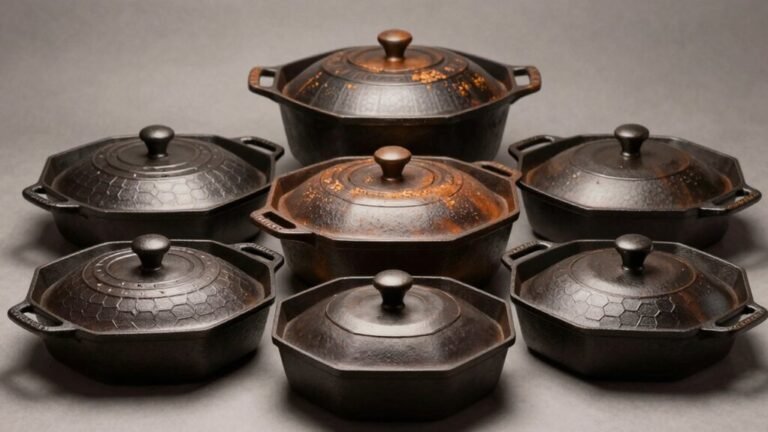
Because cast iron’s superior heat retention and even distribution make it ideal for cooking multiple components simultaneously, one-pan meals represent one of the skillet’s most practical applications. You’ll master one-pan techniques by browning protein first, then adding root vegetables before finishing with delicate greens. This meal combination strategy guarantees each component reaches peak doneness without overcooking. Deglaze the pan with stock or wine to capture fond and build sauce complexity. For braises, cast iron’s thermal mass sustains steady low temperatures that convert collagen to gelatin, enriching mouthfeel. Oven braises at 275–325°F provide even ambient heat, preventing scorching. Cast iron’s ability to transition seamlessly from stovetop to oven makes it particularly effective for both braising and baking applications. Finally, you can leverage cast iron’s heat retention for oven baking—preheating creates crisp bottoms and caramelized edges for cornbread, pizza, and skillet brownies. To protect your cookware and avoid damage, always guard against thermal shock by heating gradually and never heating an empty pot. Proper seasoning maintenance through regular use and care helps preserve the skillet’s non-stick surface and long-lasting performance. Dutch ovens are also cast iron options and ideal for deeper cooking needs such as stews and braises, with enameled versions offering easy-to-clean surfaces that don’t require seasoning. For added safety and protection, consider using cotton yarn covers on cast iron handles to prevent burns during cooking. The skillet’s versatility makes it suitable for frying, baking, and roasting, providing unique flavor profiles through searing and sautéing.
Stovetop-to-Grill and Outdoor Fire Cooking
Cast iron’s unparalleled heat retention makes it your ideal companion for shifting from stovetop to grill and outdoor fire cooking. You’ll develop a flavorful crust by searing on your stovetop, then transfer the preheated skillet to hot coals for smoky finishing without losing internal temperature control.
For outdoor grilling, position your pan on a tripod or grate to manage heat zones effectively. Use leather gloves and long-handled tongs for cookware safety, keeping your hands clear of flames and hot surfaces. Place coals atop your Dutch oven lid to create oven-like radiant heat for even cooking. When packing for camping trips, you can also use ziplock bags with a straw to vacuum seal any additional supplies you need to transport. The versatility of cast iron allows you to seamlessly transition between multiple cooking techniques throughout your meal preparation. A lid lifter is essential for safer handling of hot lids and cookware when managing coals and adjusting your setup.
Monitor doneness with an instant-read thermometer when changing between heat sources, as these non-contact devices provide quick and accurate temperature readings without touching your food. From savory mains to Dutch oven desserts, cast iron enables you to prepare complete meals over a campfire. This hybrid approach lets you leverage stovetop precision while capturing authentic campfire flavor.
Non-Cooking and Household Creative Uses
Beyond the kitchen, your cast iron skillet‘s weight, durability, and heat tolerance reveal surprising applications across household tasks, crafts, and décor. You can employ it for flower pressing, positioning it atop botanical specimens between paper sheets for weeks-long preservation. For craft lamination projects, you’ll achieve uniform pressure by pairing the skillet with flat boards. Its thermal mass makes it invaluable as an emergency heating source—preheat it to maintain beverage temperatures during outages or warm seedling trays. The cast iron’s exceptional durability means these household applications will continue to function reliably for generations, much like the cookware itself. To keep your skillet performing well across these varied uses, regular seasoning with high-quality oil will maintain its protective coating and prevent rust from compromising its functionality. For storing dried botanicals and preserved flowers, consider pairing your cast iron displays with proper storage methods that prevent oxidation to extend their longevity. Decoratively, you’ll mount it as a rustic shelf for displaying small objects or arrange it as a centerpiece bowl for dried botanicals. You can also repurpose it as a durable key holder near entryways, combining functionality with industrial-chic aesthetics that withstand daily wear. Because cast iron can be used over any heat source, you can safely employ it across multiple heating environments without concern for damage or performance degradation.
Maintenance, Seasoning, and Longevity Benefits
While your cast iron skillet’s durability makes it remarkably forgiving, consistent maintenance guarantees it’ll perform reliably for decades. Proper cast iron maintenance hinges on thorough drying immediately after cleaning and applying a light vegetable oil coating to prevent rust formation. This protective seasoning builds incrementally with each use, creating a natural nonstick surface that improves over time. Heat the oiled pan to establish the seasoning layer effectively. Store your skillet with plastic separators to maintain airflow and eliminate moisture exposure. Avoid damp environments where oxidation accelerates. By committing to regular oiling and drying protocols, you’ll preserve the pan’s cooking properties indefinitely. For stubborn messes, allow simmering water to soften debris before scraping the cooled surface. Multiple rounds of oiling and baking can build up a durable seasoning layer that strengthens the non-stick surface. This minimal effort investment assures your skillet transcends typical cookware lifespan, becoming a multi-generational kitchen asset. For stubborn rust spots, use a chain mail scrubber to restore the surface before re-seasoning. Do not place cast iron cookware in the dishwasher due to heat and harsh detergents that can damage the seasoning and cause rust.
Recipe- and Technique-Specific Advantages
Once you’ll reveal that cast iron’s superior heat retention and conductivity show performance advantages across diverse cooking methods. You’ll harness exceptional sautéing methods that develop deep, complex flavors through even heat distribution. The pan’s thermal mass maintains consistent temperatures during shallow and deep frying, strengthening your seasoning while crisping foods to perfection.
You can shift seamlessly from stovetop searing to oven roasting, building flavor development at each stage. Cast iron excels in braising applications, where low-to-high heat combinations tenderize tough cuts while building rich, concentrated sauces. For baking—whether pancakes, tortillas, or pizza—the seasoned surface provides natural non-stick properties and imparts accumulated umami notes. The porous surface of cast iron requires hand-washing and immediate drying after use to prevent rust buildup and maintain its seasoning integrity. After cleaning, apply a thin coat of oil to maintain the seasoning and extend your pan’s lifespan.
Your cast iron’s versatility across sautéing methods and braising techniques transforms routine recipes into culinary achievements, making it indispensable for serious cooks.