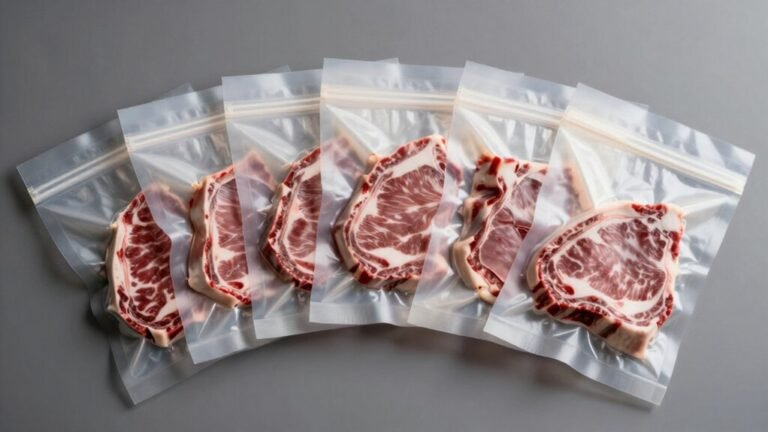
You’ll need specialized FoodSaver bags for sous vide cooking to withstand prolonged water bath exposure while maintaining airtight seals. Their five-layer construction features 3-mil smooth and 11.5-mil textured sides, resisting temperatures up to 70°C for two hours. The bags are BPA-free, FDA-compliant, and available in quart and gallon sizes with embossed designs for consistent vacuum performance. Proper sealing techniques and regular maintenance maximize storage life notably. Understanding the complete specifications and application methods will enhance your sous vide results considerably.
Understanding FoodSaver Bag Construction and Materials
Because sous vide cooking relies on precise temperature control and extended cooking times, you’ll want to understand what makes FoodSaver bags effective for this application. FoodSaver bags feature five-layer construction that delivers exceptional bag durability and reliable performance. The outer nylon layer provides structural strength while the multi-layer plastic composition guarantees an air-tight seal that withstands prolonged water immersion. You’ll find the smooth side measures 3 mils thick, while the textured side reaches 11.5 mils, offering superior protection. Regarding material safety, all FoodSaver branded bags are BPA-free and compliant with FDA and Health Canada regulations. Additionally, FoodSaver offers specialized options like the Freeze N Steam Bags that are designed for easy filling and vertical storage compatibility with microwaves. This construction prevents air, moisture, and odor penetration without chemical leaching, making them ideal for extended sous vide cooking where bag integrity matters most. Vacuum sealing also prevents freezer burn during storage, ensuring your ingredients maintain optimal quality. By eliminating oxygen, vacuum-sealed bags slow oxidation and bacterial growth, which is particularly important for sous vide applications where food sits in warm water for hours. For those seeking budget-friendly alternatives, the water displacement method provides an accessible way to seal food without specialized equipment. Using a meat thermometer ensures your food reaches the proper internal temperature for both safety and optimal results during the cooking process. When selecting vacuum sealer bags for sous vide, considering seal strength as a key performance metric helps ensure your food stays properly sealed throughout the cooking process. The 100% recyclable materials used in FoodSaver bags align with sustainable food storage practices while maintaining the durability required for sous vide applications.
Why Sous Vide Requires Specialized Vacuum Sealing Bags
Now that you understand FoodSaver bag construction, you’ll recognize why standard food storage bags won’t suffice for sous vide cooking. Specialized vacuum sealing bags must withstand prolonged exposure to water bath temperatures—typically up to 90°C for embossed varieties. Standard bags lack the heat resistance and structural integrity required for sous vide techniques.
You need bags that maintain airtight seals under sustained thermal stress while conforming tightly to food, optimizing heat transfer throughout the cooking process. Boilable FoodSaver bags specifically engineered for sous vide offer superior durability compared to general-purpose alternatives. These bags also preserve delicate flavors and oils from your food items during the extended cooking process. Similar to how flame control is essential for precision in culinary techniques, precise temperature maintenance through proper vacuum sealing is critical for sous vide success. Just as consistent oil temperatures ensure optimal results when frying, maintaining stable water bath temperatures requires reliable vacuum-sealed containment.
Additionally, vacuum sealing removes oxygen, preventing bacterial growth during extended low-temperature cooking. Proper bags prevent moisture escape and eliminate air pockets that would compromise your sous vide results. When selecting bags, consider how freezer burn prevention through airtight sealing extends the viability of your prepared meals before cooking. Both seal strength and moisture handling capabilities vary significantly across different bag types and vacuum sealer models. Chamber and external vacuum sealers each offer different advantages depending on your sealing needs and budget constraints. Heavy-duty, food-safe construction guarantees no chemical leaching occurs during heat exposure.
Compatibility With Foodsaver Appliances
FoodSaver’s diverse product line guarantees you’ll find bags compatible with whichever sealing appliance you own. Whether you’re using a full-sized vacuum sealer with a built-in handheld function or a battery-powered handheld device, compatible bags exist for your setup.
FoodSaver features multiple bag options across quart and gallon sizes, all engineered for excellent performance with their sealing systems. Bag customization allows you to select precut bags in various dimensions—from 8-inch rolls to 11-inch options—or purchase commercial-grade embossed rolls up to 6×50 feet. All FoodSaver bags are BPA-free materials designed for safe food storage during your sous vide preparation. By removing oxygen from the sealed environment, these bags help prevent freezer burn and extend the shelf life of your prepared meals. The removal of oxygen also reduces oxidation, which keeps your food fresher for longer periods. Maintaining a clear line of sight to your vacuum sealer’s sealing strip ensures proper contact during the sealing process.
Each bag type maintains the airtight seal necessary for sous vide cooking. The embossed design works universally across FoodSaver appliances, ensuring consistent vacuum performance. You’ll experience reliable sealing regardless of your specific appliance model, supporting your precision cooking requirements effectively.
The Five-Layer Design and Its Benefits
Five distinct layers work together in FoodSaver bags to create an exceptional barrier against the elements that degrade food quality. You’ll benefit from the textured gaufrée surface, which enhances vacuum adhesion and guarantees complete air extraction around your food. The multilayer construction blocks air penetration entirely, eliminating the pockets responsible for freezer burn and deterioration.
Each layer contributes to the material strength you need for repeated use and long-term preservation. The extra protection layer prevents brûlures de congélation while maintaining your food’s nutritive value and taste. You’ll experience layer benefits that extend freezer storage up to five times longer than conventional packaging. This five-layer design seals out external moisture and humidity, preserving freshness throughout storage. Proper labeling and storage duration planning will help you track your vacuum-sealed foods and use them within their optimal timeframe. Vacuum sealing works effectively with various food types including meats, vegetables, and cheeses to preserve their quality. For optimal results with your vacuum-sealed foods, consider preheating your storage area to maintain consistent temperatures, similar to how preheating techniques enhance baking outcomes. The durable material construction includes special air removal channels that ensure efficient and complete vacuum sealing. Additionally, FoodSaver bags are BPA-free, providing you with safe, durable vacuum-sealing solutions for sous vide cooking. The automatic vacuum sealing function ensures consistent results every time you prepare food for sous vide preparation. Proper calibration techniques and maintenance of your vacuum-sealing equipment will ensure long-lasting performance and food safety throughout your sous vide cooking endeavors. For precise temperature monitoring during sous vide cooking, maintaining accurate temperature measurement is critical to achieving consistent culinary results.
Heat Resistance and Safety for Water Bath Cooking
Because sous vide cooking relies on precise temperature control in water baths, you’ll need to understand FoodSaver bags‘ thermal specifications to guarantee both food safety and seal integrity. Standard bags withstand water bath cooking up to 70°C for a maximum of 2 hours, while cooking variants resist temperatures reaching 121°C for 4 hours. Professional-grade bags endure the full range from -50°C to 115°C, making them ideal for demanding sous vide applications. You’ll benefit from the five-layer construction that prevents air and moisture penetration while maintaining seal stability throughout extended cooking periods. All FoodSaver bags meet rigorous safety standards, certified BPA-free and phthalate-free, and are backed by the brand’s proven track record as an international leader in vacuum packaging innovation. Vacuum sealing also preserves flavor, texture, and nutrients during the cooking process, ensuring your sous vide meals maintain optimal quality. For those who cook sous vide occasionally, alternative sealing methods like water displacement with ziplock bags can serve as a cost-effective option. Proper precautions such as managing time-temperature safety zones help mitigate risks related to bacterial growth during extended sous vide cooking. For optimal results with items containing sharp edges or bones, consider using thicker bags (140-200 µm) to avoid perforations during the sealing process. When dealing with heavily soiled cookware or stubborn buildup, chemical treatments with lye-based solutions can effectively strip away organic matter before your cooking preparation begins. Avoid boiling, as this compromises seals and undermines your temperature control efforts during water bath cooking.
Preventing Freezer Burn and Maintaining Food Quality
While thermal stability guarantees your sous vide cooking succeeds, you’ll want to address what happens when you store vacuum-sealed foods in your freezer long-term. Freezer burnout prevention hinges on understanding how air exposure causes dehydration and oxidation, creating dry, discolored areas that compromise taste and texture.
FoodSaver bags combat this through multi-layer construction and patented waffle patterns that eliminate air pockets. The five-layer design—featuring an 11.5-mil textured side—blocks moisture and oxygen ingress effectively. Although freezer-burned food may not be palatable, it is still safe to eat, so minor freezer burn does not render your stored meals unusable.
Quality retention techniques require maintaining consistent 0°F temperatures and leaving headspace before sealing. Similar to how parchment paper protects enamel in Dutch oven cooking by creating a protective barrier, vacuum-sealed bags shield your food from environmental degradation. This approach extends beef and poultry viability to three years, versus markedly shorter periods with ordinary methods. For optimal results, monitor your food’s internal condition periodically, similar to how proper temperature monitoring ensures food safety during cooking. By trapping juices within airtight packaging, you preserve peak flavor and texture while reducing food waste substantially.
Choosing the Right Bag Size and Type for Your Needs
Selecting the appropriate FoodSaver bag involves balancing thickness, format, and dimensions against your specific cooking and storage requirements. You’ll match bag sizing to your food types: sandwich and pint sizes accommodate vegetables and small proteins, while quart or gallon bags suit standard meats. For centerpieces like whole chicken, half-gallon or larger formats work best. Pre-cut bags offer convenience in fixed sizes, but rolls provide custom sizing for odd-shaped cuts, reducing waste and cost per square foot. You’ll find rolls cheaper at $0.19–$0.39 per square foot compared to pre-cuts. Consider liquid-blocking bags for marinades and raw meats, and verify embossed sides contact your sealer for maximum air removal and vacuum integrity. The vacuum strength of your sealer will determine how effectively these embossed channels remove air from your bags. For long-term sous vide storage beyond 30 days, thicker bags at 11.5 Mil or 12 Mil provide superior protection compared to standard thickness options. Properly vacuum sealed meats can maintain best quality for 2 to 3 years in the freezer when stored at 0°F, making thicker bags a worthwhile investment for extended storage. When comparing vacuum sealing systems, seal strength and suction power are critical factors that impact how well your bags preserve food freshness over time. Like Dutch ovens that excel at heat retention and distribution, vacuum-sealed bags with proper thickness maintain consistent food quality during extended storage periods. Using a well-fitted container lid] during storage can further minimize oxidation and extend the shelf life of your vacuum-sealed proteins. FoodSaver systems provide continuous rolls for custom-sized bags, allowing you to create the exact dimensions needed for your specific ingredients and minimize packaging waste.
Proper Techniques for Vacuum Sealing Sous Vide Meals
Proper vacuum sealing requires three fundamental steps to achieve sous vide-ready meals: you’ll position your filled bag into the machine’s vacuum channel, engage the lid to lock it in place, and activate the vacuum button to simultaneously aspirate air and create a hermetic seal. For moist proteins like fish or beef, freeze items 1-2 hours beforehand to solidify juices and prevent spillage during meal preparation. Select wet mode to adjust aspiration strength appropriately. Before sealing, verify the seal area remains clear of food particles or liquids. Align your bag correctly using the built-in positioning tool. The removable drip tray catches any liquids that escape during the sealing process, protecting your machine from moisture damage. Proper maintenance and seasoning techniques will extend the life of your vacuum sealing equipment, similar to how maintenance practices preserve cast iron cookware for long-term use. Vacuum sealing also helps prevent freezer burn and reduces food waste by extending the shelf life of your prepared meals. After sealing, submerge the bag in water—absence of bubbles confirms an airtight seal suitable for sous vide cooking. Using FoodSaver’s BPA-free multi-layer material ensures your vacuum-sealed meals remain safe and protected from contamination throughout the cooking and storage process.
Cleaning, Reusing, and Maintaining Your Bags
Once you’ve mastered the sealing technique and submerged your bags to confirm an airtight seal, you’ll want to extend their lifespan through deliberate cleaning and maintenance practices. Hand-wash your bags immediately after use with warm water and mild detergent, paying particular attention to zipper channels and valve recesses where food residue accumulates. Use a soft sponge or bottle brush for seams; avoid abrasive pads that damage polymer surfaces. Rinse thoroughly, then invert and air-dry completely with the zipper open. For raw meat or seafood, perform an additional wash cycle. Before reusing, inspect bags for warping, tears, or zipper malfunction. Never dishwash FoodSaver reusable bags. Like heating metal evenly to avoid cold spots, proper bag maintenance requires attention to all areas to ensure uniform protection and longevity. Consider storing your dried bags in a cool, dry location away from direct sunlight, similar to how heat-resistant cookware should be properly maintained to preserve its integrity. Proper maintenance helps prevent freezer burn and ensures your bags remain safe for food storage. Just as one-pan ground beef skillet recipes benefit from proper cookware care, maintaining your sous vide bags ensures optimal performance and food safety. Proper bag storage and cleaning techniques directly impact food safety and durability.
Maximizing Storage Life and Freshness Preservation
Because vacuum-sealed FoodSaver bags remove oxygen from your food environment, they dramatically extend storage life across refrigerator, freezer, and pantry conditions. You’ll achieve up to 2 times longer refrigeration compared to non-sealed storage, with most items lasting 1 to 2 weeks. In your freezer, you’ll extend shelf life up to 5 times longer—beef lasting 24 to 36 months versus 6 months unwrapped, poultry reaching 24 to 36 months, and pork 12 to 24 months.
For ideal food preservation, maintain proper temperature control at 34°F within 48 hours of sealing. Your pantry staples—flour, rice, pasta, and sugar—last 1 to 2 years vacuum-sealed versus 6 months traditionally. For even longer storage of rice and grains, oxygen absorbers can be added to your vacuum-sealed bags for additional protection beyond the oxygen removal process. Blanching vegetables before freezing extends their shelf life to 2 to 3 years, maximizing both preservation quality and longevity. When vacuum sealing wet foods like marinades and soups, consider using specialized vacuum sealer bags designed to handle liquids without compromising the seal. Ensure bones and sharp edges don’t puncture the vacuum bags during storage, particularly when preserving whole poultry. The removal of oxygen slows spoilage and significantly reduces the risk of oxidation that compromises food quality. Vacuum sealing also reduces food waste by enabling efficient portioning of meals into grab-and-go portions. Vacuum sealing pairs exceptionally well with Dutch oven cooking techniques, allowing you to prepare and store marinated chicken thighs and braised meats that are ready for quick reheating on busy weeknights. Prompt refrigeration or freezing] is necessary post-sealing to inhibit bacterial growth and ensure food safety.