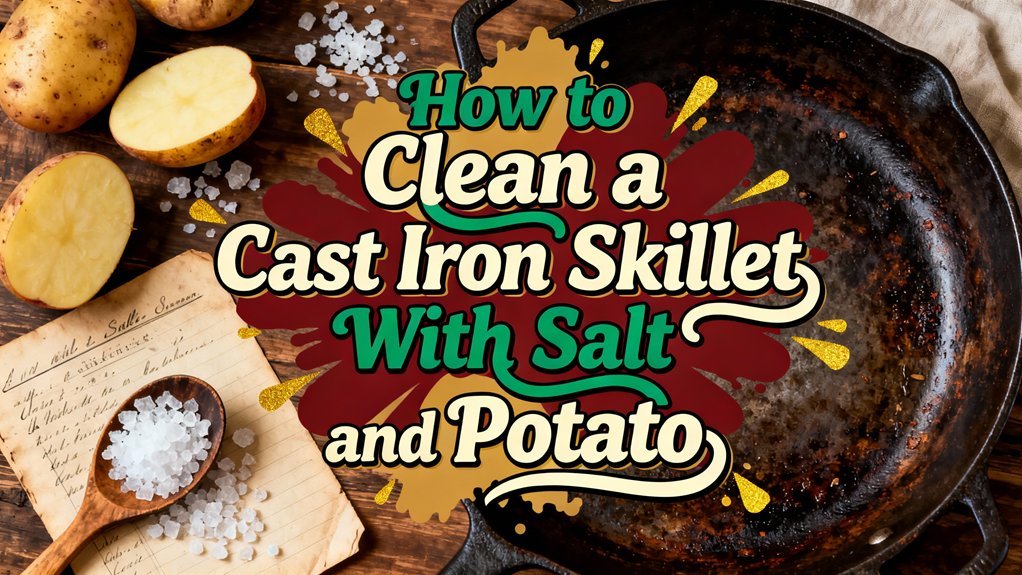
You’ll halve a raw potato, sprinkle coarse salt inside your skillet, and scrub firmly with the cut side. The salt provides mechanical abrasion while the potato’s oxalic acid dissolves rust and mineral deposits. Flip and repeat on the exterior if needed. Rinse thoroughly under hot water, pat dry immediately, and heat briefly on the stovetop to evaporate residual moisture. Apply a thin oil layer to restore seasoning. There’s considerably more technique to master for ideal results.
Why Salt and Potato Work Together
Two humble kitchen staples—coarse salt and a raw potato—combine to form an unexpectedly powerful cleaning duo for cast iron. You’ll find that salt benefits your skillet through mechanical action; its coarse particles scrape away rust and food residue from crevices without damaging the seasoning layer. Simultaneously, potato properties deliver chemical cleaning power. The oxalic acid in potatoes dissolves rust and mineral deposits by breaking down iron oxide bonds, while the potato’s natural starch provides lubrication during scrubbing. Together, they work synergistically—salt removes embedded particles through abrasion while the potato’s acid dissolves oxidation. This combination removes rust faster than either method alone. You’ll notice the salt turning brown as it absorbs extracted debris, indicating the effectiveness of their paired action in restoring your cast iron to pristine condition. After the debris is removed, apply a light coat of oil to maintain the cast iron’s seasoning and prevent rust. For more stubborn rust buildup, consider that electrolysis tanks can provide a more thorough removal of all rust and organics if this method proves insufficient. After cleaning with salt and potato, use circular motion with light pressure to ensure even scrubbing across the entire cooking surface. thoroughly dry with a towel to prevent rust from forming on your skillet. Avoiding dish soap ensures the seasoning layer remains intact throughout the cleaning process. Finally, season with oil after drying to maintain the surface and prevent future rust.
Gather Your Materials and Tools
Before you’ll want to assemble the essentials: a raw potato (ideally white), coarse salt, water, and a clean cloth or towel for drying. Your materials checklist requires nothing specialized or difficult to source.
For preparation tips, keep your potato unpeeled initially—you’ll decide whether peeling aids your cleaning approach based on your skillet’s ridge depth. Measure salt by eye; you’ll need enough coarse salt to cover your pan’s interior adequately. Ascertain your cloth or towel is clean and lint-free for effective drying.
Position yourself near a sink with running water accessible. Gather everything within arm’s reach before starting. This methodical approach prevents interruptions during the cleaning process. Avoid using dish soap and soaking overnight, as these can damage your skillet’s seasoning and promote rust. After cleaning, you should apply a high smoke-point oil to maintain your skillet’s seasoning and prevent rust. The salt-and-potato method works effectively because coarse salt acts as an abrasive agent to remove stubborn residues without damaging your pan’s seasoning. Once you’ve finished scrubbing, rinse and dry thoroughly to prevent moisture from causing rust on your cast iron. You’re now ready to execute the salt-and-potato cleaning technique efficiently and effectively.
Step-by-Step Cleaning Process
Now you’re ready to execute the salt-and-potato cleaning method. Begin by halving your raw white potato and sprinkling coarse salt liberally inside the skillet. Using the cut potato side, apply firm pressure while scrubbing salt-covered areas with effective scrubbing methods that reach crevices and pitted spots. The oxalic acid in the potato combines with salt to form an abrasive paste that dissolves rust. Flip the pan and repeat on the exterior using fresh salt if needed. Rinse thoroughly under running water, removing all brown salt-rust debris. Repeat the scrubbing and rinsing cycle at least twice. These visual cleaning techniques reveal surface conditions clearly. Finally, pat dry immediately and heat briefly on your stovetop to evaporate residual moisture completely. After cleaning, re-season the pan by applying a thin layer of oil and heating it to restore the protective non-stick coating. For accurate temperature monitoring during the heating step, consider using an oven-safe probe thermometer to ensure your skillet reaches the proper temperature for complete moisture evaporation. Proper maintenance like immediate drying after washing is crucial for preserving the seasoning layer and preventing rust from developing on your cast iron. The signature crispy, golden-brown edges that result from proper cast iron maintenance make the effort worthwhile for any home cook.
The Science Behind the Method
The salt-and-potato method‘s effectiveness rests on three complementary mechanisms working in concert: mechanical abrasion, moisture-driven capillary action, and mild chemical contributions from potato components. Salt granules concentrate pressure at their edges, micro-scraping stuck-on food and rust without gouging your seasoning. Simultaneously, potato’s released starch and water create capillary action that lifts debris from surface micro-crevices while distributing salt evenly. The enzyme contribution from potato amylases marginally softens residues, while organic acids and reducing sugars weakly solubilize burnt carbohydrates. Friction generates slight heat, improving fat pliability. You’ll notice that chemical actions remain secondary to mechanical effects, operating primarily during active scrubbing. This synergy cleans thoroughly while preserving your cast iron’s protective polymerized layer when you scrub moderately, much like how even temperature distribution is maintained during the cooking process to achieve optimal results. The salt-and-potato method works particularly well for cast iron grill pans, which require special attention due to their raised grill ridges that can trap debris. For best results, follow this salt-and-potato method with the traditional finishing steps of thorough drying with a towel, heating on the stove to evaporate remaining moisture, and applying a thin layer of oil to all surfaces, as repeated seasoning maintains your skillet’s quality over time. This approach complements slow-cooking methods like Dutch oven pot roasting, where proper cast iron maintenance ensures your cookware performs optimally for hearty family meals.
Best Practices for Safety and Results
Understanding cast iron’s cleaning chemistry matters little if you’re not executing the method safely and effectively. Your safety precautions begin with heat-resistant gloves or a pot holder to steady the warm skillet during scrubbing. Always work with a slightly cooled but still-warm pan—this temperature loosens debris without requiring soaks that promote rust.
Establish a cleaning frequency immediately after cooking to prevent hardened residue buildup. Don’t delay; prompt cleaning makes the salt-potato method greatly more efficient. For more heavily soiled pans, you can also incorporate vinegar and water solutions to break down stubborn buildup before proceeding with the salt-potato scrubbing method. To prevent damage from prolonged vinegar exposure, monitor the soak time carefully to avoid harming your pan. After cleaning, the cookware must be dried thoroughly and, while still warm, lightly coated with a thin layer of cooking oil to prevent rust. The oil must be rubbed into the pan to maintain the non-stick, rust-resistant layer that protects your cookware.
Apply steady, circular pressure when scrubbing, replenishing salt as potato moisture creates paste. Just as precision tools like kitchen torches deliver controlled results in specialized cooking tasks, the disciplined technique of applying consistent pressure ensures optimal cleaning outcomes. Rinse immediately with hot water, avoiding prolonged exposure that invites corrosion. Dry completely over low heat, then apply a thin oil film. Using coarse kosher salt and water creates an effective abrasive paste for scrubbing difficult bits without damaging the skillet’s seasoning. This disciplined approach preserves your skillet’s seasoning while maximizing cleaning results.
Maintenance Routines to Keep Your Pan Seasoned
Once you’ve mastered the immediate post-cooking cleanup, you’ll need to establish a maintenance routine that preserves your skillet’s seasoning layer through consistent daily care. The seasoning importance can’t be overstated—it’s your pan’s protection against rust and sticking.
Your maintenance frequency should follow each use cycle. After drying completely, apply a thin oil layer using vegetable, canola, or Crisco, rubbing it into all crevices. Wipe away excess to prevent pooling. For deeper seasoning maintenance, heat the oiled pan on your stovetop to polymerize the coating effectively. If you use a glass top stove, ensure your cast iron has a smooth bottom surface to prevent scratching the cooktop. Never put your cast iron in the dishwasher, as this will damage the seasoning layer. Regular maintenance like this keeps skillets ready for use and enables cast iron to last for generations.
Store your skillet clean and dry with a light oil coating always applied. For skillets with heavy buildup or rust, scrubbing with steel wool can restore the surface before re-seasoning. Periodically re-season if your patina dulls, using solid vegetable shortening for even coverage in nooks and crevices. For the most durable seasoning layer, beef tallow offers superior heat stability with a smoke point around 400 degrees Fahrenheit, making it an excellent alternative to vegetable oils. Your Dutch oven or skillet can handle braising, roasting, and baking just as effectively as stovetop cooking when properly maintained. Storing the pan in a warm oven allows it to cool alongside the cooling oven, which ensures longevity of seasoning. This disciplined approach maintains your pan’s non-stick surface indefinitely.
When to Use Alternative Restoration Techniques
Not every cast iron restoration situation calls for salt-and-potato cleaning—sometimes you’ll encounter damage that demands more aggressive intervention. When you’re facing heavy carbonized buildup, widespread surface rust, or delaminated seasoning, alternative restoration techniques become necessary.
For complete bare-iron restoration, a lye bath strips all seasoning and carbon efficiently, though it requires protective gear. Acid baths excel at rust removal after carbon elimination, but you must carefully control concentration and soak time to prevent etching. Electrolysis offers rust removal without harsh chemicals, while mechanical abrasion addresses localized pitting and corrosion precisely. An electrolysis tank system provides a chemical-free approach that many experienced restoration practitioners recommend for vintage cast iron that requires complete derusting. For heavily soiled pans, the self-clean cycle offers an efficient preliminary step before proceeding with other restoration methods. After restoration is complete, seasoning your cast iron with lard or high smoke point oils will help establish a durable protective layer, similar to how proper seasoning techniques create the crispy, well-developed crust prized in cast iron skillet cooking. To prevent future rust, avoid harsh chemicals and instead use vinegar-water soaks for stubborn rust removal on restored cookware.
Evaluate your pan’s condition honestly. If salt-and-potato cleaning fails after multiple attempts, or if structural damage exists, pivot to the appropriate alternative method. Proper storage with separators to allow airflow helps preserve the skillet’s cooking surface and prevents rust during the restoration process. Each technique carries specific hazards and tradeoffs you’ll need to weigh against your restoration goals.