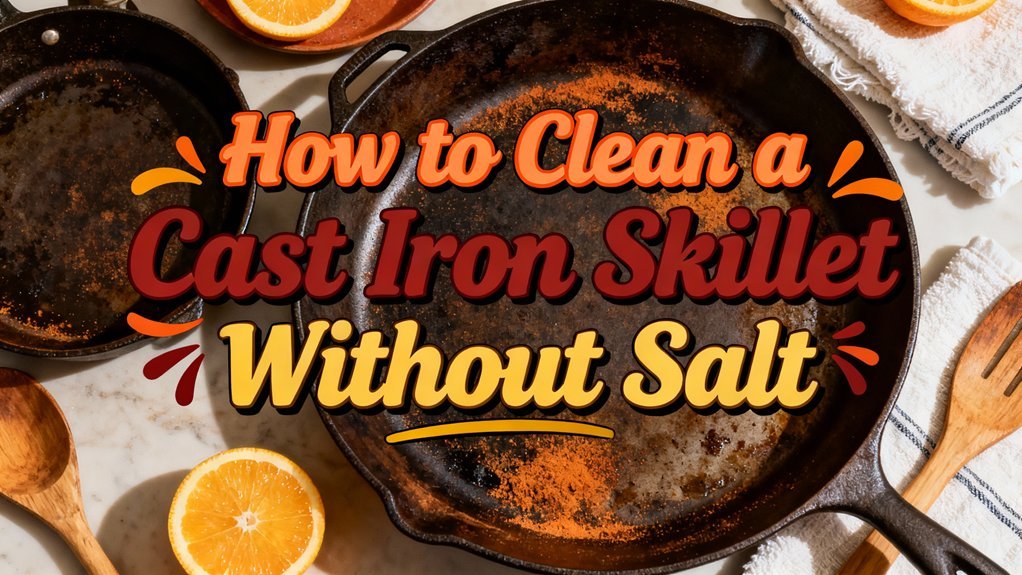
You can clean your cast iron skillet without salt by rinsing it under hot water and using a stiff-bristled brush or nylon pad to remove food residue. For stubborn buildup, boil water directly in the pan or apply a baking soda paste. Avoid prolonged soaking. Immediately dry the skillet with a cloth or place it upside down on the stovetop to evaporate remaining moisture. Once cooled, apply a thin layer of high smoke-point oil to maintain seasoning and prevent rust. Understanding the complete maintenance process will greatly extend your skillet’s lifespan.
Water-Based Cleaning Method
Start by rinsing your cast iron skillet under hot water to remove excess food residue, being careful to avoid cold water on the hot pan, which can cause warping or cracking. Use a wet clean paper towel to wipe the interior until fully clean. For stubborn buildup, repeat the rinsing process multiple times.
Next, employ the boiling technique by bringing water to a boil directly in your pan. The steam from hot water on the heated surface lifts baked-on residue effectively. Use a wooden spoon to dislodge excess particles during boiling. Pour fresh boiling water over the skillet and repeat this process for multiple layers of buildup. For extremely stubborn residue, stiff-bristled brushes can effectively remove stuck-on food without damaging the seasoning layer. If residue remains stubborn, consider using a small amount of soap to scrub the affected areas before rinsing thoroughly. Remember to clean cast iron immediately after cooking to preserve the seasoning layer and prevent food from hardening further. After cleaning, ensure thorough drying and re-seasoning to protect your skillet from rust and maintain its longevity. Maintaining your skillet’s natural non-stick properties requires consistent care and attention to the cleaning process, much like how vacuum sealing extends shelf life for preserved foods.
This water-based approach loosens debris without abrasives, preparing your skillet for the drying phase. Once your skillet is completely dry, apply a thin layer of oil to all surfaces, including the grooves, to maintain its protective seasoning.
Scrubbing Techniques Without Salt
Once you’ve loosened debris through water-based cleaning, you’ll want to remove remaining buildup using mechanical and gentle chemical methods that preserve your skillet’s seasoning. Your scraping techniques should employ non-metallic tools like plastic or wooden scrapers to lift cooked-on food without abrading seasoning layers. For routine scrubbing, use nylon-bristled brushes or non-scratch pads that minimize damage compared to steel wool. Non abrasive options include baking soda paste applied sparingly—it breaks down grease without heavy seasoning removal. For stubborn crust buildup, apply a baking soda and water paste for 30 minutes before scrubbing to achieve better results. Ceramic scrubbers designed for cookware provide stronger scrubbing than nylon while remaining less aggressive than metal alternatives. Always rinse thoroughly after cleaning. Avoid prolonged soaking, which can compromise your pan’s protective coating and underlying cast iron structure. For stubborn spots that remain particularly resistant, gentle scrubbing with chain mail designed specifically for cast iron can effectively remove buildup while maintaining your skillet’s surface. The heat-assisted cleaning method provides an efficient alternative when you’ve allowed your skillet to cool after cooking.
Proper Drying Process
Proper drying is critical to cast iron maintenance because moisture—even in small amounts—can trigger rust formation within hours. You’ll employ multiple drying methods to guarantee complete moisture control.
Start by immediately wiping your pan with a dishcloth or paper towels after rinsing away soap. Focus on all surfaces: inside, outside, and handle. Next, place the skillet upside down on your stovetop burner for a couple minutes. This heat evaporation removes remaining moisture and prevents hidden water pockets. If rust does appear despite your drying efforts, steel wool can effectively scrub off the rust before you rewash and dry the pan.
For thorough protection, you can use the oven heating method: preheat to 200°F for 20 minutes, increase to 300°F for 15 minutes, then finish at 400°F for two hours. After cooling, apply a thin oil layer using lint-free cloth and wipe excess. For additional rust prevention, consider using electrolysis tanks for more thorough rust removal if rust persists despite your drying efforts. A light coat of oil maintains your skillet’s seasoning and prevents rust formation over time. Regular use and maintenance of your cast iron skillet helps build and preserve the natural nonstick seasoning that protects the surface. This multi-layer protection strategy safeguards your cast iron effectively and maintains the seasoning that protects your skillet’s non-stick finish.
Alternative Cleaning Tools
Beyond traditional sponges and dish soap, you’ll find that specialized scrapers, brushes, and cloths offer targeted solutions for different cleaning challenges while preserving your skillet’s seasoning. Metal scrapers with beveled edges effectively remove heavy baked-on residue without damaging seasoning when used with controlled force. Non-abrasive pads like Scotch-Brite nylon scouring pads handle routine maintenance without severe abrasion. Stiff nylon bristle brushes dislodge stuck food through circular motions with warm water. For stubborn deposits, chain-mail stainless-steel scrubbers abrade grease without aggressively removing polymerized seasoning layers. Microfiber cloths and silicone scrubbers provide gentler alternatives for everyday cleaning. Long-handled scrub brushes reach deep corners while keeping your hands safe from heat. Lodge Pan Scrapers made of polycarbonate are particularly effective choices for non-scratch cleaning across griddles, grill gates, and baking trays. The silicone center of chainmail scrubbers prevents residue buildup that typically accumulates in traditional sponges. These tools work synergistically—combining mechanical agitation with appropriate abrasiveness levels—to maintain your cast iron effectively. Proper tool selection helps avoid common mistakes like using harsh soaps or abrasive scrubbers that can damage the polymerized surface you’ve worked to build. After cleaning with these tools, applying light olive oil while the pan is warm helps restore the seasoned finish and maintain the non-stick, rust-resistant layer.
Seasoning Your Cast Iron After Cleaning
Seasoning rebuilds your skillet’s protective oil layers, and you’ll want to prepare the surface meticulously before applying fresh oil. Remove all food residue and moisture, then dry thoroughly with a towel and brief heat to prevent flash rust. Inspect for bare metal or rust spots; light sanding guarantees even bonding.
For oil selection, choose high smoke-point oils like vegetable, canola, or rendered animal fat for consistent polymerization. Apply only a thin, even coat using a lint-free cloth, wiping away excess to prevent pooling. Frequent cooking with these oils will strengthen the natural non-stick finish over time. To avoid visible spots and streaks on your seasoned surface, ensure all excess oil is wiped away thoroughly after application. Much like how Dutch ovens distribute heat evenly, proper cast iron seasoning requires consistent temperature control throughout the process. Storing your seasoned skillet in a dry location helps maintain the protective coating just as proper storage techniques extend the longevity of food preservation tools.
Employ re-seasoning techniques by baking upside down at 450–500°F for one hour, then cooling inside the oven. Repeat multiple thin-coat cycles—four to six coats build a durable, hardwearing surface. Allow full cooling between cycles for proper layer adhesion. The seasoning forms a molecular bond with the iron, creating a lasting protective layer that improves with consistent use. For heavily rusted skillets, scrubbing with steel wool and soap is acceptable before beginning the seasoning process. Building up multiple layers through repeated oiling and baking creates a more resilient non-stick surface over time.
Preventing Rust and Damage
While seasoning establishes your skillet’s protective foundation, you’ll need consistent maintenance practices to prevent rust and preserve that hard-won finish. Your rust prevention strategy starts with regular inspection for discoloration or flaky spots—catching surface rust early stops it from spreading. For light rust, scrub with fine steel wool, then immediately dry and oil the pan. Moderate rust requires a brief vinegar soak (1:1 dilution) to loosen oxidation before scrubbing and neutralizing with thorough drying and oiling. Rust can impart an unpleasant metallic flavor to food, making prompt removal essential for both safety and taste.
Damage control requires avoiding prolonged water exposure, dishwashers, and acidic foods that erode seasoning. Use non-abrasive scrapers for stuck food to preserve your finish. Similar to how bakers use parchment paper to prevent sticking and protect cookware surfaces, you should protect your skillet with proper care techniques. Just as a Dutch oven requires careful maintenance to preserve its seasoning and prevent rust, your cast iron skillet demands the same dedication to longevity. For more significant rust damage, consider reseasoning your skillet in a 450-500 degree oven to restore the protective finish. Store your skillet in low-humidity environments with breathable liners between stacked pans, preventing moisture traps that accelerate corrosion. Hand wash the skillet using mild soap and a soft scrubber when necessary to maintain its integrity. Applying high smoke-point oils like vegetable or avocado oil after cleaning helps maintain and build up the seasoning over time. Regular seasoning with high-quality cooking oil should be applied to maintain the protective coating against rust.
Best Practices for Long-Term Care
Once you’ve established a solid seasoning foundation, your cast iron’s longevity depends on consistent daily maintenance and strategic periodic upkeep. Your maintenance routines should include drying thoroughly after washing and applying a thin oil film while the pan’s warm. Weekly or monthly, perform light reseasoning cycles and inspect for wear patterns. This polymerization of oils process builds a resilient, protective layer that improves with regular use.
Your storage practices markedly impact durability. Store the pan fully dry and lightly oiled in breathable environments—avoid sealed plastic bags that trap humidity, similar to how vacuum-sealed storage requires proper environmental conditions to prevent deterioration. When stacking, place cloth between pans to prevent seasoning abrasion. Keep your skillet away from damp areas like basements, which accelerate corrosion. Before seasonal use or after extended storage, re-oil lightly to refresh the cooking surface. Plastic separators should be used between stacked pans to ensure proper airflow and prevent moisture accumulation. For stubborn residue during regular cleaning, use a chain mail scrubber with light pressure to preserve your seasoning while removing food buildup. After cleaning, always apply thorough drying and consider using your stove or oven to evaporate all moisture completely before storing. Perforated grill pans offer similar maintenance considerations, as their holes require careful attention during the heat retention and distribution process to ensure even seasoning. Never place your cast iron in the dishwasher, as prolonged water exposure compromises the seasoning layer. These systematic approaches preserve your pan’s nonstick properties and structural integrity for decades.