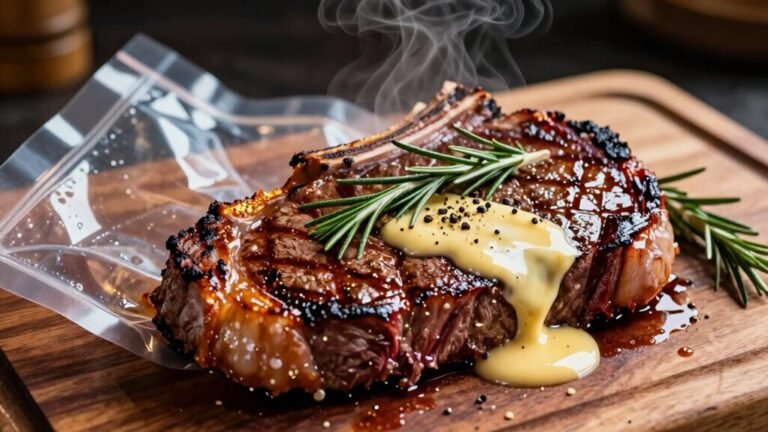
You’ll set your Anova Precision Cooker to your target temperature—129–134°F for medium-rare—then vacuum-seal seasoned steaks and submerge them in the preheated water bath for 1–4 hours. Once cooked, you’ll dry the steaks thoroughly and sear them in a scorching cast iron skillet with high smoke point oil for 45+ seconds per side, creating a caramelized crust. After a brief 3–10 minute rest, you’ll have restaurant-quality results. The technique’s nuances—from temperature precision to finishing flourishes—reveal why sous vide transforms home cooking.
Essential Equipment and Tools
Before you begin cooking steaks sous vide, you’ll need to assemble the core equipment that makes this cooking method work. The Anova Precision Cooker serves as your temperature control hub, featuring onboard controls and WiFi/Bluetooth connectivity for precise regulation. You’ll need a container—either the Anova Sous Vide Container or a large pot—to hold your water bath and maintain stable temperature control. The Anova Vacuum Sealer and vacuum bags guarantee airtight sealing, preventing water ingress during extended cooking. Clips secure unsealed bags if needed. For finishing, keep a carbon steel or cast iron skillet ready for high-heat searing. Equipment compatibility across Anova’s product line streamlines setup. These sous vide advantages—precise temperature maintenance, consistent results, and minimal babysitting—make assembling proper equipment worthwhile. The vacuum sealer removes air from bags using either electric sealing or the water displacement method to ensure food cooks evenly in the temperature-controlled bath. Using a heavy skillet or grill after sous vide cooking is essential for achieving proper browning and creating the flavorful crust that completes your steak preparation.
Preparing Your Steaks for Sous Vide
Since proper preparation directly impacts your final results, you’ll want to start by selecting cuts that respond well to sous vide cooking. Tender steaks like ribeye, strip, and filet work best for shorter 1–4 hour cooks, while tougher cuts require extended cooking times.
Next, focus on steak trimming by removing excess external fat and silver skin to guarantee even cooking and reliable vacuum sealing. Preserve a thin fat cap for flavor retention. A cast iron skillet is an excellent choice for searing your steaks after the sous vide process due to its superior heat retention and durability.
Standardize thickness to 1–1.5 inches for predictable cook times. Pat steaks thoroughly dry with paper towels before seasoning to reduce moisture and improve sear quality. Season with kosher salt, then add minimal aromatics like whole herbs or crushed garlic. Keep steaks chilled below 5–6°C throughout preparation to minimize bacterial growth. Seasoning should be done right before cooking to avoid the firm texture that results from prolonged sous vide exposure to salt. When searing your steaks after sous vide cooking, avoid thermal shock by allowing them to reach room temperature gradually before exposure to high heat. Using a sous vide machine with precise temperature control ensures your steaks cook uniformly regardless of thickness variations. An infrared thermometer can help verify that your seared steaks reach the proper internal temperature for food safety and desired doneness. For optimal results, finish your seared steak by adding aromatics or butter to the cast iron skillet to enhance flavor during the final moments of cooking.
Setting Temperature and Cooking Times
Now that you’ve prepared your steaks, you’ll need to set your Anova device to the right temperature and determine how long to cook them. Select your target temperature based on your preferred doneness level: 129–134°F for medium-rare, 135–144°F for medium, or 145–156°F for medium-well. For standard 1–1.5 inch steaks, plan for 1–4 hours at your chosen temperature range. This extended hold guarantees edge-to-edge consistency while preserving texture. Thicker cuts (>1.5 inches) benefit from the upper end of this window, while thinner steaks require only 30–60 minutes. The water circulation feature of your Anova ensures even heating throughout the cooking process. Similar to how a Dutch oven traps heat and moisture for even cooking, your Anova device relies on precise heat retention to achieve consistent results throughout the cooking chamber. Steaks should not be cooked beyond 2 1/2 hours at temperatures under 130°F (57°C) for food safety reasons. Remember that post-cook searing addresses surface pathogens, reinforcing your safety guidelines. For added assurance, use internal temperature verification by checking your steak with an instant-read thermometer at the thickest part of the meat to confirm it has reached your target doneness level. After removing the steak from the water bath, thoroughly dry it before transferring to a preheated cast iron skillet for searing to develop a flavorful crust. Similar to how cast iron cookware requires proper maintenance to prevent rust and ensure longevity, your sous vide equipment performs best with consistent care and proper equipment maintenance. When transporting your Anova device or other cooking equipment, consider using sturdy corrugated cardboard boxes with adequate padding to prevent damage during moves. Always consult validated pasteurization data if cooking below 120°F for extended periods.
Executing the Sous Vide Cook
With your temperature and timing parameters established, you’re ready to execute the actual sous vide cook. Lower your sealed bag into the preheated water bath using the water displacement method or tongs, ensuring complete submersion. Clip the bag to the pot’s edge with paper clips to prevent floating, then let the Anova maintain constant temperature throughout cooking.
Cook your steak for 2-4 hours minimum—two hours typically suffices for even temperature distribution. The sous vide benefits include precise doneness control and edge-to-edge consistency. Monitor the thermometer periodically, though the Anova handles most regulation automatically. Remember that steak cannot be overcooked due to the consistent water temperature maintaining your desired doneness level. For optimal results, maintain low stove setting to prevent the water from overheating beyond your target temperature range.
Once your cooking time‘s complete, remove the bag carefully and transfer the steak to a paper towel-lined plate. Pat it completely dry before proceeding to the finishing sear, which creates a flavorful crust while preserving the perfectly cooked interior. The sear stage is critical because cast iron’s superior heat retention allows you to achieve the same quality crust that traditional cooking methods provide. Just as vintage cast iron skillets are prized for their exceptional cooking surfaces], a quality pan will deliver superior searing results for your sous vide steak. Cast iron grill pans feature raised grill ridges that create distinctive sear marks while allowing excess fat to drain away from your steak. Using a vacuum sealer] beforehand ensures your steak is properly sealed for optimal moisture retention throughout the sous vide process. Allow your steak to rest after cooking before slicing to ensure the juices redistribute evenly throughout the meat.
Achieving the Perfect Crust Through Searing
Your sous vide steak’s perfectly cooked interior now requires a flavorful, caramelized exterior—and that’s where searing comes in. Proper crust development hinges on moisture removal; pat your steak completely dry with paper towels to prevent steaming. Season all surfaces immediately after drying with kosher salt, pepper, and your preferred spices.
Select a cast iron skillet or heavy-bottomed pan and heat it until water droplets sizzle instantly. Add high smoke point oil thinly to prevent sticking. After preheating, turn down the heat slightly since cast iron retains heat exceptionally well. The natural seasoning layer that develops on cast iron over time further enhances its non-stick properties for consistent browning. Just as cast iron can be used for alternative cooking methods beyond traditional stovetop searing, its versatility makes it an excellent choice for high-heat applications. Place your steak in the scorching pan and sear minimum 45 seconds per side without crowding. Use tongs to sear the edges thoroughly for complete browning. Consider butter basting for added flavor during the searing process to enhance the taste of your crust. Like baking sourdough bread, achieving the proper searing temperature requires steam management and even heating to develop the desired crust. The Maillard reaction occurs when sugars and amino acids reduce at high temperatures, creating the complex flavors that make a caramelized crust so desirable.
Your searing techniques determine crust quality. Limit total searing time to preserve the perfectly cooked interior you’ve achieved through sous vide cooking. For optimal results, aim for a target internal temperature of 130-135°F for medium rare before searing to ensure your steak finishes at the desired doneness level.
Resting and Serving Your Steak
Once you’ve seared your steak to a golden-brown crust, the final steps—resting and serving—require thoughtful timing to preserve both temperature and texture. Since sous vide has already equalized internal temperatures, traditional resting principles don’t fully apply. Instead, employ a short rest of 3–10 minutes after searing to allow your crust to set and stabilize surface temperatures without excessive cooling. For thin cuts, minimize resting duration to maintain warmth. For serving suggestions, present your steak immediately at your target temperature—which equals your sous vide bath temperature plus modest sear carryover. If you’ve chilled your steak before searing, account for reduced carryover when timing your rest. To enhance your presentation, consider topping with Kansas City Steak Finishing Butter for added flavor and richness. Remember that chilled thicker steaks must be reheated sous vide before serving to ensure they reach the proper temperature. These resting techniques guarantee ideal mouthfeel and juiciness while maximizing your steak’s final presentation quality, similar to how proper surface preparation ensures the best results in other cooking applications. For a complete holiday meal experience, you might also explore cast iron cookware options that complement your sous vide preparation methods.