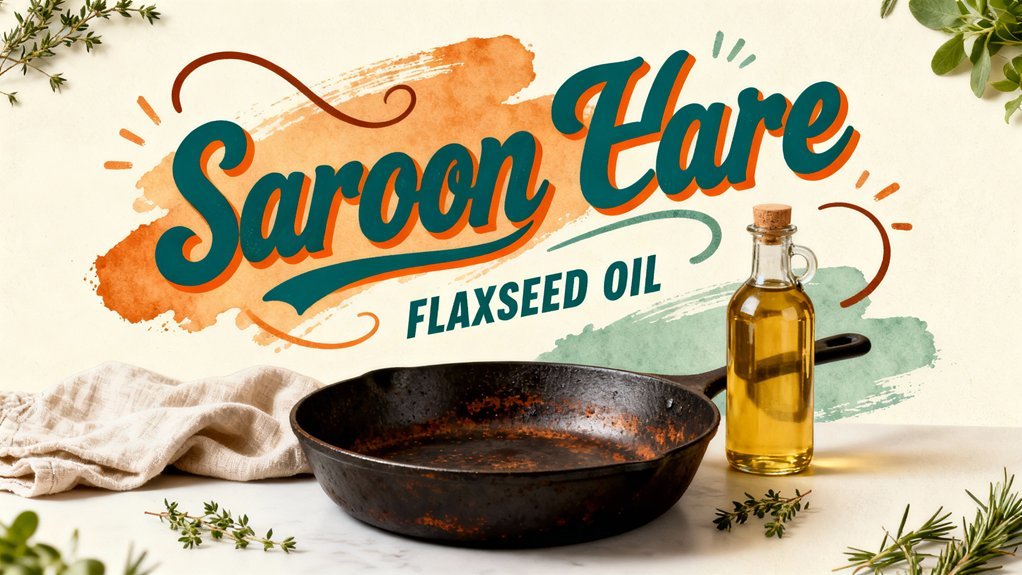
You’ll start by cleaning your cast iron thoroughly, then apply an extremely thin layer of pure organic flaxseed oil—roughly one teaspoon per coat. Wipe away visible excess until the pan feels nearly dry. Place it upside-down on your oven’s middle rack at 500–550°F for one hour, allowing complete polymerization. After cooling completely, repeat this process three or more times to build a durable, matte non-stick finish. Understanding the specific advantages of flaxseed over alternative oils will optimize your results greatly.
Why Flaxseed Oil Is Superior for Cast Iron Seasoning
When you heat flaxseed oil on cast iron, it doesn’t simply evaporate like other cooking oils—it undergoes polymerization, a chemical transformation that creates a hard, durable film bonded directly to the metal’s surface. This benefits overview distinguishes flaxseed from softer alternatives: you’ll develop a smooth, matte, nonstick finish rather than the shiny, rough texture that vegetable oil produces.
The polymerization science explains why flaxseed excels. As the only edible drying oil, it’s uniquely suited for fat polymerization on cast iron. When heated above its low smoke point of 225°F, flaxseed oil accelerates free radical release, optimizing the bonding process. To maintain this superior seasoning, avoid cooking with acidic ingredients that can damage the protective layer you’ve worked to build. Cook’s Illustrated testing confirms flaxseed-seasoned pans outperform vegetable oil versions, surviving commercial dishwashers with degreaser intact while maintaining their deep, glassy black seasoning. This durable seasoning layer also requires minimal maintenance effort over time, as the polymerized coating naturally resists oxidation and degradation, allowing your cast iron to last for generations with proper care.
Preparing Your Cast Iron Pan for Seasoning
Now that you understand flaxseed oil’s superior polymerization properties, you’ll want to guarantee your pan’s surface can actually receive and bond with that protective coating. Begin with thorough surface inspection to identify rust, pitting, or old polymerized residues that inhibit adhesion. Apply appropriate cleaning methods: use hot water and a stiff brush for debris removal, then employ mild dish soap for stubborn grease. For heavy rust or baked-on carbon, consider chemical rust removal or electrolysis followed by neutralizing rinses. Heat-soften old coatings before scrubbing to accelerate debris release. Dry your pan immediately using high heat on your stovetop or in a 250–300°F oven, ensuring all moisture vanishes from crevices and threaded areas. Similar to how flash-freezing prevents items from sticking together during storage, removing all moisture prevents rust formation and ensures proper oil adhesion. The oil must reach its smoke point to bond chemically with the cast iron and form a durable protective layer. Following the method proven effective across approximately 165 pieces of cast iron, this methodical preparation establishes the foundation for flaxseed oil’s ideal adhesion and polymerization. Store your prepared pan in a dry place to maintain its longevity and performance between seasoning sessions. Multiple rounds of oiling and baking will build up a durable seasoning layer that improves with use and care.
Applying Flaxseed Oil Correctly
The success of your seasoning hinges on precise application technique. You’ll apply only a very thin film of oil per coat—excess creates sticky, tacky results after heat-curing. Work with small oil quantities: roughly a teaspoon to a tablespoon per skillet coat. Spread the oil evenly across all surfaces using lint-free cloths, then thoroughly wipe away visible excess until the pan feels dry or nearly dry. This aggressive wiping prevents pooling in corners and handles. Cover interior and exterior surfaces uniformly to minimize patchiness. For best results, use pure organic flaxseed oil rather than blended varieties to ensure optimal seasoning performance. You can also apply these same seasoning techniques to cast iron Dutch ovens commonly used for campfire cooking. Unlike oils with lower smoke points such as lard, flaxseed oil’s higher smoke point helps maintain seasoning durability under high cooking temperatures. Wait until each previous coat has cooled completely before reapplying; applying oil to warm metal traps moisture and creates uneven layers. Allow sufficient cooling time between coats to ensure each layer bonds properly with the cast iron. Similar to using oven-safe probe thermometers for accurate meat temperature monitoring, consistent technique ensures reliable results. Just as specialized thermometers designed for candy making provide precise readings for temperature-sensitive cooking tasks, accurate oil application requires careful attention to detail. After seasoning, your skillet will be ready for cooking applications like cast iron skillet pizza. Your methodical restraint with oil quantities directly determines final coating quality.
The Baking Process for Optimal Results
Once you’ve applied your thin oil film and wiped the pan dry, you’re ready to begin the critical baking phase—where heat transforms your flaxseed oil into a durable polymerized coating. Place your pan upside-down on the middle oven rack at your target oven temperature of 500–550°F. This positioning prevents oil pooling and guarantees even curing. Bake for one hour to allow complete polymerization.
During this cycle, manage smoke by running your range hood and opening windows. The higher oven temperature accelerates free-radical formation necessary for hard film development, but produces substantial smoke. Consider placing a drip tray below to catch excess oil. Repeating this baking process multiple times builds up thicker seasoning layers that enhance the non-stick quality and durability of your cast iron skillet.
After baking, cool your pan inside the turned-off oven for at least two hours. This stabilizes the polymerized layer before applying subsequent coats. For best long-term results, aim for three rounds or more of seasoning to create a robust protective finish similar to the restoration techniques used for reviving rusty cookware.
Timeline and Alternative Seasoning Methods
Seasoning timelines vary dramatically depending on your chosen method and oil type, so you’ll want to understand what commitment each approach requires. The traditional method completes in roughly two hours using canola or vegetable oil, while Sheryl Canter’s flaxseed approach demands 21 hours for ideal polymerization. Alternative oils like grapeseed, sunflower, or even lard offer flexibility based on your cookware’s usage frequency. You’ll apply thin layers and bake at maximum oven temperature for one hour per layer, repeating six times for flaxseed oil. Each seasoning timeline reflects the oil’s smoke point and polymerization rate. Understanding these differences helps you select the method matching your schedule and desired durability level. Flaxseed oil creates a strong and durable seasoning layer but requires careful attention to prevent potential rancidity over time. Quality cast iron pans from reputable brands are essential, as poor surface quality can hinder the seasoning process and prevent you from achieving optimal results regardless of your chosen oil or timeline.
Comparing Flaxseed Oil to Other Seasoning Oils
While flaxseed oil’s lower smoke point of 225°F might seem like a disadvantage, it actually accelerates polymerization and creates a particularly durable finish that outperforms many alternatives on older cookware. When you compare flaxseed to canola oil (400°F) or grapeseed oil (420°F), you’re weighing trade-offs between speed and heat stability. Canola builds efficient non-stick layers and costs less, while grapeseed offers versatility without sticky residue. However, flaxseed advantages emerge through superior bonding strength despite lower temperatures. Crisco shortening wins on non-stick performance and price, yet lacks the neutral flavor profile flaxseed provides. Extra virgin olive oil should be avoided for seasoning because low smoke point oils break down at necessary seasoning temperatures, resulting in undesirable sticky surfaces. Well-seasoned cast iron cookware achieves a rust-proof and non-stick surface through polymerized oil and carbon residue buildup. Your oil comparisons ultimately depend on whether you prioritize maximum durability, cost-effectiveness, or cooking versatility alongside seasoning performance.