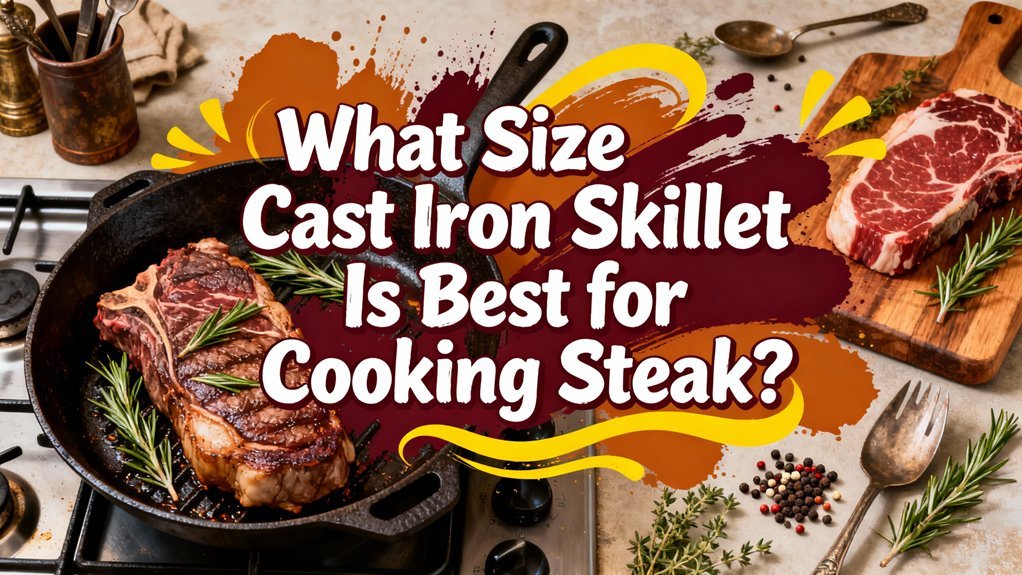
You’ll achieve superior results with a 10–12 inch cast iron skillet for steak cooking. This size balances thermal mass and heat retention, preventing temperature fluctuations that compromise crust development. A 10-inch skillet suits individual steaks up to 1.5 pounds, while a 12-inch model handles multiple steaks or larger cuts. Cast iron’s ~0.125-inch thickness and well-seasoned surface maximize contact and browning. Proper burner alignment guarantees even heat distribution across the cooking surface. Understanding how skillet dimensions influence your searing technique reveals additional nuances worth exploring.
Small Skillets: 8–10 Inch Options for Single Steaks
An 8–10 inch cast iron skillet‘s compact dimensions make it ideal for cooking individual steaks without heat loss from overcrowding. You’ll find small skillet advantages particularly pronounced when preparing single steak servings, as the confined cooking surface concentrates heat directly on your protein.
For single steak servings, you’ve got excellent options. A 1–1.5 lb New York Strip steak at 1 inch thick fits perfectly in this pan size. Alternatively, an 8-ounce chuck eye steak delivers a satisfying one-serving portion, while top sirloin steaks—typically smaller and thinner—also suit this skillet exceptionally well. The quick cooking method in a properly heated small skillet means your steak reaches optimal internal temperature in approximately 8 minutes. Season your steak with salt and pepper before searing for simple yet flavorful results.
The key benefit: steaks up to 1 inch thick cook evenly without crowding the surface. This prevents temperature fluctuations and guarantees consistent crust development across your steak’s entire surface through the Maillard reaction, which creates that savory, browned exterior cast iron skillets are renowned for achieving. Like bread baking vessels, cast iron’s ability to trap heat ensures even cooking results. Cast iron’s heavy nature maintains consistent high temperature even when a cold steak is added, preventing the temperature drops that can hinder proper searing. To maintain your cast iron skillet’s performance over time, regular seasoning with oil will preserve its non-stick properties and prevent rust from developing. When using cast iron on glass cooktops, be sure to gently place the skillet rather than slide it to avoid scratching the surface.
Medium Skillets: 10–12 Inch for Optimal Searing and Versatility
The 10–12 inch cast iron skillet represents the sweet spot for steak cooking, balancing heat retention with maneuverability while providing ideal surface area for single or paired steaks. This medium skillet uses superior heat distribution properties, preventing warping while maintaining core temperature after you place your steak. You’ll appreciate how the size accommodates 1–1.5 inch cuts like ribeye or New York strip without crowding. Your cooking techniques benefit from the extra space for butter basting and oil searing. Preheating this medium skillet over medium-high heat for 3–4 minutes establishes the foundation for a thick, crusty sear. The 3–3–3 rule—three minutes per side on high heat, then three minutes per side on medium—yields consistent medium-rare results. For optimal results, use frequent turning method to keep the interior juicy and tender while developing an even crust. Techniques like butter basting with herbs and garlic enhance the steak’s flavor during the final stages of cooking. Resting your steak after cooking allows the internal temperature to rise approximately 10°F while the juices redistribute for optimal tenderness. Consider pairing your cast iron skillet with vacuum sealing to preserve leftover cooked steaks and maintain their quality in the freezer. Medium skillets also transition seamlessly from stovetop to oven, allowing you to finish your steak with a brief broil for additional crust development. Cast iron skillets are durable and versatile cookware that can last a lifetime with proper care, making them an excellent investment for any home cook. You’ll find this versatile workhorse indispensable beyond steak preparation.
Large Skillets: 13–15 Inch for Multiple Steaks and Entertaining
While medium skillets excel at handling individual steaks with precision, 13–15 inch cast iron skillets provide capacity for high-volume searing when you’re cooking for multiple diners. You’ll fit 4–5 steaks simultaneously, whether hefty ribeyes or smaller Wagyu cuts, while maintaining consistent heat distribution across all surfaces.
The large skillet versatility shines during dinner service. You’ll sear multiple steaks 2–3 minutes per side, then flip every 2 minutes for 8–12 minutes total. Add butter, garlic, and herbs for collective basting without spillover concerns. For optimal results, apply kosher salt initially and introduce the coffee rub when steaks are almost done to enhance flavor without burning. Cast iron’s exceptional ability to retain heat ensures that all steaks cook evenly throughout the process.
Cast iron benefits include even preheating at 500°F and oven-finishing capability at 350°F for uniform doneness. A fitted lid on your skillet allows you to transition from stovetop searing to oven finishing while maintaining moisture and consistent temperatures. Just as a tight-fitting lid is essential for proper bread baking, it’s equally crucial for retaining heat during steak cooking. You’ll reduce cookware needs, minimize smoke point issues with vegetable oil addition, and rest several steaks under foil simultaneously. This approach eliminates multiple-pan juggling while entertaining crowds.
Heat Retention and Thermal Mass Across Different Sizes
Thermal mass—the amount of heat energy a skillet can store and deliver—fundamentally determines how well you’ll maintain searing temperatures throughout your cook. Heavier cast iron skillets retain heat more effectively because greater mass creates a larger thermal reservoir under your steak. A 10-inch skillet weighing 4.3–4.5 pounds balances usable heat retention with practical maneuverability. Larger 13–15 inch skillets offer superior heat retention across multiple steaks, buffering temperature drops between sequential pieces. Thicker bases amplify this advantage by concentrating more thermal mass directly beneath your food. Just as proper torching technique requires understanding heat control and application, selecting the right skillet demands attention to how thermal mass influences cooking outcomes. Conversely, lighter or thinner pans exhibit sharper temperature fluctuations and pronounced hot spots. The ideal thickness of approximately 0.125 inches optimizes both heat retention and cooking performance for consistent results. Traditional cast iron pans excel at maintaining stable cooking temperatures compared to lightweight alternatives. A well-seasoned skillet with a protective polymerized oil layer ensures that your heat retention advantages remain consistent over many cooking sessions. For family-sized cooking sessions, larger skillets provide the superior heat retention and distribution properties necessary to maintain consistent temperatures across multiple steaks. Properly browning ground beef in cast iron demonstrates how the same heat retention principles apply across different cooking applications and proteins. When selecting your skillet, prioritize adequate thermal mass—your sear quality depends on it.
Skillet Thickness and Material: Impact on Crust Formation
Because crust formation hinges on sustained contact between meat and iron, skillet thickness and surface quality become your primary tools for controlling browning outcomes. Thicker cast iron resists temperature drop when you add steak, maintaining the surface heat necessary for continuous Maillard development. A well-seasoned, moderately smooth cooking surface maximizes full meat-to-iron contact, promoting even browning across your entire sear face. Warped or excessively textured pans create micro-air gaps that compromise crust uniformity. The polymerized seasoning layer on quality cast iron reduces adhesion while facilitating efficient heat transfer to your meat. Preheating your skillet in a cold oven ensures uniform heat distribution across the cooking surface before searing begins. Similarly, proper storage techniques like vacuum sealing can protect finished dishes from air exposure and deterioration. A Lodge 10½-inch square pan represents the preferred equipment specification recommended for optimal steak cooking performance. Investing in thicker cast iron with superior skillet durability guarantees repeatable crust texture and reliable browning performance across multiple sears.
Matching Your Burner Size to Skillet Diameter
Your skillet’s diameter matters as much as its thickness, because heat distribution depends on how well your pan’s cooking surface aligns with your burner’s output. When your skillet’s bottom matches your burner diameter, you’ll achieve uniform heat transfer across the entire cooking surface, eliminating cold and hot zones that compromise crust quality.
Burner efficiency drops considerably when skillet size mismatches your heat source. Oversized pans develop cooler outer edges; undersized skillets concentrate heat at the center, risking scorching. Match your skillet’s cooking-surface diameter to your burner’s ring size—typically 6–7 inches for auxiliary burners, 7–9 inches for medium, and 9–11+ inches for large. A 12-inch skillet is ideal for family dinners and provides excellent heat retention for searing steaks evenly. The 11-inch skillet offers ample space for cooking multiple ingredients at once while maintaining consistent temperature throughout the pan. Using an instant-read thermometer helps you monitor your steak’s internal temperature to achieve the exact doneness you desire.
For induction cooktops, verify your skillet base fully covers the coil to engage complete power. Skillet compatibility with your stovetop type determines whether you’ll achieve consistent searing performance. Building a natural non-stick seasoning through proper maintenance ensures your cast iron skillet performs optimally across different cooking methods. Some cooks prefer dusting their cast iron skillets with coarse cornmeal to enhance crust development and prevent sticking during the searing process. Proper storage of your finished steaks, such as vacuum sealing, can extend their shelf life and maintain quality when freezing for later use.
Oven Compatibility and Reverse-Sear Workflows
Cast iron skillets excel in reverse-sear workflows because they’re built to handle the extreme temperature swings that define this technique. You’ll benefit from superior heat retention that maintains consistent temperatures during oven management shifts. A 10-inch skillet fits standard home ovens perfectly for single steaks, while 12-inch models accommodate family-sized cuts without crowding.
Your sear techniques start on the stovetop—preheat your skillet on low heat for 30 minutes, then sear your ribeye 3-4 minutes per side at medium-high heat with oil just below the smoke point. Transfer directly to a 500°F oven for even finishing. Cast iron skillets can withstand temperatures over 500 degrees, ensuring reliable performance during the high-heat finishing phase. Like Dutch ovens used for baking cobblers, cast iron’s heat retention properties make it versatile for both stovetop and oven cooking. For precision temperature verification during the reverse-sear process, consider using an infrared thermometer to confirm your skillet has reached the target temperature before searing. Resting the steak after the reverse-sear process is crucial for flavor and tenderness.
Short-handle designs enhance oven maneuvering and reduce burn risk. Cast iron’s durability withstands repeated high-heat cycles without degradation, making it your ideal partner for mastering reverse-sear methodology. After your cooking sessions, maintain your skillet’s performance by seasoning in a 500-degree oven to restore its non-stick properties and protective coating. For compact storage of your cast iron collection when not in use, you can employ vacuum sealing techniques to maximize your kitchen space. Like selecting the right flame control for specialized cooking techniques, choosing the proper cast iron size ensures optimal performance for your specific culinary needs.
Weight and Maneuverability for Kitchen Practicality
While reverse-sear excellence demands oven compatibility, your skillet’s weight and handling characteristics determine whether you’ll actually use it consistently in daily cooking. A 10-inch cast iron skillet strikes the ideal balance, offering ample searing surface for single steaks without excessive heft that complicates maneuvering on crowded stovetops. If you’re cooking solo, this size prevents arm strain during cooking techniques like pan-flipping and sauce deglazing. For households managing multiple skillets, pairing two smaller 8-inch pans proves lighter than wrestling one 12-inch model, enhancing your cooking techniques’ execution. Cast iron skillets like the Lodge cast iron skillet are specifically designed with helper handles and pour spouts to make handling easier during the cooking process. Most universal sizes for cast iron skillets include 8 in, 10 in, and 12 in options that cater to different cooking needs and frequency levels. The 10-12 inch range provides the best balance of functionality, storage convenience, and everyday practicality for home cooks seeking versatility. Proper heat distribution across the skillet’s surface ensures consistent searing results throughout the cooking process. Lighter cast iron variants weigh considerably less than stainless equivalents while delivering identical heat retention. Prioritize weight considerations during skillet maintenance—regular cleaning and seasoning become sustainable practices when your equipment doesn’t demand excessive physical effort.
Cooking Sides and One-Pan Meal Considerations
When you’re planning a complete steak dinner on a single skillet, pan size directly determines whether you’ll achieve proper searing on both protein and vegetables or compromise heat concentration through overcrowding. A 12-inch skillet handles two 8–12 oz steaks with limited sides efficiently, while 12–15 inch pans accommodate larger cuts and vegetable portions for true single-pan efficiency. You’ll preserve sear quality by maintaining ¾–1 inch spacing between items, allowing airflow and consistent browning. Position sides on cooler perimeters while reserving the central hot zone for steak. Batch searing—cooking protein first, then vegetables in rendered fat—optimizes meal prep without sacrificing crust development or doneness control across components. The exceptional heat retention of cast iron ensures that your skillet maintains the focused temperature needed for consistent browning throughout the cooking process. Just as a Dutch oven creates a self-contained steam chamber to enhance baking results, a properly sized cast iron skillet maintains the focused heat needed for restaurant-quality searing on all components.
Selecting the Right Skillet: A Practical Buying Guide
Three primary factors determine whether you’ll achieve ideal steak searing: matching pan diameter to your cut size, ensuring sufficient thermal mass for consistent crust development, and confirming your skillet fits your kitchen’s equipment and layout.
For most home cooks, a 10–12 inch skillet balances capacity with stovetop compatibility and oven fit. Verify your burner size accommodates the pan’s base—oversized skillets on small burners heat unevenly, compromising searing performance. Consider weight and handle design; heavier pans require two-handed lifting when transferring to the oven. A fitted lid can enhance your cooking versatility by enabling braising, steaming, and roasting techniques alongside traditional searing.
Prioritize thicker, slab-style cast iron that distributes heat evenly across the cooking surface. Regular skillet maintenance—including proper seasoning techniques and oil application during storage—preserves heat retention and extends longevity. For long-term performance, consider using bacon grease for seasoning to build multiple protective layers that enhance non-stick properties. Lighter pans lose temperature rapidly when cold steak contacts the surface, increasing cook time and moisture loss. Cast iron’s thermal mass properties make it ideal for achieving the consistent heat distribution needed for quality searing, a principle equally important whether you’re cooking steak or preparing hearty layered dishes. The heat retention properties of quality cast iron ensure your skillet maintains optimal temperature throughout the cooking process.