When you’re shopping for cast iron, you’ll want to prioritize sand-molded construction, uniform 5mm bottom thickness, and established brands like Lodge for consistency. Check the cooking surface for smoothness and use a magnet to verify authenticity. Inspect edges for cracks, test for warping by rocking it flat, and assess rust removal viability if buying vintage. Heavier pans retain heat better. Guarantee comfortable handle weight and accessible design features. Understanding these interconnected factors—from thermal mass to seasoning potential—reveals what truly separates exceptional skillets from mediocre ones.
Build Quality and Material Indicators
When you’re evaluating a cast iron skillet, the foundation of quality lies in how it’s been cast and constructed. Sand-molded casting produces the smoother surfaces you’ll find in high-end skillets, directly affecting durability factors and performance longevity. Inspect the cooking surface closely—avoid shiny crystals or raised slag deposits, both indicating inferior manufacturing and compromised material purity.
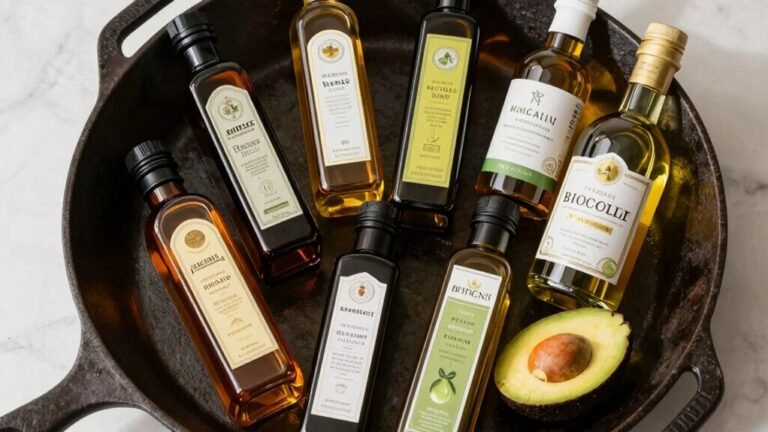
Weight matters considerably; heavier pans typically demonstrate superior construction methods and heat retention capabilities. Run your fingers across the surface; it should feel smooth, free from rough patches or deep pitting. Check the bottom with a straightedge to verify uniform thickness and prevent warping issues. A 5 mm thick bottom ensures optimal heat distribution across the entire cooking surface. Like Dutch ovens, cast iron skillets benefit from heat retention properties that allow them to maintain consistent cooking temperatures throughout the cooking process. The same versatility that makes Dutch ovens ideal for both outdoor and indoor cooking applies to skillets used across different culinary applications. To build and maintain the seasoning layer over time, apply a thin coat of high smoke-point oil such as vegetable, avocado, or grapeseed oil after each cleaning. After purchase, proper care including heating to evaporate moisture and coating with seasoning oil will build a resilient, non-stick layer that protects against rust. Tap the skillet with a bell-like tap test to confirm structural integrity and the absence of internal cracks.
The handle must be integrated as one continuous piece, never screwed or added separately. Tap the skillet with a magnet to confirm authentic cast iron composition, ensuring you’re investing in genuine durability. For long-term maintenance, consider seasoning your skillet with fats that have appropriate smoke point characteristics to ensure the seasoning layer remains durable over time.
Condition and Restoration Concerns for Used and Antique Pans
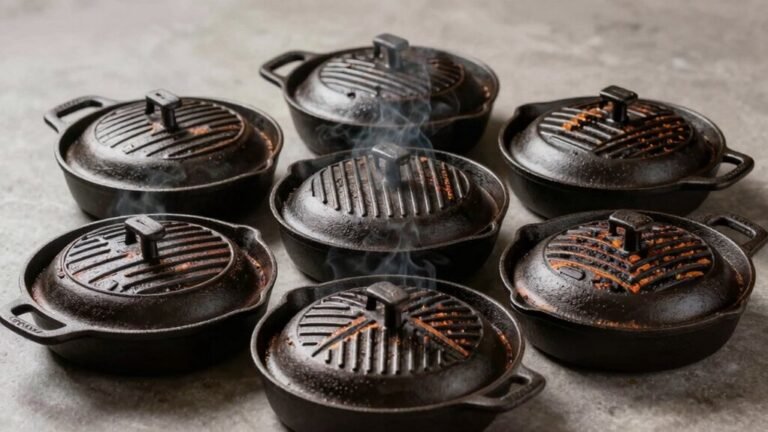
Because you’re likely sourcing cast iron from thrift stores, estate sales, or online marketplaces, you’ll encounter pans in varying states of deterioration that directly impact restoration feasibility and safety. Conduct thorough rust assessment by scraping the surface—easy removal indicates restoration viability, while deep pitting suggests structural compromise. Perform crack evaluation by heating the pan empty and visually inspecting for distortion or structural damage, which renders cookware unusable. Rock the pan on a flat surface to detect warping. Pre-1940s pieces require lead testing due to paint residues and unknown alloys. Strip suspected contaminated pans to bare metal using electrolysis, vinegar soaks, or oven self-cleaning cycles. Multiple vinegar soaks effectively remove rust buildup and carbon residue during the restoration process. The protective seasoning layer prevents rust from developing in the first place, so restoring it is essential after rust removal. After soaking, dry the pan thoroughly by towel or by heating on the stove to prevent moisture from causing additional rust. For those seeking the most thorough approach, electrolysis tanks can remove all rust, organics, and other buildup more comprehensively than traditional methods. Using kosher salt with a chain mail scrubber provides coarse abrasive action that enhances rust removal efficiency. Once your pan is clean and rust-free, apply a thin coat of oil and heat the skillet to create a durable, non-stick finish that will protect it for years to come. Building multiple layers through repeated baking cycles at progressively higher temperatures ensures the seasoning becomes more resilient and long-lasting. Inspect electrode residue carefully, then neutralize with baking soda before seasoning.
Surface and Seasoning Characteristics
The surface finish you select—or inherit—fundamentally shapes your seasoning strategy and long-term maintenance demands. Smooth surfaces, achieved through polishing, facilitate faster, more even seasoning buildup with minimal reseasoning required. Rough textures retain casting pits that mechanically anchor polymerized oil layers, creating durable coatings through deeper bonding but demanding more aggressive early maintenance to prevent food trapping.
Both paths achieve seasoning longevity when you understand the polymerization process. High-smoke-point oils heated past their ignition threshold cross-link into hard films; multiple thin layers build superior nonstick properties. The most effective oils for seasoning include vegetable oil, flaxseed oil, canola oil, or Crisco shortening, which create durable non-stick surfaces when properly layered and cured. To maintain the seasoned surface over time, clean your pan with hot water and a stiff brush after each use while avoiding soap to preserve the protective coating. Smooth pans require less aggressive treatment, while rough textures benefit from vigorous cleaning before seasoning cycles. Like the water displacement method used in alternative cooking techniques, proper maintenance relies on understanding how to work with your equipment’s specific characteristics. Vintage skillets achieved their prized smoothness through extended tumbling processes that modern manufacturing has largely abandoned. Visual indicators—shiny uniformity, glossy feel without tackiness, and absence of metallic spots—confirm successful seasoning regardless of surface type. Just as specialized cooking methods require proper sealing capabilities to ensure optimal results, cast iron seasoning depends on creating an airtight bond between oil and metal. A well-seasoned cast iron skillet can be used for slow cooking with vegetables to develop deep, complex flavors over extended periods. If rust appears on your cast iron, it can be removed with steel wool or sandpaper, followed by washing, drying, and reseasoning to restore the protective coating.
Cooking Performance Traits
Once you’ve settled on a surface finish and established your seasoning routine, cast iron’s real advantages emerge during active cooking. You’ll find that superior heat management sets cast iron apart—its high heat capacity maintains searing temperatures when you introduce cold food, enabling consistent browning and crust formation through Maillard reactions. Unlike thinner metals, cast iron’s thermal mass prevents temperature collapse during multi-step cooking techniques, from stovetop searing to oven finishing. However, its low thermal conductivity demands strategic heat source placement; make sure full burner contact to minimize edge-to-center gradients. Once uniformly preheated, you’ll benefit from stable, sustained working temperatures ideal for searing proteins, frying, and baking. The flat, heavy surface delivers broad contact, promoting uniform browning across diverse ingredients. For optimal results, preheat your pan at lower temperatures initially to allow the iron pores to open before increasing heat for cooking. Proper preheating ensures that when you introduce your steak, the skillet maintains its temperature and creates the perfect crust through the Maillard reaction. For precision cooking methods like smoking and roasting, consider using programmable temperature alerts to monitor your food’s internal temperature alongside your pan’s surface heat. To extend the longevity of your cast iron cookware, store your seasoned skillet in a dry environment, similar to how proper storage techniques maximize the lifespan of specialty kitchen equipment. The seasoning layer that develops on your cast iron contributes additional flavor complexity to every dish you prepare, building character with each use. This natural non-stick surface created by seasoning improves with each use, enhancing your cooking results over time. Cast iron’s even heat distribution and excellent heat retention make it particularly effective for achieving perfectly caramelized results in both stovetop and oven applications.
Brand, Provenance, and Value Signals
Beyond performance characteristics, your skillet’s brand, manufacturing authenticity, and design details communicate quality signals that influence both initial value and long-term resale potential. Established brands like Lodge and Smithey leverage brand heritage to signal manufacturing consistency and proven durability. You’ll notice that specialists in cast iron—rather than broad housewares companies—typically demonstrate deeper design refinements and earn independent review validation. Manufacturing location matters: U.S. foundries versus French enameled producers carry distinct provenance implications affecting perceived quality. Examine casting methods, surface finishes, and wall thickness variations; these reveal whether makers prioritize modern machining or vintage-style production. Antique cast iron skillets manufactured before the 1890s often feature gate marks, which are raised lines created during the original sand mold casting process and serve as indicators of 19th-century production. Premium sublines indicate higher-end market positioning. Documentation like serial numbers and batch information supports authenticity claims. Cast iron skillets designed for gas stove cooking require careful consideration of heat distribution properties during the selection process. A quality skillet requires proper pan-searing technique to maximize its cooking potential and develop the characteristic crust that defines excellent results. One-pan meals like ground beef and rice skillet dishes demonstrate how superior cast iron construction directly impacts the final quality of your cooking. A satin-smooth, polished finish enhances the cooking experience and signals superior craftsmanship. Proper seasoning maintenance ensures your investment performs optimally over decades of use. These layered signals collectively determine whether you’re investing in a workhorse or a collectible piece.
Practical Maintenance and Usability Features
While brand heritage and manufacturing provenance establish a skillet’s initial quality profile, what truly determines your long-term satisfaction is how well you can maintain the pan and whether its physical design suits your cooking habits. Evaluate handle length and design—longer handles and helper handles improve leverage for larger, heavier skillets. Consider rim style; flared rims and integrated pour spouts minimize drips during transfers. Assess base thickness for superior heat retention and even cooking distribution.
Your maintenance tips should account for the skillet’s finish: polished surfaces require less initial seasoning than textured ones. Check for accessible handle joints and rivets where moisture traps easily. Over time, layers of cooked oils bond to the surface of cast iron, making proper drainage design critical to preventing rust accumulation in hard-to-reach areas. These usability features directly impact both cooking performance and rust prevention, ultimately reducing your seasoning and restoration workload. Similar to how oxygen absorbers protect stored foods from degradation, proper seasoning maintenance protects cast iron from oxidation. A chain mail scrubber is an essential tool to keep on hand for removing rust and debris from textured surfaces without damaging the seasoning. When cleaning your skillet, use stiff-bristled brushes to effectively remove stuck-on food and buildup while preserving the seasoning layer. Applying a light coat of oil after each cleaning session maintains the seasoning and protects against rust formation.