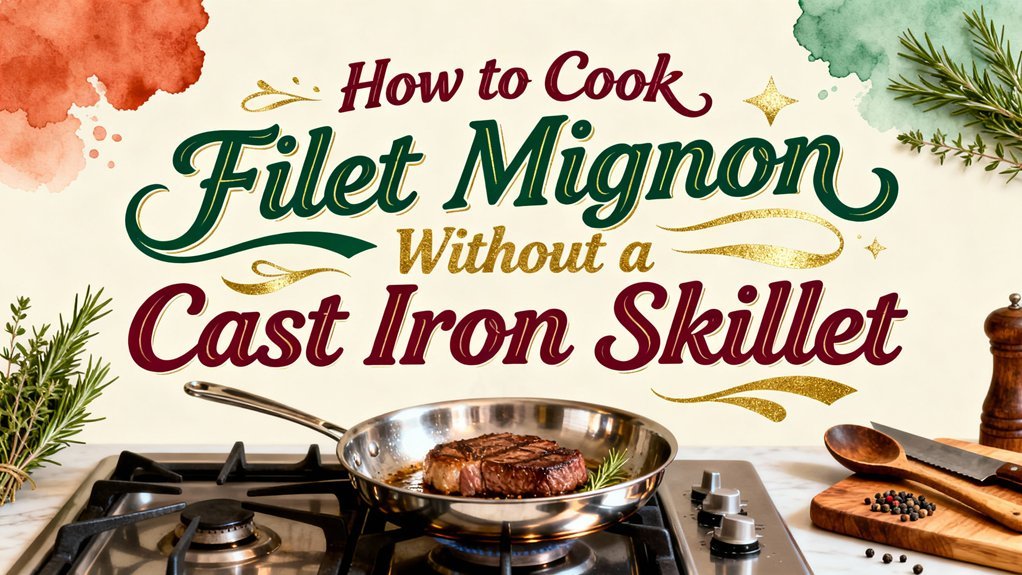
You don’t need cast iron to cook perfect filet mignon. Use a multi-ply stainless steel skillet for effective searing, then finish in a preheated 400°F oven for 4–10 minutes. Alternatively, grill over direct high heat, then indirect heat, or try sous vide for precise doneness followed by a quick sear. Carbon steel skillets work equally well. Pat your steak dry, season generously with salt and pepper, and use high smoke-point oil. Monitor internal temperature carefully—aim for 125–130°F for medium-rare. Each method offers distinct advantages worth exploring further.
Grilling Method
To grill filet mignon perfectly, you’ll start by removing it from the refrigerator 20–45 minutes before cooking to reach room temperature, which guarantees even cooking throughout. Season generously with salt, pepper, and optional rosemary, then brush both sides lightly with olive oil for flavor enhancement.
Preheat your gas grill to 450–500°F for 10–15 minutes, then clean the grates thoroughly. Reduce heat to medium-high (400–450°F) for direct cooking. These grilling techniques guarantee peak results: sear your filet 2–3 minutes per side over direct high heat with the lid closed. Flip once, then move to the indirect zone for additional cooking, turning occasionally. Use this two-zone method to develop a flavorful crust while maintaining a tender interior. For optimal results, choose grass-fed and grass-finished filet mignon that has been 100% born, raised, and harvested in the USA. Remove the steak 5–7°F below your target temperature, accounting for carryover cooking. After grilling, allow your filets to rest for 7-10 minutes to redistribute juices and achieve your final serving temperature.
Sous Vide Method
The sous vide method delivers unparalleled precision for filet mignon, allowing you to achieve your exact desired doneness with remarkable consistency. You’ll seal your seasoned steaks with aromatics and butter in vacuum bags, then submerge them in a preheated water bath set to your ideal temperature—129°F to 134°F for medium-rare.
The sous vide benefits become evident as your steaks cook evenly from edge to center within one to two hours. This controlled environment prevents overcooking while tenderizing the meat perfectly. The naturally tender cut requires careful timing to avoid becoming excessively soft despite its inherent tenderness. You can hold your steaks at the target temperature for up to four hours, providing flexibility if you’re preparing multiple steaks or coordinating your meal timing. For optimal results, use a vacuum sealer designed for food storage to ensure an airtight seal that prevents water infiltration during the cooking process. Proper seal strength and moisture handling are critical for maintaining the integrity of your vacuum-sealed bags throughout the cooking process. If you lack a vacuum sealer, the water displacement technique using ziplock bags can work as an alternative method for occasional sous vide cooking. Selecting an appropriate container with adequate depth ensures proper water circulation around your steaks during the cooking process. After cooking, you’ll pat the steaks dry and sear them in a stainless steel pan with high-heat oil for just ninety seconds per side, creating a caramelized crust that rivals the results achieved with precision control similar to professional cooking torches. Rest your steaks five minutes before serving for prime juice retention.
Stove-to-Oven Method
While sous vide offers unmatched precision, you’ll find the stove-to-oven method delivers superior crust development and deeper flavor through high-heat searing. Start by preheating your oven-safe stainless-steel skillet on medium-high heat for 3-5 minutes. Once hot, add avocado or vegetable oil, then sear your room-temperature filet 2-3 minutes per side until golden-brown.
During the final flip, introduce butter, garlic, and rosemary, basting for one minute. This aromatic combination infuses your steak with complexity. The golden-brown exterior you achieve results from the Maillard reaction, which creates that savory, complex flavor profile essential to a perfectly seared steak. Transfer your hot skillet directly to a preheated 400°F oven on the middle rack, ensuring oven safety by using proper mitts. Always pat the steak dry before cooking to maximize browning and crust development. Using tongs to flip the steak ensures even heat distribution and prevents the crust from sticking. Like Dutch oven cooking, proper skillet maintenance, including regular seasoning and cleaning, will extend the life of your cookware and improve heat retention over time. To manage the smoke produced during the searing process, consider using a vent or fan to keep your kitchen comfortable. For long-term use, maintain your skillet by removing buildup through rust removal and seasoning techniques.
For medium-rare, cook 5-8 minutes to reach 120-130°F internally. Rest for five minutes post-oven; residual stovetop heat and carryover cooking will raise the temperature another 5-10°F, achieving perfect doneness.
Pan Searing and Roasting
Pan searing and roasting demands meticulous preparation before you ever heat your skillet. Choose a heavy-bottomed stainless-steel or carbon-steel pan and preheat it over medium-high heat until shimmering—test readiness with a water drop that’ll sizzle instantly. Use high smoke-point oils like grapeseed or avocado oil to prevent burning.
Your searing techniques determine crust quality. Pat steaks dry, season with coarse kosher salt and freshly ground black pepper, then sear undisturbed for 2–3 minutes per side. Flip once using tongs; excessive flipping compromises browning. During the final 30–60 seconds, baste with hot butter and herbs. Filet mignon’s tender texture comes from the minimally used muscle of the beef tenderloin, making it ideal for this high-heat cooking method. For optimal results, bring steaks to room temperature at least 30 minutes before cooking to ensure even cooking throughout. Unlike sous vide cooking, which requires an airtight seal to maintain precise temperatures, pan searing relies on direct heat contact for rapid crust development.
After achieving a golden crust, transfer steaks to a preheated oven at moderate temperature or finish on indirect grill heat. This dual-method approach preserves your seared exterior while bringing internal temperature to target doneness precisely.
Oven Finishing Alternatives
Oven-proof pans provide reliable heat distribution for consistent results. Place your seared filet on a preheated rimmed baking sheet or wire rack at 400°F for rapid finishing—typically 4–10 minutes depending on thickness. A wire rack elevates the steak, allowing hot air circulation that prevents bottom-side steaming and guarantees even exterior browning. For best results, ensure your basting butter mixture includes fresh rosemary and garlic cloves to enhance flavor during the finishing process. Using a meat thermometer to measure the internal temperature ensures you achieve your desired doneness without guesswork. Like cast iron skillets, oven-proof pans should be rotated periodically during cooking to ensure even heat distribution across the cooking surface. Many home cooks also appreciate how retaining moisture in the pan during the finishing phase keeps the exterior crust from drying out. Just as a tight-fitting lid is essential for Dutch ovens used in bread baking, a covered oven-proof pan can help maintain steam and moisture during the finishing process. Proper preheating of your oven-proof pan to the target temperature, similar to the preheating process used with cast iron skillets, creates optimal conditions for even browning and prevents hot spots.
For gentler finishing, use the middle rack at 300–350°F, slowing internal temperature rise to reduce overcooking risk. An instant-read thermometer removes guesswork; remove steaks a few degrees below target, accounting for carryover cooking. Proper thermometer calibration techniques guarantee accurate temperature readings for food safety. This method delivers precise doneness without compromising your initial sear.
Low-Temperature Roasting
For a filet mignon with edge-to-center uniformity you can’t achieve through high-heat methods, low-temperature roasting delivers superior results through gentle, even cooking at 275°F. Start with a completely thawed, dry steak seasoned liberally with salt and pepper 30–60 minutes prior for ideal penetration. Place your thermometer probe in the geometric center and set an alarm 5–10°F below your target doneness. Cook times typically range 20–90 minutes depending on thickness and oven accuracy. Remove the steak when it reaches your alarm temperature, accounting for 5–15°F carryover during the resting period covered with aluminum foil for 20 minutes. This method preserves moisture retention while ensuring food-safety guidelines are met, yielding a perfectly cooked filet with enhanced flavor and consistent texture throughout. For best results, begin with high-quality beef that has been properly aged to maximize tenderness and flavor development.
Choosing the Right Equipment
While low-temperature roasting creates uniformity from edge to center, you’ll still need the right tools to execute this method flawlessly and handle your filet with precision throughout the cooking process. Multi-ply stainless steel skillets conduct and maintain heat effectively for the initial sear before roasting. Precision tongs enable careful handling without piercing the meat’s tender surface. An instant-read thermometer verifies internal temperatures accurately—target 125°F for medium-rare doneness. Wire cooling racks over sheet pans support even air circulation during low-temperature roasting. High smoke-point vegetable oil facilitates proper searing. Kosher salt seasons evenly before cooking, as a heavy coating of kosher salt and coarse ground black pepper creates an ideal crust. Finishing with a high-heat sear develops a flavorful crust while maintaining the tender, evenly cooked interior texture. Grilling tools like basting brushes add finishing touches after roasting. A Pro-Series needle probe thermometer set to alarm at your target temperature removes guesswork from the cooking process. Wireless thermometers with temperature alert systems allow you to monitor your filet’s internal temperature without constantly opening the oven and losing heat. For precision cooking at controlled low temperatures, ensure you’re using food-grade cooking vessels designed to handle sustained water immersion if employing alternative cooking methods. If considering a stainless steel Dutch oven for larger cuts or family-sized portions, verify the cookware has a flat magnetic base to ensure compatibility with your stovetop. Regular maintenance of your cooking equipment, including cleaning the gasket and drip tray, ensures optimal performance and longevity of your tools. Together, these instruments guarantee you’ll achieve restaurant-quality results without relying on traditional cast iron.
Tips for Perfect Results Every Time
Mastering filet mignon hinges on three essential elements: temperature control, proper searing technique, and strategic resting periods. You’ll achieve consistent results by letting your steak rest 30–60 minutes at room temperature before cooking, which promotes even internal temperature and reduces cook time. Apply seasoning techniques strategically—salt liberally before searing to enhance browning and crust formation. Use an instant-read thermometer to remove your steak 5–10°F below your target doneness, allowing carryover cooking during the vital resting importance phase. After cooking, tent with foil and rest 5–10 minutes to redistribute juices. Pat your steak dry before searing in a preheated heavy-bottomed pan with high smoke-point oil, searing undisturbed for ideal crust development. An oven-proof stainless steel sauté pan is an excellent alternative to cast iron for achieving restaurant-quality results. For optimal results, aim for internal temperatures between 130–135°F for medium rare or 125–130°F for rare, depending on your preference. Finish with compound butter and aromatics for richness and enhanced flavor development. Filet mignon’s extreme tenderness comes from the minimal muscle use in this particular cut of beef, making it an excellent choice for high-heat cooking methods that create a flavorful crust while maintaining a tender interior.