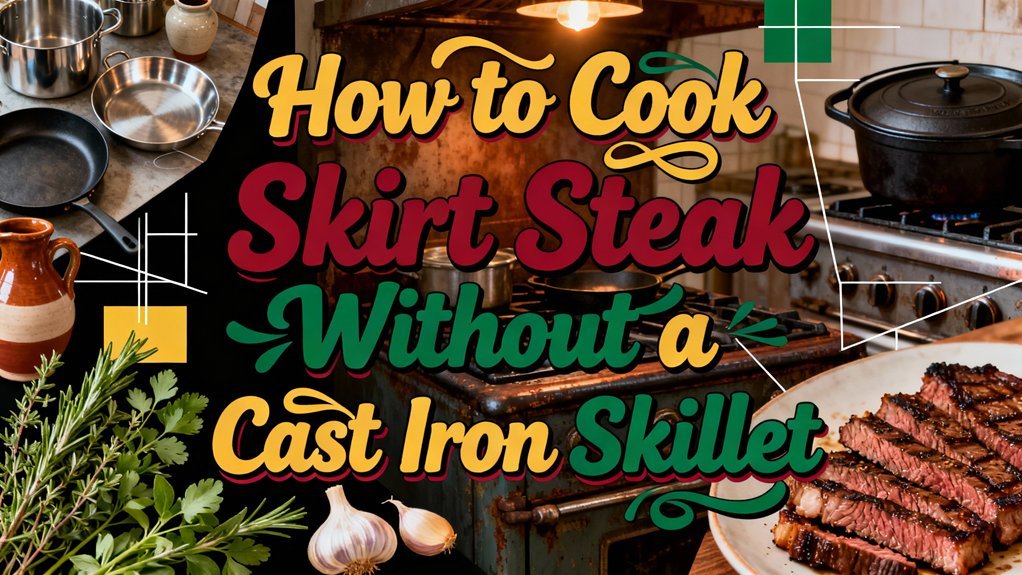
You’ll achieve excellent results using stainless steel pans, broilers, or high-heat ovens at 450°F. Heat your cooking surface thoroughly before searing the seasoned steak for 2-3 minutes per side. Grilling works beautifully at 500°F for 2-4 minutes per side, while air fryers deliver consistent browning at 400°F. Each method requires proper dry-brining, thin slicing against the grain, and adequate resting time. Uncover how these alternative techniques compare for different cooking preferences and kitchen setups.
Preparation & Trimming Your Skirt Steak
Start by selecting a quality skirt steak from your grocer’s meat section—you’ll recognize this cut by its long, thin shape and the visible grain running width-wise across the surface. Look for vibrant red color and minimal excessive fat.
Before cooking, identify the muscle grain’s direction for later slicing reference. Your trimming techniques should focus on removing thick silver skin or membrane to improve texture. Use a sharp knife for clean cuts along grain edges, but trim visible fat sparingly—over-trimming compromises natural juices and flavor. Outside skirt offers more tender, intense flavor compared to inside skirt, so selecting the right type enhances your final dish. This often overlooked cut benefits from proper selection to maximize its versatility in various culinary dishes.
Pat the steak thoroughly dry with paper towels immediately before cooking. This critical steak handling step removes surface moisture, promoting a superior browning crust during high-heat searing. Allowing adequate resting time before service ensures the meat retains its juices and tenderness. Preheating your cooking vessel with even temperature distribution helps achieve consistent results throughout the cooking process. A Dutch oven’s heavy construction and tight-fitting lid can also help retain heat for consistent cooking results. For precise temperature verification during cooking, an infrared thermometer allows you to monitor your skirt steak without piercing the meat. Excess moisture causes steaming rather than caramelization, undermining your final result. Alternatively, if you prefer stovetop cooking, a pre-seasoned skillet provides reliable heat distribution for developing that desirable crust.
Seasoning & Marinating Techniques
Once you’ve trimmed and dried your skirt steak, seasoning becomes your next lever for maximizing flavor and texture. You’ll choose between dry-brining, wet marinades, or rubs—each delivering distinct results.
For dry-brining, apply coarse kosher salt 40 minutes to overnight before cooking, allowing surface denaturation and improved crust formation. With wet marinades, balance acid (citrus, vinegar), oil, and umami carriers (soy sauce, Worcestershire) using proper marinade ratios: limit acid exposure to 12–24 hours maximum to prevent fiber degradation. A versatile marinade of honey, lime, and soy sauce works particularly well for transforming the texture and taste of skirt steak across different cooking methods. Essential marinade ingredients like olive oil, soy sauce, balsamic vinegar, and lemon juice create a well-rounded flavor profile that tenderizes the meat effectively. Just as cast iron cookware enhances heat distribution and browning in outdoor cooking, proper marinade selection enhances your steak’s final result regardless of your cooking vessel. Similar to how Dutch oven cooking develops rich sauces through braising, strategic marinade selection builds complex flavor layers in your steak.
Your seasoning methods should align with timing. Apply sugar-forward rubs immediately before cooking; salt-based rubs tolerate longer windows. Combine approaches strategically—dry-brine first, then apply brief marinades (2–4 hours) to avoid over-salting. This layered approach yields superior browning and deeper, more complex flavor development throughout your steak. The tight-fitting lids characteristic of quality cookware trap moisture during cooking, similar to how seasoned cast iron retains heat to develop better browning on your steak. When handling raw meat during preparation, consider using probe covers or other disposable barriers to maintain proper hygiene and food safety standards. Always verify that your finished steak reaches a safe internal temperature before serving to eliminate any harmful bacteria.
Broiler Method for Quick Cooking
Because skirt steak‘s inherent thinness demands high, direct heat for perfect browning, the broiler becomes an excellent cast iron alternative—delivering restaurant-quality results in under ten minutes.
Broiler benefits include precise temperature control and consistent heat distribution across your meat’s surface. Position your oven rack closest to the element, preheat on high for five minutes minimum, and line your baking sheet with foil. For optimal results, remove connective tissue from the steak before broiling to ensure even cooking and better texture. Similar to how chamber-style vacuum sealers gently handle delicate foods, careful preparation prevents damage to your meat. Cast iron’s superior heat retention properties explain why the broiler can replicate its searing capabilities when used properly.
For cooking safety, open your window and activate your vent before starting. Some smoke may be produced during the broiling process, so ventilation measures are recommended. To prevent thermal shock and ensure even cooking, place your baking sheet in the oven as it preheats gradually rather than inserting it into an already-hot broiler. Using a trivet or baking sheet helps control heat distribution and prevent uneven cooking or burning. Broil the first side four minutes, flip, then cook the second side three to five minutes depending on thickness. Monitor closely to prevent burning. Target an internal temperature of 130-135°F for medium-rare doneness.
Rest your steak wrapped in foil for three to five minutes, allowing juices to redistribute for peak tenderness before slicing thinly across the grain.
High-Temperature Oven Roasting
For skirt steak that rivals broiler results without the intense direct heat, high-temperature oven roasting at 450°F delivers consistent browning and edge-to-edge doneness in roughly ten minutes. Preheat your sheet pan on the middle rack alongside your oven—hot metal guarantees immediate sear contact. Pat your steak dry, season with kosher salt and pepper, then place it on a lightly oiled surface with adequate spacing. Flip halfway through cooking. For oven preheating tips, verify actual temperature with an oven thermometer since dial accuracy varies widely. Since skirt steak benefits from high-heat cooking due to its surface area-to-thickness ratio, this method works particularly well for this cut. The even heat distribution from your preheated sheet pan creates a superior sear and crust comparable to what cast iron achieves through its thermal properties and heat retention. Like slow-cooked braises that develop deep flavors through extended cooking times, allowing your steak proper resting time after cooking ensures the meat retains its juices for maximum tenderness. Always slice against the grain to enhance the tenderness of your cooked skirt steak. Monitor internal temperature with an instant-read probe, targeting 125–130°F for medium-rare; expect 3–5°F carryover rise during rest. Just as cast iron cookware requires proper seasoning maintenance to prevent rust and extend its lifespan, your skirt steak benefits from proper resting techniques to lock in juices. For extended storage after cooking, consider using vacuum sealer bags to maintain freshness and prevent freezer burn if you plan to refrigerate or freeze leftovers. Adjust cooking temperature adjustments based on thickness and your oven’s actual performance for excellent results.
Grilling and Outdoor Cooking
Grilling skirt steak outdoors demands high heat and precise timing to achieve the perfect crust without drying out the meat. You’ll want to preheat your grill—whether charcoal or gas—to approximately 500 degrees Fahrenheit. Both grill types deliver excellent results, though charcoal imparts distinctive smoke flavors that complement the steak’s richness.
Oil your grates thoroughly and place your seasoned steak directly over high heat. Cook 2-4 minutes per side, flipping only once for ideal caramelization. Target an internal temperature of 130 degrees Fahrenheit for medium rare, preventing the lean meat from tightening and becoming chewy. Use an instant-read thermometer to verify the internal temperature for consistent, perfectly cooked results. For the most accurate readings, ensure your thermometer is calibrated to the correct emissivity setting for meat surfaces. Consider investing in a wireless meat thermometer with temperature alert systems to monitor doneness without opening the grill and losing heat. Like Dutch ovens used for rice preparation, proper heat distribution across your grill grates ensures even cooking throughout the meat. Achieving superior heat retention on your grill creates the perfect crust similar to cast iron cooking. For longer-term storage of leftover grilled steak, consider using vacuum sealing to preserve freshness and prevent freezer burn.
After grilling, rest your steak 5-10 minutes before slicing against the grain. This resting period allows juices to redistribute, ensuring tender, buttery slices. Apply butter or chimichurri sauce while the meat’s still hot for maximum flavor absorption. Most packages of skirt steak weigh 14 to 16 ounces and serve 2 to 3 people depending on preparation and side dishes.
Air Fryer Preparation and Cooking
Air fryers offer a faster, more convenient alternative to outdoor grilling when you’re short on time or facing inclement weather. Preheat your air fryer to 400°F for 3–6 minutes to guarantee immediate browning. Pat your steak dry, apply light oil coating, and season with salt and pepper just before cooking. Arrange the steak in a single layer without overlap. Your cooking times depend on steak thickness: thin skirt steaks require 5–6 minutes for medium-rare, while thicker cuts need 8–12 minutes. Flip halfway through to promote even browning. Use an instant-read thermometer to verify internal temperature—aim for 130–135°F for medium-rare. Rest your steak 5–10 minutes post-cooking; carryover heat raises temperature while redistributing juices for ideal tenderness. Skirt steak’s higher fat content makes it particularly flavorful compared to leaner cuts. High-quality beef, such as Angus or Prime, will deliver superior flavor and texture compared to lower-grade cuts.
Stovetop Non-Cast-Iron Pan Searing
When you don’t have a cast iron skillet available, stainless steel pans deliver equally impressive results for searing skirt steak at high temperatures. Your pan choice markedly impacts the final outcome—heavy skillets distribute heat evenly and maintain consistent temperature throughout cooking. Proper heat distribution ensures your steak cooks evenly and develops the desired crust.
For oil selection, use high smoke point oils like avocado, canola, or grapeseed. Heat your pan over high heat for five minutes until it’s properly preheated, then add oil until it shimmers. Once the oil reaches ideal temperature, place your steak pieces in the pan undisturbed for two to three minutes per side, creating a golden-brown crust. Marinating the steak for 3 to 12 hours before cooking enhances tenderness and flavor development.
Sear until your internal temperature reaches 120°F, then remove and rest for five minutes before serving to allow juices to redistribute throughout the meat. Letting meat rest after cooking, similar to how cool, dark storage preserves the quality of prepared foods, helps maintain the quality of your final dish. After cooking, thoroughly dry your stainless steel pan with a soft cloth to prevent water spots and maintain its appearance. Stainless steel pans can handle high heat temperatures comparable to cast iron when properly maintained. Like cast iron, stainless steel pans benefit from thorough drying after washing to prevent corrosion and maintain their condition. This technique produces restaurant-quality results without cast iron.
Sous-Vide and Reverse-Sear Options
Sous-vide cooking offers a scientifically controlled alternative that complements the stovetop searing method you’ve just mastered. This technique delivers precise temperature control, ensuring consistent tenderness factors across your skirt steak. Target 130–132°F for medium-rare; adjust by 10°F per doneness level. Cook for 2–4 hours—the ideal window balancing collagen breakdown with sliceable texture. Sous vide benefits include predictable results and extended holding flexibility without overcooking. Use a digital thermometer to verify your steak has reached the target internal temperature before removing it from the water bath.
For marinating tips, dry-brine before bagging to enhance seasoning penetration. Reserve aromatic herbs and fresh garlic for finishing; acidic marinades risk mushiness if prolonged. Vacuum-seal to eliminate air pockets ensuring full water contact. When vacuum sealing your steak, use appropriate vacuum-seal bags designed to withstand the sealing process and prevent puncturing. This method ensures even moisture retention] throughout the meat, similar to how poultry benefits from sous vide’s precise control. Properly sealed vacuum bags prevent freezer burn when storing your prepared steak before cooking. To further protect your vacuum-sealed steak during storage, consider using sturdy packaging with adequate cushioning to prevent damage and maintain quality. After sous vide cooking completes, resting the steak before serving helps redistribute juices throughout the meat.
After cooking times conclude, finish your steak on a preheated stovetop pan—high heat for 1–2 minutes per side develops the crust you’re missing from cast-iron searing.