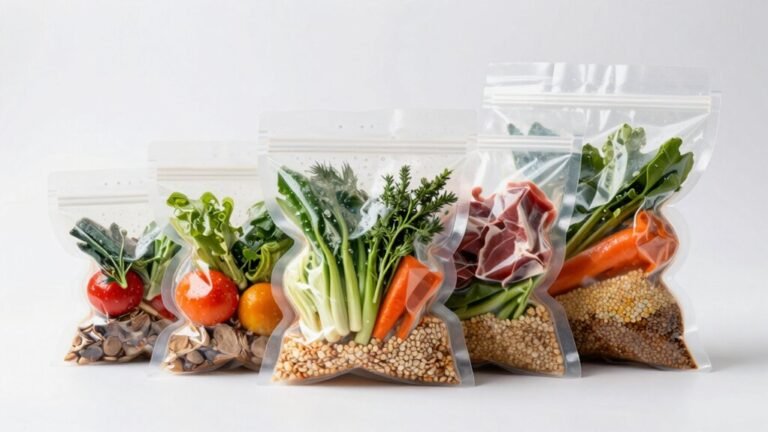
You can extend your cheese’s shelf life greatly through vacuum sealing. Hard cheeses like Cheddar and Parmesan last 3–12 months refrigerated when vacuum sealed, while soft cheeses such as Brie remain safe for only 1–3 weeks due to higher moisture content. Fresh unripened varieties like cream cheese last 1–3 weeks. Store them at 34–38°F with 85–95% humidity for best results. Understanding the specific variables affecting each cheese type helps you maximize freshness.
Understanding Cheese Types and Their Shelf Life
Because moisture content fundamentally determines how quickly cheese deteriorates, you’ll find that hard cheeses like Cheddar and Parmesan vastly outlast their soft counterparts when vacuum sealed. Hard cheese varieties with low moisture levels retain quality for 3–12 months refrigerated, while semi-hard options like young Gouda last 1–3 months. Soft, high-moisture cheese varieties—Brie, Camembert, fresh mozzarella—degrade within days to weeks despite vacuum sealing because their elevated moisture levels accelerate spoilage mechanisms. Blue-mold cheeses occupy a middle range, typically lasting several weeks to months depending on rind integrity. Fresh unripened varieties like chèvre and cream cheese represent your shortest shelf life category, lasting only 1–3 weeks. Vacuum sealing removes air and reduces spoilage, mold growth, and moisture loss, which are critical factors in preserving cheese quality over time. Just as proper rust removal techniques require consistent attention to prevent deterioration, maintaining your vacuum-sealed cheese requires regular monitoring. Just as an infrared thermometer requires proper distance calibration to ensure accurate readings, selecting the right vacuum seal container ensures optimal air removal and maintains consistent pressure for maximum preservation effectiveness. Like vacuum sealed meat, which can last 2 to 3 years in the freezer when properly stored, cheese longevity depends significantly on consistent cold storage conditions. For optimal preservation, monitor vacuum-sealed cheese for unusual smells or textures that indicate spoilage has begun. Maintaining fridge temperature below 40°F further extends the shelf life of vacuum sealed cheese by slowing bacterial growth. Understanding these moisture-level distinctions allows you to accurately predict spoilage timelines and plan consumption accordingly.
Optimal Refrigerator Storage Conditions
While vacuum sealing dramatically extends cheese shelf life, you’ll find that proper refrigerator conditions determine whether your sealed cheese remains safe and flavorful throughout its storage window. Maintain temperatures between 34–38°F (1–3°C) for most cheeses, with temperature stability being critical—avoid fluctuations exceeding 2–3°F to minimize condensation and mold risk. Softer, high-moisture varieties tolerate slightly warmer zones around 38–42°F (3–6°C). Position hard cheeses on lower back shelves where conditions are most stable; place delicate types in deli drawers. Humidity control at 85–95% relative humidity prevents excessive drying and rind cracking while vacuum sealing retains internal moisture. Proper food handling practices such as maintaining clean utensils and keeping vacuum-sealed cheeses refrigerated are essential for preventing bacteria growth in oxygen-free environments. This air removal process ensures your cheese maintains optimal preservation conditions throughout storage. Similar to how even heat distribution is critical for baking success in cast iron skillets, maintaining consistent refrigerator conditions is equally essential for cheese preservation. The tight-fitting lid design principle used in Dutch ovens for moisture retention also applies conceptually to vacuum-sealed packaging, which creates an airtight seal to preserve cheese quality. Use a refrigerator thermometer to verify your actual temperature, as many consumer units deviate noticeably from setpoints. Much like vacuum sealing extends meat freshness in the freezer for extended periods, proper refrigerator conditions are vital for maintaining cheese quality and extending shelf life when stored in the cold. For optimal flavor enhancement, consider removing your vacuum-sealed cheese from refrigeration 2 weeks prior to serving to allow it to reach room temperature and fully develop its taste profile. Packaging quality significantly impacts preservation by maintaining the protective seal that keeps air out and freshness in throughout your storage period.
Hard Cheeses: Extended Storage Benefits
Hard cheeses represent your best investment for long-term vacuum-sealed storage, consistently delivering shelf-life extensions that dwarf other cheese varieties. When you vacuum seal mature hard cheeses like Cheddar or Parmesan, you’re accessing 4-6 months of refrigerated storage, with aged varieties maintaining quality beyond a year unopened. This dramatic extension occurs because vacuum sealing removes oxygen, the primary catalyst for mold growth and spoilage. You’ll notice unopened vacuum-sealed hard block cheeses endure several months to over a year—a stark contrast to non-vacuum alternatives lasting merely 1-2 weeks. The airtight seal blocks moisture and bacteria while preserving your cheese’s dense texture and rich flavors. Just as thoroughly drying surfaces is essential for protecting stored items, properly maintaining your cheese’s packaging integrity ensures optimal preservation throughout storage. Modified atmosphere packaging using gases like nitrogen can further enhance the preservation quality of vacuum-sealed hard cheeses. Vacuum sealed cheeses can last 4-8 months in the refrigerator when properly stored. For ideal cheese preservation, maintain refrigerator temperatures between 34-38°F and keep packaging undamaged throughout storage.
Soft Cheeses: Special Considerations
Unlike hard cheeses’ remarkable longevity, soft cheeses present fundamentally different storage challenges when you vacuum seal them. You’re working with high-moisture products that create favorable environments for Listeria and Staphylococcus aureus—risks vacuum sealing doesn’t eliminate. Anaerobic conditions actually can mask spoilage signs while potentially permitting pathogen growth if initial contamination exists.
Your vacuum-sealed soft cheeses typically remain safe for 3–14 days (fresh varieties) to 1–3 weeks (soft-ripened), refrigerated consistently at 4–8°C. You’ll notice texture compression, altered flavor profile development, and intensified off-odors from reduced oxygen. Delicate rinds darken or deteriorate visually. Temperature fluctuations greatly shorten safe life. For optimal preservation, store at cooler temperatures between 35°F–40°F to achieve best flavor retention and shelf life. Proper preheating your storage environment before placing sealed cheese helps maintain consistent conditions. When using vacuum seal bags at home, ensure your electric pump-compatible bags are properly sealed to prevent air reentry and maintain the dark blue flame of preservation integrity. Like vacuum-sealed cookies that maintain quality through proper portioning and storage conditions, keeping your cheese in convenient grab-and-go portions can enhance both preservation and usability. Always follow manufacturer “use by” dates rather than generalizations, since pasteurization methods greatly influence microbial risks and allowable storage duration. Hard and semi-soft cheeses, by contrast, can be vacuum sealed in the fridge for 4–8 months, offering substantially extended preservation compared to their 1–2 week unsealed lifespan.
What Happens After Opening Vacuum-Sealed Cheese
What fundamentally changes when you break the vacuum seal? Oxygen reintroduction accelerates mold growth and bacterial proliferation greatly. You’ll notice surface contamination risk increases immediately upon handling, cutting, or utensil contact.
Your cheese’s texture and flavor begin deteriorating through oxidation and moisture loss. Creamy varieties may separate or turn grainy as fats reorganize. Volatile aroma compounds dissipate, particularly in semi-soft cheeses, while microbial contamination accelerates in refrigeration.
Hard cheeses resist spoilage longer than fresh varieties, remaining acceptable for weeks under proper cold storage. Semi-hard types typically maintain quality 2–3 weeks. To minimize microbial contamination and mold growth, rewrap opened portions tightly in wax paper plus airtight film, store in your refrigerator’s coldest section, and label with the opening date for tracking safe usage timelines.
Vacuum-Sealed Versus Traditional Packaging Methods
When you’re deciding how to store cheese, the packaging method you choose greatly impacts how long it’ll remain fresh and safe to eat. Traditional packaging like plastic wrap and conventional bags suffer from permeability issues, allowing oxygen, moisture, and bacteria to infiltrate continuously. This accelerates spoilage, limiting most cheeses to just 1-2 weeks in your refrigerator.
Vacuum technology benefits overcome these limitations through airtight sealing that removes oxygen entirely. You’ll achieve 2-5 times longer shelf life compared to conventional methods. Vacuum-sealed hard cheeses last 4-8 months frozen versus 1-2 weeks normally, while semi-mature varieties endure 1-2 months refrigerated. The airtight barrier prevents contamination and greatly slows mold and bacterial growth, preserving your cheese’s quality considerably longer than traditional wrapping ever could. By removing oxygen, vacuum sealing reduces oxidation and creates an environment where bacteria cannot thrive as readily. Like vacuum sealing meat, proper equipment and technique are essential for achieving optimal results with cheese preservation. Proper temperature control is essential, as vacuum sealing works best as a complementary method alongside consistent refrigeration at or below 40°F. Like the rich crust development that occurs when searing meat in a Dutch oven, proper vacuum sealing creates a protective barrier that significantly enhances your food’s preservation. By maintaining an inventory system, you can easily track which cheese was vacuum sealed first and rotate your stock efficiently. Storing vacuum-sealed cheese in consistent cool temperatures between 34-38°F will further optimize preservation and maintain the cheese’s integrity. Proper labeling on vacuum sealed cheese bags is essential for tracking freshness and ensuring you consume your cheese before it spoils.
Packaging Materials and Seal Integrity
The airtight barrier that gives vacuum sealing its advantage over traditional wrapping depends entirely on the quality of your packaging materials and how well they’re sealed. You’ll find that multilayer films combining polyethylene, polypropylene, and EVOH layers provide superior oxygen barriers, with transmission rates below 38ml/m² for high-breath cheeses like Emmental. These barrier materials typically range from 45-125 micrometers thick, supporting consistent seal integrity across applications.
Your seal strength relies on specialized resins like SURLYN™ ionomers and BYNEL™ adhesives, which enhance heat-sealability and puncture resistance. High tensile strength prevents breaches during storage, while shrinkage rates of 26-60% guarantee vacuum conformity around your cheese. JHG barrier shrink films tested by SGS according to REACH and FDA standards ensure compliance with food contact regulations. Similar to how preheating cast iron ensures optimal results in baking, proper vacuum seal preparation is critical for extending shelf life. Active packaging technologies can further enhance protection by integrating antimicrobial agents that inhibit harmful microbial growth and extend shelf life beyond standard vacuum sealing alone. Together, these elements create the tamper-evident, contaminant-resistant protection that extends shelf life considerably beyond traditional packaging methods.
Additional Preservation Techniques for Maximum Longevity
While vacuum sealing creates an exceptional preservation environment, you’ll achieve maximum longevity by layering complementary storage and preparation strategies that address temperature control, cheese typology, and pre-sealing conditioning.
You can extend shelf life markedly by combining vacuum sealing with freezing, where hard cheeses retain acceptable quality for 6–8 months. For additional protection, employ modified-atmosphere packaging or nitrogen flush techniques, which suppress oxidative and aerobic microbial activity beyond vacuum’s capabilities. Before sealing delicate varieties, wrap them in breathable parchment to prevent crushing. You should also consider applying cold smoking or protective waxing to hard cheeses for enhanced flavor stability and barrier protection. Controlled low-temperature aging prior to sealing stabilizes rind moisture, optimizing long-term storage outcomes. Just as mini cast iron skillets require proper temperature management for optimal cooking results, maintaining ideal refrigerator conditions of 32-40°F ensures optimal microbial suppression and texture preservation across all cheese varieties. Similar to how ridge design enhances cooking performance in quality cookware, proper cheese preparation before sealing significantly impacts storage effectiveness. Achieving proper internal temperature accuracy requires careful measurement technique, just as precise refrigerator temperatures prevent uneven cheese deterioration. Unlike regular vacuum cleaners that cannot create proper air-tight food seals, dedicated vacuum sealers remove air from specially designed bags and heat-seal them to maintain preservation integrity. Using a heat diffuser on your stovetop prevents hot spots during cooking, just as consistent refrigerator temperatures prevent uneven cheese deterioration. Labels should include cheese type and sealing date so you can track freshness and prioritize consumption of sooner-to-use portions.