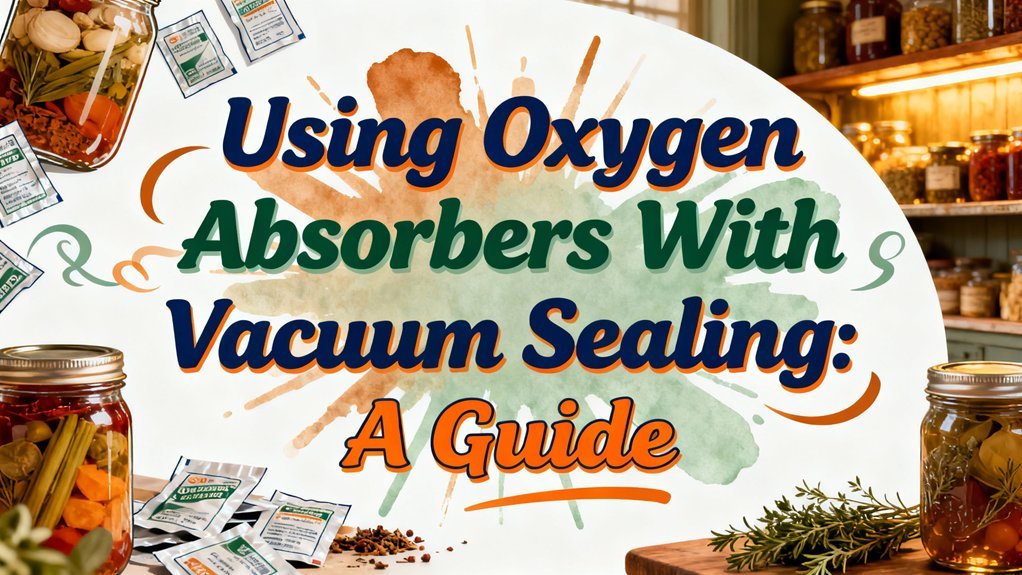
You’ll dramatically extend your food’s shelf life by combining vacuum sealing with oxygen absorbers—a synergistic approach that creates a near-zero oxygen environment neither method achieves alone. Vacuum sealing mechanically removes air, while oxygen absorbers’ iron powder chemically binds remaining oxygen to <0.01%, preventing oxidation, rancidity, and microbial growth. This dual protection works exceptionally well for grains, legumes, nuts, seeds, and dried meats. Position absorbers directly inside packages before sealing, expose them to air for no longer than 20 minutes, and size them correctly to your container volume. The specifics of implementing this strategy efficiently reveal surprising nuances worth understanding.
Understanding Vacuum Sealing and Oxygen Absorbers
When you’re looking to extend shelf life and preserve food quality, vacuum sealing paired with oxygen absorbers creates a powerful preservation system that removes the air—and the oxidation—that degrades your products.
Vacuum sealing mechanically eliminates oxygen by drawing out air from packaging, squeezing food contents into a compact space. However, this alone leaves residual oxygen that can still cause deterioration. That’s where oxygen absorption enters the picture.
Oxygen absorbers contain iron powder that chemically binds oxygen molecules, reducing concentrations to less than 0.01%. Combined with vacuum sealing’s mechanical removal, you’ll achieve oxygen levels below 0.0001%—an exceptionally low environment that prevents oxidation, rancidity, and microbial growth. Food-compliant oxygen absorber packets further enhance food safety by reducing microbial contamination risks in sealed packaging. For those seeking even more streamlined solutions, integrated oxygen-absorbing film eliminates the need for loose sachets during packaging production.
This dual approach protects dried seeds, nuts, meats, grains, and oils far more effectively than either method independently. When combined with proper storage temperatures—keeping refrigerated items at or below 40°F and frozen items at 0°F—vacuum sealing and oxygen absorbers work together to maximize preservation. Vacuum sealed meat can maintain quality for years when frozen, with whole cuts lasting 2 to 3 years and ground meats around 1 year. Vacuum sealing also prevents freezer burn and maintains food texture during extended storage. It’s important to note that specialized vacuum sealers with proper heat-sealing capabilities are necessary to create secure, airtight seals that work effectively with oxygen absorbers. By combining these preservation methods with proper portioning and inventory management, you can maximize the efficiency of your food storage system.
How Combining Both Methods Extends Shelf Life
Because vacuum sealing alone leaves residual oxygen that continues to degrade fats, vitamins, and pigments through oxidation, combining it with oxygen absorbers creates a synergistic preservation system that dramatically extends shelf life. You’ll reduce internal oxygen to trace levels (<0.1%), creating an environment hostile to aerobic molds, bacteria, and insects. This combined approach suppresses enzymatic browning and microbial colonization more effectively than either method independently. For frozen goods, you’ll minimize freezer-burn while preventing oxidative off-flavors. Absorbers also provide fail-safe protection if your seal integrity falters during storage, maintaining low-oxygen conditions that prevent re-oxygenation. The versatility of vacuum sealing allows you to preserve diverse food types beyond just dry goods, complementing the oxygen absorbers’ targeted oxygen removal. Selecting the appropriate size and type of oxygen absorber based on your food volume and packaging ensures maximum effectiveness throughout the storage period. By layering these preservation techniques—vacuum bag plus absorber in secondary dry packaging—you’ll achieve near-anaerobic conditions, enabling decade-scale shelf life for dehydrated and low-moisture products without relying on chemical preservatives.
Key Benefits of Using Oxygen Absorbers With Vacuum Sealing
By pairing oxygen absorbers with vacuum sealing, you’ll achieve preservation capabilities that neither method delivers independently. This combination leverages oxygen absorber advantages by targeting the residual oxygen that vacuum sealing techniques leave behind, reducing levels to 0.01%. You’ll protect delicate foods from crushing damage while eliminating dissolved oxygen between particles that vacuum alone can’t reach. Your vacuum sealing techniques work synergistically with absorbers to create an ideal oxygen-free environment, preventing aerobic pathogens, mold, and spoilage organisms from proliferating. You’ll preserve color, texture, aroma, and nutritional value more effectively than using either method alone. The oxygen absorber advantages extend shelf life substantially under identical storage conditions while maintaining structural integrity of fragile items like fine flours and baked goods. Much like how heavy lids trap moisture in specialized cookware to preserve food quality, oxygen absorbers create an airtight seal that protects contents from environmental factors. However, it’s important to remember that this preservation method should complement proper refrigeration or freezing for perishable foods to ensure safety. This combination is particularly effective at preventing bacteria growth in stored foods, which is essential for maintaining food safety alongside the extended freshness benefits. Oxygen absorbers can be used alongside vacuum seal bags] or storage containers for maximum flexibility in your preservation strategy. Ideal candidates for this combined approach include low-moisture dry goods such as wheat berries, rice, rolled oats, and dried beans, which respond exceptionally well to the synergistic preservation effect. Similar to how slow-roasting in a Dutch oven concentrates flavors through extended cooking time, oxygen absorbers work gradually to eliminate oxygen and preserve food quality over months or years of storage. This preservation technique shares the precision of targeted heat application] with specialized kitchen tools to ensure optimal results for your stored foods.
Best Practices for Optimal Results
Understanding the synergistic benefits of oxygen absorbers and vacuum sealing establishes the foundation for effective food preservation, but realizing those benefits demands meticulous attention to implementation details. You’ll achieve ideal results through proper oxygen absorber sizing and placement. Calculate absorber capacity using manufacturer charts, adjusting for your package’s headspace and food respiration rate. For freeze-dried or low-moisture products, reduce recommended quantities by 25–33% to avoid waste. Position absorbers directly inside your primary package before vacuuming, distributing multiple small packets throughout large containers rather than using one large packet. This guarantees uniform oxygen scavenging. Expose absorbers to air only immediately before sealing, keeping exposure under 20 minutes. Once your vacuum-sealed packages are complete, store any unused oxygen absorbers in a vacuum-sealed mason jar to preserve their effectiveness for future use. The reduction of aerobic bacteria growth is significantly enhanced when oxygen absorbers work in tandem with vacuum sealing to create an inhospitable environment for microbial proliferation. Execute your workflow systematically: fill, insert absorber, vacuum, then seal—minimizing premature activation and maximizing preservation effectiveness.
Foods and Items Best Suited for Dual Protection
Not all foods benefit equally from oxygen absorbers and vacuum sealing, so you’ll want to match your preservation method to your specific items. Grain types like rice and wheat require fewer absorbers due to their dense packing, while legumes and beans trap more air and demand additional oxygen levels management. Nuts and seeds preserve effectively in mylar vacuum bags with absorbers protecting their natural fats from oxidation. Dehydrated fruits and vegetables gain significant shelf life benefits from dual protection, combining moisture control with oxygen removal. Dried meats and proteins extend dramatically when vacuum sealed with absorbers, preventing rancidity. Select appropriate storage containers—buckets for beans, vacuum bags for delicate items—ensuring your preservation techniques address each food’s unique characteristics and maximize food safety throughout extended storage periods. Larger storage containers hold more food items and require a higher number of oxygen absorber packets to account for the increased volume of trapped air.
Common Mistakes to Avoid
Because improper sizing and handling of oxygen absorbers can severely compromise your preservation efforts, you’ll want to familiarize yourself with the most common pitfalls that undermine dual-protection storage. Incorrect oxygen absorber sizing—using standard packets for large containers without consulting manufacturer charts—leaves residual oxygen that shortens shelf life. Neglecting seal integrity by skipping post-seal inspections allows slow leaks that admit oxygen over time. You’ll also compromise results by placing wet foods directly on absorbers, which deactivates them, or storing opened absorber packs without resealing in oxygen-impermeable containers. Additionally, relying solely on vacuum sealing without absorbers leaves dangerous residual oxygen. Finally, reusing previously exposed absorbers risks insufficient oxygen removal. The iron powder within absorbers undergoes oxidation when exposed to oxygen, converting it to iron oxide and effectively removing oxygen from your storage environment. Remember that nitrogen gas protection is what remains after oxygen absorbers effectively remove oxygen from your storage containers, making it essential to ensure absorbers function properly throughout the sealing process. Just as preheating cast iron cookware creates optimal conditions for superior results in baking, proper preparation of your storage containers before sealing ensures maximum effectiveness of your oxygen absorber system. Avoid these mistakes through careful planning and meticulous execution.
Long-Term Storage Success With Combined Methods
Once you’ve mastered the common pitfalls that compromise preservation, you’re ready to leverage the combined power of vacuum sealing and oxygen absorbers for genuinely long-term storage success. This combined methods approach creates an oxygen-free environment that extends shelf life years or decades beyond either technique alone. You’ll prevent oxidation, aerobic bacteria growth, and mold simultaneously. For ideal results, pair vacuum-sealed bags with oxygen absorbers in glass or Mylar containers—plastic remains permeable over extended periods. When storing freeze-dried foods, reduce absorber size by one-quarter to one-third. You’ll preserve nutrient content, flavor, and color while protecting against freezer burn. This synergistic approach enables bulk purchasing and considerably minimizes waste through robust, long-term storage that professional preservation methods employ. Oxygen absorbers manufactured using Japanese technology adhere to industrial certifications that ensure the safety and quality of your stored food products.