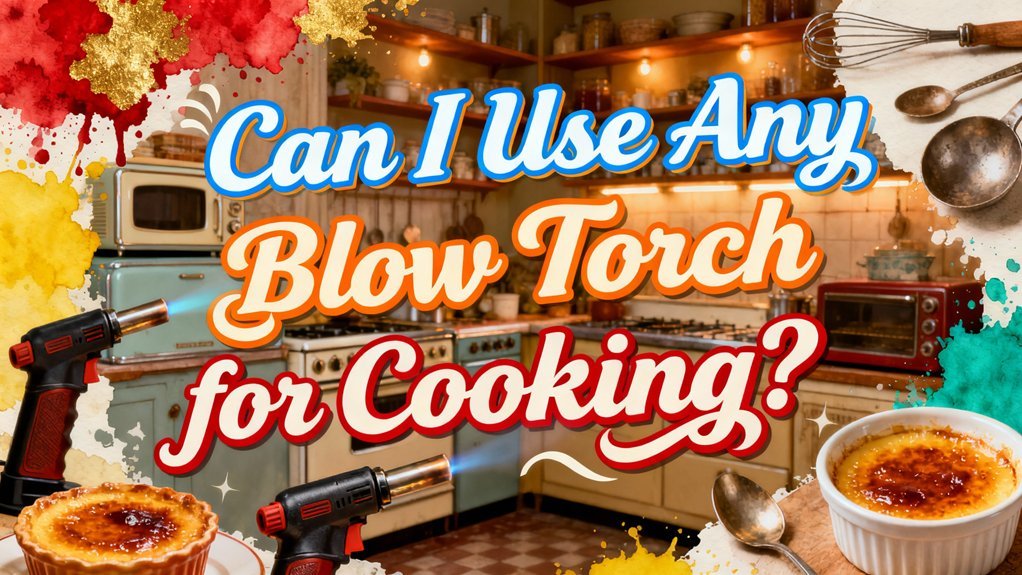
You shouldn’t use any blow torch for cooking. Non-culinary torches lack essential safety features like adjustable flames, stable bases, and safety locks. They’re designed with industrial-grade fuel that’s unsafe for food contact and poses combustion and chemical pneumonia risks. Culinary-grade torches deliver precise heat control, reaching up to 2012°F safely for caramelizing and searing. You’ll want to understand which models and fuel types actually perform best for your kitchen needs.
Kitchen Torches Designed Specifically for Culinary Tasks
Within the domain of precision cooking, kitchen torches deliver controlled high-heat performance that home cooks and professionals alike depend on. You’ll find that culinary-specific torches feature engineering designed exclusively for food preparation tasks, distinguishing them from general-purpose tools.
These specialized torches offer adjustable intensity through flame shape adjustment knobs, allowing you to rotate clockwise for concentrated pointed flames or counterclockwise for gentler spread-out applications. You can tailor your culinary flame for searing meats or perfecting crème brûlée with precision. The PRO 2 model delivers 6,300 BTU/hr output, providing the power needed for professional-grade culinary results. Professional kitchen torches can heat up to 2012 degrees Fahrenheit, enabling the high temperatures necessary for caramelizing and searing tasks.
Safety features make these torches appropriate for kitchen use. You’ll benefit from anti-flare devices that prevent unwanted flare-ups and safety locks that prevent accidental ignition. The stabilizing stand attaches securely to the fuel canister, enhancing stability during operation.
Push-button automatic ignition gives you effortless startup, while the rotatable nozzle positions at 0, 45, and 90 degrees for versatile application angles.
Risks of Using Non-Culinary Blow Torches
Because non-culinary torches lack the engineered safety features and fuel specifications of kitchen-grade equipment, they pose significant dangers when used for cooking. Industrial torches burning propane or acetylene create uncontrollable combustion risks that culinary applications don’t require. You’re exposing yourself to chemical pneumonia when non-food-grade butane releases hydrocarbons into your lungs. These torches often lack flame adjustability, stable bases, and safety locks—critical components for kitchen use. Undetected cracks or loose connections cause fuel leaks, producing explosive gas mixtures. Without proper maintenance protocols, grease accumulation ignites unexpectedly. Well-ventilated spaces are essential for preventing gas buildup when using any torch near food preparation areas. Unlike cast iron cookware that develops a natural non-stick surface through proper seasoning, torches require engineered safety specifications that cannot be improved over time. The seals and valves in non-culinary torches may not be compatible with their fuel types, potentially leading to leaks or other safety hazards. Building a reliable cooking surface requires consistent maintenance and care, similar to how regular use and proper maintenance preserve cast iron performance. Culinary-grade torches are designed for precision tasks like caramelizing sugar on desserts and other finishing touches that require controlled heat output. Soldering torches require proper flame adjustment to function safely, much like culinary torches need precise heat calibration for cooking applications. Culinary-grade torches typically feature flame temperatures between 2,500°F and 3,000°F], which are specifically calibrated for precise cooking applications without excessive heat damage. Your torches safety depends entirely on using equipment designed specifically for food preparation, where manufacturers engineer appropriate fuel types, controlled heat output, and protective mechanisms that non-culinary alternatives simply don’t provide.
Understanding Fuel Type Differences
Now that you understand why non-culinary torches endanger your kitchen, you’ll want to know what actually separates safe cooking torches from industrial alternatives—and it all comes down to fuel. Butane reaches 3150°F, delivering controlled, compact flames ideal for precision cooking tasks like torching desserts. Propane climbs to 3600°F, offering superior torch versatility for both culinary and household projects with consistent, even heat distribution. MAP-Pro hits 3730°F, providing professional-grade performance for demanding applications. For cooking specifically, butane’s fuel efficiency shines in refillable cartridges, while propane’s intensity suits varied kitchen needs. Butane is more convenient for home use due to its easy canister refilling compared to propane systems. When selecting a culinary torch, consider key features like flame control and safety mechanisms to ensure optimal performance in your kitchen. Different torch flame types serve different purposes, with jet flames providing concentrated intensity for general heating and swirl flames offering medium spread for cooking tasks. Creating steam in your oven using water or ice in a hot skillet can achieve similar heat control precision as proper torch management. Like Dutch oven cooking methods that require careful temperature control to achieve tender, juicy chicken, torch selection demands equal attention to heat management and safety. Acetylene torches excel at producing high heat for professionals, making them unsuitable for culinary environments due to safety concerns and flame control limitations. Just as proper thawing methods are essential for safe food preparation, selecting the appropriate torch fuel is critical for maintaining kitchen safety. Understanding these distinctions guarantees you’ll select appropriate fuel that balances safety, control, and performance—critical factors when working with open flames near food.
Why Hardware Torches Fall Short for Cooking
While hardware store torches excel at heavy-duty tasks like soldering or thawing pipes, they’re fundamentally mismatched for culinary applications. Their hardware limitations stem from excessive power output and crude flame control—you’ll struggle achieving even browning without over-charring delicate surfaces.
Safety concerns compound these shortfalls. Hardware torches lack food-safe regulators and built-in shut-off mechanisms present in culinary models. Higher-pressure propane systems increase flare-up risks, while broader flame patterns prove incompatible with precision work like torching meringue or fish skin. Unlike culinary torches that use refined culinary butane fuel, hardware torches employ industrial-grade fuel not intended for food contact.
Additionally, bulky designs hinder maneuverability over dishes, and manual ignition systems invite mishandling. Detachable cartridges risk running out mid-task, delivering inconsistent results. Just as proper cooking requires accurate temperature monitoring to achieve optimal results, hardware torches lack the precision necessary for culinary success. For instance, sous vide cooking demonstrates how precise temperature control creates perfectly textured eggs, whereas hardware torches cannot replicate such exactness. Without specialized nozzles or ergonomic triggers, you’ll experience hand fatigue and frustration attempting techniques requiring subtle caramelization. Hardware torches also generate flame patterns too broad to achieve the Maillard reaction necessary for proper searing, unlike culinary-grade alternatives designed for precise temperature control. Just as cast iron’s even heating requires the right equipment for optimal results, culinary torches exist precisely because hardware models simply won’t deliver the control you need.
Top Performing Models for Home Cooks
Several culinary torches stand out for delivering the precision and reliability home cooks need. The Bernzomatic excels with its fastest searing time at just 14 seconds, featuring even flame distribution ideal for various culinary applications. Jo Chef Superior RX earns Good Housekeeping’s top pick designation, boasting an easy flame control knob and safety lock for secure operation. The Iwatani PRO2 offers an adjustable flame shape knob, letting you switch between concentrated and spread flames depending on your task. For budget-conscious cooks, the Sondiko S400 provides quality features at considerably lower costs than competitors. Flame King’s propane models deliver high intensity with electric start options, ranging from $20.95 to $48.95. Each torch provides superior flame control for precise culinary applications like creating a crisp caramelized top on desserts such as crème brûlée. Understanding the differences between household kitchen torches and professional-grade options helps you select the right model for your cooking needs. Proper maintenance techniques and refueling practices ensure your culinary torch remains in optimal working condition for years of reliable use. Learning appropriate distance from food prevents common mistakes like over-browning or creating bitter flavors during torch cooking. Many advanced culinary torches now include ambient temperature sensors to help monitor your cooking environment and adjust flame intensity accordingly. Flame King kitchen torches are designed for professional chefs and home cooks, making them suitable for both experienced and novice users. When selecting a torch, prioritize safety features like trigger starts and locks to prevent accidental activation during storage and use.
Key Features That Matter for Kitchen Searing
Flame adjustability lets you calibrate heat intensity from gentle melting to aggressive caramelizing, preventing burnt surfaces through precise control. Ergonomic design—particularly thumb-depress buttons—enables one-handed operation with steady flame directionality across food surfaces.
Piezoelectric ignition eliminates matches or lighters, reducing accident risks. Heat precision delivers targeted high-heat flames for localized browning without heating your entire kitchen. Refillable butane canisters guarantee consistent performance while producing clean, odorless combustion ideal for indoor use. Most kitchen torches are available at price points ranging from budget-friendly home tools to professional-grade options, making quality accessible across different budgets.
Safety mechanisms, including mandatory five-minute waiting periods after refueling, dissipate lighter fluid vapors and prevent dangerous fireballs. To ensure optimal performance during refueling, align the butane canister nozzle with your torch’s filling valve and press firmly for 5-10 seconds until you hear a slight sputtering sound indicating the tank is full. Understanding the differences between butane culinary torches and propane options helps you choose equipment suited to your cooking needs. Propane torches offer higher heat output compared to butane alternatives, making them particularly effective for demanding culinary tasks. A dark blue flame indicates proper combustion and prevents off-flavors in your food. Proper torch maintenance and care ensures your equipment performs reliably over time and extends its lifespan through regular upkeep. Prioritizing these features ensures reliable culinary performance and minimized hazards during extended searing sessions.
Butane vs. Propane for Indoor Cooking
Butane advantages include superior flame control for precise simmering and caramelizing, plus lighter, compact canisters that fit easily in kitchen drawers. Butane performs reliably in indoor environments without extreme cold exposure. Butane is often used in portable stovetops and lighters due to its space-saving portability. Butane also burns cleaner than propane, producing less carbon monoxide for safer indoor cooking environments.
Propane benefits offer hotter flame temperatures and higher calorific value for intensive searing tasks. However, propane requires sturdier, bulkier tanks demanding more storage space. Similar to how professional bakers rely on superior heat retention for achieving optimal results, serious home cooks may find propane’s higher calorific value beneficial for intensive cooking tasks. Like Dutch oven cooking methods that braise meat at low temperatures for extended periods, propane’s sustained heat output can support prolonged slow cooking techniques. Just as cast iron skillets excel at creating the perfect sear, propane torches deliver the intense, consistent heat needed for restaurant-quality steak preparation. Propane torches are particularly effective for caramelizing sugar surfaces on desserts, creating an evenly browned crust without scorching the underlying custard.
For indoor cooking, butane suits most home cooks prioritizing portability and precision. Guarantee adequate ventilation regardless of fuel choice. When selecting between fuel types, consider testing criteria such as ignition reliability and temperature consistency to ensure optimal performance. If you’re searing large quantities or frequently cooking in cool kitchens, propane delivers superior performance. Consider your specific culinary needs and storage constraints when deciding between these fuels.
How to Test Flame Evenness and Speed
You’ll want to verify that your torch produces a consistent, uniform flame before relying on it for precision cooking tasks. Start with flame stability tests by holding your torch steady at six inches from a flat surface, observing the blue inner cone for flicker-free combustion without yellow tips. Rotate slowly to detect variations in intensity around the circumference.
Next, conduct ignition speed tests using small paper strips. Time how quickly the flame propagates across ten identical specimens at different angles—vertical, horizontal, and 45-degree. Your torch should ignite each strip consistently in under three seconds, with char lengths averaging seven inches maximum. Calculate the standard deviation across trials; values below one second indicate reliable performance suitable for precise culinary applications. These measurements align with vertical flame test methodologies that evaluate ignition resistance and burning rate consistency. Understanding flame spread rates during these tests helps ensure your torch maintains the safety standards required for consistent performance. Using high-quality purified butane specifically formulated for culinary applications will help achieve the flame consistency needed for professional results. For compact storage of your cooking equipment and supplies, consider using ziplock bag storage methods to keep your kitchen organized. Consider using your torch primarily with acidic foods that can enhance iron absorption, especially when cooking with cast iron cookware. Always use refined butane fuel and ensure adequate ventilation when operating any torch to prevent inhalation of harmful fumes.
Recommendations for Selecting Your Kitchen Torch
Once you’ve confirmed your torch meets performance standards, selecting the right model requires evaluating fuel source, flame control features, safety mechanisms, and ergonomic design. For kitchen torch usage, choose butane for room-temperature storage and consistent performance. Prioritize models with dual-knob systems enabling precise flame control techniques—one adjusting size, another shaping the flame from concentrated to spread. The Jo Chef Superior RX excels here, offering intuitive thumb-operated triggers and compact handheld design for quick browning. Verify safety locks prevent accidental activation during storage and handling. Consider ergonomic factors like weight and trigger responsiveness, which directly impact your ability to achieve even browning and melting. MAP-Pro gas offers superior heat transfer compared to propane, making it the preferred fuel choice for frequent culinary use and consistent cooking results. Butane’s lower flame temperature of approximately 2,400-2,600°F provides precise temperature control for delicate dishes compared to propane’s intense 3,600-3,623°F heat. Understanding optimal temperature ranges helps ensure you don’t overheat delicate dishes or desserts that require precision heat application. Just as a kitchen torch requires careful heat control to achieve the perfect crust without burning, slow cooking methods like braising with root vegetables allow flavors to develop gradually and deeply. Bernzomatic torches offer strong heat output and user-friendly operation if you prefer propane and outdoor flexibility. Like choosing the right cookware size, selecting an appropriately sized torch ensures you can work efficiently across different cooking tasks and kitchen setups. Just as cast iron skillets require proper seasoning and maintenance to prevent rust and maintain their cooking surface, kitchen torches need regular care to ensure safe and reliable operation.