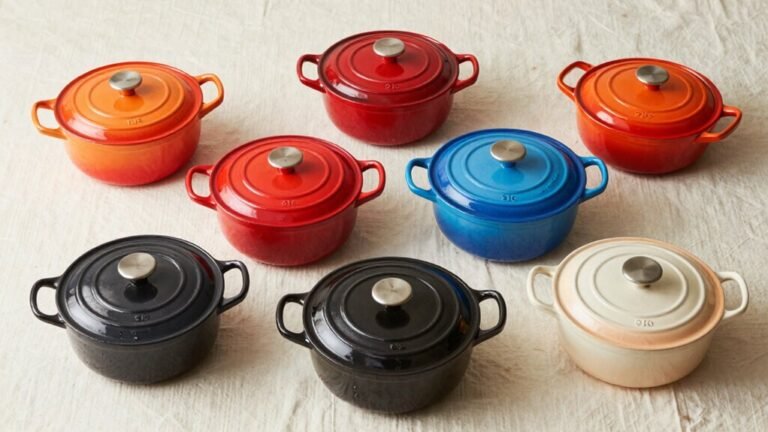

You can safely use your Le Creuset Dutch oven in the oven up to 260°C (500°F), provided you verify your specific knob type—phenolic knobs max out at 390°F, while metal knobs tolerate 500°F. Always preheat with oil or liquid for five minutes on medium heat to prevent enamel cracking. Avoid drastic temperature changes and never slide the Dutch oven on glass-topped stoves. The enamel coating’s vulnerability to thermal shock and physical damage means understanding these guidelines determines whether your cookware performs reliably for years.
Maximum Temperature Ratings and Safety Standards
How safe is your Le Creuset Dutch oven in the oven? You can confidently use it up to 260°C/500°F, which aligns with established safety standards for cast iron cookware. This maximum oven temperature rating applies to the entire unit, including phenolic knobs, which share the same threshold. If your Dutch oven features stainless steel knobs instead, you’ll have greater flexibility since they’re rated for any oven temperature.
Stoneware components within your cookware also maintain the 500°F safety limit. You shouldn’t exceed these specifications, as doing so risks permanent damage to the enamel coating and structural integrity. Le Creuset Dutch ovens are notably lightweight compared to many competing brands, which can make handling them at high temperatures slightly easier. Like cast iron skillets used on gas stoves, Dutch ovens benefit from superior heat retention that ensures even cooking distribution throughout your dishes. Always verify your specific model’s documentation, as variations exist. When handling hot pans after oven use, use dry oven gloves or cloth to protect yourself from burns and prevent accidental damage to surrounding surfaces. Adhering to these temperature guidelines guarantees your investment remains functional and safe for years of reliable cooking performance.
Knob and Handle Considerations for Oven Use
While your Le Creuset Dutch oven‘s enameled cast iron body can withstand temperatures up to 500°F, the knob and handles you’ll use to maneuver it often can’t. Understanding your specific knob types and handle features is critical for safe high-heat cooking.
Classic phenolic knobs with the C-shaped logo max out at 390°F and’ll smoke or warp beyond that threshold. Signature phenolic knobs without logos reach 480°F. Metal options—copper, gold, or stainless steel—tolerate 500°F fully. Glass lids with stainless steel hardware cap out at 425°F. The ergonomic design of these metal knobs ensures a firm grip even when using protective equipment. For recipes requiring extremely high temperatures like sourdough bread, high-heat oven mitts provide essential burn protection when lifting lids. Just as cast iron skillet pizza requires careful attention to oven temperatures, Dutch oven cooking demands precision in monitoring heat levels.
Since the knobs are interchangeable, you can replace phenolic knobs with metal ones to safely use the Dutch oven at temperatures up to 500°F. You’ll need to verify your knob material before high-temperature cooking. For sustained heat above your knob’s rating, you’ll remove it and use protective oven mitts. Consider using an instant-read thermometer to monitor your cooking temperature and ensure you’re staying within your equipment’s safe limits. When measuring surface temperatures on your Dutch oven or cookware, maintain proper distance-to-spot ratio to ensure accurate readings. Always consult your documentation; knob compatibility varies markedly across production years. Le Creuset and other leading brands engineer their Dutch ovens with construction quality that prioritizes both performance and safety across various cooking applications.
Enameled Cast Iron Performance in Heat
Once you’ve verified your knob’s heat rating, you’ll want to understand how Le Creuset’s enameled cast iron body actually performs when exposed to sustained oven temperatures. The glazed enamel surface remains non-reactive when you cook acidic foods like tomatoes and wine, maintaining its integrity throughout extended use. However, you should note that Le Creuset’s heat retention ranks third-worst among competitors, primarily due to thinner walls that reduce thermal capacity. The cast iron construction does provide adequate thermal mass for most applications, though you’ll experience more responsive temperature adjustments than heavier alternatives. The enamel performance stays consistent at temperatures up to 500°F, and independent testing confirms the finish remains lead-free and cadmium-free. Le Creuset’s lighter 11.4-pound construction in the 5.5-quart size enhances portability while potentially affecting heat distribution compared to heavier competitor models. The fitted lid design enables moisture control during extended cooking, similar to specialized grill pan functionality. Like sous vide cooking that relies on precise temperature control, your Le Creuset Dutch oven benefits from maintaining consistent oven temperatures for optimal results. For extended cooking applications, you can also use flame control techniques with specialized kitchen equipment to achieve precise caramelization and finishing effects on your dishes. Preheating your Dutch oven before adding ingredients ensures even heat distribution throughout the cooking vessel. When properly maintained, your Le Creuset Dutch oven can deliver reliable performance for years, though quality cast iron cookware that’s well-cared for can last for generations. Chips and discoloration may occur faster with Le Creuset compared to competitors due to thermal shock sensitivity. You’ll find the cookware maintains structural integrity within recommended temperature parameters.
Proper Oven Usage Guidelines
To maximize your Le Creuset Dutch oven’s lifespan and guarantee safe oven use, you’ll need to understand the critical temperature limitations that govern its components. Your oven placement strategy depends entirely on knob material: phenolic knobs restrict usage to 390°F, while metal knobs permit 500°F temperatures.
Before cooking, employ proper preheating techniques by heating your Dutch oven on medium heat for five minutes. Never preheat empty—always add oil, fat, or liquid to the base first. This prevents enamel cracking and guarantees even heat distribution. Avoid sliding the pan on glass-topped stoves; always lift it instead to prevent damage to the cooking surface. Additionally, avoid drastic temperature changes when removing your Dutch oven from the oven to maintain enamel integrity. A light layer of cooking oil applied while the cookware is still warm can help preserve the enamel finish over time. Understanding thermal shock prevention is essential for ensuring your cookware remains durable and functional for years to come.
When placing your Dutch oven in the oven, position it on a shelf or rack, never directly on cast iron linings. Verify your knob type before high-temperature baking. For temperatures exceeding 390°F, unscrew phenolic knobs and replace them with interchangeable metal alternatives to prevent warping or melting.
Long-Term Durability and Warranty Protection
Your Le Creuset Dutch oven’s longevity depends on understanding both its vulnerabilities and the manufacturer’s limited warranty coverage. While cast iron construction provides excellent heat retention, the enamel coating remains susceptible to thermal shock and physical damage. You’ll find that warranty coverage typically doesn’t encompass enamel discoloration, staining, or minor cracking from normal use.
Longevity expectations require consistent maintenance protocols. Professional refinishing services become necessary when enamel damage occurs, considerably increasing total cost of ownership. Le Creuset’s warranty protection falls short of addressing long-term wear patterns, particularly staining requiring thorough cleaning. To prevent damage, cool the product to room temperature before cleaning with warm, soapy water and a soft, non-abrasive sponge. Dutch ovens are designed for heavy use, often lasting as family heirlooms when properly maintained. For optimal results, maintain consistent heat throughout the cooking process to achieve ideal consistency when preparing dishes like chicken pot pie. Like tortillas made in cast iron skillets, Dutch ovens benefit from even heat distribution to ensure consistent cooking results across all surfaces.
You should recognize that premium pricing doesn’t guarantee extended durability. Real-world performance testing reveals comparable brands deliver similar heat retention without elevated maintenance demands, making warranty limitations a critical consideration in your purchase decision.