You can elevate your cast iron collection into a stunning kitchen focal point by exploring versatile hanging solutions. Wall-mounted pipe racks offer industrial elegance with adjustable configurations, while commercial grid walls scale beautifully as your collection grows. For rustic charm, barnwood with heavy-duty screw hooks delivers authentic farmhouse character. Ceiling-suspended systems maximize vertical space, and strategic positioning near your stove guarantees accessibility during cooking. Layer these options with accent lighting and complementary hardware finishes to create visual cohesion. Each approach transforms both your storage challenges and kitchen aesthetics simultaneously—discover which method perfectly suits your space.
Wall-Mounted Pipe Racks for Organized Storage
If you’re seeking a storage solution that marries industrial aesthetics with practical functionality, wall-mounted pipe racks deliver both—transforming your kitchen into a gallery while maximizing vertical space. These galvanized steel constructions feature adjustable height configurations, allowing you to customize placement according to your collection’s size and your wall dimensions.
The pipe rack versatility shines through multiple mounting options: wall or ceiling installation, single or double rail arrangements, and widths spanning 30 to 48 inches. With sturdy 1/2-inch diameter steel pipes and weight capacities exceeding 80 pounds per rod, you’ll securely display your cast iron collection without compromise. Handmade in the UK, these racks are available in multiple tube color options including brass, galvanized, raw steel, and black to match your kitchen’s design aesthetic. The minimalist design enhances aesthetic appeal while providing a sturdy design that holds up under the weight of your collection. For cast iron pieces you plan to cook with regularly, consider pairing your display with food preservation methods to maintain their seasoning during storage.
Three-point fixing guarantees stability, while the matte black powder-coated finish complements modern and rustic kitchens alike. Unlike Dutch ovens that require careful consideration of capacity limitations for different baking projects, cast iron skillets offer more flexible storage without space constraints. When your skillets need cleaning, dish soap and warm water with a soft sponge effectively remove food residue without damaging the seasoning. Vacuum sealing cast iron pieces during extended storage periods can provide freezer burn prevention comparable to meat preservation techniques, keeping your collection protected from oxidation. To protect your cast iron investment long-term, explore vacuum seal bags designed for food storage that can help preserve seasoning quality when pieces are not in active use. Assembly requires basic hardware installation into wall studs, delivering a durable, long-lasting display that’s both functional and visually striking.
Commercial Grid Walls for Growing Collections
As your cast iron collection expands beyond what traditional shelving accommodates, commercial grid wall systems offer scalable elegance that grows with your needs. Metro SmartWall’s corrosion-resistant epoxy coating and Microban antimicrobial protection make them ideal for kitchens where durability matters. You’ll appreciate grid wall organization’s versatility—panels range from 18″ to 42″ widths, adapting perfectly to your space constraints.
Commercial shelving solutions like the Metro WG3036K4 provide customizable configurations. You combine grid panels with specialized hooks and brackets, creating tailored displays that showcase your collection’s aesthetic appeal. The modular design lets you reconfigure arrangements as your skillet inventory grows without permanent installation hassles. The WG1848BR model measures 18″ x 48″ and installs easily without tools or brackets, making it an excellent choice for expanding storage needs. The epoxy-coated Metroseal Gray finish ensures long-lasting durability and maintenance-free performance in busy kitchen environments. Unlike traditional storage methods, using a lid with your displayed cast iron helps retain moisture and prevent dust accumulation when skillets are not in active use. To further protect your collection when not cooking, apply a thin coat of oil to each skillet before display to maintain its seasoning and prevent rust, which is essential for preserving the seasoning layer you’ve worked to build. Proper air circulation around your displayed skillets prevents moisture buildup and keeps them in optimal condition between uses.
IKEA’s KUNGSFORS series offers an alternative aesthetic, blending stainless steel with ash wood for contemporary kitchens. Both systems free valuable countertop real estate while transforming your cast iron into functional wall art.
Barnwood and Screw Hooks for Rustic Charm
While commercial grid systems offer modern modularity, rustic barnwood with heavy-duty screw hooks delivers authentic farmhouse character that transforms your cast iron display into a storytelling focal point. You’ll appreciate how reclaimed wood’s weathered grain and natural grayish tones create visual depth that functional decor demands. Install 50+ pound-rated screw hooks into wall studs spaced 16 inches apart, positioning them 12-18 inches from each other to accommodate multiple skillets. These handmade blacksmith hooks feature an Antique Black finish that complements rustic designs while providing the durability needed for cast iron cookware. Pair hammered wrought iron hooks with light-toned barnwood for striking contrast, or choose twisted designs that complement wood knots cohesively. For those seeking an alternative, expandable pot racks with durable black wrought iron finishes offer versatile hanging solutions that adapt to various kitchen layouts. Just as vacuum sealing techniques help maximize storage efficiency in other areas of your home, thoughtful hook placement maximizes your kitchen’s vertical space. Cast iron’s ability to retain heat and develop rich, flavorful seasoning layers makes proper display and storage essential for maintaining cookware quality. Understanding emissivity and material properties helps you select hooks and finishes that complement both your cast iron’s heat-conducting capabilities and your kitchen’s aesthetic. This approach maintains rustic aesthetics through authentic material selection and thoughtful spatial arrangement that celebrates both form and function.
Industrial Pipe Systems for Modern Kitchens
How do you marry strength with sleek minimalism? Industrial pipe systems deliver both. You’ll appreciate how threaded black iron or powder-coated steel creates clean lines while handling substantial weight—custom assemblies anchored to studs support several hundred pounds, far exceeding typical skillet needs.
Your pipe finish options range from matte black to brushed nickel, each complementing modern aesthetics while resisting corrosion better than raw iron. Mount horizontally on walls with 3–5 inch spacing between hang points, or suspend rectangular frames from ceiling joists at 28–36 inches above your range. VEVOR’s industrial pipe shelving provides tested durability for demanding kitchen environments where cast iron weight and humidity require engineered solutions. Heavy-duty pipe brackets in straight industrial style enhance both functionality and visual appeal while supporting your cast iron collection.
The load capacity adapts to your collection. Consumer kits handle 10–55 pounds per shelf; engineered installations manage exponentially more. Like vacuum seal bags designed for airtight seals that preserve items long-term, your pipe system maintains structural integrity under sustained weight and environmental conditions. Dutch ovens’ superior heat retention makes proper storage solutions essential for protecting your investment. Remember that resting your cookware after cooking and storage helps maintain the longevity of your cast iron pieces. Proper seasoning methods ensure your displayed pieces remain in optimal condition while hanging on display. Just as refrigerated storage conditions are critical for preserving perishable foods safely, maintaining appropriate environmental conditions around your hanging cast iron prevents rust and degradation. This flexibility lets you scale your system as your cast iron grows, maintaining visual cohesion throughout your kitchen’s contemporary design.
Repurposed Materials Racks for Unique Character
Where industrial pipes favor sleek geometry, repurposed materials embrace authenticity and warmth. You’ll uncover that reclaimed pallet wood and salvaged wrought iron create distinctive focal points while honoring sustainability. Repurposed wood boards stained to match your kitchen aesthetic pair beautifully with black lag screws and hand-forged iron details. These unique designs accommodate your specific layout—you can adjust three-board configurations around light switches and doors, then test placement on the floor for visual balance before mounting.
The beauty lies in versatility: countertop displays avoid stacking skillets, preserving their seasoning, while wall-mounted vintage racks handle heavy cast iron without deformation. Most designs successfully support around 65 lbs of cookware weight across multiple skillets. For optimal stability, lock bolts secured to wall studs prevent shifting while accommodating the weight of your collection. Consider pairing your repurposed materials with sturdy S-hooks to maximize both hanging space and ease of access for your cast iron collection. Salvaged materials emphasize rustic durability, transforming functional storage into genuine character pieces that celebrate both craftsmanship and culinary heritage within your space.
Strategic Hanging Positions for Easy Access
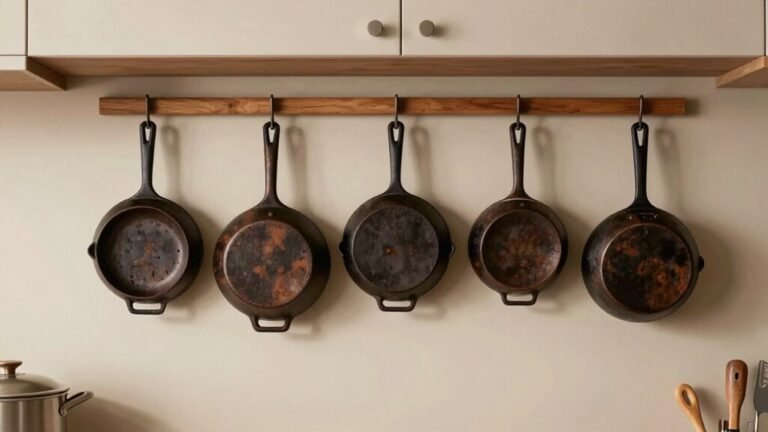
Thoughtful placement transforms your cast iron collection from mere storage into an ergonomic kitchen system that honors both workflow and aesthetics. Position racks directly beside your stove for immediate skillet accessibility during cooking. Suspend organizers over prep areas and kitchen islands to eliminate reaching across workspaces. Mount wall-hung configurations at eye level, spacing hooks far enough apart so cast iron pieces don’t touch, preventing damage.
Your hanging techniques should prioritize frequency of use—everyday skillets near cooking zones, occasional pieces in secondary locations. Employ adjustable grid systems that adapt as your collection evolves. Consider using commercial grid walls for maximum flexibility in repositioning hooks as your storage needs change. Orient racks vertically or horizontally based on available space, maximizing kitchen flow without blocking pathways. Installing ceiling-mounted racks in small spaces provides efficient storage while maintaining accessibility. To preserve the integrity of your hanging cast iron, apply a thin layer of olive oil to the surface using a paper towel while the skillet is warm, which bonds the oil into the pan through polymerization to maintain the seasoned finish. Ensure cast iron skillets are stored in a clean, dry environment to prevent rust and maintain food safety, just as you would handle raw chicken by avoiding cross-contamination. Maintaining seasoning layers through proper care preserves the non-stick properties of your hanging skillets. Regular seasoning maintenance keeps your hanging cast iron in optimal cooking condition. This strategic approach guarantees your cast iron remains both functional and visually compelling.
Maximizing Vertical Space With Ceiling-Suspended Options
Once you’ve optimized your kitchen’s horizontal real estate, ceiling-suspended options reveal an entirely new dimension for your cast iron collection. Cast iron oval racks and heavy steel ceiling mounts transform your overhead space into functional display areas. These systems leverage vertical storage by utilizing typically wasted airspace, creating visual interest while freeing countertops and cabinets.
Hook and chain systems in black, white, or Fontana blue complement your kitchen’s design principles. The tubular railing designs with multiple S-hooks distribute weight evenly across ceiling joists, ensuring stability. Proper mounting on ceiling joists or studs is essential for safety, as hanging pot racks typically support between 100 and 200 pounds depending on construction material and installation method. Pre-drilling holes for eyelet installation into your ceiling beam prevents wood splitting and ensures secure fastening. You’ll enhance ceiling aesthetics by selecting finishes that coordinate with your décor while showcasing your cookware as intentional design elements rather than hidden away. These durable cooking tools require proper care to maintain their superior heat retention capabilities that make them ideal for display. Whether you choose pre-seasoned versus unseasoned] varieties, the cooking surface of your cast iron ensures it remains functional and beautiful when displayed overhead. While cast iron is traditionally used in skillets, these hanging displays work equally well for alternative cookware designed for different cooking methods. The pre-seasoned cooking surface of your cast iron ensures it remains functional and beautiful when displayed overhead. For added protection and comfort when handling your cast iron, consider pairing your hanging display with a cotton yarn cover for the skillet handles.
Display and Functionality Combined in Kitchen Design
Rather than choosing between aesthetics and practicality, you can design a wall display that serves both purposes seamlessly. Arrange your skillets by patina or brand to create a museum-quality focal point while keeping them accessible for cooking. Install floating shelves with recessed cleats to secure pan bases while showcasing their faces—functional decor at its finest. Incorporate under-shelf hooks to maximize storage density without sacrificing visual impact. Layer complementary elements like hanging plants or framed recipes to soften the metal’s weight and enhance kitchen aesthetics. Use uniform hardware finishes—brass, black steel, or raw screws—to establish visual cohesion. Consider accent lighting to highlight textures and handle visibility. For optimal stability when installing these display elements, use a stud finder to ensure your hooks and screws are securely anchored. Just as butane torch refilling requires careful alignment of components to prevent malfunction, properly positioning your skillet display ensures both safety and longevity. Cast iron skillets excel at searing and braising when used on the stovetop, so keeping them readily accessible on your wall display means you can grab them quickly for everyday cooking tasks. Much like the slow-cooking techniques used in Dutch oven preparation, displaying cast iron skillets requires patience and strategic planning to achieve both visual appeal and lasting durability. To protect your skillets while they’re on display, consider adding silicone handle covers for both safety and a polished appearance, as these covers provide heat resistance and durability to keep your collection in pristine condition. This approach transforms your cast iron collection into intentional kitchen design that balances form and everyday utility.