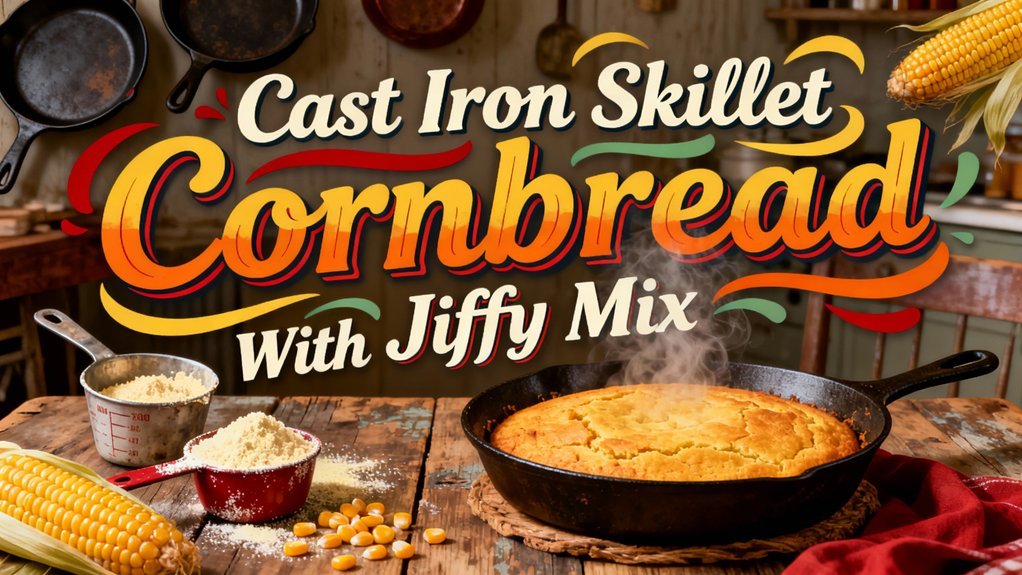
You’ll transform a humble Jiffy mix into golden-crusted cornbread magic by preheating your cast iron skillet with melted butter at 400°F. Whisk together the mix, eggs, milk, and sour cream until slightly lumpy, then pour into that sizzling skillet for crispy, buttery edges. Bake for 18–23 minutes until golden, let it cool briefly, and you’ve got that authentic Southern comfort food ready. Drizzle it warm with honey butter, and uncover why this simple technique produces results that’ll make you forget store-bought ever existed.
Ingredients You’ll Need
You’ll want to grab two boxes of Jiffy Corn Muffin Mix as your foundation—that’s the classic 8.5 oz boxes that’ve been warming Southern kitchens for generations. Beyond the mix, gather four large eggs for superior moisture and lift, then add 1⅓ cups of whole milk or buttermilk for that tender crumb ingredient benefits deliver. You’ll need ⅓ cup plus 2 tablespoons melted unsalted butter to blend into your batter, plus another 2 tablespoons to grease your cast iron skillet. Remember to preheat your cast iron over medium heat for a couple of minutes to ensure even cooking and prevent sticking. Maintaining proper distance and positioning while heating will help you achieve consistent results throughout the cooking process. Before using your skillet, ensure it’s been properly seasoned with oil to create a non-stick surface and maintain the cast iron seasoning layer that prevents rust and improves cooking performance.
For sweetness, include 2 tablespoons honey or sugar. Consider sour cream—a full cup transforms the texture into something melt-in-mouth worthy. If you’re exploring Jiffy alternatives, the vegetarian or honey-sweetened variants work beautifully. Don’t skip 1 teaspoon baking soda; it’ll give you impressive rise and that golden-brown exterior you’re after. Room-temperature eggs enhance the overall texture and help create that light, fluffy crumb you’re seeking in every bite. Baking at temperatures around 375–425°F for 20–25 minutes until a toothpick comes out clean will ensure your cornbread reaches perfect doneness. If buttermilk is unavailable, you can mix white vinegar with milk and let it sit for 5 minutes to achieve the same tangy richness.
Step-by-Step Preparation
The magic of cast iron cornbread starts before you even mix a single ingredient—it’s all about getting that skillet screaming hot. Place your 10″ cast iron skillet in a cold oven preheated to 400°F with butter melting inside. This baking tip guarantees crispy, golden edges that’ll transport you back to grandma’s kitchen.
While your skillet heats, combine Jiffy corn muffin mix, eggs, and milk in a bowl. Whisk until slightly lumpy—don’t overwork it. Use double eggs for better texture. Sour cream is crucial for reducing crumbliness and increasing moisture in your batter. You can also substitute ingredients like extra milk to achieve your preferred level of moisture and flavor. The recipe yields 10-12 servings when prepared in a standard 10-inch cast iron skillet. Just as proper heat distribution ensures evenly cooked rice in a Dutch oven, the same principle applies to achieving consistent cornbread texture throughout your skillet. A well-preheated skillet creates steam during baking that contributes to the crispy exterior and tender crumb structure of your cornbread, similar to how layering ingredients and proper heat management work together in cast iron Dutch oven desserts. The iron from a properly seasoned skillet can also add trace minerals to your cornbread while enhancing its flavor profile. When your oven reaches temperature, carefully remove that sizzling-hot skillet using proper skillet care and oven mitts.
Grease it generously, pour your batter into the heat, and watch it sizzle immediately. That’s your signal you’re doing it right. Bake 18-23 minutes until a toothpick comes clean and the top turns golden brown.
Cooking Techniques for Perfect Results
Getting that cast iron skillet blazing hot is where cornbread magic truly happens. You’ll preheat your skillet at 400°F alongside your oven, allowing the butter to reach screaming temperatures that’ll create those irresistible crispy edges you’re craving.
When it comes to mixing techniques, you’re combining two boxes of Jiffy mix with four eggs and buttermilk using a gentle lift-and-fold motion. This keeps your batter slightly lumpy and preserves those precious air bubbles for better rise. Unlike traditional cast iron skillets, alternative baking vessels such as stoneware and casserole dishes can also produce excellent results if you prefer not to use specialized cookware.
Your cooking temperatures matter tremendously. At 400°F, you’re looking at 18-23 minutes until a toothpick emerges clean. Prefer moist results? Drop to 350°F for 40-45 minutes instead. For precise temperature verification during baking, an infrared thermometer can confirm your skillet has reached optimal heat before pouring the batter. Just as flame control ensures proper technique in specialized cooking applications, maintaining accurate oven temperatures is essential for consistent cornbread results. The initial high heat creates steam development similar to dutch oven baking, which helps achieve that desirable crispy exterior. Vintage cast iron pieces from manufacturers like Griswold and Wagner are particularly prized for their superior heat retention properties, making them ideal for achieving consistently excellent cornbread results. Either way, that golden-brown top signals success, and cooling in the skillet seals the deal—tender interior meets crispy edges. Allow to cool for 10 minutes before serving to achieve the best texture and flavor development.
Creative Variations and Hacks
Once you’ve mastered the fundamentals of heat and technique, it’s time to make this cast iron cornbread truly yours. Transform your skillet with creative toppings like honey-butter glazes that caramelize beautifully. Explore flavor variations by folding in diced green chiles or hatch peppers for spice additions that wake up your palate.
Boost moisture with sour cream or buttermilk swaps, and enhance texture with sweet corn kernels and shredded cheddar. Consider egg alternatives like aquafaba if you’re after healthier substitutions, or double your eggs for richer structure. For the best results, use two boxes of Jiffy cornbread mix to ensure a fluffy base that serves as the perfect foundation for your creative additions.
Don’t shy away from sweetener alternatives—a touch of honey complements the cornbread’s natural character. To protect your cast iron skillet surface while serving and storing, invest in proper storage solutions that prevent scratching and maintain your pan’s longevity. These hacks transform Jiffy mix from ordinary to extraordinary, letting you craft a personalized cornbread that tastes homemade. For optimal cooking results and seasoning maintenance, always preheat your skillet with high smoke point oils to ensure even heat distribution and protect your cast iron’s seasoned surface.
Serving Suggestions and Storage
Your cast iron cornbread’s golden, buttery perfection deserves a worthy plate. Consider these pairing suggestions: serve it alongside Southern fried chicken, beef stew, or white chicken chili. Collard greens with ham hocks and black-eyed peas also complement beautifully. For an authentic Southern experience, pair your cornbread with homemade white gravy to create a truly traditional meal. Don’t forget a pat of warm butter and honey drizzle to elevate each bite.
Serve your cornbread warm, allowing it to rest fifteen minutes after baking. The golden brown top signals readiness, and a toothpick test confirms doneness. Just as Dutch ovens trap steam to develop crispy crusts in artisan breads, cast iron skillets distribute heat evenly to create that signature golden, crispy exterior on your cornbread. To maintain your skillet’s seasoning and prevent stickiness, always hand wash cast iron with warm soapy water and a brush rather than using a dishwasher. Preheating your cast iron skillet before adding batter allows it to heat up gradually, ensuring even cooking and optimal crust development. For the best results, keep the skillet covered during cooking to help the center set while the edges become firm. Like one-pot ground beef stroganoff, cast iron cooking allows you to prepare complete meals efficiently in a single vessel.
When storing, you’ll appreciate how make-ahead friendly this dish proves for holidays. It reheats remarkably well through multiple methods: use your oven at low heat, try an air fryer for speed, or microwave for convenience. You’ll find it retains its moist, tender texture while maintaining those crispy edges you love. For longer storage, freeze cornbread for up to 3 months by wrapping it tightly in foil and thawing overnight in the refrigerator before serving.