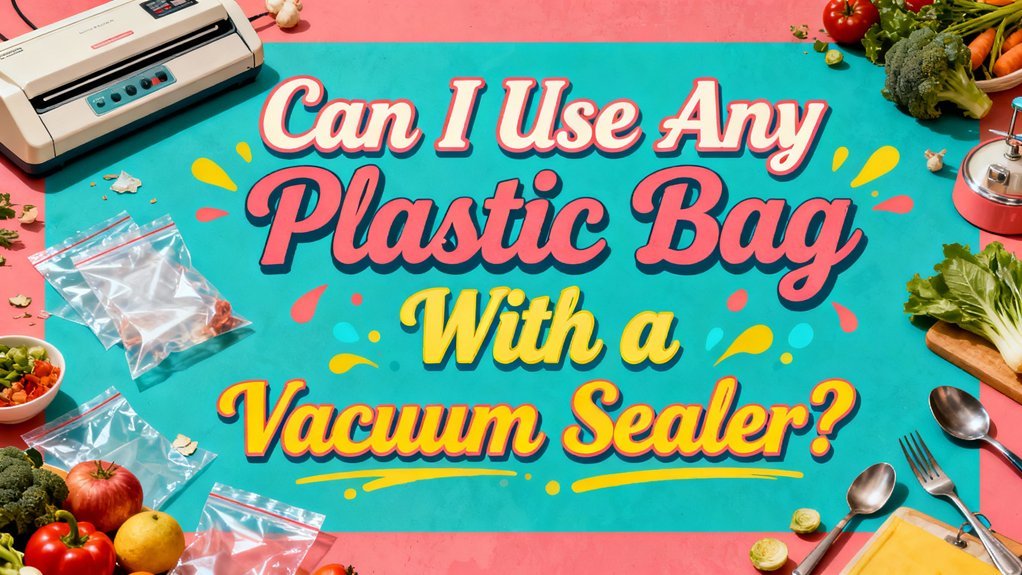
You can’t use any plastic bag with your vacuum sealer. You’ll need bags specifically designed with proper material composition, thickness, and heat-seal compatibility. Standard Ziploc bags won’t work because they lack the necessary structural integrity and thermal properties. You’ll want FDA-approved polyethylene-nylon blends or polypropylene bags at the recommended thickness for your machine type. External suction sealers require mesh-lined bags, while chamber machines work better with smooth pouches. Following your manufacturer’s guidelines guarantees effective air removal and food safety. Understanding the critical differences between bag types will greatly improve your preservation results.
Understanding Polyethylene Plastic Bag Compatibility
When you’re selecting bags for vacuum sealing, you’ll need to understand the fundamental differences between suction and chamber machines—they’ve got vastly different requirements. Suction vacuum sealers demand mesh-lined bags specifically, as they extract air directly from the pouch. Non-mesh pouches simply won’t work with external style sealers like Foodsaver or Weston. Chamber machines, however, offer greater flexibility since they evacuate air from the entire chamber rather than the bag itself.
Your bag compatibility hinges on polyethylene properties and construction. A polyethylene-nylon blend at 4 mil thickness provides puncture resistance and airtight seals for suction machines. For chamber applications, 3-mil thickness works as the industry standard. VacMaster offers 175 different bag sizes to accommodate various food storage needs and ensure proper fit for different applications. These vacuum seal bags are sous vide compatible, making them versatile for multiple cooking methods beyond basic food storage. Just as a Dutch oven provides even heat distribution for cooking rice, vacuum-sealed bags maintain consistent temperatures during sous vide preparation. Vacuum-sealed food can stay fresh up to five times longer than conventionally stored items by preventing oxygen exposure and bacteria growth. Proper labeling and storage duration management are essential for tracking your vacuum-sealed inventory and maintaining food quality over time. Both options deliver BPA-free, FDA-approved material suitable for food contact. Selecting vacuum-sealed bags with smooth, flat bottoms ensures optimal contact with your sealing machine for secure, reliable seals. Handheld and countertop vacuum sealer options are available to suit different kitchen spaces and budgets when choosing the right machine for your bag selection needs. Understanding these distinctions guarantees you’ll select appropriately durable bags for your specific sealing method.
Essential Features for Optimal Vacuum Sealing Performance
Because you’ve selected the right bag type and machine, you’ll now need to focus on the operational elements that directly impact sealing performance. Your sealing speed guarantees quick air removal without compromising seal quality, which directly correlates to product longevity. Bag thickness—ranging from 3 to 5 mils or more—prevents punctures during storage, especially when handling jagged-edged items. Multi-layer vacuum bags designed for your machine assure reliable seals, while liquid block bags with absorbent strips protect against moisture damage. You’ll achieve ideal results by allowing 20-30 seconds cool-down between seals, using gentle settings for delicate items, and maintaining your heating element. Programmable settings and pulse modes add customizability for different sealing requirements depending on your product type. Rolls offer flexibility for custom-sized bags that accommodate items of varying dimensions and storage needs. Specifically designed vacuum sealer bags are BPA-free and tear-resistant, ensuring durability and safety for long-term food storage. Proper vacuum sealing also helps prevent freezer burn and extends shelf life by removing oxygen that would otherwise promote bacterial growth. For delicate items like fresh fish fillets, pulse functions allow for controlled sealing that protects fragile textures from damage during the preservation process. Beyond food storage, these devices offer practical applications for protecting important documents and camping gear from environmental damage. For serious meal preppers, professional-grade sealers provide enhanced durability and consistent performance across high-volume sealing tasks. These technical specifications work synergistically to maximize performance and preserve your products effectively.
External Suction Versus Chamber Vacuum Sealers
Once you’ve mastered the fundamentals of vacuum sealing, you’ll need to understand which machine type best suits your needs, as the two primary technologies—external suction and chamber vacuum sealers—operate through fundamentally different mechanisms that greatly impact performance.
External suction sealers pull air directly from the bag’s open end, achieving 80-95% air removal. However, chamber sealers evacuate air from the entire chamber, reaching 99.8% efficiency. This sealing efficiency difference proves significant when you’re preserving food long-term. Chamber machines utilize oil-lubricated pumps that outperform dry piston alternatives by 19.8%, delivering superior vacuum pressure for genuinely airtight seals. Chamber sealers ideal for restaurants and catering businesses due to their enhanced performance capabilities and commercial-grade construction. Chamber vacuum sealers are also versatile enough to handle various food types, including liquids and bulk ingredients that external models struggle with.
The external vs. chamber comparison reveals that chamber sealers excel at preventing moisture siphoning and handling liquids effectively, while external models remain ideal for dry goods and occasional home use. Impulse heat sealers offer an alternative option for those seeking seal-only functions without vacuum capabilities. When properly executed, vacuum sealing can extend meat freshness significantly beyond traditional storage methods by removing air to prevent freezer burn and oxidation.
Material Construction Standards for Food Storage
Now that you’ve determined which vacuum sealer technology suits your needs, selecting the right plastic bag material becomes equally important for safe, effective food preservation. You’ll want FDA-approved materials like polyethylene (PE), polypropylene (PP), or nylon (PA) that guarantee material safety and prevent chemical leaching into your food. Multi-layer constructions—combining PE/PA or PET/PE composites—deliver superior seal integrity while resisting temperature fluctuations during storage and reheating. You should prioritize bags with 3-5 mil thickness to withstand punctures and maintain durability without compromising performance. BPA-free formulations assure your stored foods remain uncontaminated across all conditions: refrigeration, freezing, boiling, and microwaving. For enhanced barrier performance, consider bags incorporating aluminum foil layers which provide superior light blocking and material stability for extended food shelf life. Food-grade bags undergo rigorous manufacturing processes to ensure they meet strict safety standards and quality control measures. Different bag formats like pre-cut bags, roll bags, and reusable options offer flexibility depending on your specific food preservation needs and usage patterns. Proper response time in temperature monitoring during the cooking process helps ensure your vacuum-sealed foods are prepared safely before storage. Just as heat retention in sealed environments is critical for baking applications, proper vacuum seal construction maintains optimal conditions for preserving your food’s quality and safety. By selecting properly constructed, food-grade bags, you’re investing in reliable preservation that protects both your meals and your family’s health.
Why Embossed Bags Outperform Flat Alternatives
While flat plastic bags might seem like a straightforward choice, their smooth surfaces create significant functional limitations when paired with external vacuum sealers. You’ll experience compromised sealing efficiency because air becomes trapped against flat walls, preventing complete evacuation.
Embossed texture transforms this dynamic. The textured channels you’ll find on quality vacuum bags facilitate consistent air removal by creating pathways for suction extraction. This embossed design prevents bag collapse during the external vacuum process, which you’d encounter with flat alternatives. Embossed bags better protect irregularly shaped items from tears during the sealing process, adding another layer of protection to your stored goods. Similar to how heat distribution matters in specialized cooking equipment, proper bag design ensures uniform preservation across all stored items.
The result? You’ll achieve superior seal integrity with better protection against oxidation and bacterial growth. Your food storage benefits from tighter, more reliable seals that maintain vacuum completeness around irregular shapes. These compatible vacuum sealers work specifically with bags featuring the right structural design to maximize food freshness and storage efficiency. Proper maintenance of your vacuum sealer equipment and storage practices ensures that seasoning and protection of your preserved goods remains consistent over time. By removing oxygen through the embossed bag channels, you effectively reduce oxidation and inhibit bacterial growth in your frozen foods. This technological advantage means you’re investing in demonstrably better preservation outcomes compared to flat bag limitations.
Temperature Range Considerations and Cooking Applications
Achieving proper sealing with embossed bags sets the foundation for your next consideration: managing temperature throughout the sealing process and subsequent cooking applications. You’ll need to match sealing temperatures to your bag’s material: LDPE requires 270-370°F, PVC demands 300-350°F, and polypropylene needs 380-450°F.
Your cooking safety depends on respecting temperature limitations. VacMaster Temp Plus pouches handle sous vide up to 194°F, while standard cooking bags withstand 70-120°C. Freeze to Boil Bags shift from -18°C to 130°C without rupturing. You shouldn’t boil standard FoodSaver bags, as excessive heat risks seal separation and water ingress. Like Dutch ovens that excel at slow-cooking and braising, vacuum-sealed bags must be matched to your intended cooking method. Multiple layers in vacuum sealer bags provide enhanced protection against temperature fluctuations and oxidation damage. The nylon material construction found in premium vacuum bags resists warping and splitting during demanding culinary applications.
Thicker bags adapt better to temperature extremes. Allow your vacuum-sealed bags to cool and stabilize for several minutes after sealing, similar to how torches require stabilization time before use. While vacuum sealing is not absolutely necessary for sous vide cooking, it offers significant advantages such as removing air to ensure even cooking and better flavor retention. Vacuum sealing prevents bacterial growth when combined with proper temperature management, ensuring food safety throughout storage and cooking. Proper vacuum sealing also helps prevent freezer burn], which can compromise food quality during extended frozen storage. Test sample bags on thermally-controlled sealers to determine ideal settings, prioritizing manufacturer specifications over assumptions about thickness.
Manufacturer Recommendations for Best Results
To maximize your vacuum sealing investment, you’ll want to match your bag selection precisely to both your machine type and intended application. Manufacturer guidelines specify that external suction sealers require mesh-lined bags, while chamber sealers demand smooth pouches—using incompatible bags compromises sealing quality and machine longevity.
Your ideal bag selection depends on thickness specifications too. Chamber sealers perform best with 3-mil pouches for freezing and boiling, though 4-mil and 5-mil options provide enhanced durability. External suction machines benefit from zipper bags that maximize suction while reducing mechanical stress. Action Packaging offers durable multi-layer film engineered specifically for chamber-style vacuum sealers to ensure complete air removal and uniform sealing. Quality bags made from food-grade polyamide and polyethylene maintain food freshness over extended storage periods while preventing harmful substances from migrating into your food. The airtight seal created by properly matched bags prevents oxidation and bacterial growth, effectively extending the shelf life of your stored foods.
Each sealer manufacturer lists compatible bags explicitly. Standard Ziploc freezer bags lack the necessary material thickness and heat-seal compatibility for use with most vacuum sealer machines. Consulting these recommendations guarantees you’re selecting FDA and USDA-approved materials that prevent food contamination while extending product freshness. Following manufacturer guidelines prevents equipment damage and ensures superior preservation results, helping you avoid common mistakes when vacuum sealing that can compromise your long-term storage success.