
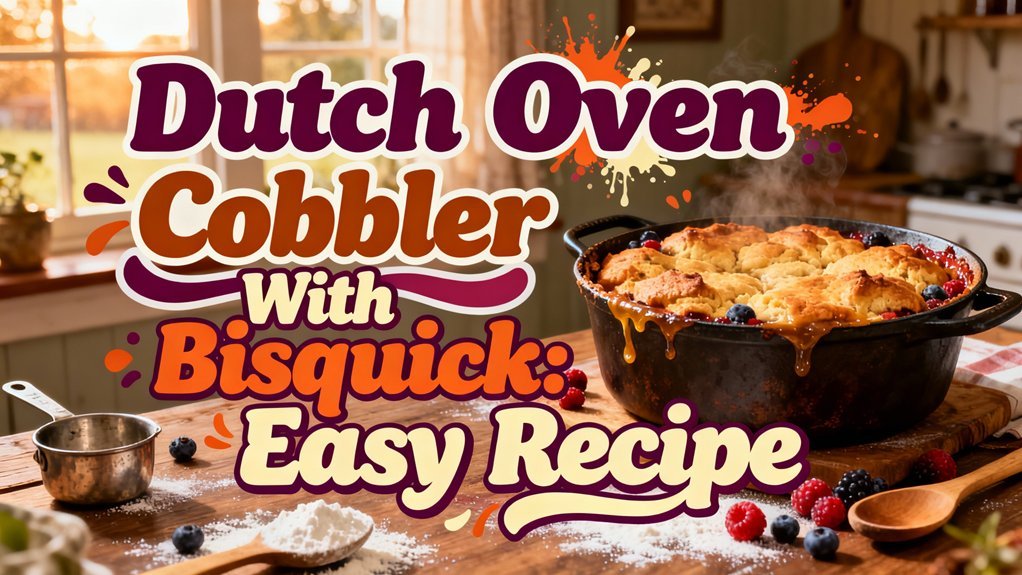
You’ll combine Bisquick mix, milk, and melted butter to create a simple batter topping. Toss your sliced peaches with sugar and lemon juice, then layer them in your preheated Dutch oven with melted butter. Drop the batter over the fruit without stirring. Position coals underneath and on the lid, maintaining 300–325°F for thirty to forty-five minutes until golden-brown. Let it cool before serving with ice cream. There’s much more to uncover about perfecting this classic dessert.
What You’ll Need: Complete Ingredient List
You’ll want to start with Original Bisquick pancake and baking mix as your foundation—it’s specifically formulated for cobbler bases and eliminates the guesswork of combining separate leaveners. You’ll need between 1/2 cup to 2 1/4 cups depending on your recipe style. For your ingredients overview, gather whole milk (1/2 to 1 cup) for richness and tender texture, plus 1/4 to 1/2 cup melted unsalted butter for browning and depth. Add granulated or light brown sugar—1/3 to 1 cup—mixed directly with your drained fruit. Ground nutmeg (1/2 teaspoon) and vanilla extract (1 teaspoon) round out your flavor profile. Canned sliced peaches are ideal for achieving that tender consistency that melts in your mouth during baking. Consider using vacuum sealing to preserve your fresh peaches before canning them, which helps maintain their quality and extends their shelf life. To further protect your cast iron Dutch oven from rust and wear over time, apply seasoning oil after each use to maintain its non-stick surface and longevity. Dutch ovens work exceptionally well for cobbler and crisp recipes, allowing for even heat distribution and beautiful browning of the topping. For a gluten-free option, you can substitute gluten-free Bisquick to accommodate dietary needs. If you’re exploring biscuit alternatives, you can substitute flour-based mixes or self-rising flour options, though Bisquick remains your most convenient choice for streamlined preparation.
Preparing Your Peaches and Fruit
The foundation of an exceptional Dutch oven cobbler starts with selecting the right peaches. You’ll want freestone varieties for easy pit removal, though clingstone peaches work if you’re willing to slice around the pit.
For the blanching process, place your peaches in boiling water for 45 seconds, then immediately plunge them into an ice bath. This loosens the skin dramatically. You can peel them by hand without a knife once they’ve cooled. Fresh peaches are typically in season from May to late September, with peak season in July and August.
Cut an X at the peach bottom before blanching. After the ice bath, peel starting from that incision, holding the cut side down for stability. Find the natural stem indent, cut lengthwise, and twist the halves apart. The pit pops right out.
Slice your prepared peaches into chunks, then toss with lemon juice to prevent browning. You’ll typically need 10-14 peaches for a cobbler filling.
Making the Bisquick Batter
Creating a homemade Bisquick mix gives you complete control over your cobbler’s texture and flavor. You’ll combine six cups of all-purpose flour, three tablespoons of baking powder, and one tablespoon of salt in a large bowl. Stir these dry ingredients thoroughly before incorporating one cup of vegetable shortening.
Using a pastry cutter or two forks, cut the shortening into the flour mixture until it resembles coarse cornmeal. This mixing technique guarantees even distribution throughout your batter consistency, creating that tender, crumbly texture cobblers demand. Just as cast iron’s heat distribution creates evenly baked results in traditional baking, proper mixing ensures consistent texture in your cobbler topping. For optimal results, store your homemade mix in an airtight container in a cool, dark place like a pantry cupboard for up to six months before using it in recipes.
For your cobbler topping, blend two cups of your homemade mix with one cup of milk and two eggs until just combined. Avoid overmixing, which toughens the batter. Homemade Bisquick can be made with four basic ingredients, simplifying your preparation process. Your properly mixed batter should drop easily over your prepared fruit, creating a golden, fluffy topping.
Creating the Perfect Topping
While the fruit filling simmers in your Dutch oven, crafting the ideal topping requires attention to both ingredient ratios and mixing technique. You’ll combine Bisquick mix, milk, and melted butter to create your batter base. The milk-to-flour ratio directly impacts your topping texture—use less milk for a crispier result, more for a cake-like consistency.
For flavor balance, incorporate vanilla extract and consider adding nutmeg to complement your filling’s cinnamon notes. You can mix ingredients in a resealable plastic bag for convenient distribution. Pour or drop the batter across your fruit surface without stirring, maintaining distinct layers. This approach guarantees even coverage while preserving textural separation between fruit and topping, creating the cobbler’s signature contrast. The trapped steam environment created by your Dutch oven’s covered design helps develop a golden, crispy exterior on your topping while keeping the interior moist and tender. Similar to browning meat to develop a rich crust, the Dutch oven’s concentrated heat environment promotes flavorful results and even cooking. Similar to slow-roasting techniques, the low, steady heat environment promotes even cooking and tender results. Proper preparation techniques, including enzyme deactivation through heat, ensure your ingredients maintain their quality and texture throughout the cooking process. For best results, ensure your baking powder is fresh to promote proper rise and a lighter texture in your topping. Freezing your prepared cobbler topping before baking can help preserve freshness and texture while allowing you to bake it at a later time. The Auto-Generate Shopping List feature in Cookn makes it easy to ensure you have all your topping ingredients measured and ready before you begin cooking.
Dutch Oven Setup and Baking
Once you’ve prepared your topping batter, you’ll need to set up your Dutch oven for ideal baking results. Start by spraying your Dutch oven with vegetable oil spray to prevent sticking. Next, handle your oven preheating by heating the appropriate number of briquettes based on your Dutch oven’s size—typically 16 for an 8-inch or 21 for a 10-inch model.
For briquette placement, position about 12 coals underneath your oven and 12 on the lid to guarantee even heat distribution throughout your cooking environment. Melt 2 tablespoons of butter or shortening in the preheated oven, then pour in your fruit filling before adding your Bisquick topping.
Once you’ve positioned your Dutch oven over the coals, monitor the baking process carefully. Adjust your top coals if your dough browns too quickly, maintaining consistent heat for approximately 30 minutes until golden brown. The golden brown topping indicates your cobbler has reached the desired doneness level. Consider using a temperature alert system or meat thermometer to verify internal temperatures if you’re baking thicker cobblers. Dutch ovens can safely withstand high temperatures due to their thick construction and heat retention qualities, making them reliable for outdoor baking applications. After baking, allow your Dutch oven to cool before applying a light coat of oil to maintain its seasoning and prevent rust. For outdoor cooking, consider vacuum-sealing your pre-measured ingredient portions using vacuum sealer bags to keep components fresh and organized before your camping trip, as freezer life extension allows these prepared ingredients to stay fresh for extended periods. For best results when cooking outdoors, remember that charcoal briquettes provide more reliable and consistent heat compared to open flames or wood fires.
Cooking Times and Temperature Guide
After you’ve arranged your coals and added the topping to your Dutch oven, managing heat and timing becomes your primary focus. You’ll want to maintain a temperature between 300°F and 325°F for ideal results. At this moderate heat level, your cobbler requires 30 to 45 minutes to develop a golden-brown, crusty topping while the filling bubbles gently underneath.
Monitor your cobbler closely rather than relying solely on the timer. Since oven calibration varies between individual Dutch ovens, you may need to adjust timing based on how quickly your crust browns. Just as with pot pie fillings, maintaining consistent heat throughout the cooking process is essential to achieve the ideal consistency. To ensure accurate temperature readings, consider taking multiple readings over time to confirm your Dutch oven maintains the proper heat level. Using an instant-read thermometer can help you verify the filling has reached the proper temperature for food safety. If your instant-read thermometer is oven-safe, you can leave it in the Dutch oven during cooking for continuous monitoring. For optimal food preservation after cooking, consider storing any leftover cobbler in airtight seals to keep it fresh longer. Check for that deep golden color] as your primary doneness indicator. For best results, pair your cobbler with vanilla ice cream or whipped cream to enhance the dessert experience. Once finished, let your cobbler cool for at least 10 minutes before serving, allowing the structure to set properly and ensuring the best texture.
Alternative Cooking Methods
What if you don’t have access to a campfire or traditional oven? You’ve got solid alternatives. For alternative baking, swap your Dutch oven for any oven-safe 3-quart baking dish—glass, metal, or cast iron all work beautifully. If the top darkens too quickly, cover it lightly with foil. Cast iron baking dishes are particularly recommended for outdoor cooking enthusiasts due to their heat distribution properties. A cast iron lid can help trap moisture and ensure even cooking when baking your cobbler. To maintain your cast iron cookware, remember to dry completely and oil after every use to prevent rust and keep it seasoned.
Stovetop preparation streamlines your process. Combine peaches, sugar, and water in a saucepan, then boil for 10 minutes. Simmer your filling to thicken it and reduce excess juices before transferring to your baking dish. This pre-cooking step prevents a soggy cobbler. You can also substitute yellow cake mix with Bisquick batter for a lighter, more tender topping that bakes more quickly. Dutch ovens excel at soups, stews, grains, and desserts, making them incredibly versatile for both sweet and savory dishes. For outdoor cooking, use an infrared thermometer to monitor your baking dish temperature and ensure even heat distribution. Proper heat resistance in your cooking vessels ensures consistent results and prevents damage to your baking dishes during the cooking process.
Meanwhile, melt butter in your preheating 350°F oven while mixing your Bisquick batter with milk. Pour the batter over the melted butter without stirring, add your prepared filling, then bake exposed for 30-45 minutes until golden.
Nutritional Information and Serving Sizes
Since you’re planning to serve this Dutch oven cobbler, understanding its nutritional profile helps you make informed choices about portions and ingredients. The caloric breakdown ranges from 254–401 kcal per serving, depending on your recipe variation. You’ll find the fat content varies considerably, from 7g in lighter versions to nearly 20g in richer recipes, affecting your daily value intake. Protein levels remain consistent at 3–4g across most versions, offering minimal contribution from Bisquick and milk.
Your carbohydrate comparison shows 52–56g per serving, with sugars ranging from 36–38g. Fiber content stays low at 1–3g. For serving recommendations, recipes yield 6–10 servings depending on portion size. The Bisquick baking mix provides convenient ratios of baking ingredients without complicated measuring, simplifying both preparation and nutritional calculations. Dutch ovens offer superior heat retention that ensures even baking and consistent results throughout your cobbler. You can customize the nutritional benefits by adjusting ingredient ratios—reducing sugar or butter creates a lighter option while maintaining the cobbler’s appeal. Brown sugar can be used for reduced sweetness if you prefer a less sugary dessert that still delivers satisfying flavor.
Delicious Variations to Try
Once you’ve mastered the basic Dutch oven cobbler, you’ll find endless opportunities to customize your dessert by swapping fruits and toppings.
Explore seasonal fruits to keep your cobblers fresh year-round. Cherry cobblers shine with cinnamon-enhanced cake mix, while peach variations benefit from Bisquick toppings combined with brown sugar. Berry cobblers gain brightness from lemon zest paired with blueberries, creating zippy flavor combinations that excite the palate.
Apple cobblers transform into snickerdoodle-style treats when you sprinkle cinnamon-sugar over tender apples and butter. Strawberry cobblers get an elegant touch with whipped cream and fresh berries as garnish. Like slow-roasted meat dishes, cobblers benefit from resting after cooking to allow flavors to fully develop and set. Just as Dutch oven braising develops rich sauces, layering complementary ingredients like spices and herbs in your cobbler creates complex, satisfying flavors.
Don’t shy away from unconventional pairings—black forest variations combine chocolate cake mix with cola for unexpected depth. For best results, consider using a high smoke point oil when preparing your Dutch oven to ensure even heat distribution during baking. A properly seasoned Dutch oven develops a polymerized oil layer that enhances non-stick performance and prevents rust. A domed or flat lid design can also help retain moisture and reduce cooking time for more consistent results. These adaptations guarantee you’ll never tire of cobbler season.
Pro Tips for Best Results
While customizing your cobbler flavors is half the fun, mastering the fundamentals of preparation and cooking technique guarantees every version turns out perfectly. You’ll avoid common cobbler troubleshooting issues by never stirring your ingredients together—this separation is essential for achieving that signature layered texture. Don’t skip the initial 20-minute cooking period before rotating; it allows your bottom crust to form properly. For flavor enhancements, consider the liquid you choose—soda pop creates unique taste profiles beyond standard water or juice. Always rotate both your dutch oven and lid in opposite directions every 10 minutes for even heat distribution, much like how cast iron requires proper heat management to ensure consistent cooking results. Let your finished cobbler rest uncovered for 10 minutes; this cooling period allows filling to thicken while preserving your crust’s desirable texture. Using a heavy Dutch oven suitable for embers ensures proper heat distribution and prevents damage from the campfire coals. Similar to how fuel components stabilize before use, allowing your cobbler to rest after cooking ensures optimal texture development. The Bisquick biscuit topping creates a golden crust that balances perfectly with the warm peach filling beneath. Check doneness like a cake by ensuring the center is set with no bubbling batter present to guarantee your cobbler is perfectly baked. Like a traditional pot roast, the savory cooking liquid in your cobbler infuses the fruit filling with deep, complex flavors that develop during the extended cooking time. For the richest flavor development, consider using beef broth or wine as your base liquid, which mirrors the depth achieved in slow-roasted meat dishes.