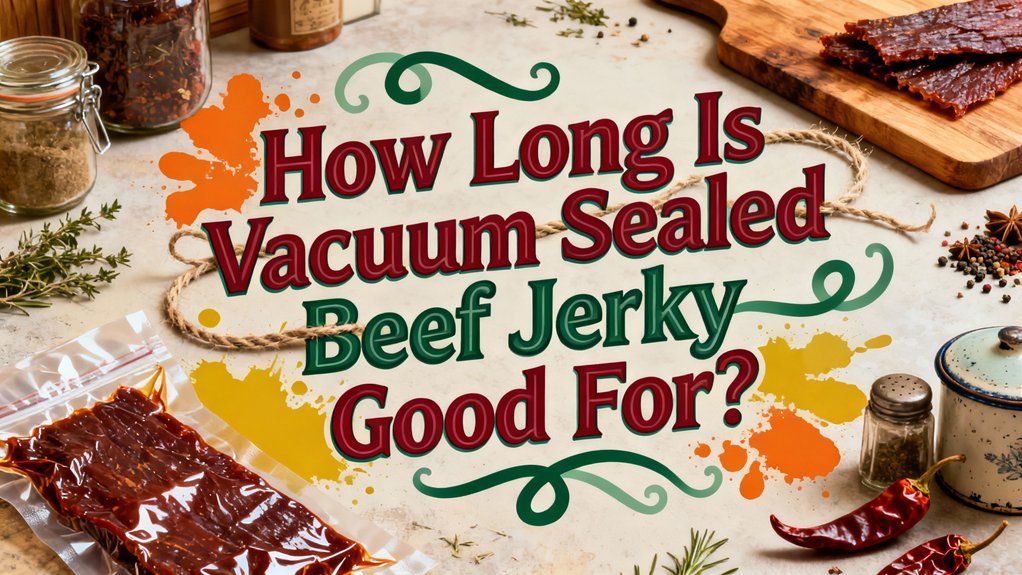
You can keep store-bought vacuum-sealed beef jerky fresh for 1–2 years at room temperature, thanks to industrial-grade sealing and nitrogen flushing. Homemade varieties last up to 6 months in your pantry or 1 year refrigerated when properly cured. Freezing extends shelf life indefinitely. Once you’ve opened the package, consume store-bought jerky within 1–2 days at room temperature or 1–2 weeks refrigerated. Several critical variables determine how long your jerky remains viable.
Store-Bought Vacuum Sealed Jerky Shelf Life
Store-bought vacuum sealed beef jerky doesn’t spoil quickly—you’ll find unopened manufacturer sealed bags maintain their quality for one to two years when stored at room temperature. Store bought varieties benefit from chemical preservatives and industrial-grade vacuum sealing technology that greatly extend shelf life beyond homemade options.
The preservatives combined with nitrogen flushing in commercial packages create an oxygen-free environment, preventing oxidation and spoilage. You’ll maximize your jerky’s shelf life by storing it in dark, cool locations away from direct sunlight, which causes condensation and mold growth. Once you open the package, consume the jerky within 3-5 days to ensure safety and optimal quality. Avoiding exposure to air, moisture, and temperature fluctuations is essential for maintaining jerky quality during storage.
Temperature fluctuations accelerate degradation even when vacuum sealed, so consistent room temperature storage proves ideal. Compared to other methods, unopened manufacturer sealed bags last approximately twice as long as home vacuum sealed options, demonstrating the effectiveness of commercial preservation techniques and packaging integrity.
Homemade Vacuum Sealed Jerky Shelf Life
Homemade vacuum sealed beef jerky doesn’t last quite as long as commercially produced varieties, but you can still achieve impressive shelf life with proper technique. Your homemade jerky ingredients—particularly curing salts and sugar levels—directly impact longevity. Properly vacuum-sealed homemade jerky lasts up to six months in your pantry and up to one year in your refrigerator when cured.
Your jerky preparation methods greatly influence shelf life duration. Low moisture removal combined with high sodium content extends preservation. Without curing salts, expect only one to two months refrigerated. Freezing can preserve your vacuum-sealed jerky almost indefinitely when stored properly. Store your vacuum-sealed bags in cool, dark locations away from sunlight. Maintain seal integrity by inspecting bags regularly and protecting against moisture exposure, which accelerates mold growth and spoilage. Oxygen absorbers further maintain freshness and consistency by preventing oxygen from spoiling your jerky during extended storage periods. Proper storage minimizes exposure to moisture, light, and heat to maximize the longevity of your vacuum-sealed jerky, similar to how vacuum sealing technology prevents oxidation and spoilage in other preserved foods. The tight-fitting seal of vacuum-sealed packaging works much like the lid design found in quality cookware to create an airtight environment that protects your jerky from external contaminants.
Freezer Storage for Vacuum Sealed Jerky
When you’re looking to maximize your jerky’s shelf life beyond what pantry or refrigerator storage offers, freezing vacuum-sealed packages provides the most effective preservation method available. You’ll extend storage up to 12 months or beyond by combining vacuum sealing with freezer temperatures.
To enhance freezing techniques, cool your jerky to room temperature before vacuum sealing—never freeze warm jerky, as this introduces moisture problems. Remove as much air as possible during vacuum sealing to prevent freezer burn. Place your sealed bag directly into the freezer for extended life. Extra insulation layers like aluminum foil or butcher paper around your vacuum-sealed package help maintain moisture and prevent discoloration.
While proper vacuum sealing with freezing inhibits bacterial growth and maintains safety indefinitely, freezing does diminish sensory qualities like taste and texture. Consider freezing smaller batches rather than large quantities to preserve peak quality throughout storage.
Storage Conditions for Vacuum Sealed Jerky
Three critical factors—temperature, moisture, and light exposure—determine how long your vacuum-sealed beef jerky maintains quality and safety.
You’ll maximize shelf life by storing jerky in consistently cool environments away from heat sources. Temperature fluctuations accelerate degradation, so maintain stable conditions between 50-70°F when possible. Just as proper internal temperature monitoring ensures food safety in cooking, maintaining consistent storage temperatures is vital for preserving jerky quality.
Moisture control is essential for preventing mold development. Vacuum sealing benefits your jerky by creating an almost airless environment that markedly slows oxidation and moisture intrusion. For added protection, include appropriately-sized desiccant packs or oxygen absorbers in your sealed containers to buffer residual moisture and maintain freshness. When properly vacuum-sealed, store-bought jerky can last over a year, far exceeding the shelf life of unsealed products.
Keep your vacuum-sealed packages in dark storage locations. Direct sunlight exposure creates condensation, which breeds mold and compromises texture. These combined conditions preserve your jerky’s flavor, texture, and nutritional integrity considerably longer than variable or suboptimal environments.
Opened Vacuum Sealed Jerky Shelf Life
Once you’ve opened your vacuum-sealed beef jerky, you’re working against a rapidly accelerating timeline for consumption. Store-bought jerky remains fresh for 1-2 days at room temperature, though refrigeration extends this to 1-2 weeks. Homemade varieties last 3-5 days when opened, stretching to one week refrigerated.
Your opened jerky storage method greatly impacts longevity. Resealable bags maintain viability for 1-2 weeks, while airtight containers extend freshness to five weeks. Mason jars with vacuum seals provide ideal preservation for pantry or refrigerator storage. Oxygen absorber packets can further extend the shelf life of opened jerky by reducing air exposure. To verify your storage containers are maintaining proper conditions, test their seal integrity using the ice water method to ensure no temperature fluctuations are compromising your jerky.
Opened vacuum sealed jerky freshness deteriorates once oxygen exposure occurs. Jack Link’s recommends refrigerating within three days post-opening. Regardless of type, immediately transfer opened jerky to airtight containers or resealable bags to maximize shelf life and prevent rapid spoilage.
Factors Affecting Vacuum Sealed Jerky Longevity
Beyond proper storage containers, the shelf life of your vacuum-sealed beef jerky depends on several interconnected factors that either accelerate or inhibit spoilage. Oxygen regulation through vacuum sealing prevents bacterial proliferation, while moisture management determines whether microorganisms thrive or remain dormant. Temperature control greatly impacts longevity—freezer storage extends shelf life indefinitely, pantry storage yields 3-6 months, and heat accelerates deterioration. Light exposure degrades quality over time, particularly when combined with warmth. Ingredients matter considerably; curing salts and chemical preservatives greatly extend shelf life, whereas naturally-made jerky without additives benefits more from cold storage. Finally, proper dehydration during production minimizes initial moisture content, establishing the foundation for extended preservation in vacuum-sealed packages. Similar to how heat management is critical when cooking with cast iron, temperature control is essential for maintaining jerky quality and preventing spoilage. Unopened vacuum-sealed bags can maintain freshness for up to 12 months when stored in a pantry, providing a reliable baseline for shelf life expectations. Vacuum sealed jerky can last 12 months or more in the freezer, making it an ideal long-term storage solution for those planning extended consumption periods.
Signs Your Vacuum Sealed Jerky Has Gone Bad
How can you tell when your vacuum-sealed jerky’s quality has deteriorated? You’ll notice jerky spoilage signs through multiple sensory indicators. Discoloration—darkening, fading, or unusual spots—signals degradation. A musty, sour, or rancid odor overrides the original smoky profile. Texture changes like excessive chewiness, sliminess, or brittleness reveal bacterial activity or freezer burn.
Taste alterations including bitter, sour, or metallic flavors indicate spoilage. Package swelling suggests gas-producing bacteria compromising vacuum sealing effectiveness. Check for visible mold growth—white, green, or black fuzzy patches—and inspect seals for air pockets or leaks. Freezer burn appears as icy crystals on the surface. Proper vacuum sealing technique prevents many of these quality issues by creating an airtight environment that protects jerky from oxidation and contamination. Vacuum sealing also prevents freezer burn by removing air that would otherwise cause ice crystal formation on the jerky’s surface. For opened jerky that has been removed from vacuum sealing, transfer it to an airtight container or reseal it in zip-top bags to maintain freshness. Using a reliable meat thermometer can help verify that jerky reaches safe internal temperatures during the initial cooking process before vacuum sealing. Vacuum sealed whole cuts of meat maintain their best quality for extended periods in the freezer, with ground meats requiring quicker freezer storage due to their larger surface area exposure to oxidation.
If your jerky exceeds six to twelve months’ storage or exhibits these signs, discard it immediately to avoid foodborne illness.
Best Practices for Maximizing Jerky Freshness
Now that you know what spoilage looks like, you’ll want to implement storage strategies that prevent it altogether. Employ proper sealing techniques by using vacuum sealers to remove oxygen and double-sealing with impulse sealers if needed. Implement portion control by dividing jerky into small batches before sealing, which minimizes air exposure during handling.
Store your packages in cool, dark environments away from sunlight and heat fluctuations. Include oxygen absorbers in vacuum bags for storage beyond 12 months to maintain freshness consistently. Label all packages with expiration dates for tracking purposes. Vacuum seal bags can extend storage up to 2 years, making them ideal for long-term preservation strategies.
Ensure your jerky is completely dry before sealing to prevent moisture-related mold growth, which is a common concern when storing foods in airtight containers. Cast iron skillets with superior heat retention can be used to properly dehydrate jerky before vacuum sealing, ensuring moisture is completely removed. Similar to maintaining fire-safe surfaces when working with high-heat methods, proper preparation of your food before storage is essential for safety. Just as temperature measurement devices help verify proper cooking conditions for food safety, monitoring your jerky’s moisture content before vacuum sealing ensures optimal storage outcomes. These evidence-based practices work synergistically to extend your jerky’s shelf life remarkably while preserving its texture and flavor integrity.
Comparing Storage Methods for Extended Shelf Life
While vacuum sealing itself provides considerable preservation benefits, the storage environment you choose dramatically influences how long your beef jerky remains fresh and safe to eat. Room temperature storage works adequately for commercial jerky thanks to added preservatives, lasting up to 12 months. However, refrigeration extends homemade jerky’s viability to one year by inhibiting bacterial growth—particularly valuable in warm climates. Freezer storage offers ideal preservation, keeping vacuum-sealed jerky viable for two years or longer. Removing oxygen through vacuum sealing creates an airtight environment that prevents mold development and extends shelf life significantly.
Your jerky’s longevity ultimately depends on three factors: dehydration techniques used during preparation, jerky ingredients like curing agents, and temperature consistency. Low moisture content combined with proper vacuum sealing prevents mold development. Just as neutral flame temperature control is critical in precision work, maintaining consistent freezer temperatures is essential for preserving vacuum-sealed jerky quality. For optimal results, consider using a vacuum sealer with wet/dry modes to handle any residual moisture from your jerky preparation process. To maintain the integrity of your vacuum-sealed jerky, avoid soaking or prolonged exposure to moisture, which can compromise the airtight seal and introduce contaminants. Choosing freezer storage over room temperature greatly maximizes shelf life when you prioritize long-term preservation.