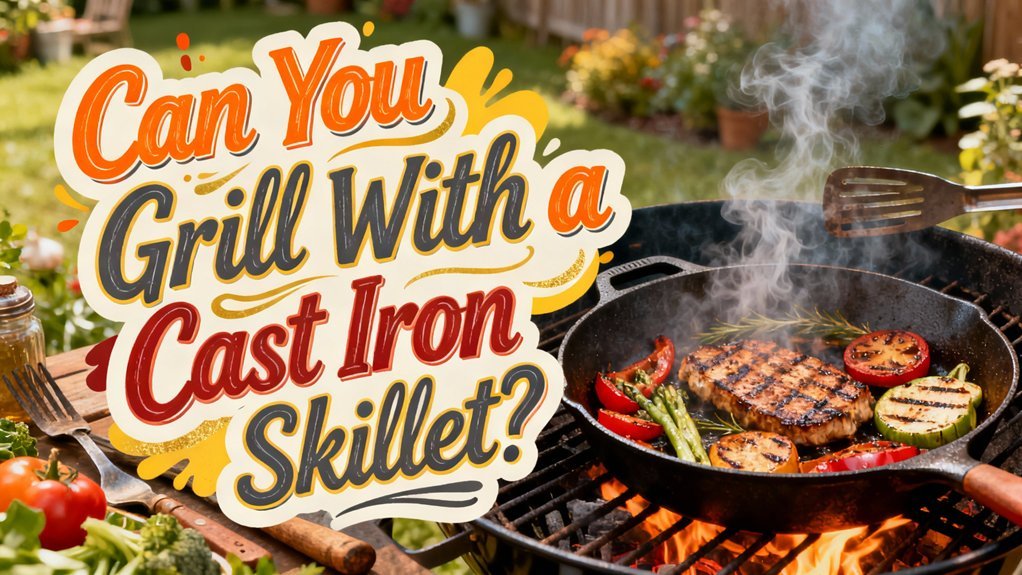
You’ll find cast iron skillets perform exceptionally on both charcoal and gas grills, maintaining structural integrity beyond 500°F. They’re versatile for searing, sautéing, and smoking while distributing heat evenly. Proper seasoning with high smoke-point oils like avocado or canola creates superior non-stick properties. Preheat for 10-15 minutes to prevent warping and cracking. Dry thoroughly afterward and apply light oil before storage. Their thermal mass generates perfect char marks while preserving juices through the Maillard reaction—though mastering specific techniques requires understanding the nuances.
Grill Compatibility and Heat Tolerance
Because cast iron’s exceptional thermal mass and even heat distribution make it inherently suited for grilling, you’ll find that these skillets perform reliably across both charcoal and gas setups. Your grill placement options remain flexible—position the skillet flat on standard grates or contoured against charcoal grates alongside accessories like the Slow ‘N Sear. Cast iron maintains structural integrity at temperatures exceeding 500°F, tolerating high-heat zones reaching 700°F without warping or cracking.
When properly preheated, you’ll avoid thermal shock despite outdoor temperature fluctuations. This durability enables repeated grill cycles without degradation. The heat distribution properties you gain from cast iron’s material composition guarantee consistent cooking performance, whether you’re searing meat or cooking vegetables. Like Dutch ovens used for sourdough, cast iron’s superior heat retention allows it to maintain consistent temperatures during extended cooking. More use builds up seasoning on the surface, resulting in a smoother cooking surface and enhanced non-stick properties. The seasoning layer develops through a process of applying thin oil layers and exposing the skillet to high heat, which creates a natural, long-lasting non-stick surface. To maintain this protective coating, apply thin oil layers periodically to prevent rust and extend the skillet’s lifespan. Your investment withstands rigorous grilling demands reliably.
Essential Preparation Steps Before Grilling
Before you grill with cast iron, you’ll need to guarantee your skillet possesses adequate seasoning—either factory-applied or operator-applied—to create a protective barrier against rust and optimize non-stick performance. Apply extremely thin oil coats using lint-free paper towels across all surfaces, including edges and crevices. Select high smoke-point oils like avocado, canola, or grapeseed oil to withstand intense grill temperatures without excessive smoking. Use approximately ⅛ teaspoon per application to prevent pooling or dripping when tilting the cookware. These seasoning techniques build multiple protective layers that interlock during regular cooking, creating thorough coverage. Multiple coats develop superior non-stick properties compared to single applications. For best results, beef tallow offers a high smoke point of around 400 degrees Fahrenheit, making it an excellent natural option for cast iron seasoning. A well-seasoned pan can last for generations of cooking use. If your skillet shows signs of rust before grilling, you can restore it using a vinegar spray solution applied for no longer than 30 minutes before rinsing and scraping away the loosened rust. The most effective way to maintain your cast iron’s seasoning is through regular use with oil or fat, which adds another protective layer with each cooking session. To preserve your skillet’s seasoning between grilling sessions, thoroughly dry the cookware and apply a light layer of oil before storing. Cast iron’s non-reactive surface means acidic foods won’t compromise your seasoning during cooking. Similar to baking sourdough, trapping steam and heat] in your cooking vessel creates superior results for developing desirable textures and surfaces. Allow 10 to 15 minutes of preheating on grill grates to achieve proper temperature equilibrium before introducing food.
Critical Safety Precautions to Follow
Since cast iron skillet grilling involves sustained high temperatures and open flames, you’ll need to establish a thorough safety framework that addresses location, personal protection, heat management, and fire prevention.
Position your skillet on a flat, level surface at least 10 feet from your home’s siding and overhanging branches. Clear the surrounding area of combustible materials. Wear tucked-in shirts, tied-back hair, and use long-handled utensils to minimize grilling hazards. Keep heavy-duty oven mitts and a spray bottle accessible for flare-ups. Cast iron’s ability to distribute heat evenly makes it an excellent choice for outdoor cooking when proper precautions are taken.
Preheat your skillet evenly for 10 minutes to prevent warping and cracking. Never leave your grill unattended; designate a monitor. Maintain a fully operational fire extinguisher and first-aid kit nearby. Empty your grease tray regularly to prevent fire fuel accumulation. Verify propane connections with soap and water before each use. Be aware that bacterial contamination like Listeria growth can occur in food left at unsafe temperatures, so maintain proper heat during cooking. For optimal safety, use insulation or heat containment measures similar to those recommended for high-temperature metalworking applications to trap heat efficiently. To further protect your glass cooktop or other heat-sensitive surfaces nearby, consider using porcelain enamel-coated cast iron or alternatives that provide better heat distribution. Ensure your grill is located on a flat, level surface to prevent tipping hazards. Wait at least 5 minutes before relighting your grill if the flame unexpectedly goes out to allow any residual propane to dissipate safely. Allow the cast iron to reach an internal temperature appropriate for your food before cooking to ensure even heat distribution. These skillet safety measures protect both you and your equipment.
Mastering Cast Iron Cooking Techniques
Now that you’ve established your safety framework, you’re ready to reveal cast iron’s full potential on the grill—and it all begins with proper preheating. You’ll want to preheat your skillet for 10-15 minutes, allowing gradual heating to enhance your cast iron seasoning and create a superior non-stick surface.
Select high smoke point oils—avocado, canola, or grapeseed—and apply a light coating with a paper towel before cooking. These cooking oils withstand extreme temperatures without breaking down, protecting your seasoning while enhancing performance. Avoid overheating your skillet to prevent damaging the enamel coating if you’re using an enameled cast iron pan.
Maintain medium-high heat consistently before adding food, ensuring even heat distribution across the surface. This approach generates beautiful char marks on meats while preserving juices. The Maillard reaction creates that savory crust you’re seeking when searing at proper temperatures. You can reduce temperature slightly after searing, leveraging cast iron’s exceptional heat retention properties. This technique works equally well for vegetables, delivering crisp exteriors and improved flavor development. Cast iron skillets are ideal for preparing one-pan ground beef meals that combine proteins, starches, and vegetables for convenient outdoor cooking. When using a fitted lid, you can braise and steam directly on the grill, expanding your outdoor cooking techniques beyond simple searing. The rugged nature of cast iron allows for rougher cleaning methods without damage, making maintenance effortless after your outdoor cooking sessions. For cast iron that has accumulated significant buildup over time, oven cleaner with lye can effectively strip and restore the skillet before re-seasoning. Cast iron’s durable construction ensures it can sustain these high temperatures and outdoor grilling conditions for years to come.
Proper Cleaning and Maintenance Methods
Your cast iron skillet’s longevity depends entirely on what happens after you finish cooking. Apply hot water while your skillet remains warm, using soft-bristled brushes to remove food particles without damaging seasoning. Gentle scrubbing in grooves dislodges stubborn residue effectively. The Le Creuset Grill Pan Brush is particularly ideal for cleaning between the ribs on a grill pan.
For cleaning techniques, mild dish soap works best for interior surfaces. Bar Keeper’s Friend or baking soda paste handles tough exterior stains without harming enamel. Avoid metal pads and abrasive scrubbers entirely. For more heavily soiled cookware, you can create a baking soda and water paste to remove stubborn buildup and rust from your cast iron. Never place your skillet in the dishwasher, as the harsh environment can strip seasoning and cause damage.
Your maintenance tips should prioritize complete drying—use paper towels or heat your skillet on the stovetop to eliminate residual moisture before rust forms. Apply thin, even oil layers using grapeseed or canola oil, then heat to verify proper bonding. This repeated light seasoning builds protective patina layers that enhance cooking performance considerably. Oil application after cleaning is essential to prevent moisture from causing rust and deterioration over time. Once your skillet is completely dry, you should heat it until lightly smoking to ensure the oil properly bonds to the surface and creates an effective protective barrier. A tight-fitting lid] helps maintain moisture control similar to Dutch oven baking techniques. Selecting a skillet with proper build quality and weight ensures your maintenance efforts yield long-lasting durability. Store your skillet with separators to allow airflow, which helps prevent moisture buildup and preserves the cooking surface.
Key Advantages Over Direct Grilling
When you grill with cast iron instead of cooking directly over flames, you’ll immediately notice superior heat management that prevents the uneven cooking plaguing traditional grill setups. The pan’s substantial mass distributes heat evenly across your entire cooking surface, eliminating hot spots that burn food while leaving portions undercooked. You’ll achieve steakhouse-quality sears on steaks, seafood, and vegetables through consistent thermal retention. Cast iron retains meat juices that would otherwise drip onto coals, concentrating grilling flavors while reducing flareups. Additionally, the seasoned surface provides natural non-stick properties, allowing delicate ingredients like fish and shrimp to release cleanly without breaking apart. The iron infusion from cast iron cookware naturally enriches your grilled foods with beneficial minerals dependent on seasoning thickness and food acidity. Accurate temperature monitoring during grilling ensures your food reaches safe internal temperatures, much like how infrared sensors detect heat signatures for precise measurements in other applications. For optimal preservation of your grilled foods, consider pairing cast iron cooking with temperature resistant vacuum sealer bags designed to store your creations in the freezer without compromising quality. This cookware transforms your grill into a versatile platform supporting searing, sautéing, and even smoking applications simultaneously. Similar to stovetop cooking methods, even heat distribution from cast iron ensures consistent results whether you’re grilling or using alternative cooking techniques. The heavy nature of cast iron helps maintain a consistent high temperature even when cold ingredients are added, preventing temperature drops that can hinder proper searing. Proper seasoning and preheating techniques are essential to maximize the performance of your cast iron skillet on the grill. The long lifespan of cast iron means your grilling investment will serve you reliably for decades to come.
Troubleshooting Common Grilling Issues
Even with proper technique, cast iron skillet grilling presents predictable challenges that’ll compromise your results if left unaddressed. Temperature control proves critical—high heat burns oils past their smoke point, causing flaking seasoning and uneven cooking. You’ll achieve better outcomes using medium-high temperatures that preserve your skillet’s seasoning layer.
Food sticking commonly occurs from insufficient preheating or overcrowding. Add a teaspoon of oil and heat gradually before grilling time begins. Avoid high heat on fragile foods like fish or eggs, which require gentler temperature management. To prevent sticking, preheat your skillet for 3 to 5 minutes to establish even heat distribution across the cooking surface. After preheating, turn down the heat since cast iron retains heat exceptionally well. Consider pairing your cast iron skillet with complementary vegetables and seasonings to enhance flavor profiles while maintaining proper heat control. Regular re-seasoning after grilling sessions maintains the protective coating that prevents rust and sticking.
Sticky residue develops from excess oil buildup. If stickiness persists after grilling sessions, bake your skillet upside down at 450-500°F for one hour, similar to how freezer storage techniques require proper preparation methods to maintain optimal performance. For long-term cast iron maintenance, consider storing your skillet in airtight conditions to prevent moisture exposure and rust formation. This removes polymerized oil buildup and restores ideal grilling performance.
Best Practices for Long-Term Durability
Cast iron skillet longevity hinges on consistent post-grilling maintenance that prevents rust and builds seasoning layers. You’ll maximize durability by implementing robust rust prevention strategies: clean immediately after use with hot water and a chain mail pad, then dry thoroughly on your stovetop at 350°F for ten minutes. For stubborn debris, heating your skillet until smoking hot and scrubbing with kosher salt can effectively extract impurities without harsh detergents. Regular maintenance keeps skillets ready for use and enables cast iron to last for generations.
Your seasoning techniques demand precision. Apply a thin layer of high-smoke-point oil—grapeseed or canola work best—then wipe away excess to prevent pooling. Store your skillet in a dry environment, avoiding stacked placement with moisture. For optimal results, heat your skillet on medium heat for 5 minutes, apply light oil coating using a lint-free cloth, then return it to medium-low heat for an additional 5 minutes to ensure proper oil bonding without sticky residue.
You’ll strengthen your pan’s protective polymerization by repeating light seasoning after each grill session. Frequent use maintains seasoning integrity, while avoiding prolonged contact with acidic foods prevents degradation. When storing your cast iron for extended periods, coat the skillet with oil and cover it to prevent dust accumulation. This disciplined approach guarantees your cast iron performs reliably for decades. Properly maintained cast iron develops a non-stick polymerized surface that improves with age and use.