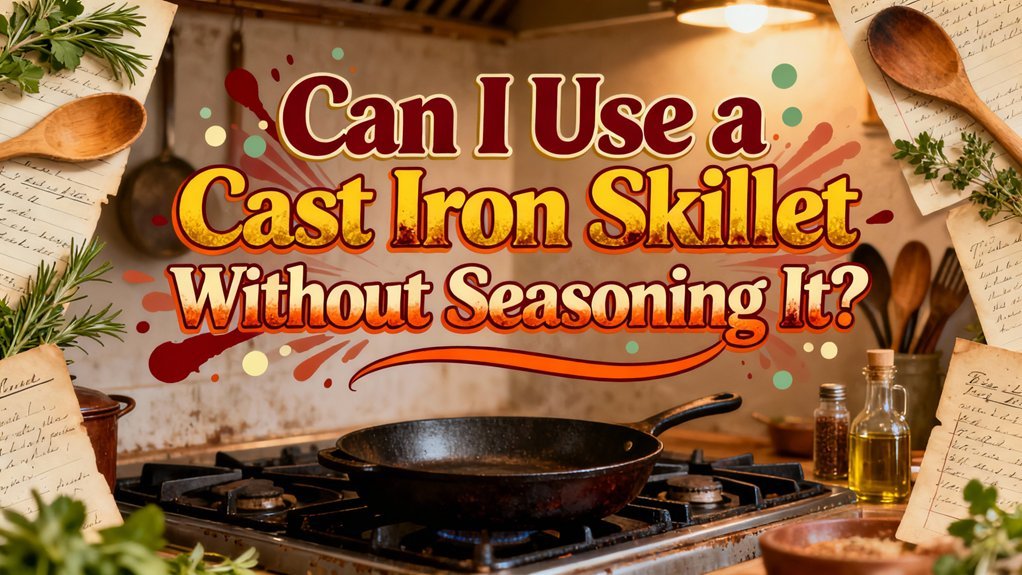
You can use a factory pre-seasoned skillet immediately, but you’re compromising rust resistance and cooking performance. The factory coating doesn’t match home seasoning’s durability, and bare cast iron reacts chemically with acidic foods, leaching iron and creating metallic flavors. Proper seasoning creates a polymerized oil barrier that prevents moisture damage and enhances non-stick properties. While you won’t damage the skillet using it unseasoned, investing in initial seasoning establishes the foundation for superior long-term results and protection.
Understanding Pre-Seasoned Cast Iron Skillets
When you purchase a modern cast iron skillet, it’s likely already coated with a factory-applied layer of oil, fat, or wax—a process designed to create an initial polymerized surface that protects the pan during shipping and storage. These factory coatings, typically vegetable oils or wax-based finishes, serve multiple purposes beyond protection. The pre-seasoning benefits include enabling immediate usability without extensive setup and reducing rust risk during distribution. However, manufacturers don’t guarantee factory coatings match the durability of multi-cycle home seasoning. The exact composition often remains proprietary, which concerns some users. While you can cook immediately, many experts recommend an initial wash or light seasoning cycle to remove potential residues and standardize surface performance before regular use. Similar to how airtight seals preserve food quality in vacuum storage, a properly maintained cast iron surface preserves cooking performance and prevents degradation over time. To get the most out of your skillet, gradually preheat it on a similarly-sized burner at medium or lower heat to ensure even cooking and prevent sticking. For optimal seasoning results, apply a thin layer of olive oil to the warm skillet and rub it in to maintain the non-stick, rust-resistant layer. Building layers of seasoning through repeated cooking cycles creates the natural non-stick coating that develops over time with proper heat retention and even temperature distribution. Regular use and proper maintenance help build and preserve the skillet’s seasoning over time. This pre-seasoned surface is non-stick and will improve with proper care and maintenance over time. Pre-seasoned cast iron cookware is particularly ideal for those new to cast iron cooking who want convenience without the learning curve of initial seasoning.
The Role of Seasoning in Rust Prevention
While factory pre-seasoning provides initial protection during transit and storage, it’s the seasoning layer you build and maintain that ultimately determines your cast iron’s resistance to rust. Seasoning benefits stem from polymerized oil forming a hydrophobic barrier that physically blocks moisture from contacting bare iron. This hard film reduces oxidation risk by limiting micro-crevices where water accelerates corrosion. However, seasoning doesn’t make cast iron chemically inert—incomplete or thin coatings allow oxygen and moisture penetration, permitting rust initiation. You’ll achieve superior rust prevention through multiple thin applications rather than single heavy coats, ensuring even bonding and durability. Regular maintenance prevents gradual abrasion; visible dulling or sticking indicates re-seasoning needs to restore protection. The most effective approach involves heating the oil to its smoke point so it bonds chemically with the cast iron, forming a durable protective layer. Beef tallow is a particularly effective natural option due to its high smoke point of around 400 degrees Fahrenheit, which allows it to withstand high heat without burning or smoking. After washing and thoroughly drying your skillet, applying a light oil layer helps maintain the seasoning and prevents rust between uses. Proper storage with separators to allow airflow also helps preserve the skillet’s cooking surface and prevents moisture accumulation. High smoke point oils like vegetable oil, canola oil, and grapeseed oil create more durable polymerized layers that better withstand repeated heating and cooling cycles.
How to Properly Clean Your Cast Iron Without Damaging It
Because proper cleaning directly impacts your seasoning layer‘s integrity and rust resistance, you’ll need to adopt techniques that remove food residue without compromising the protective coating you’ve built. Use warm, soapy water with a stiff-bristled brush or scrubbing pad, then rinse thoroughly. Dry immediately with a paper towel or lint-free cloth to prevent moisture-related deterioration.
For rust management, employ a Rust Eraser on cool, dry skillets or use steel wool in warm, soapy water, focusing on affected areas. Never subject your skillet to dishwashers or prolonged soaking, as these practices strip seasoning and accelerate corrosion. After cleaning and rust removal, apply a thin oil layer, distributing it evenly across the entire surface. Oil application after cleaning is essential for maintaining your skillet’s seasoning and preventing future rust issues. For severe rust, consider using electrolysis tanks, which can remove all rust and buildup more thoroughly before you begin the seasoning process. For stubborn burnt areas that resist initial cleaning, try using kosher salt or baking soda as gentle abrasives to scrub off the residue without damaging the seasoning. The coarse texture of salt works particularly well to remove food particles while being gentle enough to preserve your seasoning layer. Once your skillet is completely dry, you can heat it on the stove to evaporate any remaining moisture and further protect the surface. After heating, allow the skillet to cool slightly before applying a thin layer of vegetable oil to maintain seasoning and prevent rust formation. When properly maintained, cast iron skillets can last a lifetime and improve with use, developing a natural non-stick finish that enhances cooking performance over time. These cleaning techniques preserve your skillet’s longevity.
Using Acidic Foods in Unseasoned Cookware
Bare cast iron reacts chemically with acids, leaching iron into your food and rapidly developing rust. You’ll experience acidic food risks including metallic flavors in sauces after just 30 minutes of cooking. Tomato-based dishes and citrus preparations prove particularly problematic on unseasoned surfaces. For hearty, comforting dishes like ground beef and rice skillet recipes, acidic components require extra caution on bare iron.
Limit acidic contact to under 45 minutes maximum. Quick deglazing with wine remains safe, but prolonged simmers demand seasoned alternatives. Well-seasoned pans or enameled cast iron provide protective polymer barriers that unseasoned cookware lacks entirely. The polymerization creates a protective layer that prevents both rusting and iron leaching when cooking acidic foods. Using proper food preservation techniques like vacuum sealing can help you prepare acidic ingredients in advance for safer cooking methods. Pre-freezing acidic ingredients before vacuum sealing allows you to prepare them safely without exposing them to unseasoned cast iron surfaces during cooking. DIY vacuum sealing methods using household items enable you to store prepared ingredients compactly before cooking.
After cooking, clean immediately and re-oil surfaces quickly to prevent rust acceleration. For removing stubborn rust that develops despite careful use, electrolysis cleaning offers an effective method to restore unseasoned cast iron back to bare metal. Acids accelerate corrosion on bare iron, making prompt care essential for maintaining your skillet’s integrity.
Building Non-Stick Properties Over Time
Once you’ve limited your exposure to acidic foods, you’re ready to develop your skillet’s non-stick properties through intentional seasoning. Natural polymerization occurs when you heat thin oil layers, bonding them into durable, hard coatings that seal your pan’s pores.
Begin with proper oil application: use high smoke-point oils like grapeseed, applying just a few drops and rubbing them evenly with a towel. This thin coat polymerizes more effectively than thick applications. Bake your skillet at 450°F upside down for 30 minutes, allowing excess oil to drip off. Repeat this cycle 2-3 times for cumulative strength. For optimal results, allow items to cool inside the oven after baking to achieve better seasoning bonding. Oils with higher levels of unsaturated fats create superior polymerized coatings compared to those with lower unsaturated fat content. Avoid using butter for seasoning since its low smoke point causes it to burn quickly on heated cast iron. Traditional fats like rendered pig fat can also create durable seasoning layers, though they may degrade faster under high heat.
Between cooking sessions, wipe warm pans with a thin oil film to reinforce seasoning. Regular, consistent use gradually darkens and hardens your cooking surface, eventually eliminating the need for formal seasoning protocols. Remember to rotate the skillet periodically during cooking to ensure even heating and consistent seasoning development across the entire surface. Grapeseed oil is recommended for the best results when maintaining your skillet’s seasoning between cooking sessions. When storing your skillet for extended periods, ensure it is coated with oil to prevent rust and dust accumulation.
When You Need to Formally Season Your Skillet
While regular maintenance seasoning works well for established pans, you’ll need formal seasoning cycles when you’re starting with bare metal or compromised surfaces. Stripped cast iron, vintage pans cleaned to bare metal, or cookware showing visible rust and pitting require a full seasoning cycle to prevent rapid oxidation and sticking. Even pre-seasoned new skillets benefit from initial home seasoning to improve coating uniformity and durability across high-heat zones. Rough casting seams, foundry dust, or patchy factory finishes indicate seasoning necessity before regular cooking. Multiple thin-oil applications at 400–500°F create protective polymerized layers that establish the non-stick foundation your skillet demands. This formal process fills iron pores and guarantees even bond adhesion, eliminating the risk of food sticking and rust development during early use. The high smoke point oil you choose for seasoning should be applied in thin, even layers to ensure proper polymerization and durability. Proper seasoning methods also depend on understanding the heat retention and distribution capabilities that make cast iron ideal for stovetop cooking. For accurate temperature monitoring during the seasoning process, consider using an oven-safe probe thermometer to ensure your skillet reaches and maintains the proper temperature throughout the heating cycle. Avoid common mistakes such as using harsh soaps or abrasive scrubbers that can damage the seasoning layer you’ve worked to build. After each use, maintain your seasoning by coating with cooking oil while the skillet is still warm to prevent rust and build additional protective layers. Each cooking session with oil or fat adds another seasoning layer that continues to strengthen the protective finish. Over time, the durable, non-stick surface created through proper seasoning transforms cast iron into heirloom cookware that only improves with regular use and maintenance.
Cooking Fatty Foods to Develop Natural Protection
Rather than relying solely on formal oven seasoning, you can build a durable protective coating through regular cooking with fatty foods. When you cook bacon, sausage, or other fat-rich proteins, the oils polymerize on your skillet’s surface, creating non-stick layers through carbonization. This fatty cooking method develops natural protection more effectively than infrequent oven applications.
The polymerization process occurs as fats heat above their smoke points, bonding chemically to the iron. You’ll build multiple thin layers gradually, creating a glassy, hydrophobic finish. Unsaturated fats polymerize particularly well due to their reactive double bonds. This natural non-stick surface improves with age as successive cooking sessions add layers to your seasoning. For ideal results, preheat your pan, use sufficient fat during cooking, and wipe excess oil afterward, leaving only a thin protective coat. Like Le Creuset skillets designed for various heat sources, your cast iron will develop better seasoning when used consistently across different cooking methods. To maintain your seasoning between cooking sessions, apply a light layer of oil before storing your skillet. Consistent fatty cooking seasons your skillet durably over time, much like the high-temperature baking process used by manufacturers to pre-season new cookware.
Best Practices for First-Time Cast Iron Users
Success with cast iron hinges on proper preparation before your skillet ever touches heat. You’ll want to inspect for factory seasoning or enamel coating first—enameled cast iron requires no seasoning. Remove packaging residues and protective wax with warm, soapy water and a non-scratch scrub pad, then dry thoroughly. For raw or stripped skillets, eliminate rust with steel wool before re-seasoning.
Your first-time tips for cast iron usage should prioritize thin, even oil application during initial seasoning cycles. Apply barely visible layers to avoid sticky buildup. Use high-smoke-point fats like grapeseed or avocado oil, then bake upside-down at 450–500°F for approximately one hour. The fat polymerization process that occurs during heating creates a glossy, non-stick coating that prevents food from sticking to the pan. Two hours at your chosen temperature results in non-sticky, well-adhered oil that provides superior protection compared to shorter baking times. Just as specialized cooking thermometers ensure accurate temperature measurement for precision cooking tasks, maintaining proper oven temperatures during seasoning is critical for developing durable non-stick layers.
After seasoning completes, cook fatty foods that naturally build protection. Clean with warm water and soft brushes, dry immediately, and apply light oil before storage. For ongoing maintenance, repeat the stovetop oil application process periodically to preserve your seasoning layer. Avoid dishwashers and prolonged soaking during this critical phase. Metal utensils should be avoided initially, so use silicone, nylon, bamboo, or wood utensils to protect the developing seasoning layer. A well-seasoned cast iron skillet can achieve the high searing temperatures needed for cooking quality steaks.