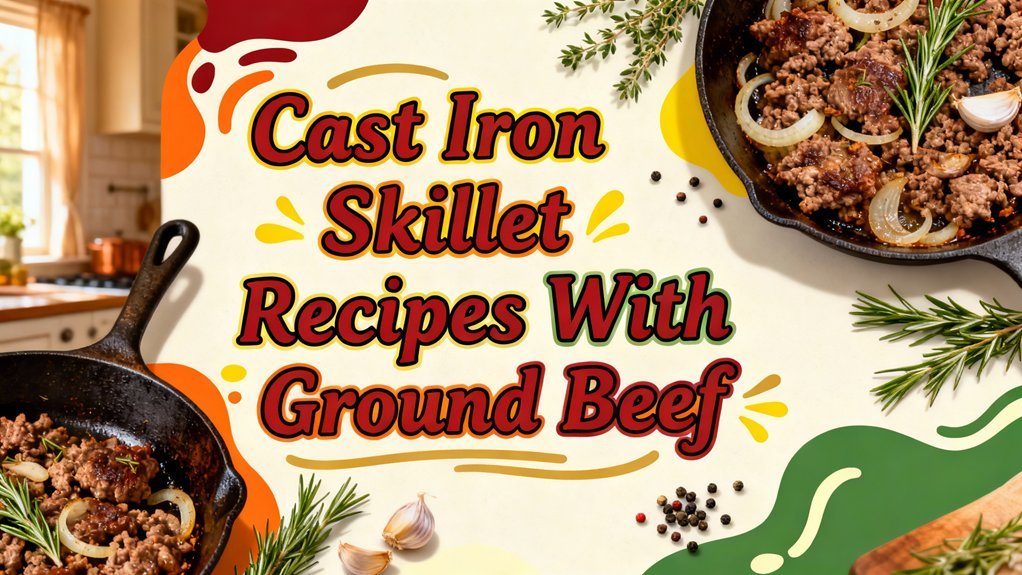
You’ll transform ground beef into restaurant-quality dinners using cast iron’s superior heat retention. Start by browning one pound of beef with aromatics, then layer in diced potatoes, vegetables, and seasonings like Worcestershire or taco spice. Top with melted cheese and bake until golden. Your 10-inch skillet yields 4–6 hearty portions perfect for freezing. Master the Maillard reaction by avoiding early stirring, cook in batches to prevent steaming, and finish under the broiler for bubbling perfection. The techniques that elevate these one-pan meals deserve closer exploration.
One-Pan Skillet Casseroles
When you’re building a skillet casserole, you’re fundamentally layering complementary textures and flavors that’ll cook together into a cohesive, satisfying dish. Your skillet size determines portion yield—a 10-inch cast-iron typically serves 4–6 people. Start by browning ground beef with aromatics, then layer in diced potatoes, vegetables, and liquid to simmer covered until starches turn tender. This brown-and-simmer workflow takes 30–45 minutes on stovetop.
Your flavor profiles emerge through Worcestershire sauce, taco seasoning, or Italian herbs mixed into the meat base. Shredded cheddar melted on top adds richness while binding the casserole together. Ground beef skillet casseroles offer high protein content through the meat and bean additions, making them satisfying one-pan dinners. For finishing, transfer your skillet to a hot oven 5–20 minutes to set cheese and brown potato toppings, creating textural contrast between creamy interiors and golden surfaces. To maintain your cast iron cookware for years of cooking, season it multiple times using high-quality oil to prevent flash rust from forming. Preheating your cast iron gradually before cooking helps protect the enamel and ensures even heat distribution across your casserole. You can customize vegetables based on family preferences, with peas replacing corn or sweet potatoes substituting for Yukon Golds, though note that alternative potato varieties may require longer cooking times. For the best results in your casserole, use a cooking thermometer to verify that ground beef has reached safe internal temperatures before serving.
Ground-Beef-and-Rice Skillets
Ground-beef-and-rice skillets strip away the layering complexity of casseroles and consolidate everything into a single, efficient cooking method where rice absorbs all the savory liquid released by browned meat and aromatics. You’ll brown 1 lb ground beef, then toast your rice briefly in the rendered fat—this essential step prevents sticking and develops nutty depth. Add 1.5–2 cups broth per 3/4–1 cup uncooked rice, cover, and simmer 15–25 minutes until tender. Since cast iron retains heat exceptionally well, preheat your skillet over medium heat to ensure even cooking throughout. The even heat distribution that cast iron skillets provide makes them particularly suited for one-pan cooking methods like this. For quick dinner ideas, embrace Mexican, Italian, or Southwestern profiles using taco seasoning, cumin, or green chiles. Healthy variations incorporate beans for fiber and protein, lean beef cuts, and brown rice. You can also add mixed vegetables like peas and carrots to boost nutrition and texture throughout the skillet. Ground pork, chicken, or turkey can serve as alternative proteins to customize the dish based on your preferences. Finish with 1–1.5 cups melted cheese and fresh cilantro or jalapeños for brightness.
Loaded Beef-and-Potato Skillets
Comfort food meets efficiency in the loaded beef-and-potato skillet, where you’ll layer thin-sliced potatoes with seasoned ground beef and finish with a bubbling cheddar crust. Your potato layering technique determines texture—mandoline-sliced potatoes cook through in 40–50 minutes, while diced russets require pre-cooking for fork-tenderness. Brown bacon first, then render its fat to sear your seasoned beef with garlic and onion. Alternate potato layers with beef, add dairy for richness, and top with shredded cheese options like sharp cheddar or a cheddar-gruyère blend. For optimal results, cut potatoes uniformly to ensure even cooking throughout the dish. Bake at 400°F until cheese browns and liquid mostly absorbs. Cast iron’s superior heat retention allows the skillet to maintain consistent temperature throughout the baking process, resulting in evenly cooked potatoes and perfectly melted cheese. The pre-seasoned cooking surface of quality cast iron requires minimal maintenance while providing years of reliable performance in your kitchen and beyond. Like other baked dishes, timing is essential—most cast iron skillet meals are ready in 40–50 minutes, making them efficient weeknight dinners. After cooking, clean your cast iron with stiff brushes while the skillet is still warm to remove residue without damaging the seasoning, and always ensure the skillet is thoroughly dried] before storing to prevent rust and maintain its longevity. To prevent a soupy texture, use full-fat cheese and skim milk rather than lower-fat alternatives that may compromise the dish’s consistency. Rest five minutes before serving to allow cleaner portioning and ideal flavor development.
Mexican-Style Beef Skillets
Mexican-style beef skillets swap the creamy potato layers of their comfort-food cousins for a vibrant, one-pan meal built on rice, beans, and bold spice. You’ll brown ground beef in cast iron, then layer in aromatics—onion, garlic, jalapeño—and your spice combinations: chili powder, cumin, smoked paprika, and garlic powder form the backbone. Add rice, broth, black beans, and tomatoes (preferably Rotel for chile depth), then simmer covered until rice absorbs liquid. This versatile dish works wonderfully as a taco filling in tortillas for different serving occasions. The result’s ideal for meal prep: a balanced macronutrient profile delivering protein, carbohydrates, and fiber. For best results, use a seasoned cast iron or nonstick pan to prevent rice from sticking during the cooking process. A high smoke point oil applied to your cast iron through proper seasoning will create a natural non-stick surface that improves with regular use. Like the tender roast in a Dutch oven that develops flavor through prolonged cooking in liquid, this skillet dish builds depth as the rice absorbs the seasoned broth. Top with shredded Mexican blend cheese and broil briefly until bubbling, similar to how cheese becomes bubbly when finished baking in the oven. Finish with cilantro and lime juice for brightness. One pound beef yields three to five hearty portions, making this dish excellent for freezing in vacuum-sealed portions to extend shelf life and reduce food waste.
Bacon-Cheddar Beef Skillets
Where Mexican-style skillets lean into rice and beans, bacon-cheddar beef skillets embrace the classic cheeseburger—rendered crispy and melted into a single cast-iron vessel. You’ll render 2–4 bacon slices per pound of ground beef, building bacon infused flavors while the fat browns your meat evenly. This beef texture balancing technique—breaking ground beef into consistent pieces over medium-high heat for 4–6 minutes—ensures even cooking and absorbs rendered fat without becoming greasy.
Layer sharp cheddar (4–8 ounces) atop sautéed aromatics and Worcestershire-seasoned beef. Your starches—pasta or potato—bind with 1–2 cups broth, preventing dryness during the 375–400°F oven finish. Broil 2–5 minutes until cheese bubbles and edges brown, delivering creamy, smoky depth in under an hour. For best results, create a divot at the center of each burger patty to help distribute heat evenly throughout the meat during cooking. Dicing raw bacon and starting in a cold pan allows fat to render gradually, creating the flavorful foundation that distinguishes these skillets. Like cast iron Dutch oven cooking, cast iron skillets distribute heat evenly and retain warmth exceptionally well for consistent results. To maximize the lifespan of your Le Creuset skillet, avoid overheating the pan and gradually heat on low to ensure even heat distribution before cooking your bacon-cheddar beef. Vacuum sealing your prepared ingredients before cooking can help preserve their freshness and extend the shelf life of your ground beef and bacon components.
Essential Cast Iron Techniques for Perfect Results
Mastering cast iron demands understanding how heat, fat, and timing work together to transform ground beef into deeply browned, evenly cooked results. Your heat management strategy begins with gradual preheating on medium for 3–7 minutes, then reducing to medium-low once browning starts. This prevents burning while maintaining even surface temperature.
Seasoning maintenance directly impacts performance. You’ll preserve that nonstick polymerized layer by applying high-smoke-point oils after cleaning. When food sticks frequently, rebuild seasoning through oven baking at 400°F for an hour. The superior heat retention of enameled cast iron ensures that your skillet maintains consistent cooking temperatures throughout the browning process, preventing temperature fluctuations that can compromise your results. Regular seasoning with vegetable oil and baking creates a protective layer that enhances your skillet’s cooking performance. For optimal results, heat your oiled skillet over medium heat until it begins to smoke, then maintain that smoke for 15-20 minutes to allow the oil to polymerize into a durable nonstick layer. To prevent rust and extend your skillet’s lifespan, always store your cast iron in a dry place after thoroughly drying it following each use. Avoid using metal utensils that can damage the seasoning layer you’ve worked to build. After each use, always dry thoroughly before storage to prevent rust and maintain your skillet’s longevity.
Break ground beef into uniform pieces and resist stirring for the first 1–3 minutes—this develops the Maillard reaction‘s flavorful crust. Cook in batches to avoid overcrowding, which causes steaming. Drain excess fat between batches to maintain texture and browning efficiency, similar to how pre-freezing prevents unwanted liquid absorption during food preservation.