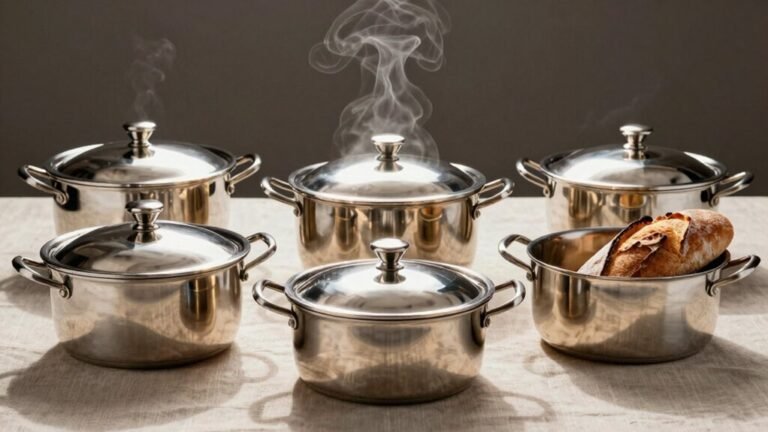

You can bake no-knead bread without a Dutch oven by using cast iron skillets, clay bakers, or stainless steel bowls paired with preheated stones. These alternatives trap steam effectively when you preheat them to 450–500°F. Generate steam by adding boiling water to a skillet, tossing ice cubes, or draping wet towels over roasting pans. Maintain high heat for the first 20 minutes, then lower to 425°F for 20–30 minutes until golden. Understanding the specific techniques for each vessel will greatly improve your results.
Understanding No-Knead Dough Basics
No-knead dough’s foundation rests on high hydration—you’re working with a wetter, stickier mixture than traditional bread dough, where water comprises roughly 75% of the flour’s weight. This elevated moisture content enables gluten molecules to move and align freely without mechanical intervention.
You’ll use minimal yeast, approximately 1 gram per 400 grams of flour, supporting extended yeast fermentation over 12–18 hours or longer. This extended timeframe replaces kneading entirely, allowing natural gluten alignment in the moist environment. You’ll also increase salt to about 2% of flour weight, balancing flavors developed during the long fermentation process. Patience is key to achieving the desired bread structure, as gluten strands naturally align over these extended resting periods without any active manipulation. Monitoring your dough temperature with a properly calibrated thermometer ensures optimal conditions for yeast activity throughout fermentation. Once your dough has fully fermented, vacuum sealing any leftover portions will preserve freshness and prevent freezer burn if you plan to store it.
The result: strong gluten networks that trap gas bubbles, creating an open crumb structure with minimal handling. During baking, steam development in a covered Dutch oven or similar vessel enhances crust formation and crumb expansion. Filtered water] is recommended to avoid chlorine’s inhibitory effects on yeast during the fermentation process. A non-contact temperature measurement device can help you monitor your dough’s temperature throughout the fermentation period to ensure optimal conditions for yeast activity. Preheating your covered vessel to 450-500°F before baking allows the trapped steam to create the golden, crackling crust characteristic of artisan bread.
Preparing Your Dough for Success
With your understanding of high-hydration dough’s mechanics in place, you’re ready to combine ingredients thoughtfully. Start by whisking water, salt, and yeast together in a large bowl. Proper yeast activation requires lukewarm water between 80°F-100°F; this temperature range guarantees ideal fermentation without killing the cells.
Next, add your flour gradually, mixing with a spatula until a sticky dough forms. Don’t knead—instead, scrape the bowl’s sides to fully incorporate flour. Your dough hydration should feel wet and shaggy, not dry or stiff. Once your dough reaches the proper consistency, you should cover the mixture and allow it to rest undisturbed for the initial fermentation stage.
Cover your mixed dough and let it rest for 30 minutes. During this initial phase, perform gentle coil folds by pulling dough from the bowl’s sides and folding it under. Rotate the bowl quarterly and repeat this process. These folds strengthen gluten development without aggressive kneading, preparing your dough for successful baking. Like the savory cooking liquid that infuses a pot roast with deep flavor, the steam created during baking will help your bread develop the crispy crust characteristic of artisan loaves. The heavy pot used in traditional Dutch oven baking ensures even heat distribution throughout the baking process. Consider using high smoke point oils to brush your baking vessel if you choose alternative baking methods. After the initial rise, punch down the dough to remove excess air before shaping and final proofing.
Mastering Coil Folds and Shaping
Coil folds are your primary tool for developing dough strength during the bulk fermentation phase, replacing the aggressive action of traditional kneading. You’ll lift dough from the middle, allowing it to stretch naturally under its own weight, then tuck edges underneath to create tension on the top surface. Rotate your bowl and repeat four to five times until the dough forms a cohesive ball.
Perform coil folds twice during the second hour of rise with 30-minute intervals between them. This tension building prevents your dough from spreading on the baking tray without enclosure while preserving gas for peak oven spring. Using stretch and fold techniques during the initial stages of bulk fermentation further enhances dough structure before transitioning to coil folds. Just as a Dutch oven’s ability to retain and distribute heat creates optimal baking conditions, your coil fold timing can be adapted based on your dough’s hydration level and room temperature. After bulk fermentation is complete, ensure your work surfaces and cookware are non-corrosive and residue-free to prevent contamination during the final shaping and baking process.
For final shaping, grab the bottom edge and pull it up and over to the top. Execute four perimeter folds opposite one another, creating a tight package. Pinch edges lightly to add final strength against spreading. The tight package you create ensures that sufficient gas remains in the dough to maximize oven spring without a Dutch oven’s confinement.
Essential Equipment Alternatives
You don’t need a Dutch oven to bake exceptional bread at home—five viable alternatives’ll deliver comparable results when you understand how each traps steam and distributes heat. Romertopf clay bakers offer cost effective options, available used under $10, producing superior crust compared to cast iron. Cast iron skillet pairs generate even heat conduction when preheated to 460°F with ice cubes for steam. Stainless steel bowls over preheated stones create steam environments for various loaf shapes. Roasting pans function as domes over baking stones, while oven-safe pots with tight-fitting lids mimic Dutch oven thermal mass. Each equipment substitution requires preheating and strategic steam generation during initial baking phases. Soaking clay bakers in water before use aids moisture retention and enhances baking outcomes. For cast iron alternatives, building up a seasoning layer through repeated oiling and baking creates a natural non-stick surface that improves with regular use and proper care. Avoid using metal covers other than stainless steel to prevent acid interaction with your dough during the baking process. If you prefer working with smaller loaves, a 3-quart Dutch oven can be scaled down proportionally to bake bread in the 600-900 gram range. Understanding steamy environment creation remains essential regardless of which vessel you choose, as proper humidity during the first stages of baking develops the crispy, golden crust that defines quality artisan bread. The initial baking phase with trapped steam is critical for achieving that professional-quality golden crust and airy interior that distinguishes artisan sourdough. Consider using a baking stone] alongside your chosen vessel to improve heat distribution and promote even browning throughout the loaf. Select based on your kitchen’s available tools and desired loaf shape.
Steam Creation Without a Dutch Oven
Three core steam-generation methods—direct water application, rapid ice techniques, and sustained reservoirs—replicate the moisture retention that Dutch ovens provide naturally.
For direct water application, preheat a heavy cast-iron skillet on your oven floor, then add boiling water just before loading your loaf. You’ll generate an immediate steam blast that delays crust formation and maximizes oven spring. Using a baking stone with this method enhances heat retention and moisture control for superior results. Cast iron’s superior heat retention makes it particularly effective for maintaining consistent temperatures during the steaming phase. Like searing steaks on the stovetop before finishing in the oven, preheating your cooking vessel ensures even heat distribution and better crust development.
Alternatively, you can use the ice method: toss several ice cubes into a preheated pan for rapid steam with minimal splatter risk. This alternative steam method cools the pan slightly but remains effective for loaf baking techniques requiring quick moisture bursts. The gelatinized starches from sustained steam contribute to a glossy crust finish that elevates the final appearance of your bread.
For sustained steam, saturate kitchen towels with boiling water and place them in a roasting pan alongside your bread. Remove all steam sources after 15–20 minutes to allow proper crust crisping and browning.
Scoring and Loading Your Bread
Once your steam sources are positioned and your oven’s reached temperature, you’ll turn your attention to preparing the dough’s surface for baking. Transfer your proofed dough to parchment paper and dust it evenly with fine flour using a sieve. You’ll then execute your scoring techniques with a sharp blade held at a 45-degree angle.
For batards, employ a single expansion score down the center or overlapping angled cuts. Boules work well with crosshatch patterns or multiple small cuts resembling wheat stalks. Keep decorative patterns shallow to avoid disrupting your primary expansion score. Utility knife blades are particularly effective for scoring due to their thinness, which creates clean, precise cuts in the dough. Scoring depth should be maintained between 1/4 to 1/2 inch to ensure optimal oven spring and controlled loaf expansion.
Change your blade every five loaves to maintain sharpness, as dull blades require more pressure and can tear the dough rather than creating the clean cuts that professional bakers achieve. Slide the parchment directly onto your preheated baking surface, and you’re ready to bake.
Baking Temperature and Timing
Because steam dissipates quickly without a Dutch oven’s enclosure, your oven’s temperature management becomes critical to developing both oven spring and a proper crust. Start by preheating your oven to 450°F for 45-60 minutes, then load your bread with an immediate steam source using boiling water in a skillet.
Maintain this high temperature for your first 20 minutes of baking while steam’s present. After that initial phase, lower your baking temperatures to 425°F for the remaining 20-30 minutes. Remove your steam source during this final stage, allowing the crust to set properly. Parchment paper prevents sticking and eases dough transfer during the transition between temperature stages.
Your timing adjustments should total 40-50 minutes overall. Monitor your loaf’s color—aim for golden-brown results. If browning occurs too quickly, reduce temperatures by 25°F. Check doneness by tapping the bottom; you’ll hear a hollow sound when finished. Like a Dutch oven, alternative cookware such as cast iron pans or CorningWare bakeware can retain heat evenly and maintain the steam needed for proper crust development. Consider using these alternatives that can withstand high oven temperatures and retain steam effectively, much like how reusable silicone bags are designed to maintain proper cooking conditions while reducing environmental waste in the kitchen.
Achieving the Perfect Crust
Now that you’ve mastered steam management and temperature control, you’ll want to focus on the variables that’ll give you that bakery-quality crust you’re after. Your dough’s hydration level directly influences crust thickness and texture—higher hydration produces thinner, crispier crusts with blistering because internal moisture converts to steam during baking. Apply surface treatments before baking: egg wash yields glossy brown crusts, while water encourages chewier, rustic exteriors. Dust lightly with flour to promote rapid crust formation and reduce stickiness. Proper final proofing matters too; underproofed loaves develop thicker, tougher crusts, whereas overproofed dough browns unevenly. Strong gluten development supports controlled expansion and thin crust formation, similar to how proper weight and pressure can shape and refine other foods during preparation. Consider using high protein flour instead of all-purpose flour, as it absorbs more moisture during baking and creates the thinner, crunchier crust that distinguishes artisan bread. For optimal results, score the dough before baking to control crust expansion and create an attractive appearance. Programmable alarms can help you monitor internal temperature progression during longer baking times to ensure your bread reaches the ideal doneness. Using cast iron or baking stone on the oven rack helps distribute heat evenly and contributes to a more uniform, professional-quality crust. Some bakers dust their baking surfaces with coarse cornmeal or semolina instead of oil to prevent sticking and reduce burning risk. After baking, brush melted butter on the crust to soften it and retain moisture.
Creative Variations and Flavor Additions
Your no-knead dough‘s neutral base makes it an ideal canvas for creative flavor experimentation. You can incorporate whole wheat flour by substituting 1.5 cups bread flour for a nuttier, earthier profile with denser crumb. Cheese additions of two cups grated cheddar, gouda, or emmental mixed into dry ingredients create gooey pockets during baking. Herb infusions using two tablespoons dried rosemary, thyme, or oregano deliver Mediterranean aromatics that retain potency through fermentation. Garlic enhancements involving up to 0.5 cup roasted garlic provide sweet, mellow depth without raw bite. Beer variations substitute water entirely, introducing malty, yeasty undertones and slightly denser crumb. Each variation ferments similarly to standard no-knead recipes while dramatically shifting flavor profiles and texture complexity.